
Find your pellet stove in Wheeler County.
Clean, thermostat-controlled heat for the long Nebraska winters around Bartlett and the surrounding farm country. Get matched with a trusted local dealer who can size and install the right unit for your home.
Every Project Starts From One of These Five Situations
Consistent heat, without the woodpile.
Wheeler County sits in climate zone 5A, with winters that resemble Fargo or Bismarck more than they resemble anything in eastern Nebraska—long stretches of below-freezing days, wind that cuts across open farmland, and heating seasons that stretch well into spring. With a population of just 239 spread across the county and its seat in Bartlett, most homes here are older farmhouses on rural acreage, often with propane or electric as the primary system and a supplemental heat source doing the heavy lifting on the coldest nights.
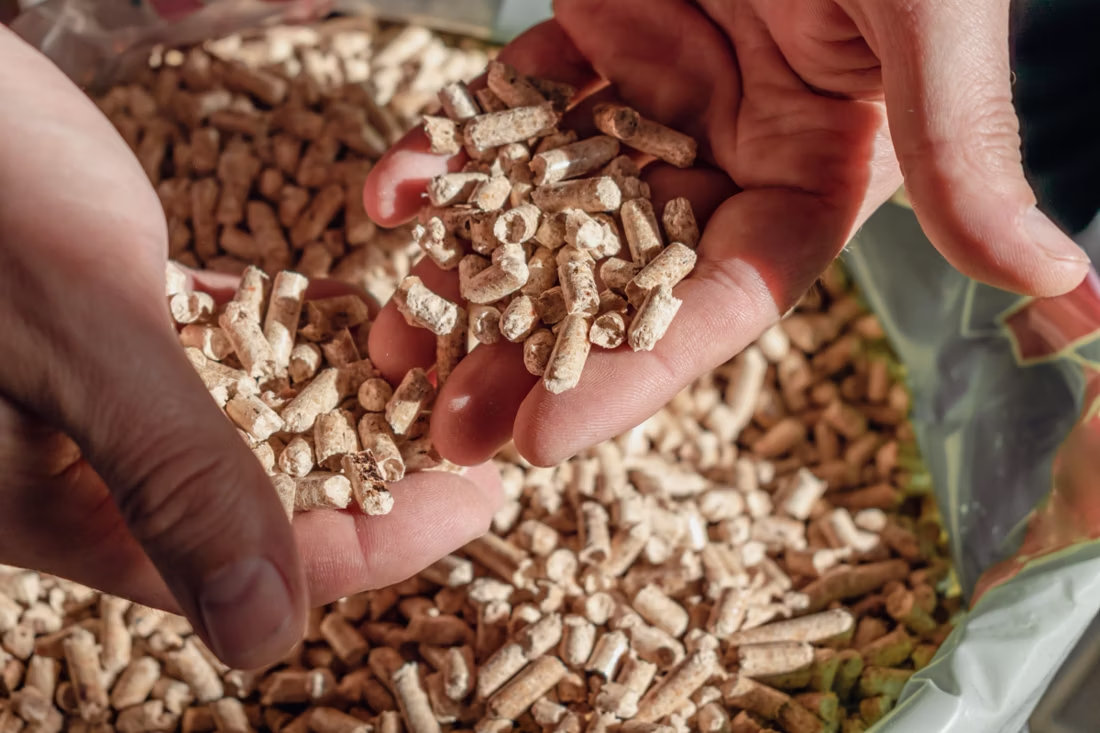
A pellet stove fits that pattern well. Load the hopper, set the thermostat, and it burns evenly for a day or more without the splitting, stacking, and hauling that cordwood demands—a real consideration on farms where oak, hickory, and cottonwood are the local firewood staples but daylight and labor hours are already spoken for. Regional brands like Lignetics supply bagged pellets through the same feed and farm-supply channels that already serve rural Nebraska, and Indeck Energy Services is a familiar name in the broader pellet-fuel supply chain across the Midwest. With no local air quality restrictions on burning, pellet stoves here are chosen for convenience and steady heat rather than any regulatory workaround.
Three steps. No salesperson until you're ready.
Tell us about your project
Your zip code, your situation, and the fuel you're leaning toward—or let the answers point you to one.
See what's actually available
The brands dealers within 100 miles genuinely carry—real options, never a catalog mirage.
Get your dealer & Project Guide
A trusted local dealer, plus the free Project Guide & Parts List that names every component of the job.
Frequently Asked Questions
How much does a pellet stove installation cost in Wheeler County?
Most pellet stove installations in this part of Nebraska run in the $4,500 to $7,500 range, depending on the unit and whether the vent path is straightforward. Because Wheeler County has so few households, there isn't a hearth shop based in Bartlett itself—most installers travel from Grand Island, Norfolk, or Ord, and that travel factors into the quote. Expect the installer to confirm electrical access for the hopper motor and blower, plus a wall or roof penetration for the vent pipe, during an in-home visit before finalizing pricing.
Will a pellet stove work as backup heat during a rural power outage?
Not on its own. Pellet stoves run an electric auger to feed fuel and a blower to distribute heat, so they go dark in a power outage unless paired with a battery backup or generator. For Wheeler County's rural properties, where outages during ice storms or high-wind events can stretch longer than in town, that's worth planning around. Many farm households here pair a pellet stove for everyday convenience with a generator hookup, or keep a wood-burning option as true off-grid backup. Ask your installer about a small battery backup unit sized for the stove's draw if outage risk is a priority for you.
What size pellet stove do I need for a farmhouse in Wheeler County?
Sizing depends on square footage, ceiling height, and how drafty the house is—and a lot of Wheeler County's housing stock is older farmhouses with higher heat loss than modern construction. As a rough guide: a small stove (up to 1,000 sq ft) suits a single zone or an addition, a medium stove (1,000–2,000 sq ft) covers most main living areas, and a large stove (2,000+ sq ft) can carry a whole home if insulation is reasonable. Given the zone 5A winters here, most local installers size slightly up rather than down so the stove isn't running at maximum output on the coldest January nights.
Where do I buy pellets near Wheeler County?
Bagged pellets aren't typically stocked in Bartlett itself given the town's small size, so most residents buy through farm and ranch supply stores in Ord, Grand Island, or O'Neill, or order pallets directly. Lignetics is a widely distributed regional brand that shows up in Nebraska farm-supply channels, and buying by the pallet (roughly a ton, or 50 forty-pound bags) rather than by the single bag saves both money and repeat trips on rural roads. Stock up before winter—a single pallet typically covers several weeks of regular use, and road conditions in a Nebraska winter storm aren't ideal for a pellet run.
Do I need a permit to install a pellet stove in Wheeler County?
Wheeler County is unincorporated in most areas and has limited formal building permit infrastructure compared to larger counties, but any new pellet stove installation should still follow manufacturer venting specifications and local code where it applies. Most installers coming from outside the county—from Grand Island or Norfolk—are familiar with rural Nebraska permitting norms and will tell you directly whether your specific installation triggers a permit requirement. When in doubt, a quick call to the county clerk's office in Bartlett will confirm what's needed for your project.
How often does a pellet stove need maintenance?
Pellet stoves need more frequent light maintenance than wood stoves but far less heavy cleaning. Plan on emptying the ash pan every few days during regular winter use, cleaning the burn pot weekly, and a full professional service once a year—checking the auger, exhaust fan, and gaskets. Because Wheeler County doesn't have a hearth shop locally, many owners handle the routine ash and burn-pot cleaning themselves and schedule the annual service visit to coincide with an installer's other trips through the area.
Pellet stove vs. wood stove—which makes more sense on a Wheeler County farm?
Wood is the traditional choice here, and oak, hickory, and cottonwood are all locally available if you're cutting your own or buying from a neighbor—wood also keeps working with no electricity, which matters when a rural power outage runs long. Pellet stoves trade that off-grid reliability for convenience: no splitting or stacking, more consistent heat output, and a thermostat instead of tending a fire by hand. For a household with existing wood supply and the labor to manage it, wood still makes sense. For a household that wants steady heat without the physical work—or a second home used only part-time—pellet is usually the better fit.
Can a pellet stove replace my furnace as primary heat?
It can serve as the primary heat source for a well-insulated single-story home, but most Wheeler County households use a pellet stove as a strong supplemental system alongside propane or electric central heat rather than a full furnace replacement. Given the depth of winter in a 5A climate zone, relying on a single pellet stove for an entire farmhouse—especially an older one with real heat loss—carries risk if the stove needs service mid-winter. Most local installers recommend sizing the stove to comfortably heat your main living space and letting the existing system handle the rest of the house and the coldest overnight lows.
How do I find a pellet stove dealer near Wheeler County?
Because Wheeler County's population is under 250, there's no hearth retailer based in Bartlett—homeowners typically work with a dealer based in a larger nearby town like Grand Island, Norfolk, or O'Neill who travels out for installs. The key is finding someone who routinely works rural properties and understands farmhouse venting and electrical realities, not just suburban installs. That's exactly the matching problem Find My Fireplace solves: tell us about your home and we'll connect you with a trusted dealer who actually covers Wheeler County, rather than you cold-calling shops two counties away.
Why is a fireplace insert so efficient?
An insert does two things: it seals the chimney completely, so you stop losing air you already paid to heat, and it radiates warmth into the room through the firebox and glass. Most add a heat-exchange fan that pulls cool room air underneath, wraps it around the hot firebox, and pushes it back out warm. Your home is more efficient before you've even lit the first fire.
What's the difference between an insert and a zero-clearance fireplace?
An insert is a fireplace that slides into a pre-existing wood-burning fireplace—if you don't have one, there's nothing to insert it into. A zero-clearance fireplace is built into a framed wall, which makes it the answer for remodels and new construction. Simple test: existing masonry fireplace means insert; blank or framed wall means zero-clearance.
Does a fireplace add value to my home?
On average, a fireplace adds back to the home about the same amount you spent installing it. Add the monthly savings from heating the rooms you actually use instead of the whole house—often hundreds of dollars a year—and the value case is strong before you even count what a fire does for how your family uses the room.
How much should I budget for a fireplace?
For an average home—covering the fireplace, the vent pipe, and basic installation—a budget between $3,900 and $5,500 gives you a lot of options across wood, gas, and pellet. By the time you add finish work, gas line, and electrical, the average complete installation lands between $5,000 and $12,000 all-in. In a remodel or new build, a good rule is to put about 2.5% of the total project cost toward the fireplace.
Pellet Brands Stocked Around Wheeler County
Manufacturers will point you to the nearest stocking dealer.
Get your Wheeler County pellet stove Project Guide.
Tell us about your home and we'll match you with a trusted local dealer who covers Wheeler County, plus a free Project Guide & Parts List with the exact vent kit and parts your install needs.
Find Your Fireplace →