
Steady heat for Sandhills ranch country, however far the nearest line runs.
Thomas County is home to fewer than 300 people spread across open Sandhills grassland, and most of that ground sits well outside any natural gas main. A propane-fired direct-vent fireplace gives you real, thermostat-controlled heat without depending on a delivery truck reaching you before the next storm. I'll match you with a trusted local dealer who installs this kind of thing out here regularly.
Every Project Starts From One of These Five Situations
Propane heat for the least populated county in Nebraska.
Thomas County sits in climate zone 5A, and winters here run hard and long—the kind of cold more associated with Fargo, ND or Bismarck, ND than with most of the Great Plains, with subzero nights a regular feature of the season. With a population around 270 and the county seat of Thedford serving as the only real town, most homes and ranch buildings are spread across miles of open Sandhills grass, well outside any municipal utility footprint. The county does have one unusual local landmark worth knowing: the Bessey Ranger District of the Nebraska National Forest near Halsey, the largest hand-planted forest in the country, which shapes the local relationship with wood heat even though most of the county's ranchland is treeless prairie.
Because natural gas mains don't reach the vast majority of Thomas County, 'gas fireplace' here almost always means a propane-fired unit, typically fed from a tank set on the property and filled by a regional bulk delivery service. That's not a downgrade—a modern direct-vent propane fireplace or insert delivers the same instant, thermostatically controlled heat as natural gas, and with a battery-backup ignition system it keeps running through a rural power outage, which matters when the nearest crew from your electric cooperative may be an hour or more away. With no air quality restrictions or burn bans in the county, a propane fireplace also gives you clean, code-compliant heat without the smoke management that comes with wood.
Three steps. No salesperson until you're ready.
Tell us about your project
Your zip code, your situation, and the fuel you're leaning toward—or let the answers point you to one.
See what's actually available
The brands dealers within 100 miles genuinely carry—real options, never a catalog mirage.
Get your dealer & Project Guide
A trusted local dealer, plus the free Project Guide & Parts List that names every component of the job.
Frequently Asked Questions
How much does a gas fireplace installation cost in Thomas County?
Most propane fireplace or insert installations in this part of the Sandhills run somewhere between $4,000 and $10,000, depending on the unit, whether you're retrofitting an existing masonry fireplace or building new, and whether a propane tank and line already exist on the property. Homes without an existing tank will have that setup cost added on top, and because Thomas County installers often travel from Broken Bow, North Platte, or Valentine, expect a modest trip charge factored into any quote for ranch properties well off the highway.
Do I need natural gas, or does propane work just as well?
For nearly every home in Thomas County, propane is the fuel, not a fallback—there's no natural gas main reaching the unincorporated parts of the county, including most of the ranchland outside Thedford. Any direct-vent gas fireplace can be configured to run on propane with the correct orifice and regulator, so you're not giving up performance or heat output. The main planning difference is making sure your propane supplier can reliably reach your property for refills, especially if you're on a road that gets rough after a Sandhills snowstorm.
Do I need a permit to install a gas fireplace in Thomas County?
Thomas County doesn't maintain a full-time building department the way larger Nebraska counties do, so permitting for a new gas appliance typically runs through the county clerk's office in Thedford—it's worth a call before work starts to confirm what's required for your specific project. Any propane line work should still be done by a licensed gas-fitter regardless of the permit process, and a full-service local dealer will usually handle that coordination as part of the installation rather than leaving you to sort it out separately.
Will my gas fireplace still work if the power goes out?
Most direct-vent gas fireplaces with intermittent pilot ignition run on battery backup, so they'll still light and heat during an outage from the local rural electric cooperative—a real consideration on Sandhills ranch properties where a downed line in a winter storm can mean hours before power is restored. Some models, like Valor's, generate their own electricity through the pilot assembly and don't need batteries at all. Given how spread out Thomas County is, that outage resilience is one of the strongest arguments for a propane fireplace over an electric-only heat source.
How does a gas fireplace compare to a wood stove out here?
Wood is still a viable option in Thomas County—locally available species include oak, hickory, and cottonwood, mostly from river-bottom stands rather than the open grassland, plus the planted pine of the Bessey Ranger District near Halsey. Wood heat needs no propane delivery and no electricity at all, which appeals to some ranch households. But it also means hauling and stacking fuel and managing a chimney, while a propane fireplace gives you instant, thermostat-controlled heat with none of the daily tending. With no local air quality restrictions either way, the choice really comes down to how hands-on you want your heat source to be.
How big a propane tank do I need to run a gas fireplace?
A single gas fireplace used as a secondary heat source typically doesn't demand a large dedicated tank if you're already running propane for a furnace or water heater—it simply draws off the existing supply line. If a fireplace will be your primary heat for a room or an outbuilding without existing propane service, your supplier can size a standalone tank based on expected burn hours per day. In a county this remote, it's worth discussing delivery frequency with your propane company up front, especially for properties at the end of long ranch roads that can be hard to reach after heavy snow.
What's the difference between vented and vent-free gas fireplaces?
Direct-vent units draw combustion air from outside and exhaust it back outside through a sealed pipe, keeping any combustion byproducts out of the room entirely. Vent-free units burn directly into the living space and are legal in Nebraska, but they come with strict room-size requirements and need an oxygen depletion sensor. With no air quality concerns in Thomas County either way, the choice usually comes down to preference and where the unit sits—most local dealers still recommend direct-vent for a primary living space, saving vent-free for supplemental use in a workshop or outbuilding.
What size gas fireplace do I need for a ranch house in Thomas County?
Sizing depends on square footage and how the space is insulated, but the long, cold Sandhills winters here mean it's worth sizing toward the higher end of a unit's rated range rather than the low end. Older ranch homes with less insulation, or large open living areas common in this part of Nebraska, often benefit from a larger direct-vent fireplace than the square footage alone would suggest. A local dealer walking the space will account for ceiling height, window exposure, and how the room connects to the rest of the house before recommending a BTU rating.
How often does a gas fireplace need to be serviced?
Plan on an annual inspection before the heating season starts, typically in September or October ahead of the Sandhills' first hard freeze. A technician checks the burner, pilot assembly, and gas connections, and cleans the glass—a much lighter job than a wood chimney sweep. Because service techs in this part of Nebraska often travel from North Platte or Valentine, it's common for Thomas County homeowners to schedule this alongside other seasonal maintenance to avoid a separate trip charge.
Can I put a TV above my fireplace?
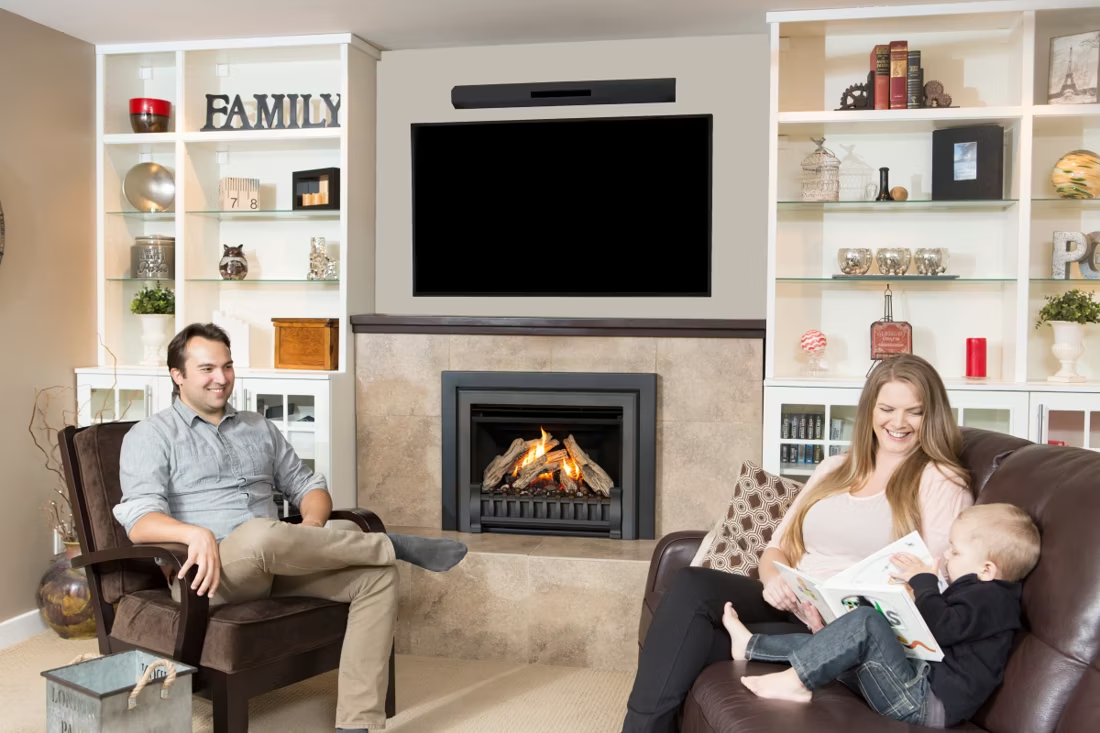
Yes—with an asterisk. Fireplaces are hot and TVs don't like heat. Either put a mantel between them to deflect rising warmth, or choose a fireplace with heat-management technology that creates a cool zone on the wall above—the wall stays around 125 degrees, barely warm, while the room still gets full heat. If you like clean lines and don't want a mantel, heat management is the answer.
What's the difference between an insert and a zero-clearance fireplace?
An insert is a fireplace that slides into a pre-existing wood-burning fireplace—if you don't have one, there's nothing to insert it into. A zero-clearance fireplace is built into a framed wall, which makes it the answer for remodels and new construction. Simple test: existing masonry fireplace means insert; blank or framed wall means zero-clearance.
How much should I budget for a fireplace?
For an average home—covering the fireplace, the vent pipe, and basic installation—a budget between $3,900 and $5,500 gives you a lot of options across wood, gas, and pellet. By the time you add finish work, gas line, and electrical, the average complete installation lands between $5,000 and $12,000 all-in. In a remodel or new build, a good rule is to put about 2.5% of the total project cost toward the fireplace.
Does a fireplace add value to my home?
On average, a fireplace adds back to the home about the same amount you spent installing it. Add the monthly savings from heating the rooms you actually use instead of the whole house—often hundreds of dollars a year—and the value case is strong before you even count what a fire does for how your family uses the room.
Get your free Project Guide & Parts List for a gas fireplace in Thomas County.
Tell me about your home or ranch property and how you plan to use the fireplace, and I'll match you with a trusted local dealer and send a free Project Guide & Parts List—the exact equipment, propane setup, and recommended installer for your project, no big-box guesswork.
Find Your Fireplace →