
Reliable electric heat for one of Nebraska's most remote counties.
No gas line, no chimney, no venting—just a plug and a switch. Electric heat that fits ranch houses, hunting cabins near Halsey, and homes scattered across Thomas County's Sandhills.
Every Project Starts From One of These Five Situations
The practical choice for the Sandhills' emptiest county.
Thomas County is home to just 270 people, making it one of the least populated counties in Nebraska—a stretch of rolling, grass-stabilized Sandhills dunes centered on the tiny county seat of Thedford, with Halsey and the hand-planted pines of the Bessey Ranger District of Nebraska National Forest at the county's edge. Winters here sit in climate zone 5A, with cold fronts that push temperatures down toward levels familiar to Bismarck, North Dakota, and ranch homes are often spread miles apart along gravel roads off Highway 83.
With so few households spread across so much ground, running a new gas line isn't practical for most properties, and not every ranch house has a chimney suited to a wood insert—even though oak, hickory, and cottonwood along the Middle Loup and Dismal River bottoms keep plenty of local wood stoves fed. An electric fireplace sidesteps that entirely: no venting, no gas line, no chimney sweep, just a plug into household wiring supplied by Loup Valleys Rural Public Power District. That makes it a practical fit for supplemental heat in a bedroom, a hunting cabin near Halsey, or a workshop that doesn't need a full heating system installed.
Three steps. No salesperson until you're ready.
Tell us about your project
Your zip code, your situation, and the fuel you're leaning toward—or let the answers point you to one.
See what's actually available
The brands dealers within 100 miles genuinely carry—real options, never a catalog mirage.
Get your dealer & Project Guide
A trusted local dealer, plus the free Project Guide & Parts List that names every component of the job.
Frequently Asked Questions
How much does an electric fireplace installation cost in Thomas County?
A plug-in electric fireplace insert typically runs $300 to $1,200 for the unit itself, with no installation labor required beyond setting it in an existing opening. A built-in electric fireplace wired into a wall runs higher—usually $1,200 to $3,000 including a licensed electrician's time, and travel is a real factor here since most electricians serving Thomas County are based out of Broken Bow or North Platte. Because there's no venting, gas line, or chimney work involved, electric installs are consistently the least expensive fireplace option for Thomas County homes.
What size electric fireplace do I need for my home?
Most electric fireplaces are rated for 400 to 1,000 square feet of supplemental heat, which fits a single ranch house living room or bedroom well but won't carry a whole home through a Sandhills winter on its own. For a hunting cabin or single-room outbuilding near Halsey, a smaller 1,000-1,500 watt unit is usually enough. For a larger open living area in a Thedford-area farmhouse, size up to a model rated for at least 1,500 watts and talk to a local dealer about your square footage and insulation before buying.
Do I need a permit to install an electric fireplace in Thomas County?
A plug-in electric fireplace that simply plugs into an existing outlet doesn't require a permit—there's no venting or gas line to inspect. A built-in unit wired directly into your home's electrical system may need a basic electrical permit, which in Thomas County is handled through the county clerk's office in Thedford given the county has no dedicated building department. Most licensed electricians will pull this permit as part of the job if it's needed.
What's the difference between an electric fireplace, insert, and stove?
An electric fireplace insert is built to slide into an existing fireplace opening or a framed wall cavity, mimicking a built-in look. A freestanding electric stove sits on the floor like a traditional wood stove and can go almost anywhere there's an outlet—a good option for a hunting cabin or a room without an existing fireplace. A wall-mounted or built-in electric fireplace unit gets wired directly and often becomes a focal point in a remodel. For most Thomas County ranch homes without an existing fireplace opening, a freestanding stove or wall-mounted unit is the simpler path.
Will my electric fireplace work during a power outage?
No—and this matters more here than in most places. Electric fireplaces run entirely off household current, and Sandhills winter storms can knock out Loup Valleys Rural Public Power District lines for hours or, in a bad ice storm, days, given how far the lines run between scattered ranch properties. If you're counting on backup heat during outages, pair an electric fireplace with a generator, a propane furnace, or a wood stove rather than relying on electric heat alone during a Thomas County blizzard.
Can an electric fireplace heat my whole home in Thomas County's winters?
No—electric fireplaces are supplemental heat, not primary heat, especially in a climate zone 5A county where overnight lows regularly rival Bismarck or Fargo. Most Thomas County homes rely on propane furnaces or heat pumps as primary heat, since natural gas infrastructure doesn't reach this far into the Sandhills. An electric fireplace is best used to warm a specific room—a den, a bedroom, a cabin—while your main heating system handles the rest of the house.
How much does it cost to run an electric fireplace in Thomas County?
Running cost depends on your electric rate through Loup Valleys Rural Public Power District and how many hours you run the unit. A typical 1,500-watt electric fireplace run on high for 8 hours uses roughly 12 kWh, which usually works out to a few dollars a day at rural Nebraska co-op rates—far less than heating an entire ranch house with propane. Most owners run theirs a few hours in the evening for ambiance and supplemental warmth rather than around the clock.
Electric vs. wood—which is right for my Thomas County home?
Wood offers real heat output, works without power during outages, and is genuinely local here—oak, hickory, and cottonwood grow along the Middle Loup and Dismal River bottoms, and plenty of Thomas County households already burn wood as backup heat. Electric offers zero mess, no chimney to maintain, and instant on-off convenience, but it won't run without grid power and won't carry a whole house through a hard Sandhills cold spell. Many ranch homes here end up with both: wood or propane for the real winter workload, electric for a quick, clean-burning ambiance in a room that doesn't need full heat.
Electric vs. pellet stove—which makes more sense out here?
Pellet stoves from brands like Lignetics or Indeck Energy Services are available regionally, but pellets have to be trucked in and stored, which is a bigger commitment for a county this sparsely populated. Pellet stoves also need electricity to run the auger and blower, so like electric fireplaces, they go down in a power outage. If you want convenience and don't want to manage a fuel supply at all, an electric fireplace is the simpler choice for a Thomas County home; if you want more heat output and don't mind ordering pellets ahead of winter, a pellet stove is worth a look too.
Does an electric fireplace need a vent or chimney?
No—that's its superpower. An electric fireplace needs a wall and an outlet, period. No vent pipe, no gas line, no clearances to design around, which is why it works in bedrooms, offices, apartments, and walls where venting a gas or wood unit would be impractical or impossible. Installation is typically the simplest and least expensive of any fireplace type.
Can I put a TV above my fireplace?
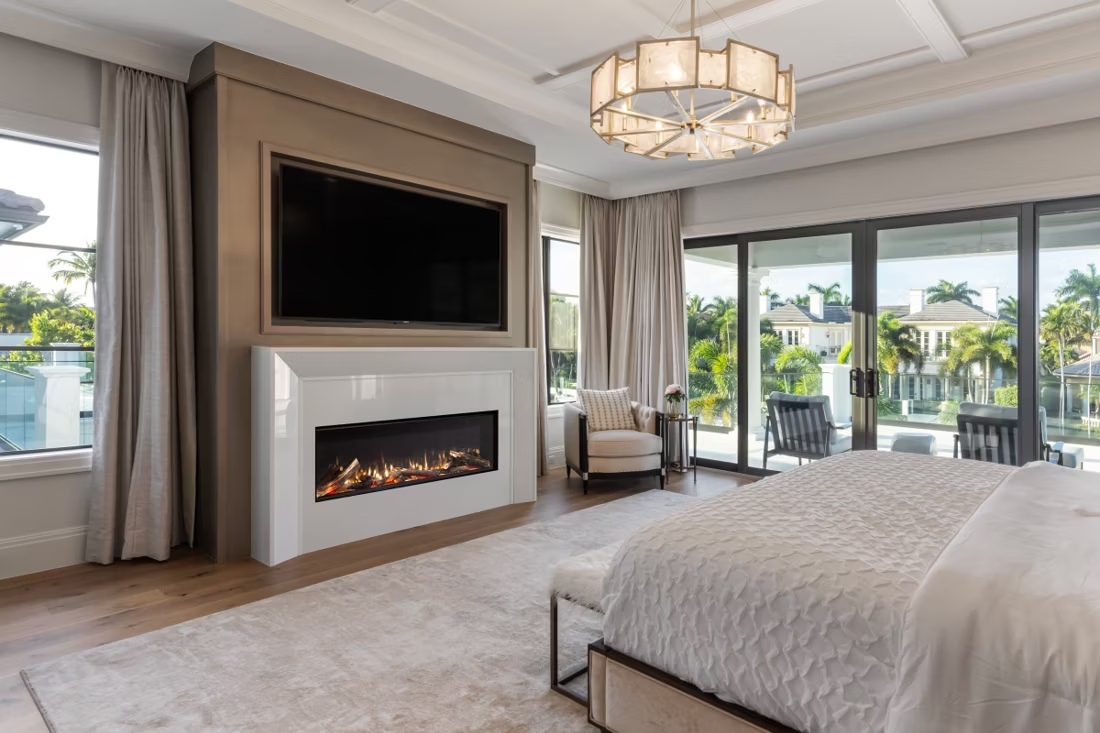
Yes—with an asterisk. Fireplaces are hot and TVs don't like heat. Either put a mantel between them to deflect rising warmth, or choose a fireplace with heat-management technology that creates a cool zone on the wall above—the wall stays around 125 degrees, barely warm, while the room still gets full heat. If you like clean lines and don't want a mantel, heat management is the answer.
How much should I budget for a fireplace?
For an average home—covering the fireplace, the vent pipe, and basic installation—a budget between $3,900 and $5,500 gives you a lot of options across wood, gas, and pellet. By the time you add finish work, gas line, and electrical, the average complete installation lands between $5,000 and $12,000 all-in. In a remodel or new build, a good rule is to put about 2.5% of the total project cost toward the fireplace.
Does a fireplace add value to my home?
On average, a fireplace adds back to the home about the same amount you spent installing it. Add the monthly savings from heating the rooms you actually use instead of the whole house—often hundreds of dollars a year—and the value case is strong before you even count what a fire does for how your family uses the room.
Find your electric fireplace in Thomas County.
Tell us a bit about your home and we'll put together a free Project Guide & Parts List—the right electric fireplace for your space, matched with a trusted local dealer who can get it installed right.
Find Your Fireplace →