
Warm up your Sioux County ranch home without new gas lines or a chimney.
With just 241 residents spread across nearly 2,000 square miles of high-plains ranch country near the Wildcat Hills and Pine Ridge escarpment, Sioux County homes need heat that doesn't depend on a gas main or a masonry chimney. Find the right electric unit and connect with a trusted local dealer.
Every Project Starts From One of These Five Situations
Instant heat, zero venting, built for the high plains.
Sioux County sits in Nebraska's far northwestern panhandle, bordering Wyoming and South Dakota, with elevations near 4,600 feet around the county seat of Harrison. It's a Zone 5A climate—cold winters, sharp wind chill off the escarpment, and a landscape of scattered ranches rather than dense neighborhoods. There is no incorporated town of any real size besides Harrison itself, and most homes in the county are older ranch houses, mobile homes, or additions built well outside city limits.
Natural gas mains don't reach most of Sioux County, and propane deliveries can mean a wait on the county's back roads in bad weather. Electric service, on the other hand, already runs to nearly every ranch and home through the local rural electric cooperative, which makes electric fireplaces a genuinely practical option here—no propane tank, no flue, no wood to split and haul. They're a common choice for additions, guest rooms, converted outbuildings, and mobile homes where running new gas line or masonry venting isn't realistic, and they pair well with the wood or propane heat many ranch homes already rely on for the coldest stretches of a Panhandle winter.
Three steps. No salesperson until you're ready.
Tell us about your project
Your zip code, your situation, and the fuel you're leaning toward—or let the answers point you to one.
See what's actually available
The brands dealers within 100 miles genuinely carry—real options, never a catalog mirage.
Get your dealer & Project Guide
A trusted local dealer, plus the free Project Guide & Parts List that names every component of the job.
Frequently Asked Questions
How much does an electric fireplace installation cost in Sioux County?
A plug-in electric fireplace or insert that uses an existing standard outlet typically runs $400 to $1,200 installed, including the unit and any surround or mantel work. Built-in electric fireplaces that require a dedicated 240-volt circuit—common for larger units meant to serve as real supplemental heat in a Sioux County ranch home—run higher once an electrician runs new wiring, often $1,200 to $2,500 depending on how far the circuit has to travel from the panel. Given the distances between properties out here, expect a modest trip charge from installers based in Harrison or nearby panhandle towns.
What size electric fireplace do I need for my home?
Most electric fireplaces are rated for supplemental zone heating rather than whole-house heat, typically covering 400 to 1,000 square feet per unit depending on wattage and insulation. For the older, often less-insulated ranch homes common in Sioux County, plan on the higher end of a unit's rated range, and consider two smaller units—one for the main living area and one for a bedroom wing—rather than a single large unit trying to cover an entire farmhouse. A local dealer can walk through your floor plan and electrical panel capacity before you buy.
Where can I find electric fireplace dealers near me in Sioux County?
With only Harrison as a town of any size in the county, most Sioux County homeowners end up working with a hearth dealer or licensed electrician based in a larger panhandle community and traveling out for install day. That's normal for this part of Nebraska—expect to schedule a bit further ahead than you would in a city, and factor a trip charge into your quote. The advantage is that electric installs are far less labor-intensive than wood or gas work, so even a dealer coming from out of county can usually complete a standard install in a single visit.
What's the difference between an electric fireplace, insert, and wall-mounted unit?
An electric insert is built to slide into an existing fireplace opening—a good option if a Sioux County home has an old, rarely-used wood fireplace that the owners want to convert to something simpler to operate. A freestanding or mantel-style electric fireplace stands on its own and can go anywhere near an outlet, which suits additions or rooms without an existing hearth. A wall-mounted unit hangs flush like a piece of art and is popular in smaller ranch-house living rooms or bedrooms where floor space is tight. All three plug in or hardwire, and none require venting of any kind.
Do I need a permit to install an electric fireplace in Sioux County?
A simple plug-in electric fireplace that uses an existing outlet generally doesn't require a permit. If your unit needs a new dedicated circuit—which is common for larger built-in models—the electrical work itself typically requires a permit pulled by a licensed electrician, coordinated through the Sioux County building office. Since there's no local gas line or venting work involved, this is by far the simplest permitting process of any fireplace fuel type in the county.
Will my electric fireplace work if the power goes out?
No—and this matters more in Sioux County than in most places. Winter storms on the high plains can knock out rural electric service for hours or longer, and response times from volunteer fire and utility crews can stretch given how spread out the county is. An electric fireplace is a great choice for everyday supplemental heat and ambiance, but most Sioux County homes still keep a wood stove, fireplace, or propane appliance as backup heat for outages—electric alone isn't a safe bet as your only heat source out here.
How much maintenance does an electric fireplace need?
Very little. There's no chimney to sweep, no venting to inspect, and no gas line to service. Maintenance is mostly dusting the unit, occasionally cleaning the glass front, and replacing the heater fan or LED ember bed components if they eventually wear out—usually after many years of use. This low-maintenance profile is one of the reasons electric units make sense for seasonal or vacation properties in the county, where nobody is checking on the house every week.
Can an electric fireplace look like a real wood fire?
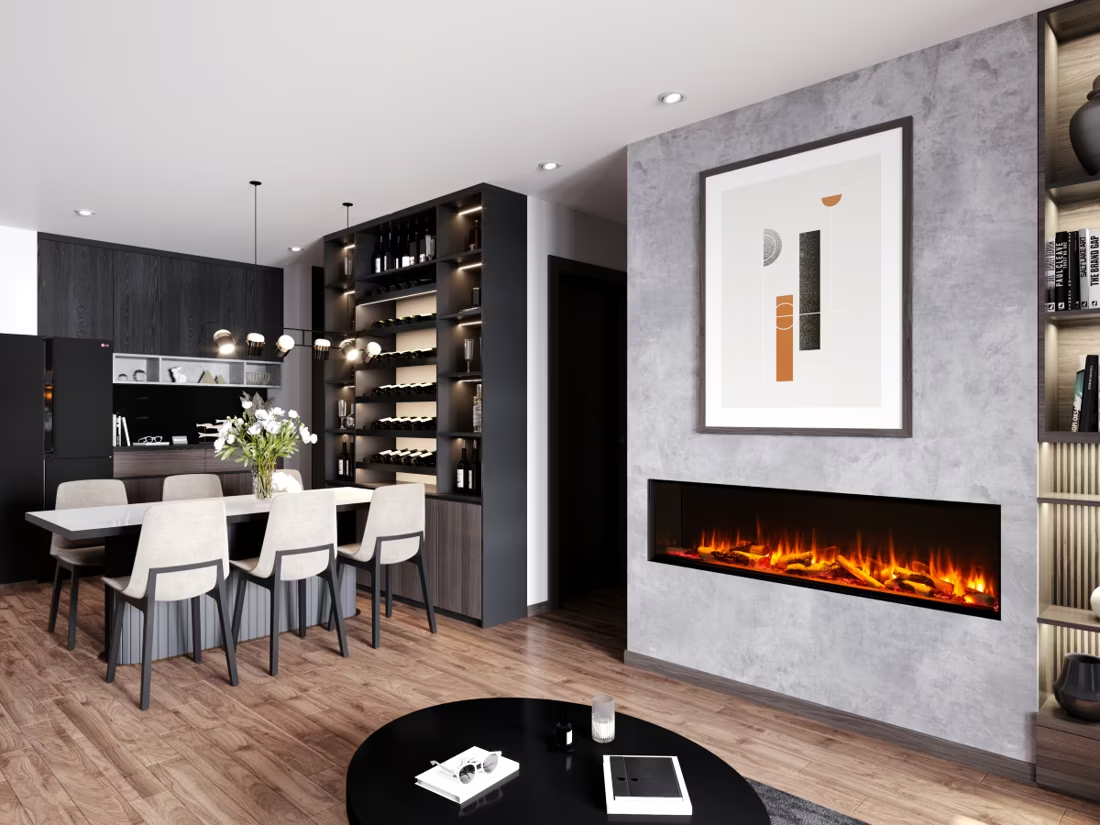
Modern electric units have come a long way—LED flame technology and realistic log sets styled after oak or hickory, the same species common in Sioux County's cottonwood-lined draws and ranch woodlots, can convincingly mimic a wood fire's movement and glow without any smoke, ash, or actual combustion. They won't throw the same radiant heat as a loaded wood stove, but for ranch homes wanting fire ambiance in a room that doesn't need major heat output, they're a close visual match with none of the upkeep.
Electric vs. wood vs. propane—which is right for my Sioux County home?
Wood—burning local oak, hickory, or cottonwood—remains the most reliable heat source during outages and the cheapest fuel if you're cutting your own, and Sioux County has no air quality restrictions or burn curtailment schedule to work around. Propane offers instant heat without wood handling but depends on tank delivery across long rural routes. Electric fireplaces are the easiest to install and maintain, work well as supplemental heat or ambiance in rooms without a chimney, and avoid the pellet fuel logistics that come with brands like Lignetics or Indeck Energy Services—but they're not a substitute for backup heat when the power's out. Many Sioux County homes end up with two of the three: wood or propane for reliability, electric for convenience in a secondary room.
Does an electric fireplace need a vent or chimney?
No—that's its superpower. An electric fireplace needs a wall and an outlet, period. No vent pipe, no gas line, no clearances to design around, which is why it works in bedrooms, offices, apartments, and walls where venting a gas or wood unit would be impractical or impossible. Installation is typically the simplest and least expensive of any fireplace type.
Can I put a TV above my fireplace?
Yes—with an asterisk. Fireplaces are hot and TVs don't like heat. Either put a mantel between them to deflect rising warmth, or choose a fireplace with heat-management technology that creates a cool zone on the wall above—the wall stays around 125 degrees, barely warm, while the room still gets full heat. If you like clean lines and don't want a mantel, heat management is the answer.
Can I install a fireplace myself?
If you're putting a fire in your house on purpose, it's best to work with an expert. Unless you're genuinely experienced in framing, gas line, vent pipe, and the national code on clearances to combustibles, have a professional do it—and ideally the same company that sells you the fireplace, so warranty, service, and liability all live under one roof.
What is an in-home preview and do I need one?
It's a visit where a hearth professional measures your space, confirms the model you picked actually works in your home, and walks the specs—framing, gas line, venting, finish work—before anything is ordered. Some details you just can't know until you see the house. Never make a down payment without one; it's the single most-skipped step that burns buyers.
Find your electric fireplace in Sioux County.
Tell us a bit about your home and we'll put together a free Project Guide & Parts List for your Sioux County electric fireplace project—the right unit, the exact parts, and a matched local dealer to handle the install.
Find Your Fireplace →