
Reliable Heat for Nebraska's Largest, Least-Populated County.
Wood, gas, pellet, and electric fireplace resources for Harrison and the ranches scattered across nearly 2,000 square miles of Sioux County. Find the right unit for the Panhandle and connect with a dealer who actually makes the drive out here.
Every Project Starts From One of These Five Situations
Heating the Pine Ridge country of Nebraska's biggest county.
At roughly 2,067 square miles, Sioux County is the largest county in Nebraska by land area—and, with a population of 241, one of the smallest by headcount. The land climbs out of the plains into the Pine Ridge escarpment, with buttes and canyons around Agate Fossil Beds National Monument sitting at 4,000 to 5,000 feet. Winters here sit in climate zone 5A, with wind-driven cold that runs closer to Bismarck, North Dakota than to the rest of the Nebraska plains. Cottonwood grows along the White River drainages, while oak and hickory show up in sheltered canyon draws—all three are burned locally, often self-cut from private ranch ground or under a cutting permit through the Pine Ridge Ranger District, which manages the Oglala National Grassland that covers much of the county.
What you'll find on this hub: hearth retailers, service technicians, and fuel suppliers willing to serve a county this remote—most based out of Chadron or Scottsbluff, since Sioux County itself has no hearth showroom of its own. Pick your fuel below for local dealer coverage, installation costs, and recommended units, whether you're heating a ranch house on the Wyoming line or a home in Harrison, the county seat.
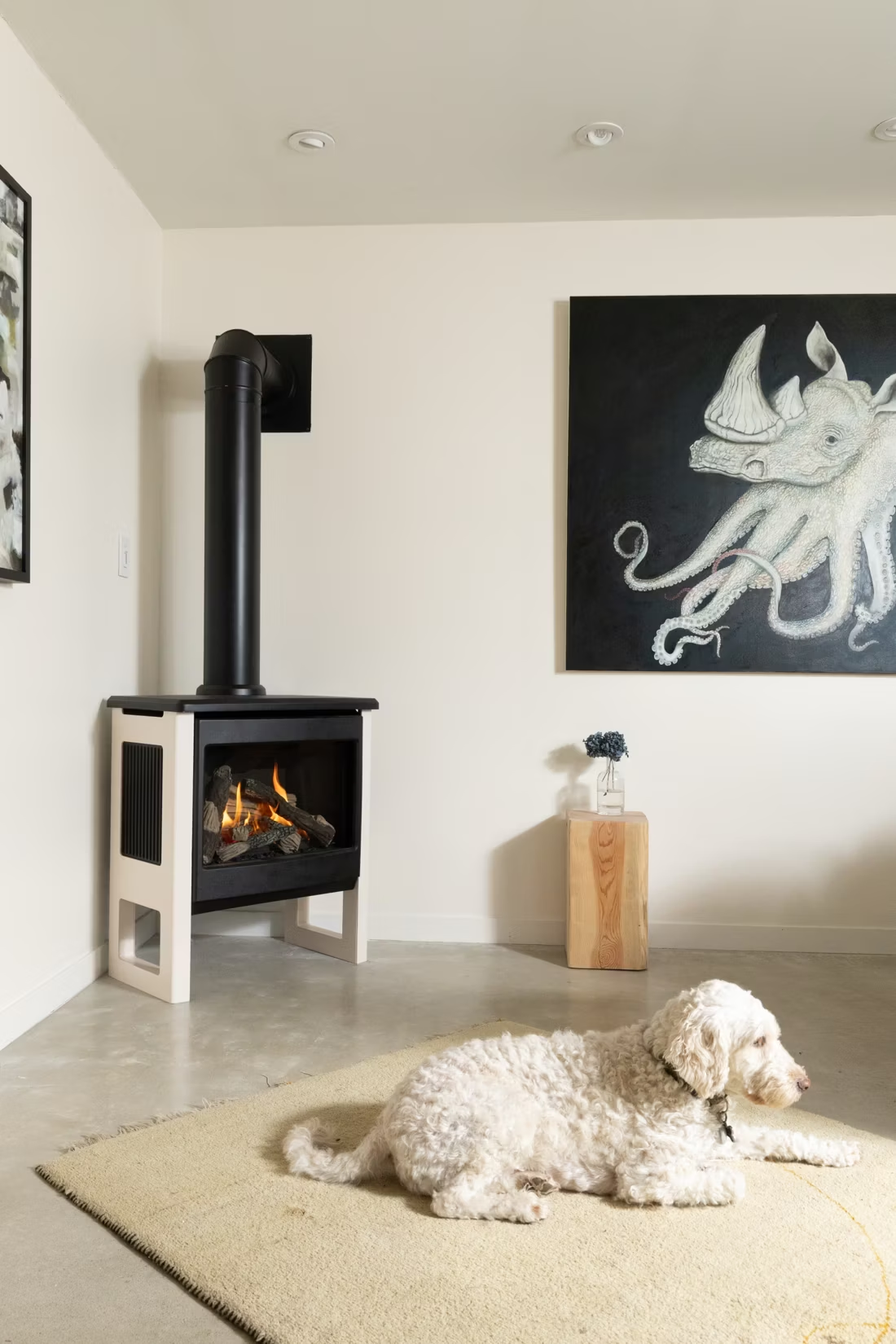
Four fuels. One honest answer for Sioux County.
Three steps. No salesperson until you're ready.
Tell us about your project
Your zip code, your situation, and the fuel you're leaning toward—or let the answers point you to one.
See what's actually available
The brands dealers within 100 miles genuinely carry—real options, never a catalog mirage.
Get your dealer & Project Guide
A trusted local dealer, plus the free Project Guide & Parts List that names every component of the job.
Frequently Asked Questions
Which fuel makes sense for a home in Sioux County?
Wood remains the backbone fuel for most ranch homes here—cottonwood cut along the White River drainages and oak or hickory pulled from canyon draws, often under a Forest Service cutting permit through the Pine Ridge Ranger District, which oversees the Oglala National Grassland covering much of the county. A catalytic wood stove that holds an overnight burn matters when the nearest neighbor, let alone a repair crew, is miles away. Propane is the standard 'gas' option since there's no natural gas main running through most of the county—propane fireplaces and inserts give instant heat without hauling wood, and tanks can be sized for weeks of backup fuel. Pellet stoves are workable for homes willing to keep a stock of Lignetics or similar bagged pellets on hand, since in-county retail supply is thin. Electric units are best treated as supplemental—good for a spare bedroom or a cabin, not something to lean on through a Panhandle blizzard when the co-op line goes down along with everything else.
Do I need a building permit to install a wood stove or fireplace in Sioux County?
Outside the town limits of Harrison, Sioux County does not enforce a countywide building code requiring permits for hearth appliance installation—common for rural Nebraska counties this sparsely populated. Inside Harrison's town limits, basic local building requirements still apply, and it's worth checking with the town clerk before work starts. Permit or not, any wood-burning appliance installed new should still meet EPA 2020 NSPS emissions standards, and a competent local installer will size the flue and clearances correctly regardless of whether a county inspector ever shows up to check it.
Are there wood-burning restrictions or air quality concerns in Sioux County?
No—Sioux County has none of the winter inversion or non-attainment issues that trigger burn advisories in tighter basin geographies elsewhere in the West. The open, windswept high plains and Pine Ridge terrain don't trap wood smoke the way a low valley does, so there's no local advisory system or voluntary curtailment program to track here. That said, a properly sized and EPA-certified stove still burns cleaner and uses less wood per BTU, which matters when your fuel supply is whatever you cut and hauled yourself.
What does installation cost across fuel types in Sioux County?
Costs here run at or slightly above typical rural Nebraska pricing, mostly because of the added travel from Chadron or Scottsbluff. Wood stove or insert installs generally run $4,500–$9,500, more if new chimney work is needed for a ranch house without existing masonry. Propane fireplaces, inserts, or stoves run $4,500–$10,000 depending on tank setup and line work—homes already on a propane tank see costs at the lower end. Pellet stoves or inserts typically run $4,500–$7,500. Electric units range from $200–$3,000 for the unit itself, plus $400–$1,200 in labor for anything beyond a plug-and-play wall mount. Ask your dealer whether the quote includes the drive time—for a county this size, it often shows up as a separate line item.
How does service scheduling work when the nearest technician is an hour away?
Most chimney sweeps and gas technicians serving Sioux County are based in Chadron or Scottsbluff and build Harrison-area and ranch calls into a set route rather than driving out on demand. Expect a trip fee, often $50–$100, and plan on booking your annual sweep or gas inspection in late summer or early fall—appointments tighten up fast once the first cold snap hits and everyone in the Panhandle calls at once. For ranch properties, it's worth keeping a spare igniter or battery pack for a propane IPI unit on hand, since a service call during a January storm may not be a same-week fix.
Is propane delivery reliable enough to rely on through a Sioux County winter?
Generally yes, but timing matters more here than in town. Rural propane delivery routes across the Panhandle can get delayed by the same snow and wind events that make roads impassable for a day or two at a time—the kind of weather that hits harder here than in most of the rest of Nebraska, closer to what Bismarck, North Dakota sees most winters. Homeowners on propane heat typically keep their tank topped off well before the first hard freeze rather than waiting for a low-level alert, and many pair a propane fireplace or stove with a backup wood-burning unit precisely so a delayed delivery or a downed co-op line doesn't mean a cold house.
What is an in-home preview and do I need one?
It's a visit where a hearth professional measures your space, confirms the model you picked actually works in your home, and walks the specs—framing, gas line, venting, finish work—before anything is ordered. Some details you just can't know until you see the house. Never make a down payment without one; it's the single most-skipped step that burns buyers.
Does a fireplace add value to my home?
On average, a fireplace adds back to the home about the same amount you spent installing it. Add the monthly savings from heating the rooms you actually use instead of the whole house—often hundreds of dollars a year—and the value case is strong before you even count what a fire does for how your family uses the room.
Can I install a fireplace myself?
If you're putting a fire in your house on purpose, it's best to work with an expert. Unless you're genuinely experienced in framing, gas line, vent pipe, and the national code on clearances to combustibles, have a professional do it—and ideally the same company that sells you the fireplace, so warranty, service, and liability all live under one roof.
Can a fireplace actually lower my heating bill?
Yes—by creating a comfort zone. A furnace heats every square foot of the house just to warm the one room you're in; a gas fireplace on low burns roughly a sixth of the gas a typical furnace does. Set the furnace around 55–60 degrees as a baseline, then heat the rooms your family actually uses. Families who heat this way commonly save $20–$60 a month.
Stove and Fireplace Dealers in Sioux County
Listings include WhyFire partner dealers, dealers we have verified as authorized for the brands we recommend, and established local businesses that carry hearth products. Every listing shows which one it is. The ones marked Preferred run on WhyFire's software, so they can show you real pricing and book your appointment right here. No manufacturer pays for placement. How we verify dealers →
Flannel Brothers
Carr Trumbull Lumber
Metal Products
Johnson Cashway Building And Design Center
Find your fireplace in Sioux County.
Get matched with a trusted local dealer serving Harrison and the ranch country around it, plus a free Project Guide & Parts List with the exact parts—including the vent kit—for your fuel and your home.
Find Your Fireplace →