
Steady, thermostat-controlled heat for Sheridan County's long winters.
With winters comparable to Madison, Wisconsin and average winter lows around 13°F, Sheridan County ranches and farmhouses need heat that doesn't quit. A pellet stove gives you set-it-and-forget-it warmth between chores—matched with a local dealer who'll size and install it right.
Every Project Starts From One of These Five Situations
Consistent heat without another propane refill.
Sheridan County is Nebraska Panhandle ranch country—Rushville as the county seat, with Gordon, Hay Springs, and Clinton spread across roughly 2,400 square miles and just over 3,400 residents. That kind of density means long drives between neighbors, and it means winter matters. With an average winter low near 13°F and a cold season comparable to Madison, Wisconsin, the county's winters are long, steady, and not particularly forgiving of an underpowered heat source.
Most rural homes here run on propane furnaces, since natural gas mains don't reach far outside the towns. A pellet stove doesn't replace that furnace, but it takes real pressure off it—heating the kitchen and living room directly during the coldest stretches so the propane tank isn't working overtime. Local hardwoods like oak, hickory, and cottonwood line the county's draws and river bottoms and remain the backbone of traditional firewood use, but for pellet fuel, most Sheridan County households order by the ton or pallet from regional mills such as Lignetics and Indeck Energy Services rather than relying on a single in-town retailer. With no local non-attainment or burn-ban designations to work around, pellet appliances here run without curtailment restrictions—one less thing to manage during a Panhandle cold snap.
Three steps. No salesperson until you're ready.
Tell us about your project
Your zip code, your situation, and the fuel you're leaning toward—or let the answers point you to one.
See what's actually available
The brands dealers within 100 miles genuinely carry—real options, never a catalog mirage.
Get your dealer & Project Guide
A trusted local dealer, plus the free Project Guide & Parts List that names every component of the job.
Frequently Asked Questions
How much does a pellet stove installation cost in Sheridan County?
Expect a typical pellet stove installation to run in the $3,500 to $6,500 range, depending on whether the unit vents through an existing masonry chimney, a wall, or requires new roof penetration. Homes with an existing fireplace opening for a pellet insert tend to land on the lower end; a freestanding stove in a new location—say, a shop or addition without existing venting—runs higher once you factor in the dedicated electrical outlet the hopper motor and blower require. Because Sheridan County's population is small and spread out, most licensed installers are based in nearby hub towns like Chadron or Alliance and travel into the county, so ask about a trip charge when you get your quote.
Pellet stove or propane furnace—which should heat my Sheridan County home?
They're not really competing for the same job. A propane furnace is built to heat the whole house and is the standard system on most rural Sheridan County properties, since natural gas lines don't extend far past Rushville, Gordon, and Hay Springs. A pellet stove is a zone heater—it warms the room it's in extremely well, at a lower cost per BTU than propane in a lot of winters, and lets you turn the furnace down during the parts of the day people are actually home. The tradeoff is that a pellet stove needs continuous electricity to run its auger and combustion blower, so it isn't a standalone backup during a power outage the way a wood stove is. Most homeowners here run both: propane for baseline heat, pellet for the living space where people spend their evenings.
What size pellet stove do I need for a Sheridan County farmhouse?
Sizing depends more on how the house is built than on square footage alone. A lot of Sheridan County's older farmhouses were built well before modern insulation standards, so a stove rated for 1,500 square feet on paper may only comfortably cover 1,000 to 1,200 square feet of an older, drafty structure—especially with the wind exposure common across the Panhandle's open ground. For a well-sealed newer home or a single large living area, a mid-size stove with a 40-60 lb hopper is usually enough to run 24-36 hours between refills. For a bigger farmhouse or a shop conversion, size up and look for a larger hopper so you're not refilling multiple times a day during a stretch of sub-zero nights. A local dealer sizing your specific home will get this right faster than any online calculator.
Where do Sheridan County residents buy pellet fuel?
Because the county's population is under 3,500 and spread across small towns, there isn't a pellet retailer on every corner—most households buy by the ton, either through a dealer who stocks pallets or through direct order from regional mills like Lignetics and Indeck Energy Services, both of which supply the broader Nebraska and Great Plains market. Buying a season's supply at once and storing it dry in a shop or garage is the norm here rather than picking up a few bags at a time. Ask your installer where they source their pellets and whether they can arrange a bulk delivery—many do this as part of the sale.
Do I need a permit to install a pellet stove in Sheridan County?
Most new solid-fuel appliance installations require a building permit, and in a county this rural that typically means a call to the Sheridan County zoning or building office in Rushville rather than a city building department, since most of the county is unincorporated. The permit process mainly confirms proper clearances and venting, since pellet stoves use a mechanical vent rather than a traditional masonry chimney. Most local installers handle this paperwork themselves as part of the installation, so it's worth confirming with your dealer up front whether permitting is included in their quote.
What's the best pellet stove for a climate like Sheridan County's?
With winter lows averaging around 13°F and a heating season that runs long, look for a stove with a larger hopper capacity—60 lbs or more—so overnight burns don't require a middle-of-the-night refill. Brands like Harman, Quadra-Fire, and Lopi build models specifically rated for extended run times and consistent heat output in cold-climate use, and most offer thermostat-controlled models that modulate output automatically as outdoor temperatures swing. Given the wind exposure typical of open Panhandle ranch country, ask your dealer about the stove's outside air kit—it helps combustion stay consistent even on gusty days that can otherwise disrupt draft.
How often does a pellet stove need to be cleaned and serviced?
Plan on a full professional service once a year, ideally before the heating season starts in the fall, along with regular homeowner maintenance—emptying the ash pan every few days during heavy use and wiping down the glass. Hardwood pellets, which are common in this region given the local oak and hickory supply, tend to produce a bit more ash than premium softwood pellets, so heavy users may want to check the ash pan more frequently during the coldest months. An annual service should include cleaning the exhaust fan, checking the auger motor, and inspecting the venting for any blockage—critical in a county where a stove is often running nearly nonstop for months at a time.
What happens to my pellet stove during a power outage?
It stops working. Pellet stoves rely on electricity to run the auger that feeds fuel and the blower that pushes heat into the room, so a power outage shuts the unit down regardless of how much fuel is in the hopper. This matters in Sheridan County, where winter storms can knock out rural power lines for hours or longer. Some homeowners pair their pellet stove with a small battery backup or a portable generator sized to run the stove's low-draw electronics, which keeps the heat going through most outages. If uninterrupted backup heat during outages is your top priority, a wood stove burning local oak or hickory is worth considering alongside—or instead of—a pellet unit.
Pellet stove or wood stove—which fits Sheridan County better?
Wood stoves run entirely off-grid, which matters during the power outages that come with Panhandle winter storms, and local oak, hickory, and cottonwood are readily available as firewood across the county. Pellet stoves trade that off-grid independence for convenience—load the hopper, set the thermostat, and walk away, with less ash and a cleaner burn overall. Since Sheridan County has no air quality restrictions or burn curtailment periods to navigate, the choice really comes down to lifestyle: households that already process their own firewood tend to stick with wood, while those without the time or equipment for that lean toward pellet. A number of local dealers carry both, so it's worth discussing your specific routine with them before deciding.
How often does a pellet stove need cleaning?
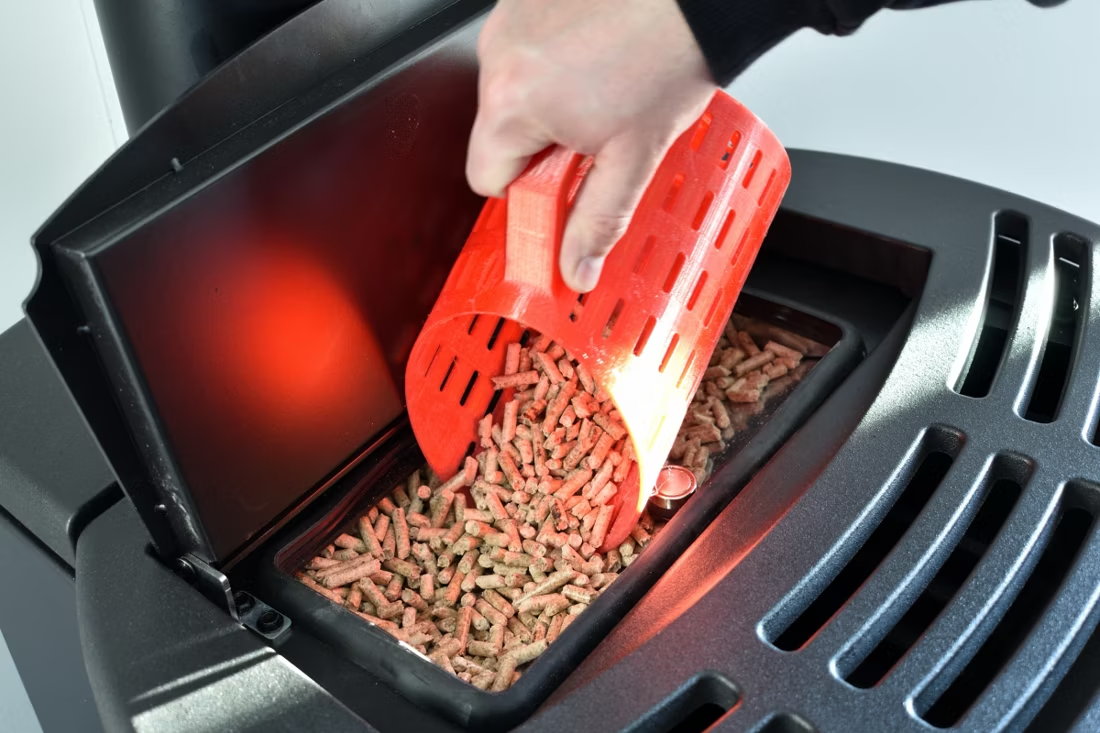
A clean pellet stove is a happy pellet stove. Plan on cleaning the burn pot about once a week when you're burning regularly—ash and clinkers gum up the air holes just like a pellet barbecue. Most pellet stove problems trace back to skipped cleaning that nobody explained up front. Some designs make it easy with a trapdoor burn pot: pull a lever and the gunk drops into the ash pan.
Why is my open fireplace making my house colder?
Open fireplaces suck—literally. As the fire burns, it consumes air your furnace already paid to heat and pulls it out through the chimney, so the house is actually colder after the fire goes out than before you lit it. An insert fixes this: it seals the chimney, puts fixed glass across the front, and turns that hole in your house into a real heat source.
Can a fireplace actually lower my heating bill?
Yes—by creating a comfort zone. A furnace heats every square foot of the house just to warm the one room you're in; a gas fireplace on low burns roughly a sixth of the gas a typical furnace does. Set the furnace around 55–60 degrees as a baseline, then heat the rooms your family actually uses. Families who heat this way commonly save $20–$60 a month.
What is an in-home preview and do I need one?
It's a visit where a hearth professional measures your space, confirms the model you picked actually works in your home, and walks the specs—framing, gas line, venting, finish work—before anything is ordered. Some details you just can't know until you see the house. Never make a down payment without one; it's the single most-skipped step that burns buyers.
Pellet Brands Stocked Around Sheridan County
Manufacturers will point you to the nearest stocking dealer.
Find your pellet stove in Sheridan County.
Tell us about your home and we'll match you with a trusted local dealer and put together your free Project Guide & Parts List—the exact equipment, venting, and installation plan for a pellet stove built for Sheridan County's long, cold winters.
Find Your Fireplace →