
Steady heat for Republican River valley winters.
With a heating season in the same range as Buffalo, NY and winter lows averaging 16°F, Red Willow County homes need appliances that run every day from October through April, not just for weekend ambiance. I'll match you with a trusted local dealer who knows whether your address falls inside Black Hills Energy's natural gas footprint or out on propane.
Every Project Starts From One of These Five Situations
Heat that keeps up with a 5,800-degree-day winter.
Red Willow County sits in the Republican River valley of southwest Nebraska, anchored by McCook and home to about 8,481 people spread across farms, ranches, and a handful of small towns like Indianola and Bartley. In climate zone 5A, with a long, steady heating season and winter lows that average 16°F, the cold season here runs long and steady rather than dramatic—closer to a Buffalo, NY winter than the deep-freeze extremes farther north. Wood heat has a real place in this county, with oak, hickory, and cottonwood available from river-bottom timber and farm woodlots, but for daily heating in a main living space, gas has become the practical default for most homeowners here.
Natural gas service through Black Hills Energy reaches McCook and the immediate surrounding area, so a home already on that line can add a gas fireplace or insert without much extra infrastructure. Outside town—across the county's farmland and along the river toward Bartley, Danbury, and Lebanon—propane from a regional bulk supplier is the standard fuel, either off an existing tank shared with a furnace or a new tank set for the fireplace. Red Willow County has no air quality non-attainment designation or winter inversion concerns, so the choice between gas and wood here comes down to convenience, upfront cost, and daily use rather than any burning restriction—which is one reason a direct-vent gas unit is such an easy sell for a primary living area.
Three steps. No salesperson until you're ready.
Tell us about your project
Your zip code, your situation, and the fuel you're leaning toward—or let the answers point you to one.
See what's actually available
The brands dealers within 100 miles genuinely carry—real options, never a catalog mirage.
Get your dealer & Project Guide
A trusted local dealer, plus the free Project Guide & Parts List that names every component of the job.
Frequently Asked Questions
How much does a gas fireplace installation cost in Red Willow County?
Most gas fireplace installations in Red Willow County run roughly $3,500 to $9,000. A direct-vent insert dropped into an existing masonry fireplace in a McCook home already on natural gas or an existing propane line tends to land on the lower end. A new direct-vent fireplace for a remodel or new farmhouse build—with framing, venting through an exterior wall, and a fresh gas line run—sits higher. Rural properties that need a new propane tank set or a long gas line run from the meter to the fireplace, common on acreages outside town, can push toward the top of that range once tank delivery and line trenching are added.
Can I convert my existing wood fireplace to gas?
Yes, and it's a common project for older farmhouses and McCook homes with an original masonry fireplace that's seen years of oak, hickory, or cottonwood burned in it. A gas insert drops into the existing firebox and vents through a stainless liner run up the current chimney, so you keep the fireplace opening but gain instant, thermostat-controlled heat instead of managing a wood fire and its ash and creosote. Expect $4,000 to $8,000 depending on whether the home is already piped for gas or propane, and whether the existing chimney needs relining before the liner goes in.
Do I need natural gas, or can I run a fireplace on propane?
Either works—most gas fireplace models can be set up for natural gas or propane with the correct orifice and regulator. Black Hills Energy serves natural gas in and around McCook, so a home already on that line can typically add a fireplace without new fuel infrastructure. Outside city limits, which covers most of Red Willow County's land area, propane from a regional bulk supplier is the standard choice, either drawn off an existing tank shared with the furnace or water heater, or a new tank your propane company sets specifically for the fireplace.
Will my gas fireplace still work if the power goes out?
Most modern gas fireplaces are built to run through an outage, and that matters in a county where ice storms and high plains wind can knock out rural power lines for a day or more. Units with intermittent pilot ignition typically carry a battery backup that kicks in automatically when the power drops. Standing-pilot models, and Valor fireplaces in particular, generate their own electricity through the pilot's thermocouple, so there's no battery to maintain at all. If storm-related outages are a real concern on your property, ask your local dealer to point you toward one of these ignition systems specifically.
What's the difference between a gas fireplace, gas insert, and gas stove?
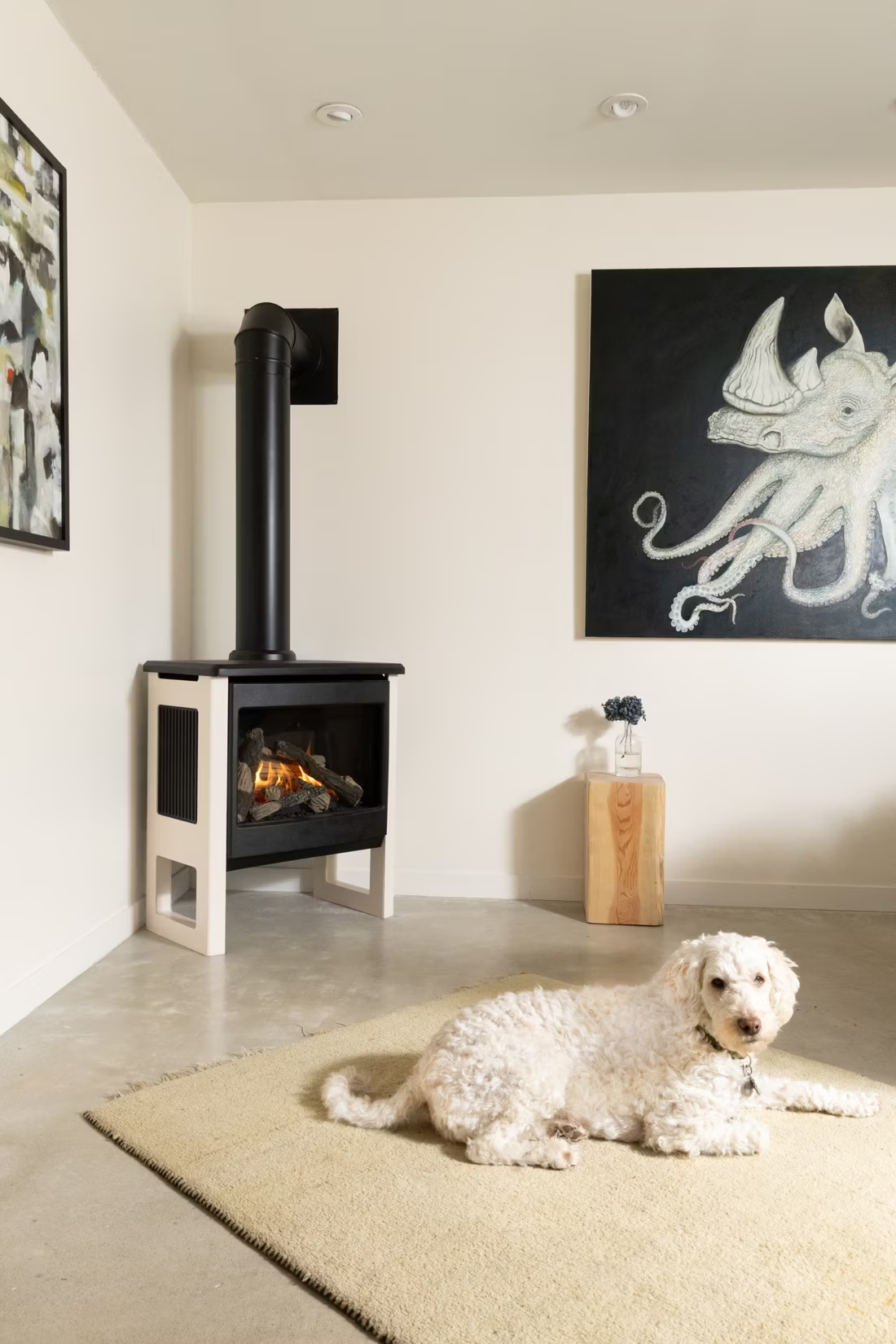
A gas fireplace is a fully built-in unit framed into a wall—the right choice for new construction or a full remodel. A gas insert slides into an existing masonry firebox and uses the existing chimney as its vent path, which is the more common route for older McCook homes upgrading a wood-burning fireplace. A gas stove is a freestanding, cabinet-style unit that sits on the floor like a wood stove but runs on gas—a good option for a room without an existing chimney, or for a manufactured or modular home common on Red Willow County acreages. A local dealer can walk the space and tell you which configuration actually fits.
Do I need a permit to install a gas fireplace in Red Willow County?
Yes. New gas fireplace installations require a building permit through the county's building and zoning office, along with a gas line permit if new piping is involved, whether the home sits in McCook or out in unincorporated county land. The gas line work has to be done by a licensed gas-fitter, which is one good reason to go through a full-service hearth dealer rather than a handyman install—a certified dealer coordinates the gas work, venting, and inspection sign-off as a single job.
Should I choose a vented or vent-free gas fireplace?
Vented, direct-vent gas fireplaces pull combustion air from outside and exhaust it back outside through a sealed pipe, keeping combustion byproducts entirely out of the living space. Vent-free units are legal in Nebraska and burn directly into the room, but they come with strict room-sizing rules and need an oxygen depletion sensor. Red Willow County doesn't have any air quality restrictions the way some western states do, so either option is on the table here—but most local dealers still steer homeowners toward direct-vent for the stronger real-world heat output and the flexibility to place the unit almost anywhere in the home.
How often should a gas fireplace be serviced in Red Willow County?
Plan on an annual inspection, ideally in September before the heating season starts in earnest. A technician checks the burner, pilot assembly, gas connections, and venting, and cleans the glass and interior. It's a quick visit compared to a wood chimney sweep, but still worth doing every year for a unit that may run daily through a long, Buffalo-like winter. A standard annual service call from a local gas appliance technician typically runs $125 to $200.
Gas vs. wood—which makes more sense for a Red Willow County home?
Wood—cut as oak, hickory, or cottonwood from river-bottom timber or a farm woodlot—costs little beyond your own labor and keeps working with no electricity at all, which matters when an ice storm takes down rural power lines. Gas offers instant, thermostat-controlled heat with no ash to manage and no fire to tend, which is why it's become the default for daily heating in most homes here. A fair number of county households run both: gas in the main living area for everyday convenience, wood or even a pellet stove (regional brands like Lignetics and Indeck Energy Services supply the area) as backup heat or for the shop and outbuildings. If your priority is low-maintenance daily warmth, gas is the better starting point.
What's the difference between an insert and a zero-clearance fireplace?
An insert is a fireplace that slides into a pre-existing wood-burning fireplace—if you don't have one, there's nothing to insert it into. A zero-clearance fireplace is built into a framed wall, which makes it the answer for remodels and new construction. Simple test: existing masonry fireplace means insert; blank or framed wall means zero-clearance.
Is my gas fireplace wasting gas?
If it was installed more than 15 years ago, probably. Older gas fireplaces keep a standing pilot light burning all the time, and that little flame can cost a couple hundred dollars a year. Newer models use pilot-on-demand ignition—the pilot lights only when you use the fireplace and goes out when you turn it off.
How much should I budget for a fireplace?
For an average home—covering the fireplace, the vent pipe, and basic installation—a budget between $3,900 and $5,500 gives you a lot of options across wood, gas, and pellet. By the time you add finish work, gas line, and electrical, the average complete installation lands between $5,000 and $12,000 all-in. In a remodel or new build, a good rule is to put about 2.5% of the total project cost toward the fireplace.
What is an in-home preview and do I need one?
It's a visit where a hearth professional measures your space, confirms the model you picked actually works in your home, and walks the specs—framing, gas line, venting, finish work—before anything is ordered. Some details you just can't know until you see the house. Never make a down payment without one; it's the single most-skipped step that burns buyers.
Get your free Project Guide & Parts List for a gas fireplace in Red Willow County.
Tell me a bit about your home—and whether you're on Black Hills Energy natural gas in McCook or propane out in the county—and I'll match you with a trusted local dealer and send over a free Project Guide & Parts List: the exact equipment, vent kit, and recommended installer for your gas project, no big-box guesswork.
Find Your Fireplace →