
Instant heat for Pierce County's long winters.
With average lows near 10°F and a long, demanding heating season stretching most of the year, Pierce County homes need heat that starts the moment you flip a switch. Find the right gas fireplace, insert, or stove, and connect with a trusted local dealer who can size it for your home.
Every Project Starts From One of These Five Situations
Reliable warmth without the wood pile.
Pierce County sits in the rolling farm country of northeast Nebraska, where winter arrives early and stays late. With a long, demanding heating season and average lows around 10°F, the county's climate runs closer to Fargo, ND than to most of the Midwest—long stretches of cold, wind-driven weather that put real demands on a home's heating system. For generations, families here split oak, hickory, and cottonwood from the shelterbelts and river bottoms for wood heat, but a growing share of Pierce County homeowners are turning to gas fireplaces and inserts for the convenience of instant, thermostat-controlled warmth.
In the town of Pierce, many homes are connected to natural gas service, making a direct-vent gas fireplace or insert a straightforward retrofit. Outside city limits, across the farms and acreages that make up most of the county's roughly 4,500 residents, propane tanks are the more common fuel source—and gas fireplaces run just as well on propane as on natural gas. Either way, a properly installed gas fireplace gives you zone heat for the coldest nights, a backup source of warmth when winter storms take down power lines on the open plains, and none of the splitting, stacking, or ash cleanup that comes with wood.
Three steps. No salesperson until you're ready.
Tell us about your project
Your zip code, your situation, and the fuel you're leaning toward—or let the answers point you to one.
See what's actually available
The brands dealers within 100 miles genuinely carry—real options, never a catalog mirage.
Get your dealer & Project Guide
A trusted local dealer, plus the free Project Guide & Parts List that names every component of the job.
Frequently Asked Questions
How much does a gas fireplace installation cost in Pierce County?
Most gas fireplace and insert installations in Pierce County run in the $3,500 to $9,000 range, depending on the unit, whether you're converting an existing wood fireplace, and whether new gas line or propane tank work is needed. A direct-vent insert going into an existing masonry fireplace with gas already run to the house sits toward the lower end. A new built-in fireplace in a remodel—with framing, venting, and a fresh gas or propane line—runs higher. Homes on rural acreages outside the town of Pierce that need a new propane tank set or a longer line run from the tank to the house should expect to be on the higher end of that range. Ask any local dealer for a firm quote after they've seen your home.
Can I convert my existing wood fireplace to gas?
Yes—it's a common project for older farmhouses and homes in and around the town of Pierce that still have a masonry wood fireplace from decades past. A gas insert slides into the existing firebox and vents through the same chimney using a stainless liner, so you keep the look of the fireplace while gaining push-button heat. Whether you're on natural gas in town or propane out on an acreage, most inserts can be configured for either fuel. The conversion typically runs somewhere in the middle of the $3,500-$9,000 installation range, with the final number depending on the insert model and whether your existing chimney needs relining.
Do I need natural gas, or can I run a gas fireplace on propane?
Either works fine. If you're inside the town of Pierce and already on natural gas service for your furnace or water heater, adding a gas fireplace is usually a simple tie-in. If you're out on one of the county's farms or acreages—which is most of Pierce County outside the town itself—propane is the standard choice, either from an existing tank or a new one set by a local propane supplier. Gas fireplace units are built to run on either fuel; your installer just sets the correct orifice and regulator for whichever you have.
Will my gas fireplace still work if the power goes out?
Most will, which matters in a county where winter storms and high plains wind regularly take down power lines. Units with intermittent pilot ignition (IPI) run on a small battery backup that kicks in the moment power drops, so the fireplace lights and operates normally on batteries alone. Valor fireplaces go a step further—the pilot's thermocouple generates its own electricity, so there's no battery to remember or replace. For a rural Pierce County home where an outage might stretch overnight or longer, that kind of self-powered ignition is worth asking your local dealer about.
What's the difference between a gas fireplace, insert, and stove?
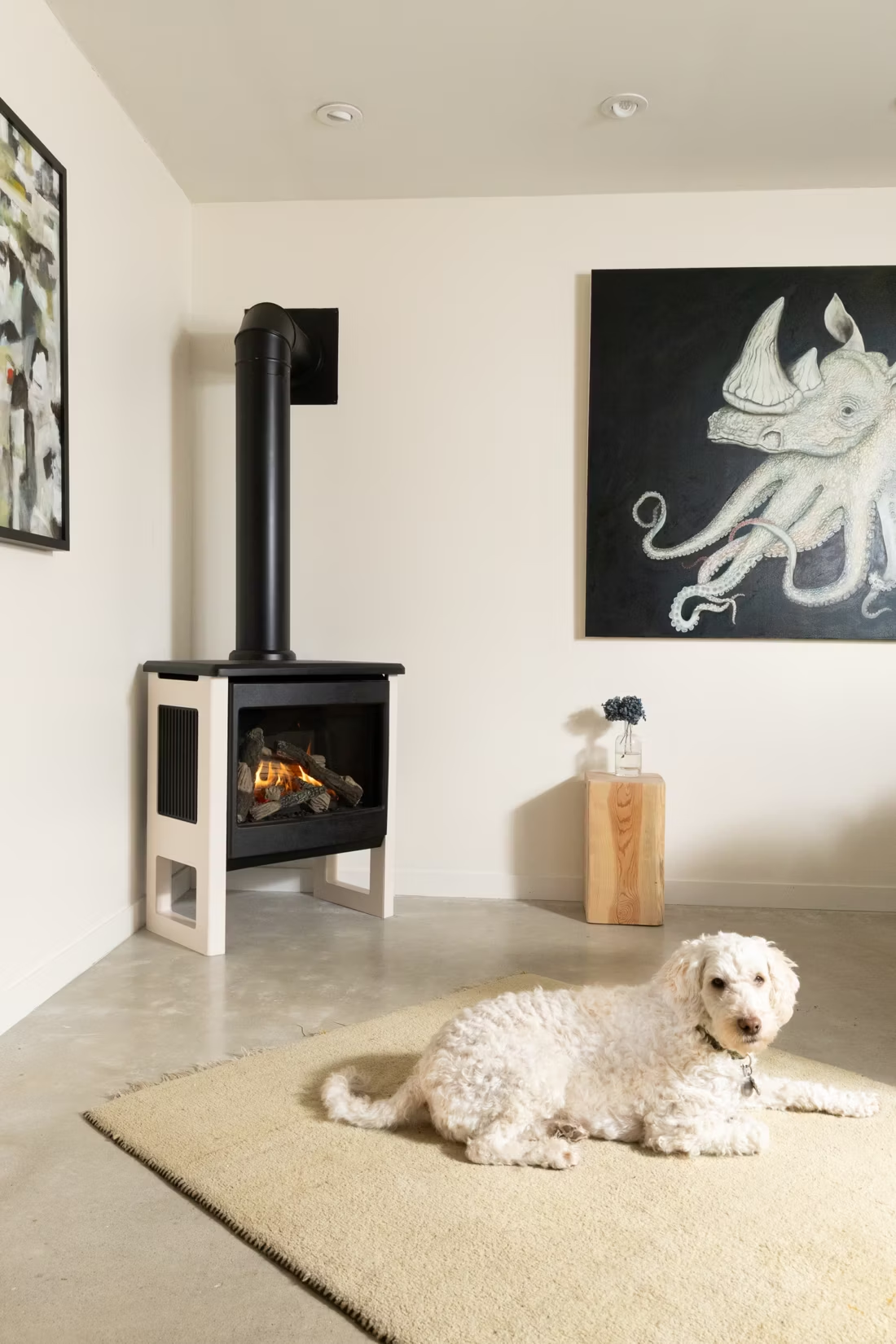
A gas fireplace is a built-in unit framed into a wall, typically chosen for new construction or a remodel. A gas insert is sized to slide into an existing masonry fireplace opening, turning a drafty old wood-burning hearth into a sealed, efficient heat source that vents through the same chimney. A gas stove is a freestanding cabinet-style unit that sits on the floor, similar in footprint to a wood stove, and works well in a room without an existing fireplace. For the older farmhouses and Main Street homes common in Pierce County that already have a masonry fireplace, an insert is usually the most cost-effective upgrade.
Do I need a permit to install a gas fireplace in Pierce County?
Generally yes—a new gas fireplace installation requires a building permit, and any new gas line or propane line work requires a licensed gas-fitter to sign off. Permit requirements are typically administered through Pierce County's building or zoning office, or through the town of Pierce directly if the property is within city limits. Most established hearth dealers handle the permit paperwork as part of the installation, so you're not left coordinating the gas line, the venting, and the inspection separately.
What's the difference between vented and vent-free gas fireplaces?
Vented (direct-vent) gas fireplaces draw combustion air from outside and exhaust the byproducts back outside through a sealed pipe—they're the cleanest, safest, and most widely recommended option, and they deliver real, sustained heat output. Vent-free units burn gas directly into the room without any outside venting; they're legal in Nebraska but release some water vapor and combustion byproducts indoors, and they come with strict room-size and ventilation requirements. For Pierce County's tightly sealed, well-insulated farmhouses built to handle 10°F winter lows, a direct-vent unit is almost always the better call for both heat output and indoor air quality.
How often does a gas fireplace need to be serviced?
Plan on an annual inspection, ideally before the start of heating season. A technician checks the burner, pilot assembly, venting, and gas connections, and cleans the glass and interior—a quick visit that typically runs $150 to $250. It's a lighter lift than the chimney sweeping wood-burning households need every year, but skipping it is still the most common cause of pilot and ignition problems mid-winter, which is the worst time to be without heat in Pierce County.
Gas vs. wood—which is right for my home?
Wood—split from local oak, hickory, or cottonwood—still has a place in Pierce County, especially for households that want a heat source that works with no electricity at all during a plains blizzard, and for those with access to their own timber or shelterbelt wood. Gas wins on convenience: no splitting or hauling, no ash, instant on-off heat, and a consistent output night after night through a long winter that runs from October into April. Many Pierce County homes end up with both—gas as the everyday, whole-house-friendly heat source, and a wood stove or fireplace kept in reserve for true backup. Either way, a local dealer can help you weigh fuel cost, convenience, and reliability for your specific home.
What's the difference between an insert and a zero-clearance fireplace?
An insert is a fireplace that slides into a pre-existing wood-burning fireplace—if you don't have one, there's nothing to insert it into. A zero-clearance fireplace is built into a framed wall, which makes it the answer for remodels and new construction. Simple test: existing masonry fireplace means insert; blank or framed wall means zero-clearance.
Is my gas fireplace wasting gas?
If it was installed more than 15 years ago, probably. Older gas fireplaces keep a standing pilot light burning all the time, and that little flame can cost a couple hundred dollars a year. Newer models use pilot-on-demand ignition—the pilot lights only when you use the fireplace and goes out when you turn it off.
Can a fireplace actually lower my heating bill?
Yes—by creating a comfort zone. A furnace heats every square foot of the house just to warm the one room you're in; a gas fireplace on low burns roughly a sixth of the gas a typical furnace does. Set the furnace around 55–60 degrees as a baseline, then heat the rooms your family actually uses. Families who heat this way commonly save $20–$60 a month.
How much should I budget for a fireplace?
For an average home—covering the fireplace, the vent pipe, and basic installation—a budget between $3,900 and $5,500 gives you a lot of options across wood, gas, and pellet. By the time you add finish work, gas line, and electrical, the average complete installation lands between $5,000 and $12,000 all-in. In a remodel or new build, a good rule is to put about 2.5% of the total project cost toward the fireplace.
Find your gas fireplace in Pierce County.
Tell us a bit about your home and we'll match you with the right gas fireplace, insert, or stove, plus a free Project Guide & Parts List—including the vent kit—from a trusted local Pierce County dealer.
Find Your Fireplace →