
Add real zone heat to a Pierce County home without new venting.
With winters that run closer to Madison, Wisconsin, than to the milder parts of the Plains, an electric fireplace gives a Pierce County living room, bedroom, or farmhouse addition instant supplemental warmth—no chimney, no gas line, no permit headaches. Find the right unit and connect with a trusted local dealer.
Every Project Starts From One of These Five Situations
Simple heat for a county built around rural self-sufficiency.
Pierce County sits in northeast Nebraska's Climate Zone 5A, with a long, hard winter heating season and winter lows that average around 10°F—cold enough that most homes here run a wood stove, propane furnace, or LP system as primary heat, often backed by cordwood cut from local oak, hickory, and cottonwood. In a county of under 4,500 people spread across farms, small towns, and acreages outside Pierce and Osmond, a lot of housing stock is older farmhouses or manufactured homes where extending ductwork to a new room, sunporch, or finished basement isn't practical.
That's where electric fireplaces earn their place. They plug into a standard outlet or, for higher-output models, a dedicated 240V circuit—no masonry, no venting, no gas-fitter. Elkhorn Rural Public Power District serves much of the county's rural service territory, and while electric heat isn't the fuel most Pierce County homeowners lean on to survive a January cold snap (ice on the lines can mean outages, and wood or propane stay the backup of choice for that reason), an electric unit is an excellent, low-cost way to add supplemental warmth and ambiance to a specific room without touching the home's primary heating system.
Three steps. No salesperson until you're ready.
Tell us about your project
Your zip code, your situation, and the fuel you're leaning toward—or let the answers point you to one.
See what's actually available
The brands dealers within 100 miles genuinely carry—real options, never a catalog mirage.
Get your dealer & Project Guide
A trusted local dealer, plus the free Project Guide & Parts List that names every component of the job.
Frequently Asked Questions
How much does an electric fireplace installation cost in Pierce County?
Most electric fireplace projects in Pierce County run well below what a wood or gas installation would cost—typically $300 to $1,800 depending on whether you're installing a simple plug-in insert into an existing mantel opening, a wall-mounted unit, or a built-in model that needs a dedicated 240V circuit run by an electrician. Plug-in units that use a standard 120V outlet require no electrical work at all. Built-in or recessed models drawing more amperage often need a licensed electrician to add a circuit, which is the bulk of the installation cost in a county where most housing stock predates modern electrical panels.
Can an electric fireplace actually heat a room in a Pierce County winter?
Yes, for the room it's in—but it's supplemental heat, not a replacement for your furnace or wood stove. Most electric fireplace inserts put out around 5,000 BTU (roughly 1,500 watts), enough to noticeably warm a bedroom, den, or farmhouse addition, but not enough to carry a whole house through a Pierce County cold snap when lows sit near 10°F. The common pattern here is a wood stove or propane furnace as primary heat, with an electric unit added to a room that's drafty, poorly ducted, or used often enough to justify instant, zone-specific warmth.
Electric vs. wood—which makes more sense for my Pierce County home?
Wood—burned in stoves fed by local oak, hickory, or cottonwood—remains the go-to backup heat source in Pierce County for one big reason: it works when the power doesn't. Rural lines here are exposed to ice storms and high wind, and an electric fireplace, like any electric appliance, goes dark the moment the grid does. Electric wins on convenience, upfront cost, and zero maintenance—no chimney sweep, no ash, no permit. For a primary or backup heat source in a county where outages happen, wood still has the edge. Many households in Pierce County run both: wood for real heat and resilience, electric for ambiance and easy zone warmth in a room the wood stove doesn't reach.
Electric vs. pellet stove—what's the real difference for this area?
Both need electricity to run—a pellet stove's auger and igniter draw power just like an electric fireplace's heating element, so neither is a true outage backup on its own. The difference is heat output and fuel: pellet stoves burn bagged pellets (available regionally from brands like Lignetics and Indeck Energy Services) and can genuinely heat a home through a Pierce County winter, while an electric fireplace tops out around 5,000 BTU and is built for a single room. If you want real whole-home heat with the ease of a thermostat, look at pellet. If you want a clean, install-anywhere accent for a specific room, electric is simpler and far cheaper upfront.
Do I need a permit for an electric fireplace in Pierce County?
Plug-in electric fireplace inserts and freestanding units that use a standard household outlet typically don't require a building permit—there's no venting, no gas line, and no structural change involved. If your unit needs a dedicated 240V circuit, the electrical work itself should be done by a licensed electrician and may require an electrical permit through the county, even though the fireplace installation itself is straightforward. Always confirm with your electrician, since permit requirements can vary between the incorporated towns and unincorporated parts of the county.
What's the best electric fireplace for a cold-climate Nebraska home?
Look for units with a true 5,000 BTU heating element and a thermostat, rather than models sold purely for the flame effect. In a county with such a long, hard winter heating season, you want the heater function to matter, not just the visual. Built-in or wall-recessed models tend to run more efficiently and lose less heat around the frame than freestanding electric stoves. For older farmhouses with drafty additions, a higher-wattage 240V built-in unit will noticeably outperform a small plug-in model—worth the extra electrical work if the room sees regular use.
Is an electric fireplace a good fit for a manufactured or mobile home?
Often, yes. Manufactured and mobile homes are common throughout rural Pierce County, and they present real challenges for wood or gas installations—clearance-to-combustible rules and venting paths get complicated in a manufactured home's construction. Electric fireplaces sidestep almost all of that: no venting, no chimney penetration, no gas line, and most plug-in models are rated for manufactured housing use. That makes electric one of the simplest heating upgrades available for this type of home in the county.
What types of electric fireplaces are available—insert, wall-mount, or freestanding?
Inserts drop into an existing fireplace opening or a mantel surround and are the most common choice for homes with a masonry fireplace that's rarely used. Wall-mounted units hang like a flat-screen TV and work well in rooms without an existing fireplace, including additions or finished basements. Freestanding electric stoves mimic the look of a wood stove and can sit anywhere near an outlet, which makes them a popular option for farmhouse kitchens or dens in Pierce County where a built-in isn't practical. A local dealer can walk through your room's layout and recommend the right format.
Will my electric fireplace work during a rural power outage?
No—electric fireplaces require power to run the heating element, fan, and flame effect, and they'll go dark along with everything else on the circuit. This matters more in Pierce County than in a city, since rural lines served by cooperatives like Elkhorn Rural Public Power District can be slower to restore after an ice storm than in-town service. If backup heat during an outage is a real concern for your household, pair an electric fireplace for everyday convenience with a wood stove or propane heater as your outage-proof fallback—a pattern common in this county's older farmhouses.
Can I put a TV above my fireplace?
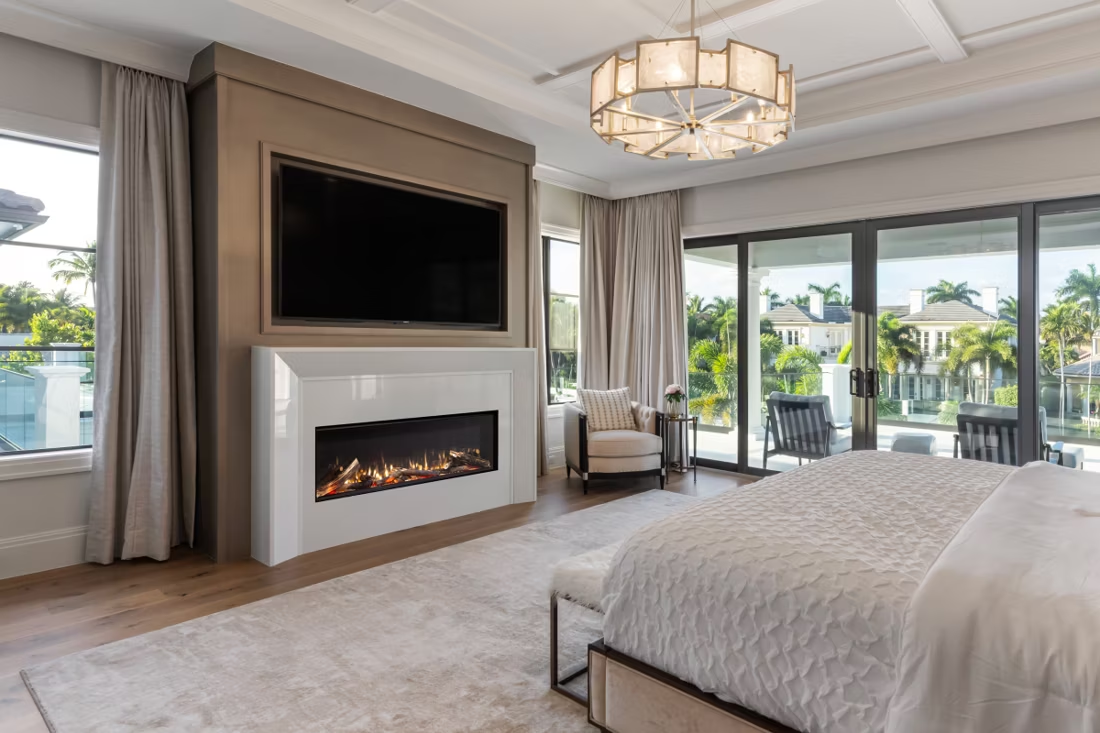
Yes—with an asterisk. Fireplaces are hot and TVs don't like heat. Either put a mantel between them to deflect rising warmth, or choose a fireplace with heat-management technology that creates a cool zone on the wall above—the wall stays around 125 degrees, barely warm, while the room still gets full heat. If you like clean lines and don't want a mantel, heat management is the answer.
Does an electric fireplace need a vent or chimney?
No—that's its superpower. An electric fireplace needs a wall and an outlet, period. No vent pipe, no gas line, no clearances to design around, which is why it works in bedrooms, offices, apartments, and walls where venting a gas or wood unit would be impractical or impossible. Installation is typically the simplest and least expensive of any fireplace type.
Can a fireplace actually lower my heating bill?
Yes—by creating a comfort zone. A furnace heats every square foot of the house just to warm the one room you're in; a gas fireplace on low burns roughly a sixth of the gas a typical furnace does. Set the furnace around 55–60 degrees as a baseline, then heat the rooms your family actually uses. Families who heat this way commonly save $20–$60 a month.
How much should I budget for a fireplace?
For an average home—covering the fireplace, the vent pipe, and basic installation—a budget between $3,900 and $5,500 gives you a lot of options across wood, gas, and pellet. By the time you add finish work, gas line, and electrical, the average complete installation lands between $5,000 and $12,000 all-in. In a remodel or new build, a good rule is to put about 2.5% of the total project cost toward the fireplace.
Find your electric fireplace in Pierce County.
Tell us a bit about your home and we'll match you with the right electric fireplace, insert, or wall unit—plus a free Project Guide & Parts List and a trusted local dealer to install it.
Find Your Fireplace →