
Steady, low-maintenance heat for Nance County winters.
With 6,228 heating degree days and average lows near 14°F, Nance County homes need dependable heat. A pellet stove gives you thermostat-like control without cutting or stacking wood. Get matched with a trusted local dealer.
Every Project Starts From One of These Five Situations
Consistent heat, minimal labor, right for farm-country living.
Nance County sits in climate zone 5A, with roughly 6,228 heating degree days a year and winter lows averaging around 14°F—a season comparable to what you'd see in Madison, WI. That's a real, sustained heating load, not a mild-winter novelty. Plenty of Nance County households already burn oak, hickory, and cottonwood in wood stoves, but not everyone wants to fell, split, and haul cordwood every fall, especially on a working farm schedule where time during harvest and calving season is scarce.
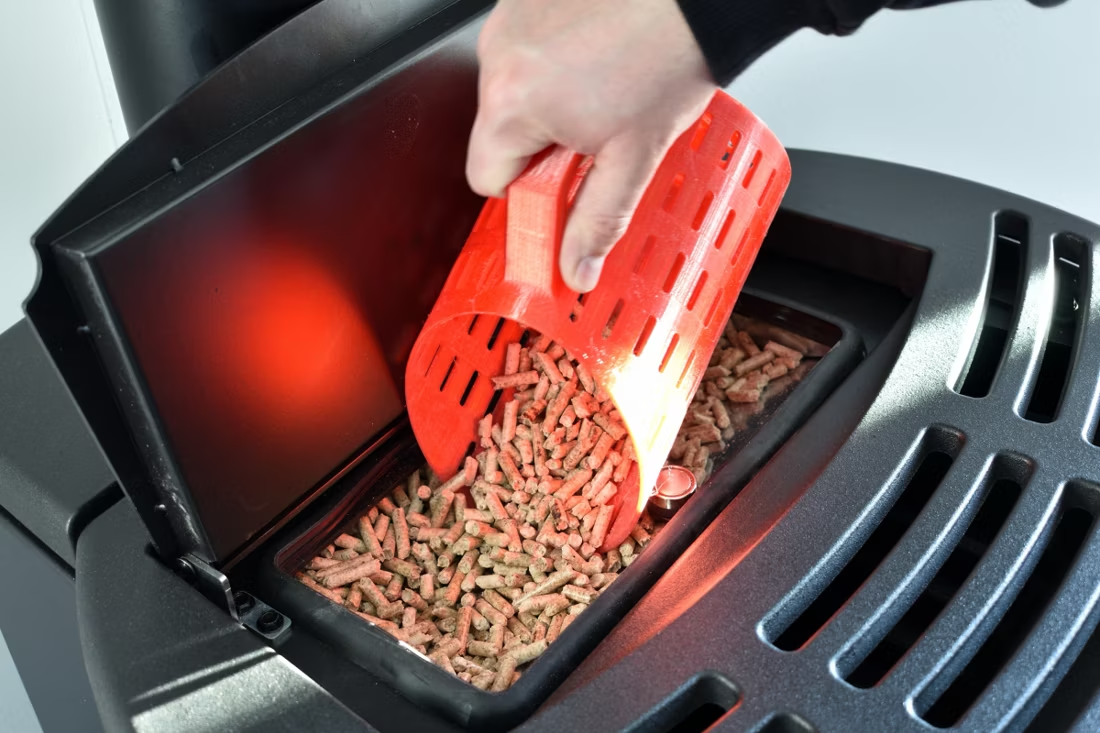
A pellet stove or insert answers that need: load the hopper, set the feed rate, and get even, thermostat-controlled heat for a day or more per fill, without tending a firebox. Bagged pellets from regional producers like Lignetics and Indeck Energy Services are sold through farm stores and hearth dealers across east-central Nebraska, so fuel supply isn't a concern even in a county with under 2,500 residents spread across mostly rural terrain. For homes near Fullerton or Genoa without natural gas service, or anyone tired of the annual firewood routine, pellet heat is a practical middle ground between wood's low fuel cost and gas's push-button convenience.
Three steps. No salesperson until you're ready.
Tell us about your project
Your zip code, your situation, and the fuel you're leaning toward—or let the answers point you to one.
See what's actually available
The brands dealers within 100 miles genuinely carry—real options, never a catalog mirage.
Get your dealer & Project Guide
A trusted local dealer, plus the free Project Guide & Parts List that names every component of the job.
Frequently Asked Questions
How much does a pellet stove installation cost in Nance County?
Pellet stove and insert installations in Nance County typically fall in a similar range to other Midwest markets once you account for the vent kit, electrical outlet for the auger and blower, and any hearth pad work—commonly $3,000 to $6,500 depending on the unit and whether it's a freestanding stove or an insert going into an existing fireplace. Rural properties around Fullerton, Genoa, or Cedar Rapids may see a modest travel charge added by installers coming from Grand Island or Columbus. A local dealer will give you a firm number after seeing your home.
What size pellet stove do I need for my home?
With Nance County's roughly 6,228 heating degree days, most homes need a mid-size unit rated for the square footage they intend to heat plus a margin for older farmhouse construction and drafty additions common in the area. Small pellet stoves suit a single large room or a well-insulated ranch home, while larger units are better matched to two-story farmhouses or homes using pellet heat as a primary source rather than backup. An oversized stove cycles on and off constantly and wastes pellets; an undersized one runs flat-out on the coldest nights and still falls short. A local dealer will size this to your actual square footage and insulation level rather than a generic chart.
Do pellet stoves work during a power outage?
This is worth knowing up front: pellet stoves require electricity to run the auger that feeds pellets and the blower that distributes heat, so a standard unit will not operate during a power outage. In rural Nance County, where outages from ice storms or high wind events aren't rare, some households pair a pellet stove with a small battery backup or generator specifically to keep it running, while others keep a wood stove or fireplace as true off-grid backup heat. If outage resilience is a top priority for your property, ask your local dealer about backup power options before you buy.
Where can I buy pellets near Fullerton or Genoa?
Bagged pellets from brands like Lignetics and Indeck Energy Services are available through farm supply stores and hearth dealers serving east-central Nebraska, with many households buying by the ton (roughly 50 forty-pound bags) ahead of the heating season to lock in supply and avoid a mid-winter run. Buying early in late summer or early fall, before demand picks up across the region, is common practice among Nance County pellet stove owners. Your local dealer can point you to the nearest reliable pellet supplier and give you a sense of typical per-ton pricing for the area.
What's the difference between a pellet stove and a pellet insert?
A pellet stove is a freestanding unit that sits on a hearth pad and vents through a wall or existing chimney chase—it can go almost anywhere with the right clearances. A pellet insert is built to slide into an existing masonry or zero-clearance fireplace, turning an old wood-burning fireplace into an efficient, thermostat-controlled heat source using the vent penetration you already have. For Nance County homes with an existing but underused wood fireplace, an insert is often the more cost-effective route since it reuses the chimney chase. Homes without an existing fireplace typically go with a freestanding stove instead.
Do I need a permit to install a pellet stove in Nance County?
Most jurisdictions require a building permit for a new solid-fuel appliance installation, covering the unit, venting, and any electrical work for the auger and blower circuit. Requirements and review timelines vary between incorporated towns like Fullerton and Genoa versus unincorporated areas of the county, so it's worth confirming with your county building office before work starts. In practice, most local installers handle the permit paperwork as part of the installation, so homeowners rarely have to navigate it alone.
How often does a pellet stove need to be cleaned and serviced?
Pellet stoves need more frequent attention than a once-a-year wood stove sweep because the burn pot and ash pan accumulate ash from regular use. Plan on emptying the ash pan every few days during heavy winter use, a deeper burn pot and glass cleaning every couple of weeks, and a full annual service—checking the auger motor, exhaust blower, and gaskets—before each heating season starts. For a Nance County household running the stove through a full winter with 6,228 heating degree days, staying on top of this maintenance keeps efficiency up and prevents the ignition or feed issues that show up when ash builds up unchecked.
Pellet stove vs. wood stove—which makes more sense on a Nance County property?
Wood stoves burn cordwood from local oak, hickory, or cottonwood, work without electricity—a real advantage during rural outages—and often cost less to fuel if you're cutting your own. Pellet stoves trade that off-grid capability for convenience: load a hopper instead of hand-feeding logs, get more consistent heat output, and produce far less ash and creosote. For a working farm household short on time to process firewood every fall, pellet heat often wins on convenience. For a property that already has an off-grid heat plan and access to cheap or free cordwood, wood may still make more economic sense. Some Nance County homes run both—pellet for daily convenience, wood as storm backup.
Is natural gas or propane a better option than pellet in Nance County?
It depends on what's already run to your property. Homes with existing propane service or an in-town natural gas hookup near Fullerton or Genoa may find a gas fireplace or insert more convenient day-to-day, since there's no fuel to load or ash to empty. But pellet heat generally costs less per BTU than propane in rural Nebraska, and there's no tank rental or annual propane delivery contract to manage. For a rural property without existing gas infrastructure, running a new propane tank and lines can add meaningfully to project cost, which is often what tips homeowners toward pellet instead. A local dealer can walk through the real cost comparison for your specific address.
How often does a pellet stove need cleaning?
A clean pellet stove is a happy pellet stove. Plan on cleaning the burn pot about once a week when you're burning regularly—ash and clinkers gum up the air holes just like a pellet barbecue. Most pellet stove problems trace back to skipped cleaning that nobody explained up front. Some designs make it easy with a trapdoor burn pot: pull a lever and the gunk drops into the ash pan.
What's the difference between an insert and a zero-clearance fireplace?
An insert is a fireplace that slides into a pre-existing wood-burning fireplace—if you don't have one, there's nothing to insert it into. A zero-clearance fireplace is built into a framed wall, which makes it the answer for remodels and new construction. Simple test: existing masonry fireplace means insert; blank or framed wall means zero-clearance.
How much should I budget for a fireplace?
For an average home—covering the fireplace, the vent pipe, and basic installation—a budget between $3,900 and $5,500 gives you a lot of options across wood, gas, and pellet. By the time you add finish work, gas line, and electrical, the average complete installation lands between $5,000 and $12,000 all-in. In a remodel or new build, a good rule is to put about 2.5% of the total project cost toward the fireplace.
Should the dealer who sells my fireplace also install it?
Ideally, yes. A fireplace project involves vent pipe, gas line, electrical, and often tile or stone. Hire three or four separate trades and you own the liability and the game of telephone between them. One company selling and installing means one accountable party, start to finish—ask about factory training, on-time completion records, and what happens if an inspection fails.
Pellet Brands Stocked Around Nance County
Manufacturers will point you to the nearest stocking dealer.
Find your pellet stove in Nance County.
Tell us a bit about your home and heating goals, and we'll match you with a trusted local dealer plus a free Project Guide & Parts List—the exact parts, vent kit, and recommended installer for your Nance County pellet project.
Find Your Fireplace →