
Warm, reliable heat across the Nebraska Sandhills.
With just 129 residents spread across open ranchland, McPherson County runs on propane, not piped natural gas. Find the right gas fireplace or insert for your home near Tryon, and connect with a trusted local dealer who actually serves this stretch of the Sandhills.
Every Project Starts From One of These Five Situations
Propane-powered comfort for ranch country.
McPherson County is the least populated county in Nebraska—about 129 people scattered across nearly 860 square miles of rolling Sandhills grassland, with Tryon as the county seat and only incorporated town. Homes here are often old ranch houses set miles apart, built for cattle country rather than curb appeal, and winters bring the kind of wind-driven cold typical of Zone 5A: long stretches below freezing, sudden Arctic snaps, and blizzards that can close county roads for days. Heating a drafty two-story ranch house out here is a different problem than heating a subdivision home in Lincoln or Omaha.
There's no natural gas pipeline infrastructure reaching McPherson County's ranches—realistically, every 'gas' fireplace here runs on propane delivered by tank truck and stored in an above-ground tank on the property. That's not a downside so much as the local norm, and it works well: a direct-vent propane fireplace or insert gives you instant, thermostat-controlled heat in a main living area without relying on the rural electric co-op lines that can go down in a whiteout. Many ranch households pair a propane unit in the house with wood heat from local oak, hickory, or cottonwood as backup or supplemental warmth—a practical hedge when you're a long way from town.
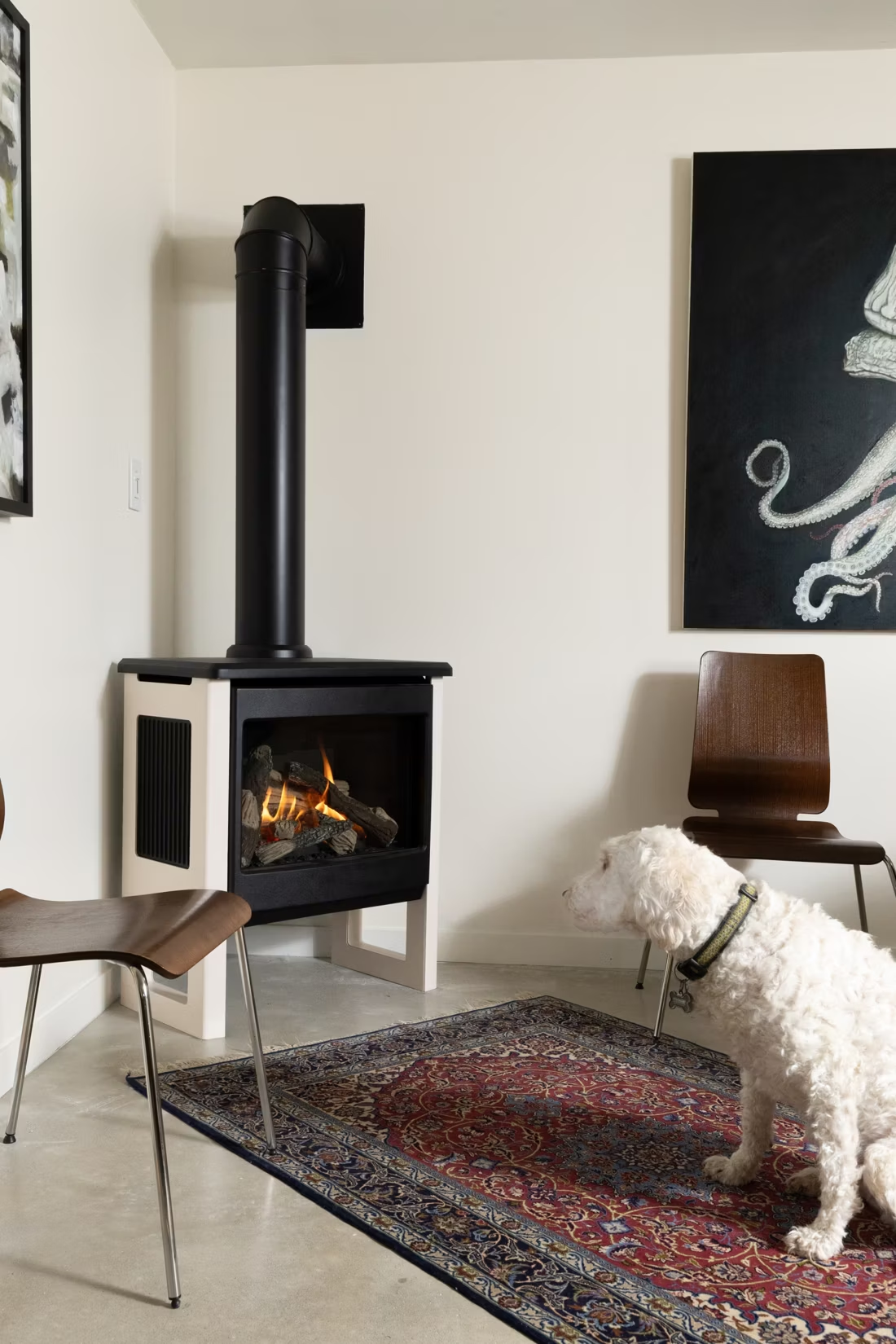
Three steps. No salesperson until you're ready.
Tell us about your project
Your zip code, your situation, and the fuel you're leaning toward—or let the answers point you to one.
See what's actually available
The brands dealers within 100 miles genuinely carry—real options, never a catalog mirage.
Get your dealer & Project Guide
A trusted local dealer, plus the free Project Guide & Parts List that names every component of the job.
Frequently Asked Questions
How much does a gas fireplace installation cost in McPherson County?
Because everyone here is on propane rather than piped gas, cost depends heavily on whether you already have a propane tank and regulator set up for the house, or need a new tank installed. A direct-vent propane insert into an existing fireplace, using a tank you already have, typically runs in the $3,500 to $6,500 range. Adding a new propane tank, running gas line through an older ranch house, and installing a built-in fireplace can push the total toward $8,000 to $9,000. Given the distances involved, expect a trip charge from most installers coming out from North Platte or Ogallala—factor that into your quote.
Is natural gas available in McPherson County, or is everything propane?
Everything is propane. There's no natural gas utility infrastructure serving McPherson County—no mains reach Tryon or the surrounding ranches. Any 'gas fireplace' installed here will run on propane from a tank on your property, refilled by a regional propane supplier. This isn't unusual for the fuel—propane-fired direct-vent fireplaces perform identically to natural gas units—but it does mean tank placement, delivery access, and fuel storage are part of the planning conversation your installer will have with you.
What size gas fireplace do I need for an older Sandhills ranch house?
Older farmhouses and ranch homes in McPherson County are often larger, less insulated, and more exposed to wind than a comparable suburban home, so sizing tends to run bigger than a square-footage chart alone would suggest. A mid-size direct-vent gas fireplace (30,000–40,000 BTU) can effectively zone-heat a living room or kitchen in a drafty older house, while a full-house heating strategy usually still leans on a furnace or wood stove with the gas unit providing supplemental, always-on comfort in the main living space. A local installer who's worked on other ranch properties in the area will size for your specific structure rather than a generic formula.
Do I need a permit to install a gas fireplace in McPherson County?
McPherson County is largely unincorporated and rural, so permitting is far less involved than in a city—but propane tank placement still needs to meet setback and safety code, and any gas line work should be done by a licensed installer. Check with the McPherson County Courthouse in Tryon before starting a project to confirm current requirements, especially if you're installing a new propane tank rather than tapping into an existing one. Most local hearth or propane dealers who work this territory regularly can tell you exactly what's required.
Will my gas fireplace still work if the power goes out?
Yes, if you choose the right ignition system—and in McPherson County, that's worth paying attention to. Rural electric co-op lines across the Sandhills can go down for extended periods during winter storms, and a fireplace that depends on electricity to light isn't much use exactly when you need it. Units with intermittent pilot ignition (IPI) include a battery backup that keeps them working through an outage, as long as the batteries are fresh. Valor fireplaces take it a step further—their pilot generates its own electricity through the thermocouple, so there's no battery to fail. For a property where the nearest neighbor might be a mile away, that reliability matters.
What's the difference between a gas fireplace, insert, and stove?
A gas fireplace is a built-in unit installed into a wall or framed enclosure, typically used in new construction or a remodel. A gas insert is designed to drop into an existing masonry fireplace opening, using the existing chimney chase (relined) as its vent path—a common upgrade for older ranch houses in McPherson County that already have a fireplace but want better efficiency. A gas stove is a freestanding, cast-iron-style unit that sits on the floor and vents through a wall or roof, which works well in a smaller room or a ranch outbuilding that's been converted to living space.
How does propane delivery and tank sizing work out here?
Most McPherson County properties run a 250- or 500-gallon above-ground propane tank, refilled on a schedule by a regional supplier serving the North Platte and Ogallala area. Because homes are spread out and winter roads can be rough, many ranchers set up automatic delivery or keep-fill service rather than calling for refills, to avoid running low during a stretch when snow closes county roads. If you're adding a gas fireplace to a house that already has a tank for furnace or water heater use, your installer will confirm the tank has enough capacity for the added draw.
How often does a propane fireplace need to be serviced?
An annual inspection is standard for any propane appliance—checking the burner, pilot assembly, venting, and gas connections, and cleaning the glass and interior. Given how far McPherson County properties can be from a service technician, it's worth scheduling that inspection in late summer or early fall, before heating season, rather than waiting for a problem to show up on a subzero night. Some propane suppliers who deliver fuel in the area also offer appliance service, which can save a separate trip.
Gas vs. wood—which makes more sense for a McPherson County ranch house?
Wood—burned in a stove or insert using local oak, hickory, or cottonwood—offers real heat output without any dependence on electricity or propane delivery, which matters when winter roads are unreliable. Propane gas offers instant, no-mess, thermostat-controlled heat that's far more convenient day to day, and with the right ignition system it can still run through a power outage. Many ranch households here run both: a propane fireplace or insert for daily comfort in the main living area, and a wood stove as backup heat and insurance against a bad winter. If you're only installing one, think about how often you're actually home to tend a fire versus how much you value hands-off convenience.
Why is my open fireplace making my house colder?
Open fireplaces suck—literally. As the fire burns, it consumes air your furnace already paid to heat and pulls it out through the chimney, so the house is actually colder after the fire goes out than before you lit it. An insert fixes this: it seals the chimney, puts fixed glass across the front, and turns that hole in your house into a real heat source.
Is my gas fireplace wasting gas?
If it was installed more than 15 years ago, probably. Older gas fireplaces keep a standing pilot light burning all the time, and that little flame can cost a couple hundred dollars a year. Newer models use pilot-on-demand ignition—the pilot lights only when you use the fireplace and goes out when you turn it off.
What is an in-home preview and do I need one?
It's a visit where a hearth professional measures your space, confirms the model you picked actually works in your home, and walks the specs—framing, gas line, venting, finish work—before anything is ordered. Some details you just can't know until you see the house. Never make a down payment without one; it's the single most-skipped step that burns buyers.
Can I install a fireplace myself?
If you're putting a fire in your house on purpose, it's best to work with an expert. Unless you're genuinely experienced in framing, gas line, vent pipe, and the national code on clearances to combustibles, have a professional do it—and ideally the same company that sells you the fireplace, so warranty, service, and liability all live under one roof.
Find your gas fireplace in McPherson County.
Tell us a bit about your home near Tryon or out on the ranch, and we'll put together a free Project Guide & Parts List—the right gas fireplace or insert, the parts needed for a propane setup like yours, and a trusted local dealer to install it.
Find Your Fireplace →