
Steady heat for the wind-swept Sandhills of McPherson County.
Zero-clearance electric heat for ranch houses and outbuildings across McPherson County—from Tryon to the open range beyond. No gas line, no chimney, no permit headaches. Find the right unit and get matched with a trusted local dealer.
Every Project Starts From One of These Five Situations
Reliable heat without a gas line or chimney.
McPherson County sits deep in Nebraska's Sandhills, a rolling sea of grass-stabilized dunes with a population of just 129—one of the smallest and most sparsely settled counties in the country. The county seat, Tryon, and the ranches scattered across the county fall in climate zone 5A, the same zone that covers Lincoln and much of central Nebraska: real winter heating demand, punishing wind chill off the open range, and long stretches where the nearest hardware store or hearth shop is an hour's drive away. Oak, hickory, and cottonwood are the wood species most ranch families have cut and burned for generations, and there are no local air quality restrictions on burning—but wood and propane aren't always practical for every room, outbuilding, or line shack on a working operation.
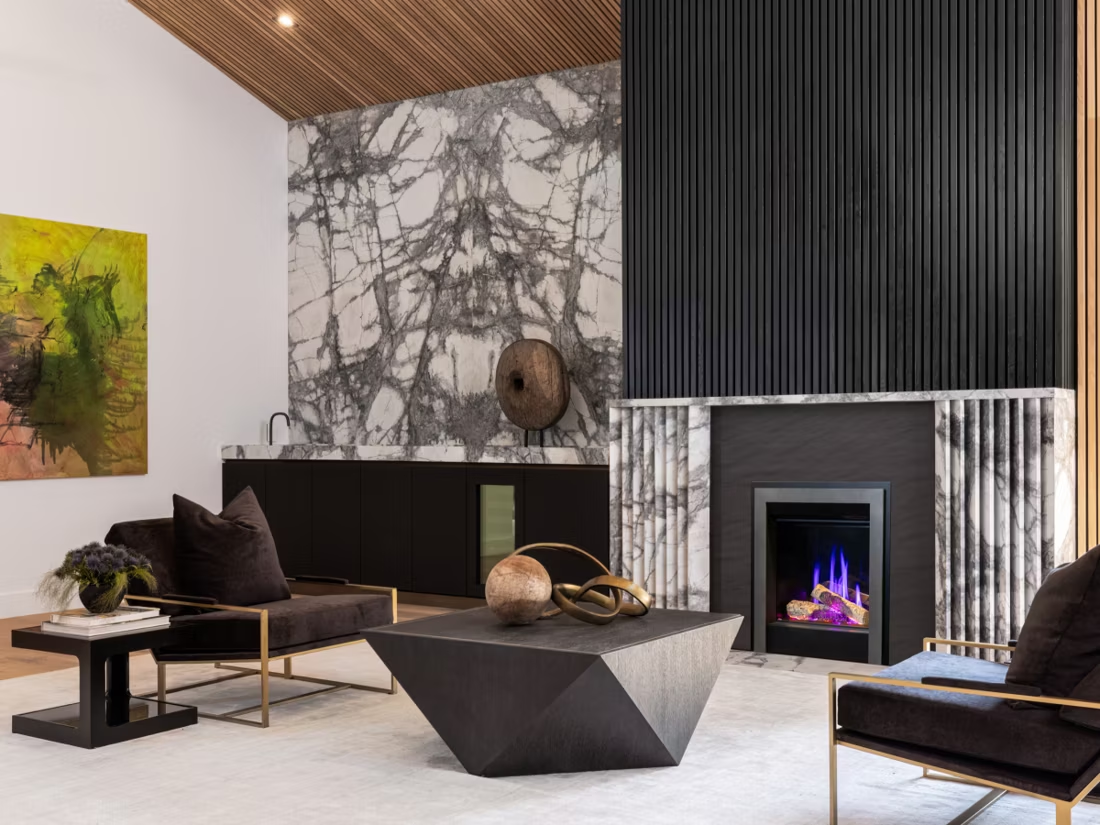
That's where electric fireplaces earn their place. There's no chimney to build, no gas line to run to a remote bunkhouse, and no combustion byproducts to vent—just a wall outlet or a dedicated circuit run by a licensed electrician tied into the local rural electric cooperative's service. For a county this thin on population and this spread out, that simplicity matters: a built-in electric fireplace or insert can go into a ranch house living room, a hired man's quarters, or a machine shed office without the permitting and inspection steps that wood or gas installs require. It won't replace a wood stove as primary heat through a Sandhills winter, but as supplemental warmth and ambiance in spaces scattered across a big, thinly populated county, it's often the most practical option on the table.
Three steps. No salesperson until you're ready.
Tell us about your project
Your zip code, your situation, and the fuel you're leaning toward—or let the answers point you to one.
See what's actually available
The brands dealers within 100 miles genuinely carry—real options, never a catalog mirage.
Get your dealer & Project Guide
A trusted local dealer, plus the free Project Guide & Parts List that names every component of the job.
Frequently Asked Questions
How much does an electric fireplace installation cost in McPherson County?
Plug-in electric fireplace inserts and freestanding units typically run $300 to $1,200 installed, since they use a standard household outlet and require no venting or gas line. Built-in electric fireplaces or wall units that need a dedicated 240V circuit run higher—usually $1,500 to $3,500 once an electrician wires a new circuit back to the panel, which is common in older ranch houses around Tryon and the rest of McPherson County where existing wiring wasn't sized for a large heater. Because there's no chimney, no gas line, and no combustion venting involved, electric installs are consistently the least expensive hearth project available in the county.
Can an electric fireplace be my primary heat source through a Sandhills winter?
Not on its own. Most electric fireplaces top out around 5,000-6,000 BTU of supplemental heat—enough to warm a single room, but not enough to carry a ranch house through the wind-driven cold that comes off the open Sandhills range in a 5A climate zone. Most McPherson County households pair an electric fireplace with wood heat (oak, hickory, or cottonwood are the local go-tos) or propane as the primary system, and use the electric unit for zone heating in a specific room, office, or outbuilding where running a chimney or gas line isn't practical.
Where do I find a dealer or installer for McPherson County?
With only 129 residents spread across the county, there isn't a hearth retailer based inside McPherson County itself—most homeowners work with installers out of North Platte or Ogallala, both within reasonable driving distance for a consultation and install. Electric fireplace installs are simpler than wood or gas jobs, so many electricians serving the area can handle the wiring portion themselves, but matching with a dealer who actually stocks and installs hearth-rated electric units, rather than a big-box plug-in unit, still matters for fit, finish, and heater performance. That's exactly the matching problem Find My Fireplace solves for a county this remote.
Do I need a permit to install an electric fireplace in McPherson County?
Like many rural Nebraska counties, McPherson County does not enforce a countywide building permit requirement for most residential electrical work, though any new circuit should still be pulled and inspected by a licensed electrician for safety and insurance purposes. There's no combustion, venting, or chimney involved with an electric unit, so the permitting questions that come up with wood or gas installs largely don't apply here. The one thing worth checking before a larger built-in unit goes in is whether your rural electric cooperative service and panel have the capacity for an added 240V circuit—older ranch properties sometimes need a panel upgrade first.
What's the difference between an electric fireplace, insert, and mantel unit?
An electric insert is built to slide into an existing masonry or wood-burning fireplace opening, giving you the look of a fire without touching the chimney. A built-in electric fireplace is framed into a wall like a gas fireplace would be, with no existing opening required—a common choice for new construction or a remodeled ranch house. A freestanding or mantel-style unit sits on the floor or on a stand and plugs straight into an outlet, making it the fastest and cheapest option for a bunkhouse, office, or secondary living space anywhere in McPherson County.
What's the best electric fireplace for a McPherson County ranch home?
For a drafty older ranch house exposed to Sandhills wind, look for a built-in or insert model with a true heater rating (most electric units include a 1,500-watt heater good for roughly 400-1,000 square feet, depending on insulation and ceiling height) rather than a decorative-only unit. Brands like Dimplex and Napoleon build electric inserts with adjustable heat output and realistic flame effects that hold up well as everyday supplemental heat. For a line shack, machine shed office, or hired man's quarters where you just want reliable warmth without fuss, a simpler freestanding unit is usually the more practical and affordable choice.
Electric vs. wood—which makes more sense for my McPherson County property?
Wood heat, burning oak, hickory, or cottonwood cut and split locally, remains the backbone of most ranch heating in McPherson County because it works without power and delivers real BTU output through a hard Sandhills winter. Electric fireplaces can't match that as a primary source, but they win on simplicity anywhere running a chimney doesn't make sense—a remodeled room, a small outbuilding, or a rental property where you want heat and ambiance without woodpile maintenance. Most working ranches in the county end up with both: wood or propane carrying the load, electric filling in the rooms where it's the easier fit.
Electric vs. pellet stove—which is better for a McPherson County home?
Pellet stoves, running fuel from regional suppliers like Lignetics or Indeck Energy Services, put out real heat and burn cleaner than cordwood, but they need both electricity and a reliable pellet supply—a bigger ask in a county this remote, where the nearest pellet retailer isn't around the corner. Electric fireplaces skip the fuel-storage question entirely; there's nothing to haul, stack, or order ahead of a storm. For most McPherson County households, pellet stoves make more sense as a primary heat source in a main living area, while electric units are the better fit for secondary rooms or buildings where fuel logistics aren't worth the trouble.
Will my electric fireplace still work if the power goes out?
No—electric fireplaces are entirely dependent on grid power, and that's worth planning around in a county served by a rural electric cooperative where outages can run longer than they would in town, especially after a Sandhills ice storm or high-wind event. If you're relying on an electric unit for meaningful heat in a given room, it's worth keeping a wood stove, propane heater, or generator as backup somewhere in the house. Most McPherson County families already default to wood as their outage-proof fallback, which is part of why electric fireplaces here tend to be a supplemental choice rather than a sole heat source.
Does an electric fireplace need a vent or chimney?
No—that's its superpower. An electric fireplace needs a wall and an outlet, period. No vent pipe, no gas line, no clearances to design around, which is why it works in bedrooms, offices, apartments, and walls where venting a gas or wood unit would be impractical or impossible. Installation is typically the simplest and least expensive of any fireplace type.
Can I put a TV above my fireplace?
Yes—with an asterisk. Fireplaces are hot and TVs don't like heat. Either put a mantel between them to deflect rising warmth, or choose a fireplace with heat-management technology that creates a cool zone on the wall above—the wall stays around 125 degrees, barely warm, while the room still gets full heat. If you like clean lines and don't want a mantel, heat management is the answer.
How much should I budget for a fireplace?
For an average home—covering the fireplace, the vent pipe, and basic installation—a budget between $3,900 and $5,500 gives you a lot of options across wood, gas, and pellet. By the time you add finish work, gas line, and electrical, the average complete installation lands between $5,000 and $12,000 all-in. In a remodel or new build, a good rule is to put about 2.5% of the total project cost toward the fireplace.
Does a fireplace add value to my home?
On average, a fireplace adds back to the home about the same amount you spent installing it. Add the monthly savings from heating the rooms you actually use instead of the whole house—often hundreds of dollars a year—and the value case is strong before you even count what a fire does for how your family uses the room.
Find your electric fireplace in McPherson County.
Tell us about your ranch house, outbuilding, or remodel and we'll match you with a trusted local dealer serving McPherson County, plus a free Project Guide & Parts List with the exact unit, wiring needs, and installation plan for your space.
Find Your Fireplace →