
Pellet heat built for Knox County's long, cold winters.
Set-it-and-forget-it warmth for farmhouses and small-town homes from Center to Verdigre—without the splitting, stacking, and hauling that come with cordwood. Find the right stove and connect with a trusted local dealer.
Every Project Starts From One of These Five Situations
Consistent heat, without the wood-splitting.
Knox County sits in Nebraska's Zone 5A climate belt, tucked along the Missouri and Niobrara Rivers with roughly 5,100 residents spread across farm ground and small towns like Center, Bloomfield, Creighton, Verdigre, Crofton, and Niobrara. Winters here run long and cold, closer in feel to Fargo, ND than to anything you'd find further south—steady snow cover, hard freezes, and stretches where a farmhouse or shop building needs heat that doesn't quit. Oak, hickory, and cottonwood grow throughout the county and have kept plenty of homes warm the traditional way, but not everyone wants to spend a fall weekend splitting and stacking a winter's worth of rounds.
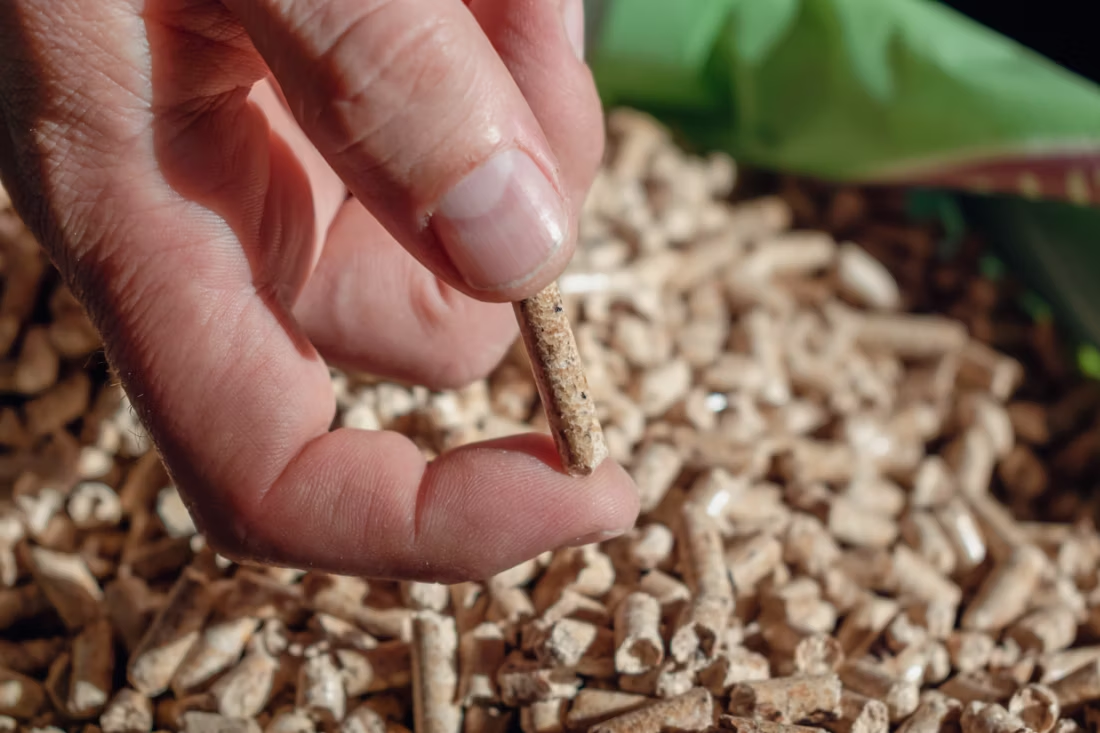
That's where pellet appliances have found a real foothold in Knox County. Regional brands like Lignetics and Indeck Energy Services supply hardwood pellets to farm stores and co-ops across the upper Midwest, and with no air quality non-attainment issues and no wood-burning curtailment periods here, pellet stoves run without the restrictions homeowners face in some other parts of the country. For rural properties on Cedar-Knox Public Power District service, a pellet stove is also an easy way to add zone heat to a shop, addition, or older farmhouse without a full furnace retrofit—as long as you've got a reliable outlet nearby.
Three steps. No salesperson until you're ready.
Tell us about your project
Your zip code, your situation, and the fuel you're leaning toward—or let the answers point you to one.
See what's actually available
The brands dealers within 100 miles genuinely carry—real options, never a catalog mirage.
Get your dealer & Project Guide
A trusted local dealer, plus the free Project Guide & Parts List that names every component of the job.
Frequently Asked Questions
How much does a pellet stove installation cost in Knox County?
Pellet stove and insert installations typically run in the $3,000 to $6,000 range, which is lower than most wood or gas installs because there's no masonry chimney to build—pellet units vent through a smaller pipe out a side wall or through the roof. Costs shift based on whether you're venting through an exterior wall (simpler, cheaper) or need to route through an existing masonry flue, and whether an electrical outlet already exists near the install location. For older farmhouses around Center or Bloomfield without a nearby 120V circuit, expect a modest add for electrical work since pellet stoves depend on power to run the auger and combustion blower. A local dealer will give you a firm number after seeing the space.
What size pellet stove do I need for my home?
It depends on square footage, ceiling height, and how drafty the house is—and a lot of Knox County's housing stock is older farmhouses with higher heat loss than newer construction. As a rough guide, a small pellet stove (up to 1,000 sq ft) suits a single room or addition, a medium unit (1,000–1,800 sq ft) covers most main living areas, and a large stove (1,800+ sq ft) can serve as a home's primary heat source in a well-insulated layout. Homes used as supplemental heat for a farm shop or outbuilding often do better with a slightly larger unit than the square footage alone suggests, since those spaces rarely have the insulation of a finished house. A local dealer can size this properly during an in-home look.
Where can I find pellet stove dealers near Knox County?
Because Knox County is rural with under 5,200 residents spread across it, most hearth dealers carrying pellet stoves are based in larger nearby trade centers—Norfolk, Yankton across the South Dakota line, or Sioux City further east. These dealers regularly service Knox County towns including Creighton, Bloomfield, and Verdigre, and most build a small travel charge into installs outside their home base. Ask specifically about pellet experience, since some hearth shops lean heavily wood or gas—you want a dealer who stocks pellet units, understands hopper sizing, and can service the auger motor and igniter down the road.
What's the difference between a pellet stove and a pellet insert?
A pellet stove is a freestanding unit that sits on its own hearth pad and can go almost anywhere with the right clearances and a nearby vent path—a common choice for shops, additions, or rooms without an existing fireplace. A pellet insert is built to slide into an existing masonry fireplace opening, using a liner run up the old chimney for venting and turning an inefficient open hearth into a sealed, thermostatically controlled heat source. For Knox County farmhouses with an old wood-burning fireplace that rarely gets used, an insert is often the more practical upgrade; for a shop or a room with no fireplace at all, a freestanding stove is the way to go.
Do I need a permit to install a pellet stove in Knox County?
Most pellet stove installations require a building permit, and in Knox County that generally means a call to the county courthouse in Center, the county seat, to confirm the process for your specific location—requirements can differ slightly between incorporated towns like Bloomfield or Creighton and unincorporated county land. Since pellet venting is simpler than a masonry chimney, the permitting process is usually quicker than a wood stove install, but it still confirms clearances, venting termination points, and electrical work meet code. Most dealers who sell and install the unit will pull the permit as part of the job.
What's the best pellet stove for Knox County's climate?
For a Zone 5A climate with real winter stretches, look for a stove with a large hopper capacity—40 to 80 pounds—so it can run overnight or through a stretch of bad weather without a refill, and a stated heating capacity that comfortably covers your square footage rather than just meets it. Widely available brands in the region, such as Harman, Enviro, and England's Stove Works, all make models suited to sustained cold-weather use. If the stove will serve as backup heat during winter storms—a real consideration on rural Knox County power lines—ask your dealer about battery backup options for the auger and blower, since a standard pellet stove stops working the moment power drops.
Where do I buy pellets in or near Knox County?
Hardwood pellets from regional producers like Lignetics and Indeck Energy Services are typically stocked at farm and ranch supply stores, hardware stores, and co-ops throughout northeast Nebraska, with availability concentrated in the larger towns like Bloomfield and Creighton and restocked heavier through fall and early winter. Buying a season's supply early—before the first hard cold snap—is the standard move here, since demand spikes and some smaller stores sell through their stock quickly once temperatures drop. A 40-lb bag typically covers a day or two of moderate use in an average-sized stove, so plan storage space accordingly if you're buying by the pallet.
Will my pellet stove work if the power goes out?
Not without a backup power source. Pellet stoves rely on electricity to run the auger that feeds pellets into the burn pot and the blower that pushes heat into the room—if power drops, so does the stove, even with a full hopper. For rural Knox County properties on Cedar-Knox Public Power District lines, where winter storms can knock out power for a stretch, this is worth planning around. Some homeowners pair a pellet stove with a small backup generator or battery system specifically to keep it running during outages; others keep a wood stove or fireplace as true off-grid backup and use pellet for daily convenience heat. Ask your dealer about UPS battery backup options built for exactly this scenario.
Pellet vs. wood—which is right for my Knox County home?
Wood stoves burn local oak, hickory, and cottonwood, work without any electricity, and offer the deepest cold-weather reliability—a real factor on rural power lines. But they require splitting, stacking, seasoning, and daily tending. Pellet stoves trade that labor for convenience: load the hopper, set the thermostat, and the stove runs itself with a cleaner burn and less ash, but only as long as the power stays on. For a farmhouse or in-town home in Knox County with steady electric service and a homeowner who wants heat without the woodpile, pellet is usually the better fit. For a rural property that regularly loses power in winter storms, keeping a wood stove as backup—even alongside a pellet unit for everyday convenience—is a common and sensible setup.
How often does a pellet stove need cleaning?
A clean pellet stove is a happy pellet stove. Plan on cleaning the burn pot about once a week when you're burning regularly—ash and clinkers gum up the air holes just like a pellet barbecue. Most pellet stove problems trace back to skipped cleaning that nobody explained up front. Some designs make it easy with a trapdoor burn pot: pull a lever and the gunk drops into the ash pan.
What's the difference between an insert and a zero-clearance fireplace?
An insert is a fireplace that slides into a pre-existing wood-burning fireplace—if you don't have one, there's nothing to insert it into. A zero-clearance fireplace is built into a framed wall, which makes it the answer for remodels and new construction. Simple test: existing masonry fireplace means insert; blank or framed wall means zero-clearance.
Does a fireplace add value to my home?
On average, a fireplace adds back to the home about the same amount you spent installing it. Add the monthly savings from heating the rooms you actually use instead of the whole house—often hundreds of dollars a year—and the value case is strong before you even count what a fire does for how your family uses the room.
How much should I budget for a fireplace?
For an average home—covering the fireplace, the vent pipe, and basic installation—a budget between $3,900 and $5,500 gives you a lot of options across wood, gas, and pellet. By the time you add finish work, gas line, and electrical, the average complete installation lands between $5,000 and $12,000 all-in. In a remodel or new build, a good rule is to put about 2.5% of the total project cost toward the fireplace.
Pellet Brands Stocked Around Knox County
Manufacturers will point you to the nearest stocking dealer.
Find your pellet stove in Knox County.
Tell us about your home and we'll match you with a trusted local dealer and put together a free Project Guide & Parts List—the exact parts, including the vent kit, for a pellet stove or insert install in Knox County.
Find Your Fireplace →