
Reliable pellet heat for Grant County's wind-swept Sandhills.
With just over a hundred residents spread across grass-stabilized dune country, Grant County runs on self-sufficiency. A pellet stove delivers steady, low-maintenance heat without depending on scarce local timber—find the right unit and get matched with a dealer who can actually service it out here.
Every Project Starts From One of These Five Situations
Consistent warmth without the wood-splitting labor.
Grant County sits in the heart of the Nebraska Sandhills—grass-covered dunes, cattle ranches, and a population of about 127 people spread across more than 700 square miles. Climate zone 5A means real winter here: hard freezes, biting wind off the open plains, and heating seasons that stretch long past what most of the country deals with. Unlike forested parts of the state, the Sandhills are grassland first—cottonwood shows up along creek bottoms and shelterbelts, with oak and hickory scattered in, but there's nowhere near the timber base you'd find in eastern Nebraska. That scarcity is exactly why pellet stoves make sense here: the fuel arrives by truck as a manufactured, consistent product instead of depending on what you can cut and split yourself.
There are no air quality restrictions or non-attainment concerns listed for Grant County, so pellet stoves and inserts run without the curtailment-period rules that some western states impose on wood burning. Regional supply comes primarily from Lignetics, a major national pellet producer with Great Plains distribution, and Indeck Energy Services, which supplies bagged pellets alongside its larger biomass operations. Given how remote Grant County is—the nearest hearth dealer with service capability is often an hour or more away, in a larger town like Alliance or North Platte—matching with the right local installer matters more here than almost anywhere. That dealer relationship is what keeps your stove running (and your pellet supply stocked) through a Sandhills winter.
Three steps. No salesperson until you're ready.
Tell us about your project
Your zip code, your situation, and the fuel you're leaning toward—or let the answers point you to one.
See what's actually available
The brands dealers within 100 miles genuinely carry—real options, never a catalog mirage.
Get your dealer & Project Guide
A trusted local dealer, plus the free Project Guide & Parts List that names every component of the job.
Frequently Asked Questions
How much does a pellet stove installation cost in Grant County?
A pellet stove or insert installation typically runs $3,000 to $6,500 depending on the unit, hopper size, and whether you're venting through an existing chimney or running new sidewall venting. Because Grant County is so sparsely populated, most installers are based out of a larger town and will factor in some travel time to reach a ranch property—worth asking about upfront when you get a quote. Homes converting an old wood-burning fireplace to a pellet insert are usually on the lower end since the chimney or flue is already in place.
Where do I actually get pellets delivered out here?
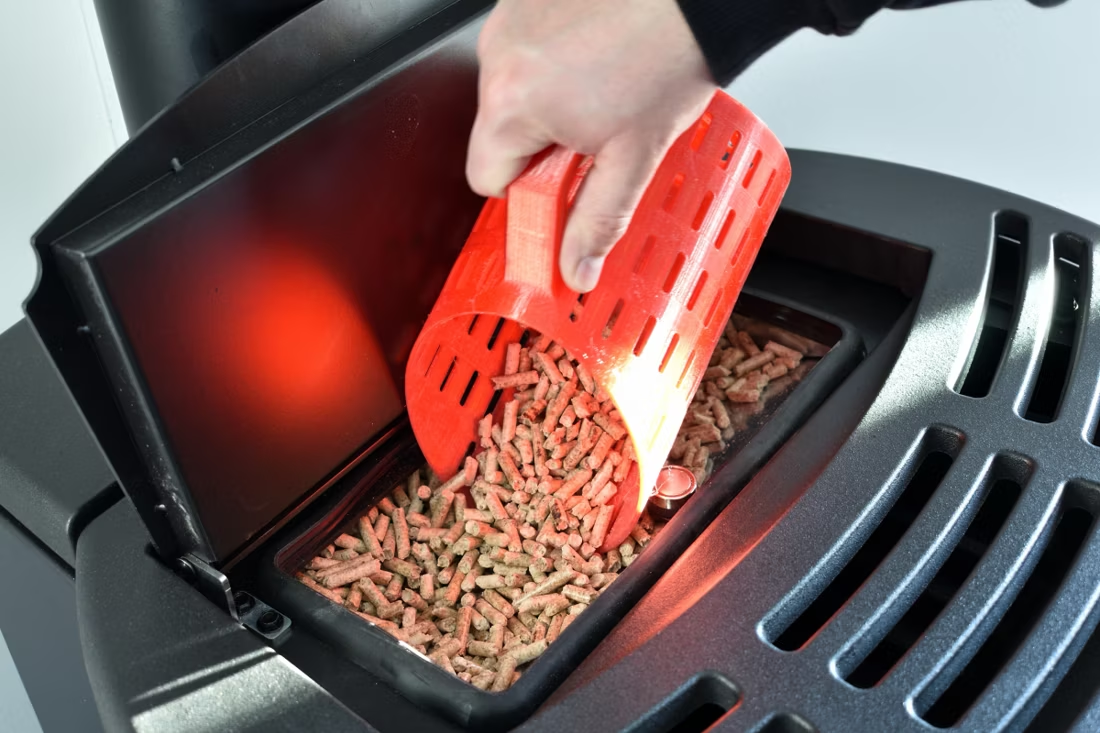
Pellet supply in Grant County comes mostly through regional distribution of brands like Lignetics and Indeck Energy Services, sold in 40-pound bags, usually by the ton (a ton runs about fifty bags and covers a typical heating season for supplemental use). Given the distances involved—Grant County has no incorporated towns beyond Hyannis and Ashby—most homeowners buy pellets in bulk ahead of winter rather than making repeat trips. Your matched dealer can tell you which suppliers actually deliver to your part of the county and how far in advance to order before the roads get bad.
Will a pellet stove keep up with Sandhills winters?
Yes, for most homes, though sizing matters more here than in milder climates. Grant County's 5A climate zone means sustained cold and constant wind exposure across open ranch land, which increases heat loss in older or less-insulated farmhouses. A mid-to-large hopper unit that can run 24-plus hours on a full load is worth the upgrade over a smaller unit if you're heating a drafty older home rather than a tightly built newer one. Talk to your dealer about square footage and insulation level rather than going by square footage alone—a Sandhills ranch house loses heat differently than a suburban home of the same size.
Why pellet instead of wood, given the local oak, hickory, and cottonwood?
Grant County's tree cover is thin by design—the Sandhills are stabilized grassland, not forest, so oak and hickory show up mainly in planted shelterbelts and cottonwood along the scattered creek bottoms, not in the kind of abundant stands you'd find in a wooded county. That makes consistent firewood sourcing harder here than in most of the state. Pellet fuel sidesteps that problem entirely: it's manufactured to a uniform moisture content and BTU output regardless of what's growing nearby, and it stores compactly in bags rather than requiring a woodpile and a chainsaw.
Do I need a permit to install a pellet stove in Grant County?
Most likely yes, though Grant County's process is about as low-friction as it gets given how small the county is—permitting runs through the county building office, based in the county seat of Hyannis. Given the low population and modest volume of building activity, turnaround tends to be quick compared to a busier county. Most hearth dealers who install regularly in this area handle the permit paperwork as part of the job, so it's worth confirming that during your quote.
Will my pellet stove work if the power goes out?
No—this is worth being direct about. Pellet stoves rely on an electric auger to feed fuel and a blower to distribute heat, so they stop working the moment power drops, unlike a standard wood stove. For a county this remote, where winter storms can knock out power for extended stretches on rural lines, that's a real consideration. Some homeowners pair a pellet stove for daily convenience with a small battery backup or a UPS unit sized for the auger motor, and others keep a wood-burning option as a true storm-outage backup. Ask your dealer about battery backup compatibility for the specific model you're considering.
What size pellet stove do I need for a Sandhills ranch home?
Ranch homes in Grant County tend to run larger and older than the suburban norm, often with less insulation than a newer build and more exposed exterior wall facing constant wind. As a starting point, a stove rated for 1,200 to 2,000 square feet handles most single-story ranch houses, but homes with high ceilings, older windows, or exposed western exposure to prevailing wind often need to size up. Your dealer will factor in actual construction details rather than square footage alone—that's the difference between a stove that keeps up on a January night and one that runs constantly without catching up.
How much maintenance does a pellet stove need?
Pellet stoves need the ash pan emptied every few days to weekly depending on use, the burn pot cleaned of clinkers every week or two during heavy heating season, and a full professional cleaning and inspection once a year, ideally before the season starts. Compared to a wood stove and chimney, it's a lighter maintenance load—no annual chimney sweep required—but the mechanical components (auger motor, blower, igniter) do need occasional service, which is another reason having a dealer within reasonable driving distance matters in a county this remote.
Pellet stove vs. propane—which makes more sense in Grant County?
Propane is the default heat source for most rural Sandhills homes, delivered by tank truck to a property-side tank. It's reliable but exposes you to price swings and to the risk of a delivery truck not making it down snowed-in county roads during a bad storm. A pellet stove run alongside your propane furnace gives you a hedge—bagged fuel you can stockpile ahead of winter, lower operating cost per BTU in most years, and a heat source that doesn't depend on a delivery truck reaching your driveway during a blizzard. The tradeoff is the electricity dependency mentioned above. Many Grant County homeowners run pellet as their primary heat for the living areas and keep propane as the whole-home backbone.
What's the difference between an insert and a zero-clearance fireplace?
An insert is a fireplace that slides into a pre-existing wood-burning fireplace—if you don't have one, there's nothing to insert it into. A zero-clearance fireplace is built into a framed wall, which makes it the answer for remodels and new construction. Simple test: existing masonry fireplace means insert; blank or framed wall means zero-clearance.
Why is my open fireplace making my house colder?
Open fireplaces suck—literally. As the fire burns, it consumes air your furnace already paid to heat and pulls it out through the chimney, so the house is actually colder after the fire goes out than before you lit it. An insert fixes this: it seals the chimney, puts fixed glass across the front, and turns that hole in your house into a real heat source.
Does a fireplace add value to my home?
On average, a fireplace adds back to the home about the same amount you spent installing it. Add the monthly savings from heating the rooms you actually use instead of the whole house—often hundreds of dollars a year—and the value case is strong before you even count what a fire does for how your family uses the room.
Can a fireplace actually lower my heating bill?
Yes—by creating a comfort zone. A furnace heats every square foot of the house just to warm the one room you're in; a gas fireplace on low burns roughly a sixth of the gas a typical furnace does. Set the furnace around 55–60 degrees as a baseline, then heat the rooms your family actually uses. Families who heat this way commonly save $20–$60 a month.
Pellet Brands Stocked Around Grant County
Manufacturers will point you to the nearest stocking dealer.
Find your pellet stove in Grant County.
Tell us about your home and heating needs, and we'll match you with a trusted local dealer and put together a free Project Guide & Parts List—the exact parts, including the vent kit, for your pellet stove project in Grant County.
Find Your Fireplace →