
Steady, hands-off heat for Gosper County's coldest stretches.
From Elwood to the farmsteads and lake homes ringing Johnson Lake, pellet heat gives Gosper County households a clean, consistent burn without a woodlot to manage. Find the right stove and get matched with a trusted local dealer.
Every Project Starts From One of These Five Situations
Consistent heat without the wood pile.
Gosper County is one of Nebraska's smallest counties by population—about 615 people spread across farmland along the Platte River valley, with Elwood serving as the county seat and Johnson Lake drawing lake-home owners on the county's western edge. Sitting in climate zone 5A, winters here run cold and windy in the way Great Plains winters do—closer to Bismarck, ND than to anywhere milder—with prairie wind chill that makes a home feel colder than the thermometer suggests. There are no local air quality restrictions on burning, which simplifies things considerably compared to counties with inversion or non-attainment concerns.
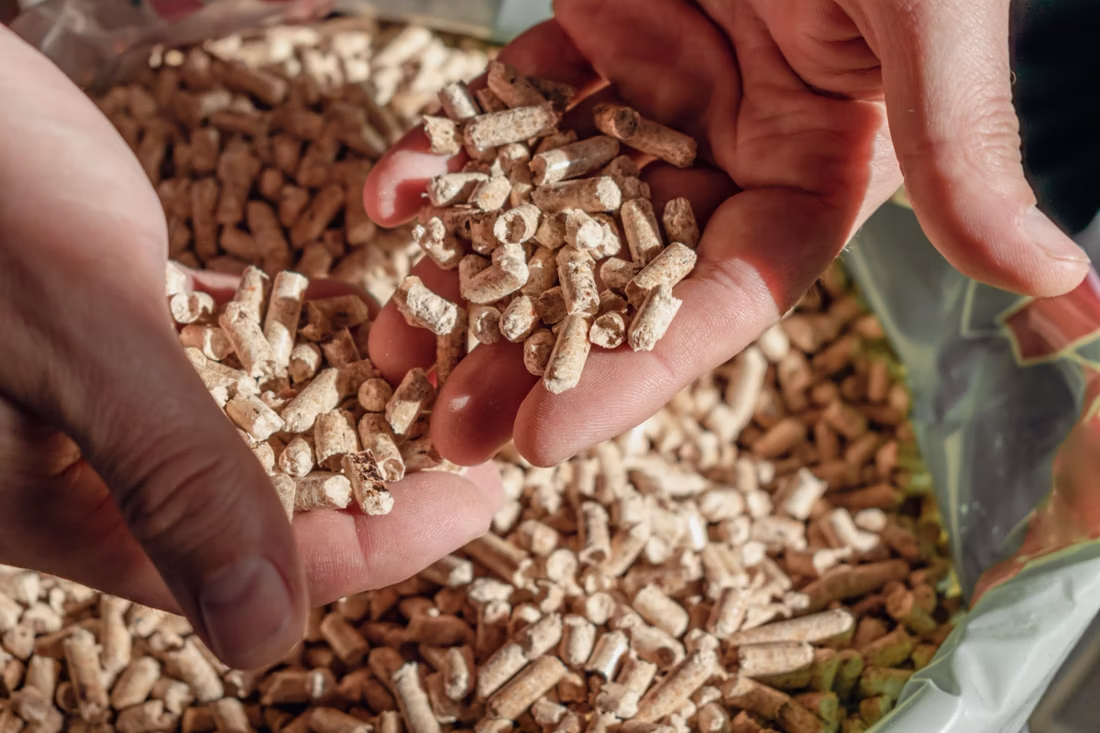
What makes pellet heat a strong fit here isn't nostalgia—it's practicality for a county this rural. Cutting and hauling cordwood from local oak, hickory, or cottonwood is an option plenty of Gosper County households still use, but during calving season, harvest, or a stretch of sub-zero prairie wind, a pellet stove that runs on a thermostat and a hopper is one less thing to manage. Regional pellet supply comes through brands like Lignetics and Indeck Energy Services, typically available through farm supply and hearth dealers in the Kearney and North Platte corridor—worth stocking up on before the roads get bad.
Three steps. No salesperson until you're ready.
Tell us about your project
Your zip code, your situation, and the fuel you're leaning toward—or let the answers point you to one.
See what's actually available
The brands dealers within 100 miles genuinely carry—real options, never a catalog mirage.
Get your dealer & Project Guide
A trusted local dealer, plus the free Project Guide & Parts List that names every component of the job.
Frequently Asked Questions
How much does a pellet stove installation cost in Gosper County?
A typical pellet stove installation runs $3,000 to $6,000 depending on the unit, whether it vents through an existing masonry chimney or needs a new through-wall vent kit, and any electrical work required for the auger and blower. Given Gosper County's size—under 700 residents—most installers travel in from Kearney, North Platte, or Lexington, so expect a modest trip charge factored into the quote rather than a same-town installer. Pellet stoves are generally cheaper to install than wood stoves since they don't require full masonry chimney work, just a simpler vent run through an exterior wall.
Where can I buy pellet fuel near Gosper County?
Lignetics and Indeck Energy Services are the two regional pellet brands most commonly stocked by dealers serving south-central Nebraska, usually sold by the ton or in 40-lb bags through farm supply stores and hearth retailers in Kearney or North Platte. Because Gosper County is sparsely populated with no pellet retailer inside the county itself, most households buy in bulk—a full ton or more at a time—before winter sets in rather than making repeat trips for a bag or two. Planning ahead matters more here than in a town with a hearth shop on every corner.
What size pellet stove do I need for my home?
Sizing depends on square footage, insulation, and whether the stove is primary or supplemental heat. As a rough guide for Gosper County's cold, windy 5A climate: smaller units (under 1,000 sq ft) suit a single room, shop, or lake cabin around Johnson Lake; mid-size units (1,000-2,000 sq ft) handle most farmhouse living areas; larger units can carry a whole well-insulated home through a stretch of single-digit prairie wind. Older farmhouses with less insulation and more exterior wall exposure typically need to size up compared to a newer, tighter build of the same square footage. A local dealer can size this correctly during an in-home visit rather than guessing off a box label.
Where can I find a certified pellet stove installer near Gosper County?
With a county population under 700, there isn't a hearth retailer based inside Gosper County itself—most installers covering Elwood, the Johnson Lake area, and surrounding farmsteads are based out of Kearney, North Platte, or Lexington, all within roughly 30 to 45 minutes. Look for NFI (National Fireplace Institute) certification, which signals training specific to pellet-burning appliances and correct hopper, auger, and vent setup. Installers who also sell the unit typically handle warranty registration and code sign-off as part of the job, which is worth prioritizing over a general handyman install.
Do I need a permit to install a pellet stove in Gosper County?
Most pellet stove installations require a building permit, issued through the Gosper County building office in Elwood for anything outside city limits, or the local municipal office if you're inside one of the county's small towns. Because pellet stoves are exempt from the emissions curtailment rules that apply in some Western states, the permitting process here is mainly about verifying clearances, venting, and electrical hookup rather than emissions testing. Most installers coordinate the permit as part of the job, so it's rarely something homeowners have to chase down themselves.
Will my pellet stove work during a power outage?
Not without backup power. Pellet stoves rely on electricity to run the auger that feeds fuel and the blower that distributes heat, so a standard unit goes dark the moment the power does—a real consideration on the open plains of Gosper County, where prairie wind storms and ice can knock out rural electric service for hours or longer. Many pellet-stove households here pair the unit with a small generator or battery backup sized to keep the stove's electronics running through an outage. If backup power isn't in the plan, ask your local dealer about a wood stove as a supplemental option for outage-proof heat.
What's the best pellet stove for a Gosper County winter?
Look for a unit with a larger hopper capacity and a higher maximum BTU output, since Gosper County's open, wind-exposed terrain pulls heat out of a home faster than a similarly cold but more sheltered location. A 40-60 lb hopper reduces how often you're refilling during a multi-day cold stretch. Pellets from Lignetics, one of the regional brands available through Kearney and North Platte dealers, burn consistently and produce low ash—worth asking about specifically when you're comparing units, since pellet quality affects burn efficiency as much as the stove itself.
How much maintenance does a pellet stove need?
Pellet stoves need less upkeep than a wood-burning chimney system—no annual chimney sweep required—but they do need regular attention. Plan on cleaning the burn pot and ash pan weekly during heavy use, a deeper clean of the exhaust venting and hopper a few times a season, and an annual professional inspection of the auger motor, blower, and vent termination. Because most installers serving Gosper County are based in Kearney or North Platte, it's worth scheduling that annual service call for late summer, before the winter workload picks up for both farm families and installers.
Pellet stove vs. wood stove—which makes more sense for a Gosper County property?
Wood stoves run on local oak, hickory, or cottonwood, work with zero electricity—a real advantage during rural power outages—and often cost less to fuel if you're cutting your own. Pellet stoves are more hands-off: load the hopper, set the thermostat, and you're done, with less ash and no chimney fire risk from creosote buildup. For a working farm household without time to manage a woodpile, or a lake cabin near Johnson Lake used intermittently, pellet is often the more practical fit. For a primary residence where outage-proof backup heat matters most, wood still has the edge. A number of Gosper County households end up with both—pellet for daily convenience, wood as a fallback.
How often does a pellet stove need cleaning?
A clean pellet stove is a happy pellet stove. Plan on cleaning the burn pot about once a week when you're burning regularly—ash and clinkers gum up the air holes just like a pellet barbecue. Most pellet stove problems trace back to skipped cleaning that nobody explained up front. Some designs make it easy with a trapdoor burn pot: pull a lever and the gunk drops into the ash pan.
Why is my open fireplace making my house colder?
Open fireplaces suck—literally. As the fire burns, it consumes air your furnace already paid to heat and pulls it out through the chimney, so the house is actually colder after the fire goes out than before you lit it. An insert fixes this: it seals the chimney, puts fixed glass across the front, and turns that hole in your house into a real heat source.
Can a fireplace actually lower my heating bill?
Yes—by creating a comfort zone. A furnace heats every square foot of the house just to warm the one room you're in; a gas fireplace on low burns roughly a sixth of the gas a typical furnace does. Set the furnace around 55–60 degrees as a baseline, then heat the rooms your family actually uses. Families who heat this way commonly save $20–$60 a month.
Should the dealer who sells my fireplace also install it?
Ideally, yes. A fireplace project involves vent pipe, gas line, electrical, and often tile or stone. Hire three or four separate trades and you own the liability and the game of telephone between them. One company selling and installing means one accountable party, start to finish—ask about factory training, on-time completion records, and what happens if an inspection fails.
Pellet Brands Stocked Around Gosper County
Manufacturers will point you to the nearest stocking dealer.
Find your pellet stove in Gosper County.
Tell us about your home or property near Elwood or Johnson Lake, and we'll match you with a trusted local dealer and send over a free Project Guide & Parts List—the exact parts, vent kit, and installer recommendation for your pellet project.
Find Your Fireplace →