
Steady pellet heat for Dundy County's wide-open winters.
From Benkelman to the ranch roads near the Colorado and Kansas lines, Dundy County winters are long and windy. A pellet stove delivers consistent heat without the woodlot work—find the right unit and a local installer who actually covers this corner of the state.
Every Project Starts From One of These Five Situations
Reliable heat that doesn't depend on a woodpile.
Dundy County sits in Nebraska's far southwest corner, where the state's high plains run straight into the Colorado and Kansas borders. Benkelman, the county seat, anchors a county of just over 1,200 residents spread across roughly 920 square miles of dryland farm and ranch ground. Winters here fall squarely in climate zone 5A—long, cold, and frequently windy, with almost nothing in the way of trees or terrain to slow the gusts that move across open wheat and grazing land. Many of the county's farmhouses and ranch homes were built decades ago with minimal insulation and additions tacked on over the years, which makes heating them with electric baseboard or propane alone genuinely expensive by the time January and February set in.
Pellet stoves have found a real niche in a county like this. Dundy County has no air quality non-attainment concerns, so there's no local burn advisory or curtailment schedule to plan around, unlike counties dealing with winter inversions or wildfire smoke. Regional pellet supply runs through producers like Lignetics and Indeck Energy Services, both of which distribute across the Nebraska-Kansas-Colorado tri-state area, so bagged and bulk pellets aren't hard to come by even out here. What is harder to come by is a hearth dealer inside the county itself—with a population this small, most Dundy County homeowners end up working with an installer based in McCook, across the line in Wray, Colorado, or down toward St. Francis, Kansas. That's the gap Find My Fireplace is built to close: rather than guessing which regional dealer actually services rural Dundy County addresses, we match you with one who does.
Three steps. No salesperson until you're ready.
Tell us about your project
Your zip code, your situation, and the fuel you're leaning toward—or let the answers point you to one.
See what's actually available
The brands dealers within 100 miles genuinely carry—real options, never a catalog mirage.
Get your dealer & Project Guide
A trusted local dealer, plus the free Project Guide & Parts List that names every component of the job.
Frequently Asked Questions
How much does a pellet stove installation cost in Dundy County?
Across rural southwest Nebraska, a typical pellet stove installation runs in the $3,000 to $6,000 range, depending on the unit, whether a new hearth pad or floor protection is needed, and how the venting is run through an exterior wall. Because there isn't a hearth retailer physically inside Dundy County, installers based in McCook or across the Colorado and Kansas lines often build a modest trip charge into rural quotes—it's worth asking about upfront when you get an estimate, since a ranch address 40 minutes from town is a different job than one in Benkelman city limits.
What size pellet stove do I need for a Dundy County home?
Sizing comes down to square footage, ceiling height, and how drafty the structure is—and a lot of Dundy County housing stock is older farmhouses with additions that weren't built to the same insulation standard as the original structure. A stove rated for 1,000-1,500 square feet often underperforms in a leaky older farmhouse of the same size once the plains wind starts pulling heat out through gaps around windows and doors. Hopper capacity matters too: a larger hopper means fewer refills during the long stretches of single-digit weather that climate zone 5A winters bring, which is a real convenience on a working ranch where nobody wants to babysit a stove every few hours.
Where can I find a pellet stove dealer or installer near Dundy County?
There's no hearth retailer based directly in Dundy County, so most homeowners work with an installer out of McCook (about 45 minutes northeast), Wray, Colorado, or St. Francis, Kansas, depending on which direction is closer to your property. Coverage and travel radius vary a lot by installer, and not every dealer that lists Nebraska service actually reaches this far southwest. That's the specific problem Find My Fireplace solves for a county this size—we confirm which trusted installer genuinely covers your address before we make the match, rather than sending you a list of names to cold-call.
Pellet stove vs. wood stove—which makes more sense out here?
Dundy County's shelterbelts and river-bottom timber run to oak, hickory, and cottonwood, and plenty of longtime ranch families already have access to cordwood through their own ground or a neighbor's windbreak, which makes wood heat close to free if you've got the time and equipment to cut and haul it. A pellet stove trades that self-sufficiency for convenience: load the hopper, set the thermostat, and go check cattle instead of splitting wood. For households without a woodlot, a tractor with a log splitter, or the time to manage a wood supply through a long 5A winter, pellets bought by the ton from a regional supplier like Lignetics or Indeck Energy Services are often the more realistic option.
Where can I buy pellets locally in Dundy County?
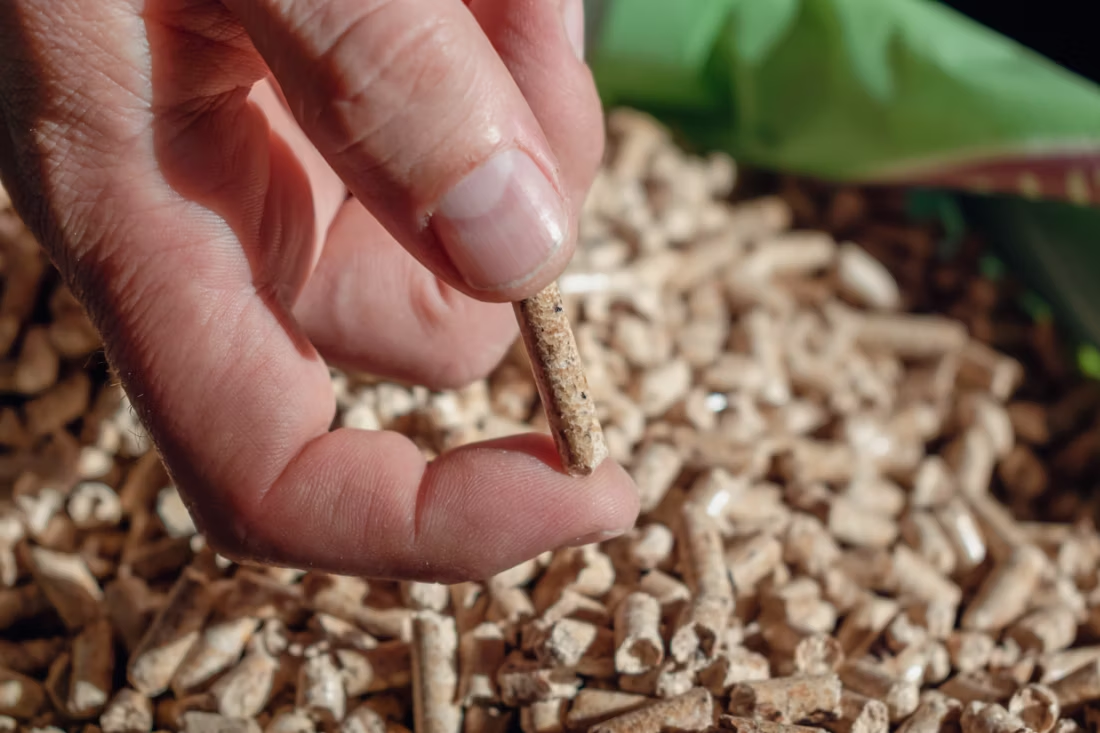
Bagged pellets are typically stocked seasonally at farm and ranch supply stores in Benkelman or McCook, and bulk delivery is available in some cases through regional distributors carrying Lignetics or Indeck Energy Services product lines. Expect to pay somewhere in the neighborhood of $250 to $320 per ton for standard softwood pellets, with premium hardwood blends running higher—and expect to stock up early in the fall, since rural supply chains this far from a distribution hub can tighten up once cold weather actually arrives.
Do I need a permit to install a pellet stove in Dundy County?
New pellet stove installations generally require a building permit, and in unincorporated Dundy County that means checking with the county's building and zoning office before work starts; installations within Benkelman city limits go through the city. Most installers coming from McCook or out of state handle the paperwork as part of the job. The stove itself should carry current EPA certification—nearly all pellet stoves sold today do—but there's no burn-day restriction or curtailment period to worry about locally, since the county has no air quality non-attainment designation.
Will my pellet stove work if the power goes out?
No—pellet stoves rely on an electric auger to feed fuel and a blower to circulate heat, so they shut down the moment the power does. That's a real consideration in Dundy County, where high plains wind and ice storms can knock out rural electric co-op service for hours or longer. A small battery backup or portable generator sized to the stove's low wattage draw can keep it running through most outages. If reliable heat during multi-day outages is your top priority, a wood stove that runs on no electricity at all is worth comparing against pellet before you decide.
How much maintenance does a pellet stove need?
Plan on emptying the ash pan every few days during regular use, wiping down the glass weekly, and vacuuming the burn pot and hopper area periodically through the season. A full annual service—checking the auger motor, blower, exhaust vent, and gaskets—is worth scheduling before each heating season, ideally with whichever installer or regional service tech covers your part of the county, since a stove that's out of service in January is a hard fix to schedule quickly out here.
What's the best pellet stove for Dundy County's climate?
Look for a stove with a larger hopper capacity—40 to 60 pounds or more—so you're not refilling constantly during the long cold stretches that climate zone 5A brings to the high plains. Brands like Harman and Quadra-Fire are common choices for cold-climate, heavy-use situations and hold up well as a primary or near-primary heat source. Direct-vent models are worth prioritizing given how consistently the wind blows across open Dundy County ground—proper vent termination placement matters more here than in a sheltered suburban lot. A local installer can walk through hopper size, BTU output, and vent placement specific to your house.
Why is a fireplace insert so efficient?
An insert does two things: it seals the chimney completely, so you stop losing air you already paid to heat, and it radiates warmth into the room through the firebox and glass. Most add a heat-exchange fan that pulls cool room air underneath, wraps it around the hot firebox, and pushes it back out warm. Your home is more efficient before you've even lit the first fire.
How often does a pellet stove need cleaning?
A clean pellet stove is a happy pellet stove. Plan on cleaning the burn pot about once a week when you're burning regularly—ash and clinkers gum up the air holes just like a pellet barbecue. Most pellet stove problems trace back to skipped cleaning that nobody explained up front. Some designs make it easy with a trapdoor burn pot: pull a lever and the gunk drops into the ash pan.
How much should I budget for a fireplace?
For an average home—covering the fireplace, the vent pipe, and basic installation—a budget between $3,900 and $5,500 gives you a lot of options across wood, gas, and pellet. By the time you add finish work, gas line, and electrical, the average complete installation lands between $5,000 and $12,000 all-in. In a remodel or new build, a good rule is to put about 2.5% of the total project cost toward the fireplace.
Can I install a fireplace myself?
If you're putting a fire in your house on purpose, it's best to work with an expert. Unless you're genuinely experienced in framing, gas line, vent pipe, and the national code on clearances to combustibles, have a professional do it—and ideally the same company that sells you the fireplace, so warranty, service, and liability all live under one roof.
Pellet Brands Stocked Around Dundy County
Manufacturers will point you to the nearest stocking dealer.
Find your pellet stove in Dundy County.
Tell us a bit about your home and we'll match you with a trusted local installer who actually covers Dundy County, plus a free Project Guide & Parts List with the exact parts—including the vent kit—for your pellet stove project.
Find Your Fireplace →