
Add electric fireplace heat to your Chase County home.
Plug-in zone heat for the wind-driven cold around Imperial, Champion, Lamar, and Wauneta—no chimney, no gas line, no masonry work. Find the right unit and get matched with a trusted local dealer.
Every Project Starts From One of These Five Situations
Zone heat that keeps up with the High Plains wind.
Chase County sits on the open High Plains of southwest Nebraska, just north of the Kansas and Colorado lines, with a population under 3,000 spread across farm ground and small towns like Imperial, Champion, Lamar, and Wauneta. At climate zone 5A with 6,305 heating degree days and winter lows averaging 12°F, the cold season here runs long and the wind makes it feel worse than the thermometer says—a severity in the same range as a winter in Buffalo, NY. That combination of wide-open exposure and older farmhouse or manufactured-home stock is exactly where a supplemental electric unit earns its keep.
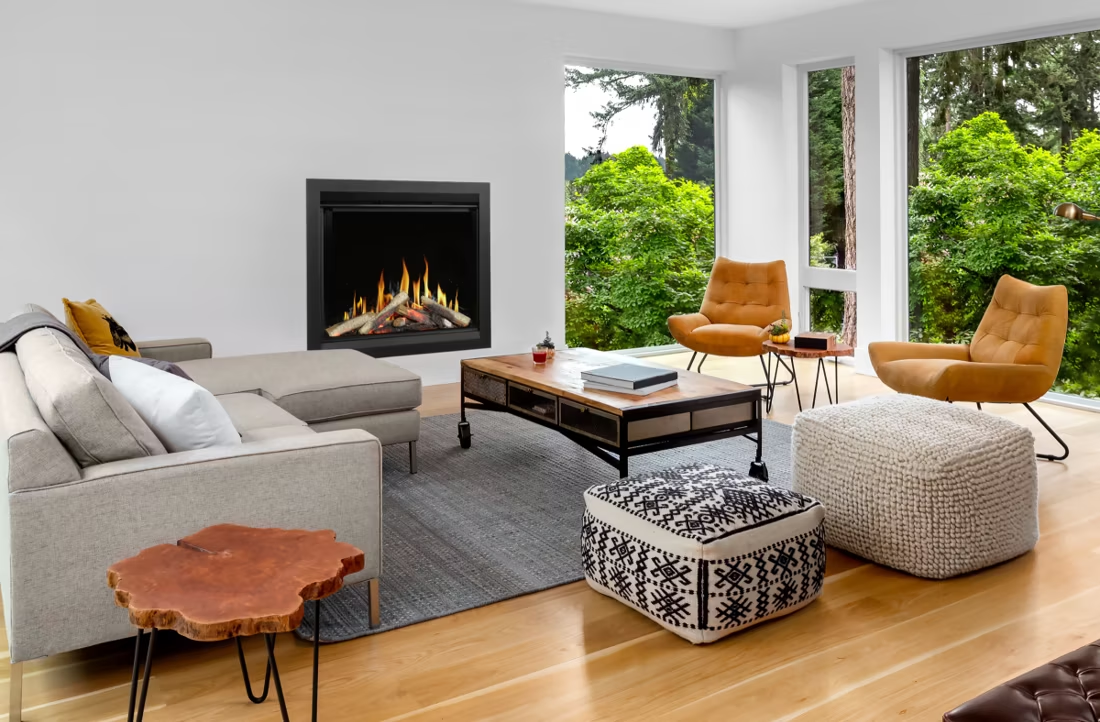
A lot of Chase County housing wasn't built with a masonry chimney or a gas line running to the living room, and retrofitting either into a rural farmhouse or a manufactured home is expensive and often impractical. An electric fireplace or insert sidesteps that entirely—it runs off a standard outlet or a dedicated 240V circuit through Chase County Public Power District, adds real, controllable heat to a bedroom, sunroom, or living area, and installs in an afternoon rather than a multi-day project. For homeowners who want the look and the zone heat without opening up a wall for venting, it's the lowest-friction upgrade available in the county.
Three steps. No salesperson until you're ready.
Tell us about your project
Your zip code, your situation, and the fuel you're leaning toward—or let the answers point you to one.
See what's actually available
The brands dealers within 100 miles genuinely carry—real options, never a catalog mirage.
Get your dealer & Project Guide
A trusted local dealer, plus the free Project Guide & Parts List that names every component of the job.
Frequently Asked Questions
How much does an electric fireplace installation cost in Chase County?
A plug-in electric fireplace or insert that uses a standard 120V outlet typically runs $300 to $900 installed, including mounting and trim work—many homeowners handle the unit itself and just have an electrician confirm the circuit. A hardwired 240V insert or built-in unit, which delivers more consistent heat output for a larger room, runs closer to $800 to $1,800 once a dedicated circuit is run from the panel. Costs on the higher end are more common in older farmhouses around Imperial and Champion where panel capacity or wiring runs need updating before the new circuit goes in.
What size electric fireplace do I need for my home?
Electric fireplaces are rated for supplemental zone heat, typically covering 400 to 1,000 square feet per unit depending on the model and insulation. In a Chase County farmhouse with drafty older windows, plan on the lower end of that range and treat the unit as a heat boost for one room rather than a whole-house solution—the same way you'd size a space heater, just far more efficient and better-looking. For a large open living area, some homeowners install two smaller units rather than one oversized unit to get more even coverage. A local dealer can walk your specific room and recommend wattage based on your insulation and window exposure.
Should I get a plug-in unit or a hardwired 240V electric fireplace?
A plug-in unit is the simplest option—it uses a standard outlet, requires no electrical work, and can be moved if you rearrange a room. It's a good fit for a bedroom, den, or basement in a Chase County home where you want heat and ambiance without any construction. A hardwired 240V insert or built-in fireplace delivers more heat output and a cleaner, flush installation, but it needs a licensed electrician to run a dedicated circuit from the panel—worth it for a main living area where you want the fireplace to actually contribute to comfort on a 12-degree night, not just look good.
Will my electric fireplace work during a power outage?
No—this is the honest tradeoff with electric heat. Unlike a wood stove or a battery-backed gas fireplace, an electric unit stops working the moment the power drops, which matters in Chase County given how exposed the county is to winter wind events that can knock out rural power lines. If backup heat during an outage is a priority for your household, pair an electric fireplace for everyday convenience with a wood stove or a gas unit with battery ignition as your outage backup, rather than relying on electric alone.
Do I need a permit to install an electric fireplace in Chase County?
A plug-in electric fireplace generally doesn't require a permit since there's no venting, gas line, or new wiring involved—it's treated like any other appliance. A hardwired 240V insert or built-in unit that requires a new circuit may need an electrical permit depending on the scope of the work, since it touches your home's wiring and panel. Most licensed electricians serving Chase County will tell you up front whether your specific installation needs a permit pulled, and a reputable local dealer will coordinate that as part of the install rather than leaving you to sort it out.
What's the best electric fireplace for a cold Nebraska winter?
For a Chase County home dealing with 6,305 heating degree days and regular wind chill well below the 12°F average low, look for a unit with a true 240V heating element rather than a smaller 120V plug-in model if you want it to meaningfully offset your furnace load in one room. Look for models with adjustable thermostats and multi-stage heat settings, since you'll want to dial output up on the coldest nights and down to ambiance-only the rest of the time. A local dealer can match wattage to your specific room size and insulation rather than guessing off a box label.
How much does it cost to run an electric fireplace in Chase County?
Running cost depends on your Chase County Public Power District rate and the unit's wattage, but a typical 1,500-watt electric fireplace run on high for several hours a day costs roughly $10 to $25 a month in most rural Nebraska rate structures—far less than most homeowners expect. Because electric units have no standby draw beyond the light or flame effect when the heater is off, many homeowners leave the flame running for ambiance without meaningfully affecting the bill. Actual cost varies with how many hours a day you run it on heat versus flame-only.
Electric vs. wood—which makes sense for my Chase County home?
Wood—burning local oak, hickory, or cottonwood—delivers more total heat, works with no electricity during an outage, and is the traditional backbone of rural Nebraska heating, but it means chimney maintenance, ash cleanup, and sourcing or cutting firewood. Electric offers instant on-off convenience, zero maintenance, and no smoke or ash, but it depends entirely on grid power and works best as supplemental zone heat rather than a whole-house solution. Many Chase County households run both: a wood stove for the farmhouse's main heat backup, and an electric unit in a bedroom or den for everyday convenience without hauling wood.
Can I convert my existing masonry fireplace to electric in Chase County?
Yes—an electric insert can be fitted into most existing masonry fireplace openings without touching the chimney or flue, since there's no venting required at all. This is a popular option for older Chase County farmhouses with a fireplace that's gone unused or drafty for years; the insert seals the opening, adds real heat output, and eliminates the cold-air draw an open masonry fireplace creates in a windy winter. Sizing the insert to your existing opening is the main variable—a local dealer can measure and confirm fit before you buy.
Can I put a TV above my fireplace?
Yes—with an asterisk. Fireplaces are hot and TVs don't like heat. Either put a mantel between them to deflect rising warmth, or choose a fireplace with heat-management technology that creates a cool zone on the wall above—the wall stays around 125 degrees, barely warm, while the room still gets full heat. If you like clean lines and don't want a mantel, heat management is the answer.
Do electric fireplaces actually produce heat?
Yes—most put out around 4,800–5,000 BTUs from a standard outlet, which comfortably warms a bedroom, office, or den as a comfort-zone heater. What they won't do is carry a whole house the way wood, gas, or pellet can. Think of electric as ambiance-first with honest supplemental heat: flames on with no heat in July, flames plus warmth in January.
How much should I budget for a fireplace?
For an average home—covering the fireplace, the vent pipe, and basic installation—a budget between $3,900 and $5,500 gives you a lot of options across wood, gas, and pellet. By the time you add finish work, gas line, and electrical, the average complete installation lands between $5,000 and $12,000 all-in. In a remodel or new build, a good rule is to put about 2.5% of the total project cost toward the fireplace.
What is an in-home preview and do I need one?
It's a visit where a hearth professional measures your space, confirms the model you picked actually works in your home, and walks the specs—framing, gas line, venting, finish work—before anything is ordered. Some details you just can't know until you see the house. Never make a down payment without one; it's the single most-skipped step that burns buyers.
Find your electric fireplace in Chase County.
Tell us a bit about your home and we'll match you with a trusted local dealer and send over a free Project Guide & Parts List—the exact parts for your Chase County electric fireplace project, including the mounting and wiring needs, and who locally can install it.
Find Your Fireplace →