
Clean electric heat for one of Montana's most remote counties.
No chimney, no gas line, no venting—just plug-in or hardwired warmth for ranch homes, sunrooms, and manufactured housing around Hysham and the Yellowstone River bottom. Find the right unit and connect with a trusted local dealer.
Every Project Starts From One of These Five Situations
Electric heat that keeps up with high-plains cold—without smoke or venting.
Treasure County is one of Montana's least populated counties—roughly 232 residents spread across the Yellowstone River valley around Hysham, with wide-open ranch country running to the horizon in every direction. Winters here sit in climate zone 6B: long, hard, and dry, with stretches of sub-zero cold more typical of Bismarck ND or Fargo ND than a mild river valley. There's no natural gas infrastructure reaching most of the county, so heating choices come down to what can be trucked, wired, or delivered—wood, propane, and increasingly, electric.
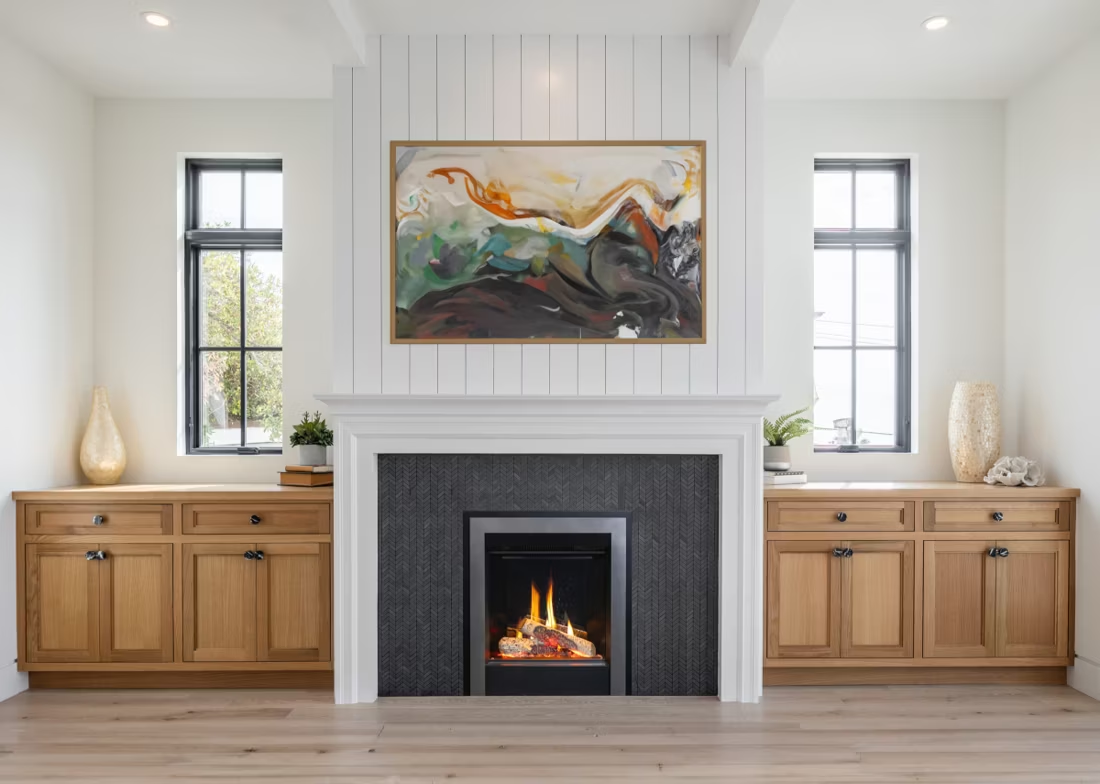
Electric fireplaces have found a real niche here precisely because they skip the hassles that come with the county's remoteness. No firewood to buck and haul, no propane tank to schedule a fill, no chimney to maintain on a guest cabin or shop office fifteen miles from the nearest hardware store. For a well-insulated ranch home, a manufactured house on the edge of Hysham, or a sunroom addition, an electric insert or stove delivers instant zone heat and a real flame look with none of the combustion byproducts that matter during wildfire smoke season, when air quality already takes a hit from regional fires. The tradeoff worth knowing: electric heat depends entirely on the grid, and rural power lines in this stretch of Montana do go down during winter storms—which is why most local homes still keep a wood stove or propane heater as backup, with electric handling the everyday, no-hassle heat.
Three steps. No salesperson until you're ready.
Tell us about your project
Your zip code, your situation, and the fuel you're leaning toward—or let the answers point you to one.
See what's actually available
The brands dealers within 100 miles genuinely carry—real options, never a catalog mirage.
Get your dealer & Project Guide
A trusted local dealer, plus the free Project Guide & Parts List that names every component of the job.
Frequently Asked Questions
How much does an electric fireplace installation cost in Treasure County?
Most electric fireplace projects in Treasure County run $300 to $2,500. A plug-in insert or freestanding stove that drops into an existing fireplace opening or sits against a wall is on the low end—no electrician required beyond a standard outlet. A built-in wall unit or a linear electric fireplace wired to its own dedicated circuit runs higher, especially if an electrician has to run new wiring in an older ranch house or ranch outbuilding. Because there's no venting or gas line involved, electric is consistently the least expensive fuel type to install in the county, and it's often the fastest—a local dealer can typically get a unit in and running in a single visit.
Will an electric fireplace actually heat my home, or is it just for looks?
A quality electric fireplace with a built-in heater will supply real supplemental heat—typically 5,000 to 10,000 BTU, enough to comfortably warm a single room or open living area in a well-insulated home. For the larger, older ranch homes common around Hysham, an electric unit works best as zone heat for the room you're actually living in, paired with your home's main heat source (often propane) for the rest of the house. Given Treasure County's climate zone 6B winters, don't expect an electric fireplace to carry a whole house through a January cold snap on its own—that's a job for wood or propane. It excels as targeted, no-fuss heat for a den, sunroom, or converted outbuilding.
Will my electric fireplace work during a power outage?
No—and this matters more in Treasure County than in most places. Electric fireplaces require power to run both the flame effect and the heater, so when a winter storm takes down rural lines along the Yellowstone River bottom, the unit goes dark along with everything else. Outages here can stretch for a day or more during a hard blizzard, which is why most local homes that rely on electric fireplaces for everyday heat still keep a wood stove or propane heater on hand for genuine emergency backup. If backup heat during outages is a priority for your household, ask a local dealer about pairing an electric unit with a wood or pellet stove rather than relying on electric alone.
What's the difference between an electric fireplace, insert, and stove?
An electric insert is built to slide into an existing fireplace opening—masonry or zero-clearance—and is the most common upgrade for older Treasure County ranch homes with an unused wood-burning fireplace. An electric fireplace (or built-in unit) is designed to be framed into a wall, common in new construction or remodels. An electric stove is a freestanding cabinet-style unit that can go anywhere near an outlet, making it a popular choice for outbuildings, shop offices, and guest cabins scattered across the county's rural acreage. All three plug into standard household wiring or, for larger units, a dedicated 120V or 240V circuit.
Do I need a permit to install an electric fireplace in Treasure County?
Plug-in electric fireplaces and stoves generally don't require a building permit since there's no venting or gas work involved. If you're having a built-in unit hardwired to a new dedicated circuit, that electrical work typically needs to meet code and may require an electrical permit depending on the scope—worth confirming with the county or your installing electrician before work starts. Because Treasure County's population is so small, most homeowners coordinate directly with a licensed electrician serving the Hysham area rather than a dedicated hearth-permitting office.
What should I look for in an electric fireplace for a cold Montana climate?
Look for a unit with a genuine, rated heater output (5,000+ BTU) rather than one sold purely for the flame visual—in a 6B climate, you want the heat to actually contribute. Realistic LED flame technology has improved enough that many units look convincing even in bright daylight, which matters in ranch homes with big south-facing windows. For outbuildings or uninsulated spaces around the property, a stove-style unit with a built-in thermostat and overheat protection is a safer, more efficient choice than a basic space heater dressed up as a fireplace. A local dealer can match wattage and BTU output to your specific room size.
How much does it cost to run an electric fireplace day to day?
Running costs come down to your electric rate and how many hours a day the heater element runs, not just the flame effect (the flame alone uses very little power). At typical rural Montana electric rates, running the heater on a medium setting for several hours a day during winter adds a modest amount to a monthly bill—usually far less than heating an equivalent space with a portable resistance heater, since most electric fireplaces cycle on a thermostat rather than running full-blast constantly. For Treasure County homes on rural electric service, ask your dealer about the specific wattage draw of any unit you're considering so you can estimate against your utility's rate.
Is an electric fireplace a good fit for a manufactured or rental home in Hysham?
Yes—electric is often the best fit for manufactured housing and rentals, which make up a meaningful share of housing in a county this small. There's no chimney or gas line to install or maintain, no combustion appliance to inspect, and most units can be unplugged and taken along if a renter moves. For manufactured homes, a freestanding electric stove or a low-profile insert avoids any structural changes to walls or flooring, which matters when working within manufactured-home construction standards.
Electric vs. wood—which makes more sense for my Treasure County home?
Wood—split from local lodgepole pine, ponderosa pine, Douglas fir, or aspen—remains the backbone of real emergency heat in the county, since it works with no power at all during outages and pairs naturally with the self-sufficient ranching lifestyle common here. Electric wins on convenience: no hauling firewood, no ash, no chimney maintenance, and instant on-off operation for a den or sunroom. Most Treasure County households end up with a practical split—wood or propane as the reliable, power-independent backbone, and electric for easy, everyday zone heat in the rooms used most. A local dealer can help you figure out which room gets which.
Can I put a TV above my fireplace?
Yes—with an asterisk. Fireplaces are hot and TVs don't like heat. Either put a mantel between them to deflect rising warmth, or choose a fireplace with heat-management technology that creates a cool zone on the wall above—the wall stays around 125 degrees, barely warm, while the room still gets full heat. If you like clean lines and don't want a mantel, heat management is the answer.
Does an electric fireplace need a vent or chimney?
No—that's its superpower. An electric fireplace needs a wall and an outlet, period. No vent pipe, no gas line, no clearances to design around, which is why it works in bedrooms, offices, apartments, and walls where venting a gas or wood unit would be impractical or impossible. Installation is typically the simplest and least expensive of any fireplace type.
What is an in-home preview and do I need one?
It's a visit where a hearth professional measures your space, confirms the model you picked actually works in your home, and walks the specs—framing, gas line, venting, finish work—before anything is ordered. Some details you just can't know until you see the house. Never make a down payment without one; it's the single most-skipped step that burns buyers.
Can a fireplace actually lower my heating bill?
Yes—by creating a comfort zone. A furnace heats every square foot of the house just to warm the one room you're in; a gas fireplace on low burns roughly a sixth of the gas a typical furnace does. Set the furnace around 55–60 degrees as a baseline, then heat the rooms your family actually uses. Families who heat this way commonly save $20–$60 a month.
Find your electric fireplace in Treasure County.
Tell us a bit about your home near Hysham and we'll put together a free Project Guide & Parts List—the right electric fireplace, insert, or stove for your space, matched with a trusted local dealer who can install it.
Find Your Fireplace →