
Steady, low-maintenance heat for Teton County's long winters.
From Choteau out along the Rocky Mountain Front to the ranches near Fairfield and Bynum, Teton County winters run long and windy. A pellet stove gives you consistent, hopper-fed heat without the daily wood-splitting—find the right unit and connect with a trusted local dealer.
Every Project Starts From One of These Five Situations
Reliable warmth without daily wood-splitting.
Teton County sits where the plains meet the Rocky Mountain Front, with the county seat of Choteau anchoring a population of just over 3,100 spread across ranch country toward Fairfield, Dutton, Bynum, and Pendroy. At 7,845 heating degree days, the county's heating load is on par with Fargo or Bismarck, North Dakota—and the average winter low of 13°F doesn't account for the chinook and downslope winds the Front is known for, which can make a still 15°F night feel much colder against an older farmhouse's walls.
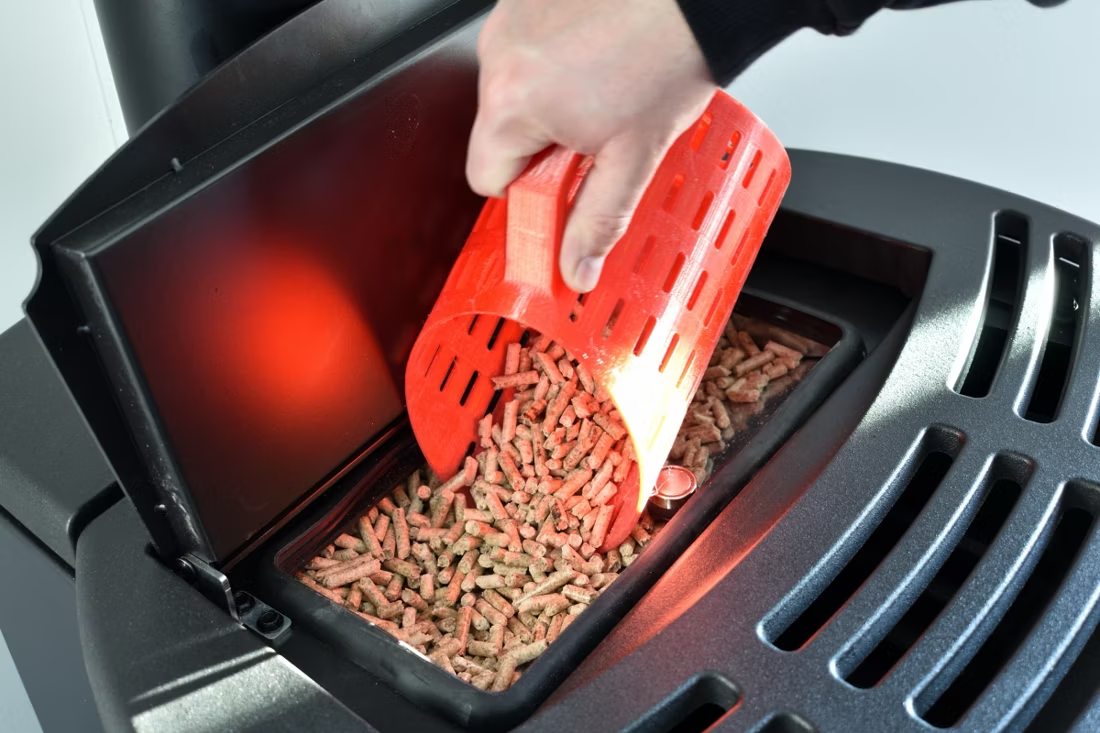
Many Teton County homes still burn cordwood cut from the lodgepole pine, ponderosa pine, Douglas fir, and aspen stands that cover the foothills, but a pellet stove solves a real problem for busy ranch households: you load a hopper, not a woodbox, and it burns unattended for a day or more. Regional pellet brands like Bear Mountain, Lignetics, and Forest Energy are milled from the same sawmill residue found across the Northern Rockies, and pellet appliances burn far cleaner than an open wood fire—a real advantage in a region where wildfire smoke can settle into the valley for weeks at a stretch during late summer and fall.
Three steps. No salesperson until you're ready.
Tell us about your project
Your zip code, your situation, and the fuel you're leaning toward—or let the answers point you to one.
See what's actually available
The brands dealers within 100 miles genuinely carry—real options, never a catalog mirage.
Get your dealer & Project Guide
A trusted local dealer, plus the free Project Guide & Parts List that names every component of the job.
Frequently Asked Questions
How much does a pellet stove installation cost in Teton County?
Cost depends heavily on whether you're installing a freestanding stove that vents through a wall, or a pellet insert going into an existing masonry fireplace—plus the length of the pellet vent run and any electrical work needed to power the auger and blower. Because Teton County is sparsely populated and spread out along the Front, expect a local dealer to factor in some travel time for installs out toward Bynum, Pendroy, or the more remote ranch roads. A dealer will give you a firm, in-home quote once they've seen your hearth, your wall or chimney situation, and your electrical panel.
What size pellet stove do I need for my home?
Sizing in Teton County leans toward the larger end of the spectrum because of the county's cold-climate heating load—7,845 heating degree days means a stove needs real sustained output, not just ambiance. Older ranch homes with single-pane windows and uninsulated additions typically need a bigger hopper and higher-BTU unit than the square footage alone would suggest, especially with the Front's wind driving infiltration through every gap in the envelope. A local dealer will walk your home and factor in ceiling height, insulation, and how exposed the house is to prevailing westerlies before recommending a size.
Where can I buy pellets in or near Teton County?
Regional brands like Bear Mountain, Lignetics, and Forest Energy are the most common pellets sold through farm supply and hardware stores serving Choteau and the surrounding county, with additional selection available in Great Falls for anyone making a supply run. Because Teton County is rural and distances between towns are real, most households who heat primarily with pellets buy in bulk—a full winter's supply, purchased and stored in the fall—rather than making repeated trips for a few bags at a time.
Will a pellet stove work if my power goes out?
Not without help. Pellet stoves rely on electricity to run the auger that feeds fuel and the blower that distributes heat, so a power outage stops the stove even with a full hopper. This matters in Teton County, where high wind events along the Front can knock down rural electric cooperative lines for hours or longer. If backup heat during outages is a priority for your household, ask your dealer about a battery backup system sized for a pellet stove, or pair the pellet stove with a small wood stove or fireplace for true off-grid heat.
Do I need a permit to install a pellet stove in Teton County?
Most new pellet stove and insert installations require a building permit, handled through the county building department for homes outside Choteau's town limits, or through the town for in-town properties. The permit process mainly confirms proper clearances, hearth protection, and correct venting for the appliance. Most local dealers handle the permit paperwork as part of the installation, so it's rarely something the homeowner has to manage directly.
Are pellet stoves affected by wildfire smoke restrictions in Teton County?
Wildfire smoke is a real seasonal concern along the Rocky Mountain Front, typically in late summer and fall rather than during the coldest heating months. Pellet stoves burn considerably cleaner than an open wood fire or older uncertified wood stove, and because they're a sealed, fan-driven appliance rather than an open hearth, they aren't the target of the kind of burn advisories that sometimes apply to wood-burning during smoke events. That said, if regional air quality alerts are issued, it's worth checking current guidance before running any solid-fuel appliance heavily.
What's the difference between a pellet stove and a pellet insert?
A pellet stove is a freestanding appliance that vents through an exterior wall with a short horizontal pellet vent pipe—it can go almost anywhere in a home with access to an outside wall and an electrical outlet. A pellet insert is built to slide into an existing masonry fireplace opening, using a liner run up the old chimney. For Teton County's older ranch houses that already have a wood fireplace, an insert is often the simpler retrofit; homes without an existing fireplace, or newer construction, are usually better suited to a freestanding stove.
Pellet stove vs. wood stove—which makes more sense for Teton County?
Wood stoves burn cordwood cut from local lodgepole pine, ponderosa pine, Douglas fir, or aspen, work with zero electricity, and are the more traditional choice for ranch properties with their own timber access. Pellet stoves trade that off-grid independence for convenience—automated feed, longer unattended burn times, easier ash cleanup, and a more consistent heat output night after night, which matters at 7,845 heating degree days. Many Teton County households that split their time between town and the ranch, or simply don't want to be out splitting and stacking wood every fall, lean toward pellet. Households most concerned about extended power outages during Front wind events often keep a wood-burning option as backup.
What's the best pellet stove for Teton County's climate?
Look for a stove rated for sustained high-output burning rather than a lighter-duty model built for milder climates—with 7,845 heating degree days, Teton County's heating season is closer to International Falls, Minnesota than it is to most of the Mountain West. A larger hopper capacity is also worth prioritizing so the stove can run through a long cold stretch or a wind-driven cold snap without a daily refill. Ask your local dealer which models pair well with the regional pellet supply from Bear Mountain, Lignetics, or Forest Energy, since fuel consistency affects both burn quality and how often you'll need to clean the burn pot.
What's the difference between an insert and a zero-clearance fireplace?
An insert is a fireplace that slides into a pre-existing wood-burning fireplace—if you don't have one, there's nothing to insert it into. A zero-clearance fireplace is built into a framed wall, which makes it the answer for remodels and new construction. Simple test: existing masonry fireplace means insert; blank or framed wall means zero-clearance.
Why is a fireplace insert so efficient?
An insert does two things: it seals the chimney completely, so you stop losing air you already paid to heat, and it radiates warmth into the room through the firebox and glass. Most add a heat-exchange fan that pulls cool room air underneath, wraps it around the hot firebox, and pushes it back out warm. Your home is more efficient before you've even lit the first fire.
Can a fireplace actually lower my heating bill?
Yes—by creating a comfort zone. A furnace heats every square foot of the house just to warm the one room you're in; a gas fireplace on low burns roughly a sixth of the gas a typical furnace does. Set the furnace around 55–60 degrees as a baseline, then heat the rooms your family actually uses. Families who heat this way commonly save $20–$60 a month.
Can I install a fireplace myself?
If you're putting a fire in your house on purpose, it's best to work with an expert. Unless you're genuinely experienced in framing, gas line, vent pipe, and the national code on clearances to combustibles, have a professional do it—and ideally the same company that sells you the fireplace, so warranty, service, and liability all live under one roof.
Pellet Brands Stocked Around Teton County
Manufacturers will point you to the nearest stocking dealer.
Find your pellet stove in Teton County.
Tell us a bit about your home along the Rocky Mountain Front and we'll put together a free Project Guide & Parts List—the right pellet stove or insert, the vent kit it needs, and a trusted local dealer to install it.
Find Your Fireplace →