
Electric heat that goes wherever you need it in Rosebud County.
No chimney, no gas line, no venting—just plug in or wire in warmth for a bedroom, den, or addition anywhere in Rosebud County. Find the right unit and connect with a trusted local dealer.
Every Project Starts From One of These Five Situations
Electric heat fills the gaps wood and propane leave behind.
Rosebud County spreads across roughly 5,000 square miles of southeastern Montana, home to just 6,768 people scattered between Forsyth, Colstrip, Ashland, and Lame Deer. It's classified climate zone 6B, with average winter lows near 14°F and about 7,369 heating degree days a year—colder, on paper, than Bozeman logs on the other side of the state. Wood heat runs deep here: local lodgepole pine, ponderosa pine, Douglas fir, and aspen keep plenty of stoves burning through the coldest stretches, with propane filling in where wood isn't practical. Electric fireplaces don't try to replace that—they fill a different role.
Rosebud County is also home to the Colstrip Steam Electric Station, one of the largest coal-fired power plants in the western United States, and to rural electric service through Tongue River Electric Cooperative, headquartered in Ashland. That local relationship with power generation doesn't mean electric heat can carry a whole home through a Rosebud County winter—the climate is too demanding for that—but it does mean an electric fireplace is a practical, no-venting way to add heat and ambiance to a bedroom, den, or converted space. And because the county sits in a designated non-attainment area where wildfire smoke can trigger burn restrictions, an electric unit is one of the few heat sources that keeps running no matter what the local air quality advisory says.
Three steps. No salesperson until you're ready.
Tell us about your project
Your zip code, your situation, and the fuel you're leaning toward—or let the answers point you to one.
See what's actually available
The brands dealers within 100 miles genuinely carry—real options, never a catalog mirage.
Get your dealer & Project Guide
A trusted local dealer, plus the free Project Guide & Parts List that names every component of the job.
Frequently Asked Questions
How much does an electric fireplace installation cost in Rosebud County?
Electric is the least expensive fireplace project available in Rosebud County, mostly because there's no chimney, no gas line, and no combustion venting to engineer. A plug-in freestanding electric stove or a simple wall-mount insert typically runs $200 to $700 installed. A built-in electric fireplace or a linear wall unit that needs a dedicated 20-amp circuit run by an electrician usually lands between $800 and $2,000, depending on how far the circuit has to travel from the panel—a bigger factor in older Forsyth and Colstrip homes than in newer construction. Larger linear units with higher heat output can push toward $2,500 to $3,000 installed. Compare that to the wood stoves and propane inserts most Rosebud County homes rely on for primary heat, which commonly run several thousand dollars once venting is included.
What size electric fireplace do I need for my room?
Most electric fireplaces are rated to supplement heat for 400 to 1,000 square feet with a standard 1,500-watt heating element—enough to take the chill off a living room or bedroom, not carry a whole house through a Rosebud County winter with roughly 7,369 heating degree days and average lows near 14°F. Think in terms of the specific room, not the whole home: a 30- to 40-inch insert or linear unit suits most main living areas, while a smaller 26-inch unit works for bedrooms or additions. If you're trying to warm an uninsulated addition or a drafty older home in Ashland or Lame Deer, plan on electric as a supplement to your existing wood stove or propane system rather than a replacement for it.
Do I need a permit to install an electric fireplace in Rosebud County?
Freestanding plug-in electric fireplaces don't require a permit—they run off a standard household outlet like any other appliance. Built-in electric fireplaces and larger linear units that need a dedicated circuit are a different story: that electrical work typically requires a permit through Rosebud County's building office in Forsyth, and the circuit itself should be pulled by a licensed electrician. Most local dealers coordinate the electrician and the permit as part of the installation, so it's not something you have to manage yourself.
Can an electric fireplace serve as my primary heat source in Rosebud County?
Not on its own. With average winter lows around 14°F and roughly 7,369 heating degree days a year—more than Bozeman logs farther west in Montana—Rosebud County's climate is too demanding for electric resistance heat to serve as a whole-home primary source. Most homes here rely on wood stoves burning local lodgepole pine, ponderosa pine, Douglas fir, or aspen, or on propane, as primary heat, with electric fireplaces used for zone heating in a specific room, ambiance, or warming a converted garage or addition without running new gas line or masonry.
Will my electric fireplace still work during a power outage?
No—and this is worth planning around. Electric fireplaces stop working the moment the power does, and severe winter storms across Rosebud County can knock out service for hours or longer, even with Tongue River Electric Cooperative's local lines serving Ashland and the rural county outside Colstrip and Forsyth. If backup heat during an outage matters to you, keep a wood stove or vent-free propane unit as your fallback and use electric for everyday convenience and zone heat rather than emergency preparedness.
Does wildfire smoke or air quality affect whether I can use an electric fireplace?
This is one of the strongest arguments for electric in Rosebud County. The county sits in a designated non-attainment area, and summer wildfire smoke regularly pushes air quality into unhealthy ranges, which can trigger voluntary or mandatory restrictions on wood burning. An electric fireplace produces zero combustion byproducts, so it keeps running through smoke advisories and burn bans when wood heat isn't an option—useful for households in Lame Deer and Ashland who want warmth or ambiance without adding to already poor air quality.
Electric fireplace vs. wood stove—which is right for my Rosebud County home?
Wood stoves burning local lodgepole pine, ponderosa pine, Douglas fir, or aspen deliver far more heat output, keep working without electricity during outages, and remain the backbone of primary heat for most Rosebud County homes given the area's roughly 7,369 heating degree days. Electric fireplaces trade heat output for convenience: no wood handling, no ash, no chimney maintenance, instant on-off operation, and zero emissions during smoke advisories. Many households in Forsyth and Colstrip run both—a wood stove for primary heat and cold nights, and an electric unit in a bedroom or den for quick, mess-free warmth.
Electric insert vs. built-in electric fireplace—which fits my home?
An electric insert is built to slide into an existing masonry fireplace opening, giving an old, rarely-used fireplace in an older Forsyth or Colstrip home new life without touching the chimney, which can simply be capped once the insert is in. A built-in electric fireplace, by contrast, is designed for new construction or a remodel—framed into a wall with no existing fireplace required, and wired to a dedicated circuit. If you already have a masonry fireplace you don't use, an insert is usually the simpler and less expensive route; if you're finishing a basement or building an addition, a built-in unit gives more flexibility on placement.
What features matter most in an electric fireplace for Rosebud County's climate?
Because electric fireplaces don't generate whole-home heat, the features that matter most here are heat output at the wattage you need (most top out around 5,000 BTU on a standard 1,500-watt element), a thermostat that holds a target room temperature rather than just high or low settings, and—particularly for the county's smoke and haze days—a unit that runs comfortably in ambiance-only mode with the heater switched off when you just want the look of a fire. Local dealers can also point you toward higher-output linear models if you're trying to offset propane use in a specific room during the shoulder seasons before full winter heating kicks in.
Can I put a TV above my fireplace?
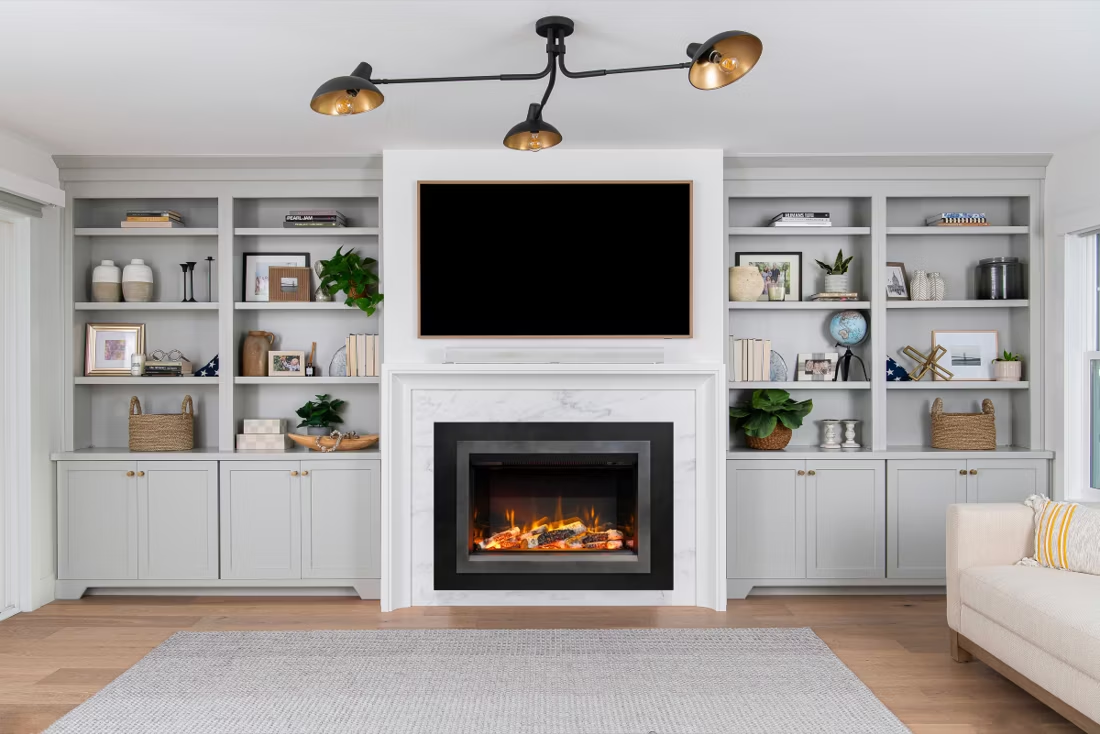
Yes—with an asterisk. Fireplaces are hot and TVs don't like heat. Either put a mantel between them to deflect rising warmth, or choose a fireplace with heat-management technology that creates a cool zone on the wall above—the wall stays around 125 degrees, barely warm, while the room still gets full heat. If you like clean lines and don't want a mantel, heat management is the answer.
Does an electric fireplace need a vent or chimney?
No—that's its superpower. An electric fireplace needs a wall and an outlet, period. No vent pipe, no gas line, no clearances to design around, which is why it works in bedrooms, offices, apartments, and walls where venting a gas or wood unit would be impractical or impossible. Installation is typically the simplest and least expensive of any fireplace type.
Can a fireplace actually lower my heating bill?
Yes—by creating a comfort zone. A furnace heats every square foot of the house just to warm the one room you're in; a gas fireplace on low burns roughly a sixth of the gas a typical furnace does. Set the furnace around 55–60 degrees as a baseline, then heat the rooms your family actually uses. Families who heat this way commonly save $20–$60 a month.
Does a fireplace add value to my home?
On average, a fireplace adds back to the home about the same amount you spent installing it. Add the monthly savings from heating the rooms you actually use instead of the whole house—often hundreds of dollars a year—and the value case is strong before you even count what a fire does for how your family uses the room.
Find your electric fireplace in Rosebud County.
Tell us about your room and your home, and we'll match you with a trusted local dealer and send over a free Project Guide & Parts List—the exact parts and dealer recommendation for your Rosebud County electric fireplace project.
Find Your Fireplace →