
Every fuel type, every town in Rosebud County.
Wood, gas, pellet, and electric fireplace resources for the whole county—from the Yellowstone River valley at Forsyth south through the Bull Mountains and Ashland pine breaks to Colstrip and Lame Deer. Pick a fuel and get matched with a local dealer who actually installs it out here.
Every Project Starts From One of These Five Situations
7,369 heating degree days on the Yellowstone plains.
Rosebud County runs from the cottonwood bottoms of the Yellowstone River at Forsyth south across open range and the Bull Mountains toward Ashland and the Northern Cheyenne communities of Lame Deer and Birney. Average winter lows near 14°F and 7,369 heating degree days put this county in the same heating-load class as Fargo, North Dakota—wind-driven continental cold with a heating season that runs from early October well into April. Lodgepole pine, ponderosa pine, Douglas fir, and aspen are the species most households burn here, much of it cut off nearby national forest and BLM ground, which keeps wood heat a practical, low-cost option on a county's worth of ranch and reservation land where population density is thin and delivery distances are long.
Rosebud County also carries a non-attainment designation, tied in part to the regional airshed around the Colstrip coal-fired power complex, and the county sees real wildfire smoke most summers and falls from fires burning across eastern Montana and the northern Rockies. That combination is a real argument for EPA-certified wood stoves and for pellet stoves running Bear Mountain, Lignetics, or Forest Energy fuel, both of which burn considerably cleaner than an old uncertified box stove. This hub rolls up hearth retailers, service techs, and fuel suppliers across the whole county—Forsyth, Colstrip, Lame Deer, Ashland, Rosebud, and Birney included. Pick your fuel below for local dealers, install costs, and unit recommendations specific to your town.
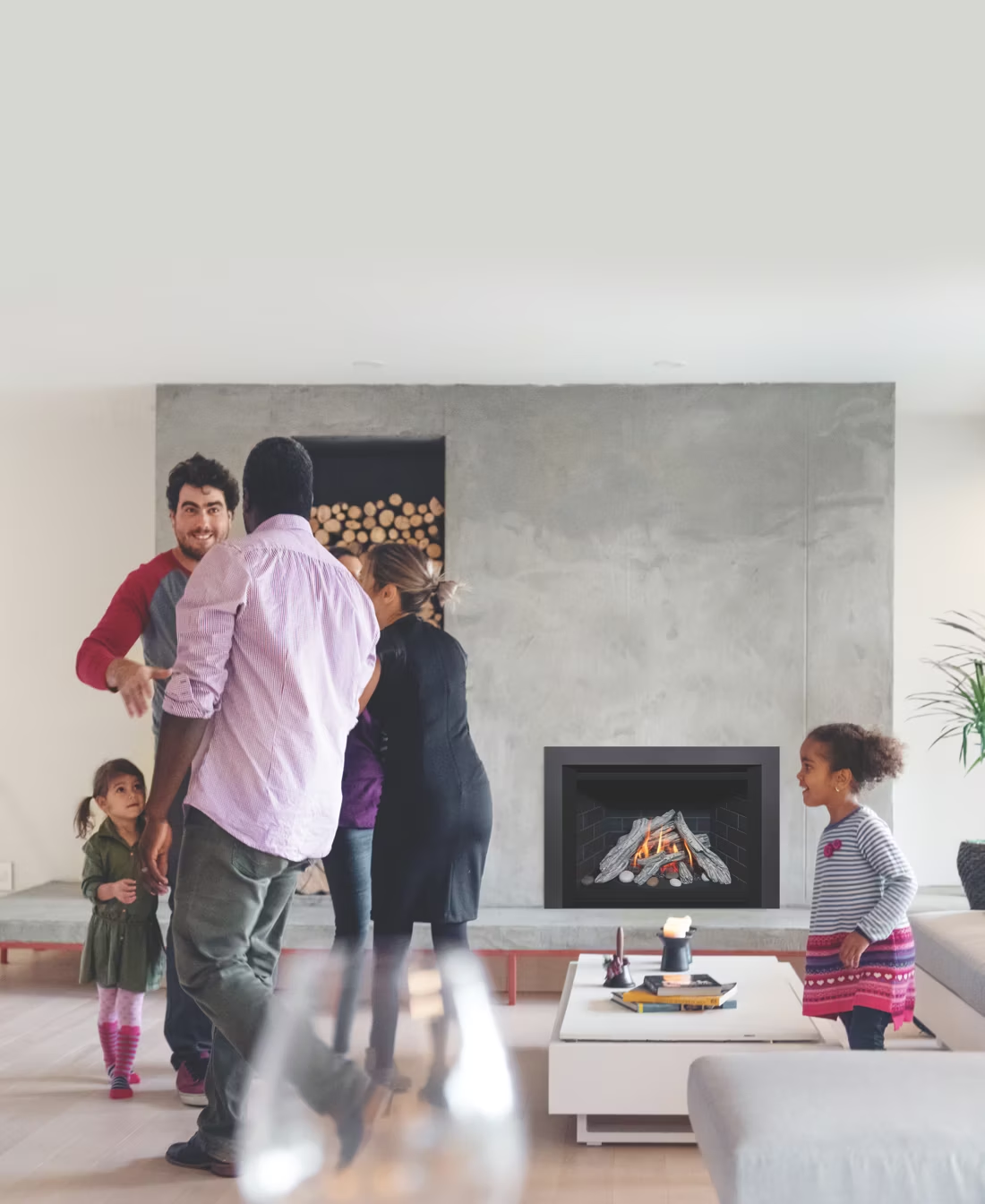
Four fuels. One honest answer for Rosebud County.
Three steps. No salesperson until you're ready.
Tell us about your project
Your zip code, your situation, and the fuel you're leaning toward—or let the answers point you to one.
See what's actually available
The brands dealers within 100 miles genuinely carry—real options, never a catalog mirage.
Get your dealer & Project Guide
A trusted local dealer, plus the free Project Guide & Parts List that names every component of the job.
Frequently Asked Questions
Which fireplace fuel makes the most sense in Rosebud County?
All four fuels get used across the county, but which one fits best depends heavily on where you are. Wood is the backbone fuel on the ranches and rural stretches between Forsyth, Ashland, and Lame Deer—lodgepole pine, ponderosa pine, Douglas fir, and aspen are all cut locally, often under low-cost BLM or national forest permits, and a well-loaded catalytic stove will hold overnight through a 14°F average low without much trouble. Gas is the convenience option in Forsyth and Colstrip where NorthWestern Energy service reaches; homes further out typically run propane instead. Pellet stoves running Bear Mountain, Lignetics, or Forest Energy fuel have real appeal here too, since they burn cleaner than an old wood stove in a county already carrying a non-attainment designation. Electric fireplaces are supplemental almost everywhere—with 7,369 heating degree days, they're not built to carry a house through winter on their own, but they're a solid add for a bedroom or a Colstrip townhome already heated another way.
Do I need a permit to install a wood stove or fireplace in Rosebud County?
In most cases, yes. New wood stoves and inserts need to meet current EPA emissions standards to be permitted, and building permits for unincorporated areas of the county typically run through the county building office in Forsyth, the county seat. Gas installations require a separate gas-line permit and a licensed gas fitter for the hookup, whether you're in Forsyth, Colstrip, or running off a propane tank further out. Pellet stove installs follow a similar permitting path to wood but without the added scrutiny that comes with the county's non-attainment status. Electric fireplaces usually don't need a permit unless you're wiring in a built-in unit that requires a dedicated circuit. Most hearth retailers we match homeowners with handle the paperwork as part of the install, so it's rarely something you're sorting out alone.
Why is Rosebud County listed as a non-attainment area, and does it affect my stove choice?
The designation is tied to the regional airshed around the Colstrip coal-fired power complex, and the county also sees genuine wildfire smoke most summers and falls from fires burning across eastern Montana and the surrounding region. Neither of those is something a homeowner controls, but it does make the case for choosing an EPA-certified wood stove over an old uncertified unit, since certified stoves burn a fraction of the particulate. It's also part of why pellet stoves have a real following here—Bear Mountain, Lignetics, and Forest Energy pellets burn considerably cleaner than cordwood, which matters in a county where the airshed is already being watched. None of this makes wood heat impractical in Rosebud County; it just means the stove's certification and burn efficiency are worth paying attention to when you're picking a unit.
Can I find a retailer that carries more than one fuel type?
Most hearth retailers serving Rosebud County carry two or three fuel types rather than specializing in one, which fits how households here actually heat—wood or pellet as the primary source on a ranch outside Ashland or Lame Deer, with a gas or electric unit somewhere else in the house. A multi-fuel dealer lets you compare working displays side by side and talk through what actually makes sense for your address, whether that's a Forsyth home on the NorthWestern Energy gas line or a place south of Colstrip running propane and burning Douglas fir. We match you with the retailer whose fuel lineup and service area genuinely covers your part of the county.
How does installation and service work for homes outside Forsyth and Colstrip?
Installation crews and service techs are concentrated in Forsyth and Colstrip but regularly travel to Lame Deer, Ashland, Rosebud, and Birney, along with the ranches scattered between them. Expect a modest trip fee for the farthest calls, and expect scheduling to tighten once the first hard cold hits in October—booking your annual chimney sweep or gas inspection in late summer gets you ahead of the rush in a county this spread out. For homes well off the highway near the Bull Mountains or the reservation communities, it's worth asking your installer about spare igniters or battery backup for a gas unit, since a winter storm on these plains can delay a return service call by more than a day.
What does a fireplace installation typically cost in Rosebud County?
Costs vary by fuel and by how much venting or line work is involved, and rural travel distance can add to the total here more than it would in a denser county. Wood stove or insert installs typically run $4,500–$9,500, with new chimney construction pushing toward $14,000 given that certified units and proper Class A venting aren't optional in this climate. Gas fireplaces, inserts, and stoves run roughly $4,500–$11,500, depending on whether you're extending a gas line in Forsyth or Colstrip or setting up a propane tank further out. Pellet stove or insert installs generally land at $4,500–$8,000. Electric fireplaces are the outlier—$200–$3,000 for the unit, plus $400–$1,200 in labor for anything beyond a simple plug-in placement. The county + fuel pages above break these numbers down further with local retailer pricing.
What is an in-home preview and do I need one?
It's a visit where a hearth professional measures your space, confirms the model you picked actually works in your home, and walks the specs—framing, gas line, venting, finish work—before anything is ordered. Some details you just can't know until you see the house. Never make a down payment without one; it's the single most-skipped step that burns buyers.
How much should I budget for a fireplace?
For an average home—covering the fireplace, the vent pipe, and basic installation—a budget between $3,900 and $5,500 gives you a lot of options across wood, gas, and pellet. By the time you add finish work, gas line, and electrical, the average complete installation lands between $5,000 and $12,000 all-in. In a remodel or new build, a good rule is to put about 2.5% of the total project cost toward the fireplace.
Wood, gas, pellet, or electric—how do I choose?
Match the fuel to your life, not the other way around. Wood: lowest fuel cost and total power-outage independence, but you're hauling and stacking. Gas: press a button, set a thermostat, no maintenance to speak of. Pellet: wood economics with automatic feeding, in exchange for weekly cleaning and a need for electricity. Electric: plugs in anywhere with honest supplemental heat. Nobody regrets the fuel that fits how they actually live.
I know I want a fireplace—where do I actually start?
Do two things today: snap a photo of the wall or fireplace you want to transform, and take a tape measure to the space—width, height, depth. Those two artifacts answer most of a hearth professional's first questions. Then settle fuel (wood, gas, pellet, or electric) and set a realistic budget: $3,900–$5,500 covers fireplace, vent, and basic install for most homes.
Stove and Fireplace Dealers in Rosebud County
Listings include WhyFire partner dealers, dealers we have verified as authorized for the brands we recommend, and established local businesses that carry hearth products. Every listing shows which one it is. The ones marked Preferred run on WhyFire's software, so they can show you real pricing and book your appointment right here. No manufacturer pays for placement. How we verify dealers →
Total Comfort Heating & Cooling
Ecommerce World LLC
Alpine Climate Control
Stove Doctor
White Heating & Air Conditioning
Get matched with a local Rosebud County dealer.
Pick your fuel below and we'll put together a free Project Guide & Parts List—the right unit, the vent kit it needs, and the local dealer we recommend for your project.
Find Your Fireplace →