
Steady heat for the Bitterroot Valley's long winters.
Ravalli County racks up roughly 7,551 heating degree days a year, with winter lows averaging 19°F between the Bitterroot Range and the Sapphires. Pellet heat delivers thermostat-simple warmth through it—find the right stove or insert and get matched with a trusted local dealer.
Every Project Starts From One of These Five Situations
Consistent, efficient heat without daily wood-splitting.
Ravalli County sits in the Bitterroot Valley, boxed in by the Bitterroot Range to the west and the Sapphire Mountains to the east, with towns from Florence down through Hamilton to Darby strung along Highway 93. At 7,551 heating degree days a year—in the same range as Duluth, Minnesota—this is a genuinely cold-climate county, and homes here need appliances that can run for months, not just take the edge off a few cold nights.
The valley also traps air. Winter temperature inversions settle over the Bitterroot on calm, cold days, and wildfire smoke fills the same corridor most late summers. Pellet stoves burn cleaner and more completely than open wood combustion, and they're typically exempt from the burn curtailments that kick in during inversion events—a real practical advantage for a household that wants reliable heat without worrying about a burn ban notice on the coldest night of the week. Regional pellet supply is solid, too: Bear Mountain, Lignetics, and Forest Energy pellets are all sold through dealers and feed stores across the valley, so fuel isn't a scarce or seasonal scramble the way firewood sometimes is.
Three steps. No salesperson until you're ready.
Tell us about your project
Your zip code, your situation, and the fuel you're leaning toward—or let the answers point you to one.
See what's actually available
The brands dealers within 100 miles genuinely carry—real options, never a catalog mirage.
Get your dealer & Project Guide
A trusted local dealer, plus the free Project Guide & Parts List that names every component of the job.
Frequently Asked Questions
How much does a pellet stove installation cost in Ravalli County?
Most pellet stove and insert installations run in the $3,000 to $6,500 range, with the spread driven by whether you're venting through an existing masonry fireplace (lower end) or need new wall penetration, a hearth pad, and a dedicated electrical circuit for the hopper motor and auger (higher end). Rural properties out toward Darby, Sula, or up the East Fork can see a modest travel surcharge added to the quote simply because of drive time from dealers based in Hamilton or Stevensville. A local installer will give you a firm number after walking the room and checking your existing venting.
What size pellet stove do I need for a Bitterroot Valley home?
With 7,551 heating degree days and winter lows that regularly sit in the teens, Ravalli County homes generally need to size up compared to a milder climate. A small unit (under 1,000 sq ft) suits a cabin or supplemental room; most valley-floor homes in the 1,000–2,000 sq ft range do well with a mid-size stove rated for continuous heat output, not just peak BTU. Homes at higher elevation on the benches above Hamilton or Corvallis, or anywhere exposed to wind coming off the Bitterroot Range, often need the next size up. A dealer who sizes to your actual insulation and layout—not just square footage—will save you from an underpowered stove that runs flat-out all February.
Do I need a permit to install a pellet stove in Ravalli County?
Yes—a new pellet stove or insert installation typically requires a building permit through the Ravalli County building department, covering the appliance clearance, venting termination, and electrical work for the unit. Most established local dealers include permit pulling as part of the installation quote, so you're not the one filing paperwork. Pellet appliances are generally the simplest wood-burning permit to get approved since they don't raise the same chimney-fire and creosote concerns as cordwood stoves.
Does a pellet stove help during Bitterroot Valley air quality advisories?
It generally does. The valley is prone to winter temperature inversions that trap smoke close to the ground, and Ravalli County also deals with wildfire smoke most late summers. Because pellet stoves burn fuel more completely than open cordwood combustion—feeding a metered, consistent amount of fuel into a controlled burn—they typically fall outside the wood-burning curtailment restrictions that get issued on the worst inversion days locally. If you want heat you can count on without checking an air quality advisory first, that's one of the strongest arguments for pellet over cordwood in this valley.
Pellet stove vs. wood stove—which makes more sense in Ravalli County?
Wood is deeply embedded here—lodgepole pine, ponderosa pine, Douglas fir, and aspen are all common locally, and cutting permits through the Bitterroot National Forest or Lolo National Forest run just $5 to $20 per cord during the May-to-October season, which makes self-cut firewood cheap if you're willing to do the work. A wood stove also keeps running with zero electricity, which matters during winter storm outages. A pellet stove trades that self-sufficiency for convenience: no splitting, hauling, or stacking, a more even burn, and cleaner operation during inversion advisories—but it needs power to run the auger and blower, so a battery backup or small generator is worth budgeting for if you're relying on it as primary heat. Many Bitterroot Valley households end up with both: pellet for daily convenience, wood as backup.
Where do I buy pellets, and how many tons will I need for a winter?
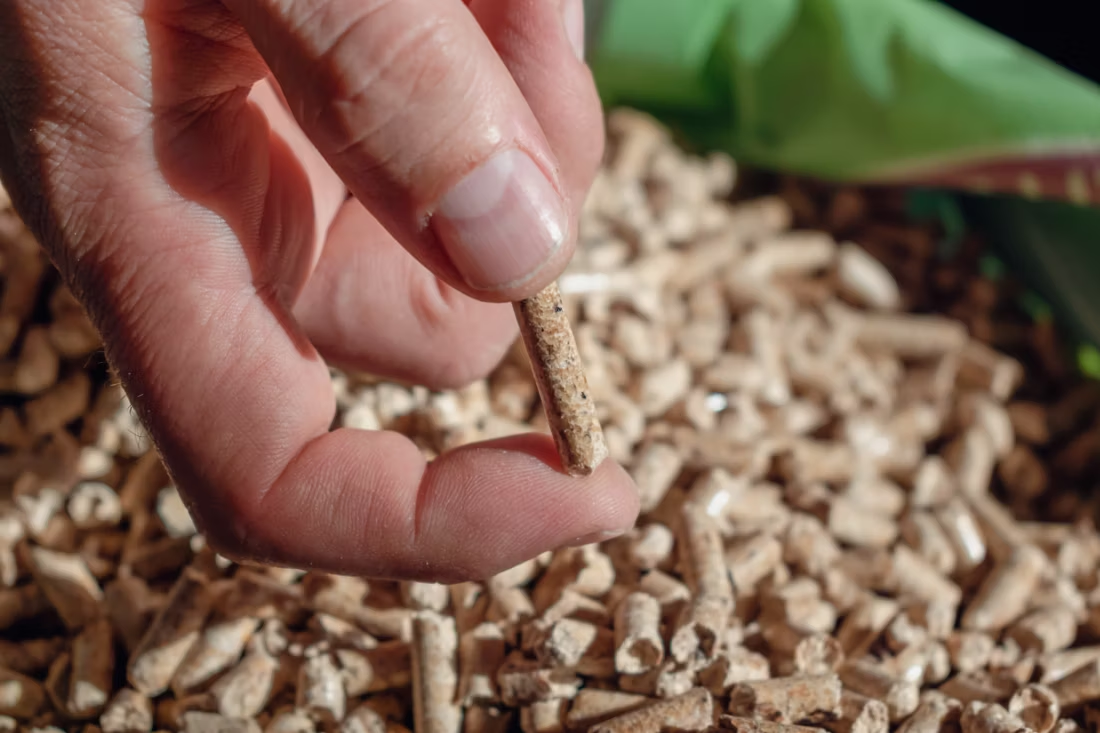
Bear Mountain, Lignetics, and Forest Energy pellets are all sold through hearth dealers and farm/feed stores across Ravalli County, usually by the ton (50 x 40-lb bags) or in bulk for homes with a hopper feed system. A home using a pellet stove as primary heat through a 7,551-HDD winter typically burns through 2 to 3 tons of pellets in a season; as a supplemental unit, expect closer to 1 to 1.5 tons. Buying early in fall before the first cold snap tends to get you better pricing and availability than waiting until January, when local supply can tighten.
Will my pellet stove still work if the power goes out?
Not without help. Pellet stoves rely on electricity to run the hopper auger, igniter, and combustion blower, so a standard unit shuts down the moment power drops—a real consideration in a rural valley where winter storms can knock out lines for hours at a stretch. Many Ravalli County households pair a pellet stove with a small backup generator or a battery/inverter setup sized to the stove's low draw (most units pull well under 500 watts). If uninterrupted backup heat during outages is the priority, a wood stove or a battery-free gas unit is worth discussing alongside pellet.
How often does a pellet stove need cleaning and service?
Plan on emptying the ash pan every few days during regular use and giving the burn pot and glass a deeper cleaning weekly. A full annual service—checking the auger, igniter, gaskets, and venting, and cleaning the exhaust fan—is recommended before each heating season starts, ideally in late summer ahead of the first cold nights. Local dealers who sell pellet stoves in the county typically offer this service directly, which is worth booking early since fall is their busiest scheduling window.
What's the best pellet stove for a Ravalli County winter?
Look for a stove rated for continuous, high-output burning rather than one built mainly for occasional ambiance—with 7,551 heating degree days, you want a unit that can run for weeks at a stretch without straining. Larger hopper capacity matters too, since it means fewer refills during the coldest stretches of January and February. A local dealer can match hopper size and BTU output to your square footage and elevation, and confirm which models they stock parts and service for locally—availability of service, not just the sticker BTU rating, is what keeps a pellet stove reliable through a full Bitterroot winter.
What's the difference between an insert and a zero-clearance fireplace?
An insert is a fireplace that slides into a pre-existing wood-burning fireplace—if you don't have one, there's nothing to insert it into. A zero-clearance fireplace is built into a framed wall, which makes it the answer for remodels and new construction. Simple test: existing masonry fireplace means insert; blank or framed wall means zero-clearance.
Why is my open fireplace making my house colder?
Open fireplaces suck—literally. As the fire burns, it consumes air your furnace already paid to heat and pulls it out through the chimney, so the house is actually colder after the fire goes out than before you lit it. An insert fixes this: it seals the chimney, puts fixed glass across the front, and turns that hole in your house into a real heat source.
What is an in-home preview and do I need one?
It's a visit where a hearth professional measures your space, confirms the model you picked actually works in your home, and walks the specs—framing, gas line, venting, finish work—before anything is ordered. Some details you just can't know until you see the house. Never make a down payment without one; it's the single most-skipped step that burns buyers.
Does a fireplace add value to my home?
On average, a fireplace adds back to the home about the same amount you spent installing it. Add the monthly savings from heating the rooms you actually use instead of the whole house—often hundreds of dollars a year—and the value case is strong before you even count what a fire does for how your family uses the room.
Stove and Fireplace Dealers in Ravalli County
Pellet Brands Stocked Around Ravalli County
Manufacturers will point you to the nearest stocking dealer.
Find your pellet stove in Ravalli County.
Tell us about your home and we'll put together a free Project Guide & Parts List for your pellet project—sized for a Bitterroot Valley winter—and match you with a trusted local dealer who can install it.
Find Your Fireplace →