
Find a pellet stove built for Prairie County's wide-open, zone 6B winters.
With just 861 residents spread across eastern Montana ranchland, Prairie County doesn't have a hearth showroom on every corner. We'll match you with a real local dealer who can size, permit, and install a pellet stove that holds up to a genuinely cold, genuinely remote county.
Every Project Starts From One of These Five Situations
Steady, clean heat for a county where the nearest supplier is a drive away.
Prairie County sits in climate zone 6B—the kind of cold that Terry, Fallon, and Mildred residents plan around, not react to. Winters here are long, and homes are often older ranch houses built before modern insulation standards, which means a heat source has to actually keep up on the coldest stretches, not just take the edge off. Wood is abundant in this part of Montana—lodgepole pine, ponderosa pine, Douglas fir, and aspen all grow within reach of the county—and plenty of households still burn cordwood. But pellet stoves have earned a place in Prairie County homes for a simple reason: load the hopper, set the thermostat, and walk away for most of a day, which matters when you're managing cattle or fieldwork instead of tending a fire.
Pellet stoves also burn dramatically cleaner than an open wood fire, which is worth noting in a county where wildfire smoke is a recurring summer air quality issue—fewer particulates from your heat source is one less thing stacked on top of an already smoky season. The tradeoff is real, though: pellet stoves need electricity to run the auger and blower, and in a county this rural, winter power outages aren't rare. A dealer worth using will talk you through battery backup options, correct pellet stove venting for your home, and realistic delivery logistics for pellets shipped in from regional suppliers of Bear Mountain, Lignetics, or Forest Energy—since Prairie County itself doesn't have a pellet retailer of its own.
Three steps. No salesperson until you're ready.
Tell us about your project
Your zip code, your situation, and the fuel you're leaning toward—or let the answers point you to one.
See what's actually available
The brands dealers within 100 miles genuinely carry—real options, never a catalog mirage.
Get your dealer & Project Guide
A trusted local dealer, plus the free Project Guide & Parts List that names every component of the job.
Frequently Asked Questions
How much does a pellet stove installation cost in Prairie County?
Pellet stove installs typically run in the $3,000 to $6,000 range nationally, and Prairie County homeowners should expect to land in that same territory—with the caveat that installers based out of Miles City or Glendive may add a modest travel charge given the distance to reach Terry, Fallon, or the ranch country beyond them. The bigger cost swing comes from venting: a pellet stove going into a home with no existing chimney needs new through-wall PL venting, while a pellet insert going into an existing masonry fireplace is usually simpler and cheaper. A local dealer can give you a firm number after seeing your home.
Is a pellet stove enough heat for Prairie County's winters, or do I need something bigger?
Climate zone 6B means Prairie County sees genuinely cold, sustained winter weather—closer to what you'd expect in Bismarck or Fargo than a mild western valley. A properly sized pellet stove can carry a well-insulated single-family home as primary heat, but many Prairie County households use it as zone heat for the main living area while a propane furnace or boiler covers the rest of the house on the coldest nights. If you're heating an older, drafty ranch house, talk to your dealer about sizing up rather than down—undersized units run constantly on max output and still fall short at zero degrees and below.
What happens to my pellet stove during a power outage?
Pellet stoves need electricity to run the auger that feeds pellets and the blower that pushes heat into the room—no power means no fire, full stop. That matters in Prairie County, where winter storms can take out rural power lines for hours at a stretch. Most homeowners here handle this one of two ways: a small battery backup or inverter sized to run the stove's electronics through a short outage, or a generator as a backup plan for longer ones. If reliable off-grid heat is your top priority, a wood stove burning locally available lodgepole pine or ponderosa pine is worth considering as a second heat source alongside your pellet unit.
Where can I buy pellets near Prairie County?
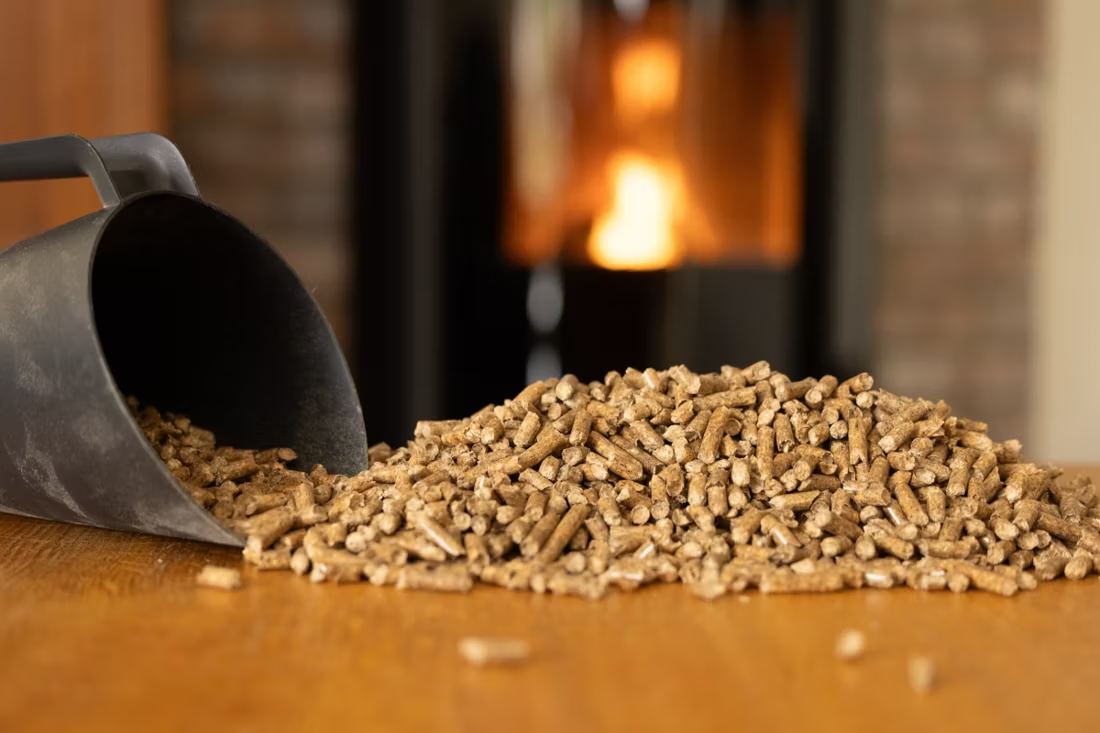
There's no dedicated pellet retailer inside the county—with a population under 900, that's not surprising. Bear Mountain, Lignetics, and Forest Energy pellets are all distributed through hardware and farm supply stores in Miles City and Glendive, and most Prairie County households plan a single trip to stock up for the season rather than making repeat runs. Buying pallets (roughly 50 forty-pound bags) at once is the standard approach out here, both for convenience and because pellet availability can tighten up during hard winters when demand spikes across eastern Montana.
What size pellet stove do I need for a Prairie County home?
Sizing depends on square footage, ceiling height, and how well-insulated the home is—and a lot of Prairie County's housing stock is older ranch construction that runs draftier than newer builds. As a rough guide: small units suit a single room or a hunting cabin, mid-size units (rated 1,200-2,000 sq ft) handle a typical farmhouse living area, and larger units are worth considering if you're trying to cover most of the home given the zone 6B cold. A local dealer will walk your home and size it properly rather than guessing off square footage alone—oversizing wastes pellets, undersizing leaves you cold in January.
Do I need a permit to install a pellet stove in Prairie County?
Prairie County's building permit process is handled out of the county courthouse in Terry, and given the county's small population, enforcement and staffing look different than in a larger jurisdiction—but that doesn't change the manufacturer clearance and venting requirements a stove has to meet. Any legitimate installer will still install to the stove's listed clearances and current venting code regardless of how permits are enforced locally. It's worth a quick call to the county office before work starts so there are no surprises later, especially if you plan to sell the home down the road.
Pellet stove or wood stove—which makes more sense in Prairie County?
Wood is genuinely abundant here—lodgepole pine, ponderosa pine, Douglas fir, and aspen are all locally available, and a lot of Prairie County households already have a chainsaw and a truck for hauling their own firewood. Wood stoves also keep working with no electricity, which matters during rural outages. Pellet stoves trade some of that self-sufficiency for convenience—no splitting, no stacking, more consistent heat output, and a meaningfully cleaner burn, which is a real plus in a region that already deals with wildfire smoke most summers. If you value hands-off operation and cleaner air over off-grid resilience, pellet is the better fit; if backup heat during outages matters more, wood—or both together—makes sense.
How much maintenance does a pellet stove need?
Plan on emptying the ash pan every few days during regular use and doing a deeper clean of the burn pot and hopper weekly. Most manufacturers recommend a full professional service annually—checking the auger motor, exhaust blower, and gaskets. Given how far the nearest certified service tech may be from Terry or the outlying parts of Prairie County, it's worth asking your dealer to walk you through basic DIY cleaning and troubleshooting at install time, so a minor issue doesn't turn into a multi-week wait for a service visit.
What's the difference between a pellet stove and a pellet insert?
A pellet stove is a freestanding unit that sits on its own hearth pad and vents through a wall or existing chimney—it can go almost anywhere in a room with the right clearances. A pellet insert is built to slide into an existing masonry fireplace opening, turning an old wood-burning fireplace into an efficient, thermostat-controlled heat source using the same chimney. For Prairie County homes with an existing fireplace that rarely gets used because tending a wood fire doesn't fit the day-to-day, a pellet insert is often the simpler upgrade. Homes without an existing fireplace are generally better suited to a freestanding stove.
What's the difference between an insert and a zero-clearance fireplace?
An insert is a fireplace that slides into a pre-existing wood-burning fireplace—if you don't have one, there's nothing to insert it into. A zero-clearance fireplace is built into a framed wall, which makes it the answer for remodels and new construction. Simple test: existing masonry fireplace means insert; blank or framed wall means zero-clearance.
Why is a fireplace insert so efficient?
An insert does two things: it seals the chimney completely, so you stop losing air you already paid to heat, and it radiates warmth into the room through the firebox and glass. Most add a heat-exchange fan that pulls cool room air underneath, wraps it around the hot firebox, and pushes it back out warm. Your home is more efficient before you've even lit the first fire.
Can I install a fireplace myself?
If you're putting a fire in your house on purpose, it's best to work with an expert. Unless you're genuinely experienced in framing, gas line, vent pipe, and the national code on clearances to combustibles, have a professional do it—and ideally the same company that sells you the fireplace, so warranty, service, and liability all live under one roof.
What is an in-home preview and do I need one?
It's a visit where a hearth professional measures your space, confirms the model you picked actually works in your home, and walks the specs—framing, gas line, venting, finish work—before anything is ordered. Some details you just can't know until you see the house. Never make a down payment without one; it's the single most-skipped step that burns buyers.
Pellet Brands Stocked Around Prairie County
Manufacturers will point you to the nearest stocking dealer.
Find your pellet stove in Prairie County.
Tell us about your home and we'll put together a free Project Guide & Parts List—the pellet stove or insert, the exact venting parts, and a trusted local dealer who can actually install it in Prairie County.
Find Your Fireplace →