
Find the right pellet stove for Musselshell County's long winters.
With a heating season that runs from October well into April and winter lows averaging 13°F, Musselshell County homes need heat that runs steady for months. A pellet stove offers low-maintenance, thermostat-controlled warmth—matched to a trusted local dealer who can size and install it correctly.
Every Project Starts From One of These Five Situations
Consistent heat for a county built on ranching and long winters.
Musselshell County sits in Montana's Zone 6B climate—roughly on par with Fargo or Bismarck for winter severity—with a long heating season and average winter lows around 13°F. Roundup and the smaller communities of Melstone and Musselshell run heating seasons that stretch from October well into April. Wood is traditional here, with lodgepole pine, ponderosa pine, Douglas fir, and aspen common on the surrounding BLM and private timber ground, but many households—especially those wanting a set-it-and-forget-it heat source without daily wood handling—have moved to pellet appliances for their main living spaces.
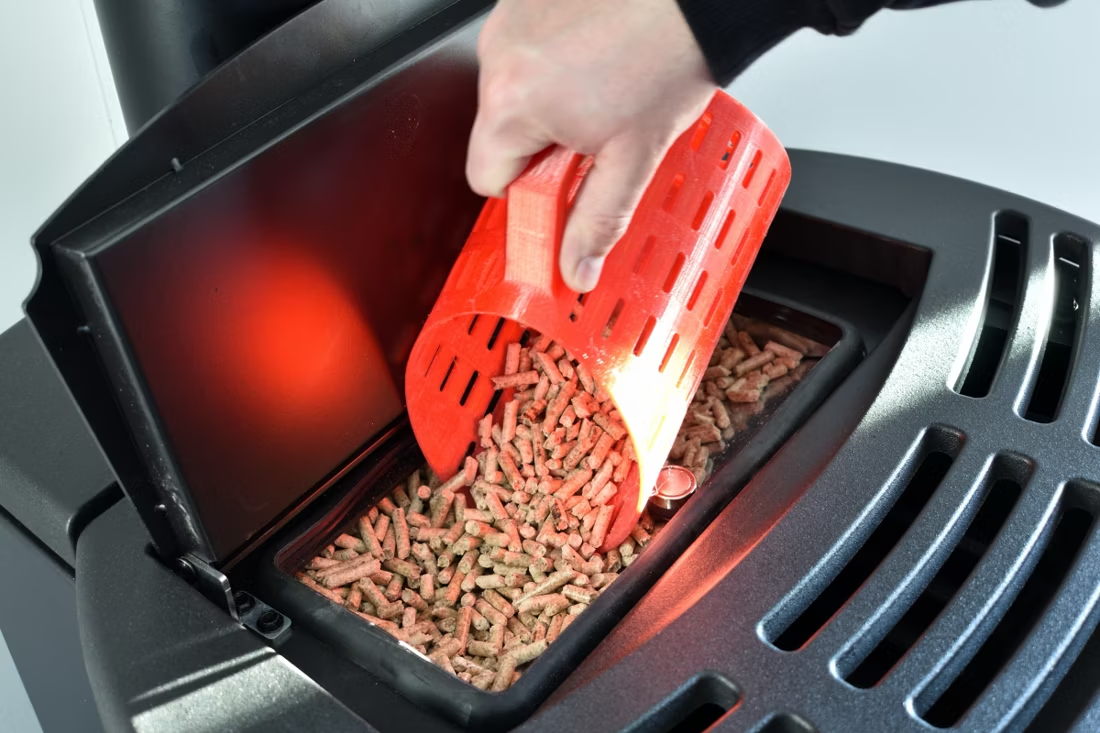
A pellet stove burns compressed hardwood or softwood pellets from a hopper, feeding the fire automatically and holding a steady temperature without constant tending—a real advantage for ranch households managing livestock chores through a Montana winter. Bear Mountain, Lignetics, and Forest Energy pellets are all sold regionally, so supply isn't the issue it can be in more remote parts of the state. The tradeoff is that pellet stoves need electricity to run the auger and blower, which matters for a rural county where winter power outages happen. A local dealer can help you weigh that against wood heat, or spec a battery backup for outage coverage.
Three steps. No salesperson until you're ready.
Tell us about your project
Your zip code, your situation, and the fuel you're leaning toward—or let the answers point you to one.
See what's actually available
The brands dealers within 100 miles genuinely carry—real options, never a catalog mirage.
Get your dealer & Project Guide
A trusted local dealer, plus the free Project Guide & Parts List that names every component of the job.
Frequently Asked Questions
How much does a pellet stove installation cost in Musselshell County?
A typical pellet stove installation in Musselshell County runs from $4,500 to $7,500, depending on the model, whether venting needs to be run through an exterior wall versus an existing chimney, and hearth pad requirements. Installations in older Roundup homes or outlying ranch properties without existing venting infrastructure tend toward the higher end once wall penetration and exterior vent kit work are factored in. A local dealer will size the job and give a firm quote after seeing the space.
Is pellet fuel reliably available in Musselshell County?
Yes. Bear Mountain, Lignetics, and Forest Energy pellets are all distributed regionally and sold through hearth retailers and farm supply outlets that serve the Roundup area. Because Musselshell County's heating season runs long, it's worth buying pellets by the pallet (typically 50 forty-pound bags) ahead of the coldest months rather than restocking bag by bag once winter sets in—rural supply runs can mean a drive to Billings if local stock runs short in a hard winter.
What size pellet stove do I need for my home?
With Musselshell County's long, cold heating season, sizing should lean toward the higher end of a stove's rated range rather than the middle. A small stove (rated to 1,000 sq ft) suits a well-insulated cabin or single main room; a medium stove (1,000-2,000 sq ft) covers most Roundup-area homes; larger, older farmhouses or ranch homes with less insulation often need a stove rated for 2,000+ sq ft to keep up through January and February cold spells. A local dealer will size to your actual square footage, ceiling height, and insulation level during an in-home visit rather than going off a general chart.
Do pellet stoves work during a power outage?
Not without a backup power source. Pellet stoves rely on electricity to run the auger that feeds fuel and the blower that distributes heat, so a standard outage will shut the stove down. For a rural county like Musselshell where winter storms can knock out power for extended stretches, some homeowners pair a pellet stove with a small backup battery system or generator, or keep a wood stove as a second heat source for true grid-down situations. Ask your local dealer about battery backup options if outage resilience matters to your household.
Do I need a permit to install a pellet stove in Musselshell County?
Building permit requirements run through the relevant county or municipal building department, and most installations—especially those involving new wall penetrations for venting—require one. Most local installers handle the permitting as part of the install, so you generally don't need to navigate it yourself. Because pellet stoves vent through smaller-diameter pipe than wood stoves and don't require a full masonry chimney, permitting and inspection are typically more straightforward than a wood stove install.
Pellet stove vs. wood stove—which makes more sense in Musselshell County?
Wood stoves work without electricity, which matters given Musselshell County's rural power grid and occasional winter outages, and pair naturally with local lodgepole pine, ponderosa pine, Douglas fir, and aspen—cutting permits through the BLM Montana State Office run about $10 per cord from April through October. Pellet stoves are simpler to operate day to day (no splitting or hauling cordwood, less ash, more even heat output) but need continuous power. Many ranch households here end up choosing based on how much daily wood handling they're willing to take on versus how much they value hands-off convenience—and some keep both, wood as backup and pellet for daily use.
How often does a pellet stove need maintenance?
Plan on cleaning the burn pot and ash area every few days during heavy use, a full interior cleaning monthly, and an annual professional service before the heating season starts—typically September in Musselshell County, ahead of the October start to serious cold. Venting should also be inspected annually, since pellet stoves vent through smaller pipe that can build up creosote and ash residue faster than expected with heavy winter use. Local dealers can handle the annual service appointment.
What's the difference between a pellet stove and a pellet insert?
A pellet stove is a freestanding unit that sits on a hearth pad and vents through a wall or existing chimney—it can go almost anywhere in a home with the right clearances. A pellet insert is built to slide into an existing masonry fireplace opening, turning an old wood-burning fireplace into a pellet-fed heat source while using the existing chimney chase for venting (with a proper liner). For Musselshell County homes with an existing but underused fireplace, an insert is often the more cost-effective upgrade; newer homes or rooms without an existing fireplace usually call for a freestanding stove instead.
Are there rebates or incentives for pellet stoves in Montana?
Incentive availability changes year to year, so it's worth asking a local dealer directly what currently applies in Montana and whether any federal biomass stove tax credits are active at the time of your purchase. Pellet stoves meeting minimum efficiency thresholds have historically qualified for federal credits under changing energy tax provisions, and a dealer familiar with current paperwork can tell you what documentation you'll need at purchase.
What's the difference between an insert and a zero-clearance fireplace?
An insert is a fireplace that slides into a pre-existing wood-burning fireplace—if you don't have one, there's nothing to insert it into. A zero-clearance fireplace is built into a framed wall, which makes it the answer for remodels and new construction. Simple test: existing masonry fireplace means insert; blank or framed wall means zero-clearance.
Why is a fireplace insert so efficient?
An insert does two things: it seals the chimney completely, so you stop losing air you already paid to heat, and it radiates warmth into the room through the firebox and glass. Most add a heat-exchange fan that pulls cool room air underneath, wraps it around the hot firebox, and pushes it back out warm. Your home is more efficient before you've even lit the first fire.
How much should I budget for a fireplace?
For an average home—covering the fireplace, the vent pipe, and basic installation—a budget between $3,900 and $5,500 gives you a lot of options across wood, gas, and pellet. By the time you add finish work, gas line, and electrical, the average complete installation lands between $5,000 and $12,000 all-in. In a remodel or new build, a good rule is to put about 2.5% of the total project cost toward the fireplace.
Does a fireplace add value to my home?
On average, a fireplace adds back to the home about the same amount you spent installing it. Add the monthly savings from heating the rooms you actually use instead of the whole house—often hundreds of dollars a year—and the value case is strong before you even count what a fire does for how your family uses the room.
Pellet Brands Stocked Around Musselshell County
Manufacturers will point you to the nearest stocking dealer.
Find your pellet stove in Musselshell County.
Tell us about your home and heating needs, and we'll match you with a trusted local dealer and send over a free Project Guide & Parts List—the right pellet stove, the exact vent kit, and the parts your installer will need.
Find Your Fireplace →