
Ambiance and zone heat, without the smoke, in Missoula County.
Missoula's mountain bowl traps cold air and wood smoke alike. Electric fireplaces give you real-looking flame and supplemental warmth on the days when burning isn't the answer. Find the right unit and connect with a trusted local dealer.
Every Project Starts From One of These Five Situations
Electric heat earns its place on inversion days.
Missoula County sits in a valley ringed by the Bitterroot, Sapphire, and Rattlesnake ranges, and that geography works against clean winter air. Cold air settles into the bowl, temperature inversions trap it there, and both wood smoke and wildfire haze can linger for days over Missoula's 109,000-plus residents. With average winter lows around 20°F and a cold-climate heating load in the same range as Bozeman, and not far off Duluth, MN's—this county leans hard on wood heat cut from lodgepole pine, ponderosa pine, Douglas fir, and aspen through Lolo and Bitterroot National Forest cutting permits. Electric fireplaces aren't trying to replace that; they fill a different role entirely.
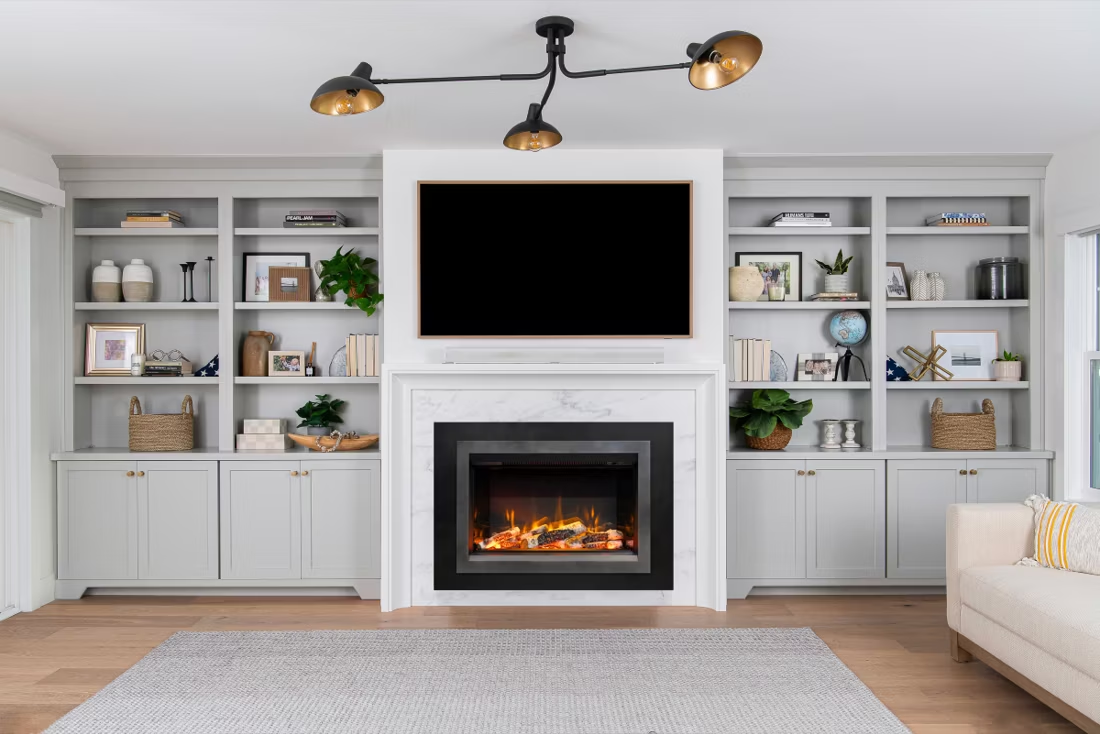
An electric fireplace or insert produces zero combustion byproducts, so it keeps running on the inversion days and wildfire-smoke advisories when wood burning gets restricted or simply feels like a bad idea. It's also the practical choice for condos, downtown Missoula rentals, university-area apartments, and additions where a chimney or gas line was never in the plans. NorthWestern Energy serves the electric grid across the Missoula valley, and a hardwired 240-volt unit or a simple plug-in insert can be installed with none of the venting, clearance, or masonry work a wood or gas project requires. It won't carry a home through a Missoula cold snap on its own, but as a supplemental heater with real ambiance, it earns its keep.
Three steps. No salesperson until you're ready.
Tell us about your project
Your zip code, your situation, and the fuel you're leaning toward—or let the answers point you to one.
See what's actually available
The brands dealers within 100 miles genuinely carry—real options, never a catalog mirage.
Get your dealer & Project Guide
A trusted local dealer, plus the free Project Guide & Parts List that names every component of the job.
Frequently Asked Questions
How much does an electric fireplace installation cost in Missoula County?
Plug-in electric inserts and freestanding units typically run $300 to $1,200 installed, since most just need a standard outlet and no venting or gas line. Built-in wall units and larger hardwired models that require a dedicated 240-volt circuit run higher, often $1,200 to $2,500, once an electrician is brought in to run the circuit. Because there's no chimney, no gas line, and no combustion venting to plan around, electric is consistently the least expensive fireplace fuel to install in Missoula County—a fraction of what a wood or gas project costs for a comparable-looking unit.
Can an electric fireplace heat my whole Missoula home through the winter?
Not on its own. With a cold-climate heating load in the same range as Bozeman and winter lows that average 20°F but regularly drop well below zero during hard cold snaps, Missoula County needs a real primary heat source—a furnace, heat pump, wood stove, or gas system. Electric fireplaces are built for zone heating: warming the room they're in, taking the edge off a chilly office or bonus room, and providing ambiance without a flue. Most Missoula homeowners run one alongside central heat rather than instead of it.
Are electric fireplaces a good option during Missoula's winter inversions?
Yes, and it's one of the strongest arguments for one. Missoula's valley geography traps cold air and wood smoke during winter inversions, and wildfire smoke can add to the problem in late summer and fall. Electric fireplaces produce no combustion byproducts at all, so they keep working through air quality advisories that curtail wood burning. For a household that wants fire ambiance without adding to the inversion-day haze, electric is the cleanest option available.
Do I need a permit to install an electric fireplace in Missoula County?
Usually not for a plug-in unit—it's treated like any other appliance plugged into an existing outlet. A hardwired unit that requires a new 240-volt circuit typically needs an electrical permit, since that's new wiring work subject to code. Local electricians and hearth dealers who handle these installs generally pull the permit as part of the job, so it's rarely something a homeowner has to manage directly.
What's the best electric fireplace for a Missoula County home?
Look for models with a realistic LED flame effect and separate heat and flame controls, so you can run the visual effect without the heater during shoulder-season months when you want ambiance but not warmth. For rooms that need real supplemental heat during Missoula's cold stretches, a unit rated for a dedicated 240-volt circuit will output more consistent heat than a standard plug-in model on a shared circuit. A local dealer can match wattage and flame style to your room size and whether you're prioritizing heat output or appearance.
Electric vs. wood—which fits my Missoula County home?
Wood remains the backbone of home heating culture in Missoula County, with cheap Forest Service cutting permits—$5 to $20 per cord—available through Lolo and Bitterroot National Forest each May through October, and abundant lodgepole pine, ponderosa pine, Douglas fir, and aspen locally. Wood also keeps working during a power outage, which matters in a valley that sees hard winter storms. Electric can't do either of those things, but it wins on installation simplicity, indoor air quality, and staying operational during the inversion and wildfire-smoke advisories that periodically restrict wood burning. Many Missoula households run wood as primary heat and add an electric unit in a bedroom, basement, or addition for supplemental warmth.
Electric vs. gas fireplace—which makes more sense for Missoula County?
Gas delivers more real heat output and can be sized to serve as meaningful supplemental heat during a Missoula winter, but it requires a gas line and venting, and installation costs run well above electric. Electric skips the venting and gas work entirely, installs in a fraction of the time, and costs less up front—but it's strictly a zone heater, not something that meaningfully offsets a furnace bill on a sub-zero night. For a rental unit, condo, or room where the goal is ambiance and light supplemental warmth without construction, electric is usually the simpler call.
Who installs and services electric fireplaces in Missoula County?
Plug-in units generally don't need a professional installer—anyone can set one against a wall and plug it in. Hardwired built-in units are best handled by a licensed electrician who can run the dedicated circuit, and several local hearth retailers and electricians in the Missoula area handle these installs together, including mounting and finish work around the unit. Service needs are minimal compared to wood or gas—mostly cleaning the fan and replacing an LED bulb or driver years down the road.
Will my electric fireplace work if the power goes out?
No—an electric fireplace needs grid power to run its heater and flame effect, so it goes dark along with everything else during an outage. NorthWestern Energy's Missoula-area grid is generally reliable, but winter storms in the valley can still knock out power for hours at a time. If backup heat during an outage matters to your household, a wood stove or a battery-backed gas unit is a better primary choice, with electric reserved for everyday zone heat and ambiance when the power is on.
Do electric fireplaces actually produce heat?
Yes—most put out around 4,800–5,000 BTUs from a standard outlet, which comfortably warms a bedroom, office, or den as a comfort-zone heater. What they won't do is carry a whole house the way wood, gas, or pellet can. Think of electric as ambiance-first with honest supplemental heat: flames on with no heat in July, flames plus warmth in January.
Does an electric fireplace need a vent or chimney?
No—that's its superpower. An electric fireplace needs a wall and an outlet, period. No vent pipe, no gas line, no clearances to design around, which is why it works in bedrooms, offices, apartments, and walls where venting a gas or wood unit would be impractical or impossible. Installation is typically the simplest and least expensive of any fireplace type.
How much should I budget for a fireplace?
For an average home—covering the fireplace, the vent pipe, and basic installation—a budget between $3,900 and $5,500 gives you a lot of options across wood, gas, and pellet. By the time you add finish work, gas line, and electrical, the average complete installation lands between $5,000 and $12,000 all-in. In a remodel or new build, a good rule is to put about 2.5% of the total project cost toward the fireplace.
What is an in-home preview and do I need one?
It's a visit where a hearth professional measures your space, confirms the model you picked actually works in your home, and walks the specs—framing, gas line, venting, finish work—before anything is ordered. Some details you just can't know until you see the house. Never make a down payment without one; it's the single most-skipped step that burns buyers.
Stove and Fireplace Dealers in Missoula County
Listings include WhyFire partner dealers, dealers we have verified as authorized for the brands we recommend, and established local businesses that carry hearth products. Every listing shows which one it is. The ones marked Preferred run on WhyFire's software, so they can show you real pricing and book your appointment right here. No manufacturer pays for placement. How we verify dealers →
Energy Partners Propane Mt
Anderson Masonry Hearth & Home
Find your electric fireplace in Missoula County.
Tell us a bit about your home and we'll match you with the right electric fireplace or insert, then hand you a free Project Guide & Parts List—the exact parts, wiring requirements, and a recommended local Missoula County dealer to get it installed.
Find Your Fireplace →