
Steady, low-maintenance heat for Mineral County's long winters.
From Superior to St. Regis and Alberton along the Clark Fork valley, pellet stoves give Mineral County homes consistent heat without a woodpile to manage. Find the right unit and connect with a trusted local dealer.
Every Project Starts From One of These Five Situations
A clean, thermostat-controlled answer to a genuinely cold valley.
Mineral County is small—about 2,358 people spread across Superior (the county seat), St. Regis, Alberton, and De Borgia, all strung along I-90 through the narrow Clark Fork River valley between the Bitterroot and Cabinet mountain ranges. The surrounding Lolo National Forest is thick with lodgepole pine, ponderosa pine, Douglas fir, and aspen, and plenty of households here still burn cordwood. But climate zone 6B means the valley sees a genuinely long, cold heating season, and not everyone wants to spend fall splitting and stacking wood or tending a firebox through the night. That's where pellet heat has carved out a solid, standard place in local homes.
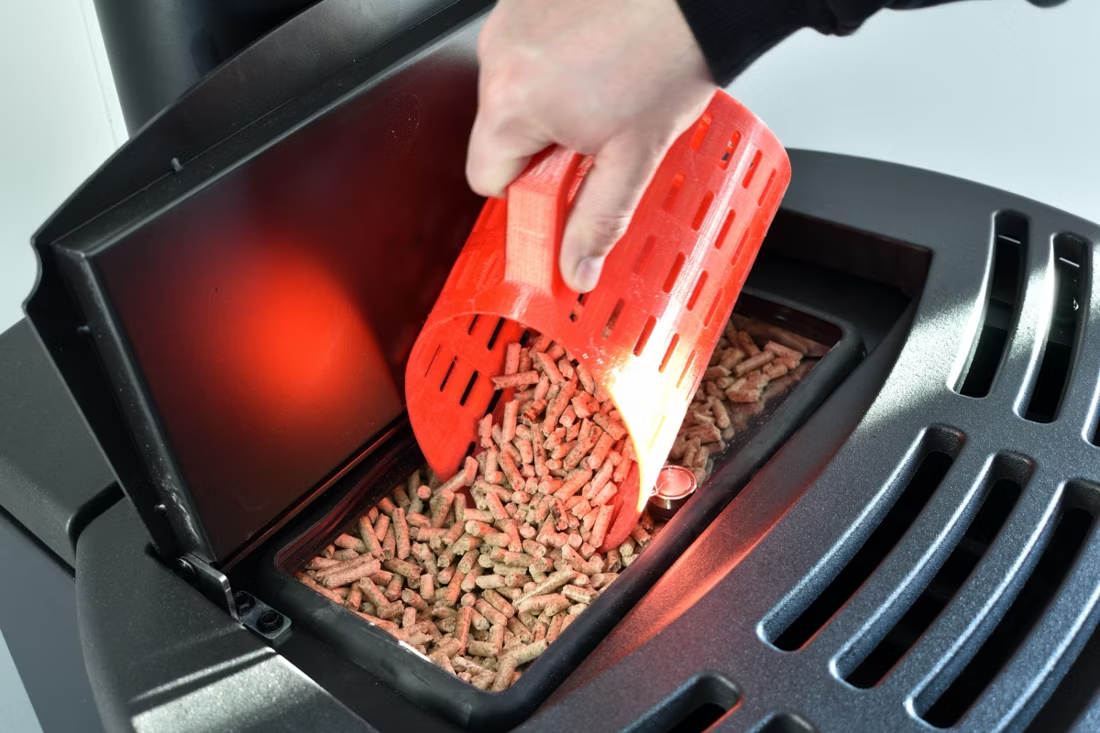
A pellet stove loads from a hopper, runs on a thermostat, and burns far cleaner than cordwood—a real advantage in a valley where summer wildfire smoke already stresses local air quality and where homeowners would rather not add to it come winter. Regional pellet brands like Bear Mountain, Lignetics, and Forest Energy supply the Inland Northwest, and Forest Energy's Montana roots mean pellets aren't traveling far to reach Mineral County. For year-round cabins, second homes near the fishing access points on the Clark Fork, and full-time residences alike, a pellet stove offers steady, controllable heat with a fraction of the daily labor of a wood stove.
Three steps. No salesperson until you're ready.
Tell us about your project
Your zip code, your situation, and the fuel you're leaning toward—or let the answers point you to one.
See what's actually available
The brands dealers within 100 miles genuinely carry—real options, never a catalog mirage.
Get your dealer & Project Guide
A trusted local dealer, plus the free Project Guide & Parts List that names every component of the job.
Frequently Asked Questions
How much does a pellet stove installation cost in Mineral County?
Most pellet stove installations run in the $4,000 to $8,000 range, depending on the unit, whether you're venting through an exterior wall or an existing chimney chase, and whether a hearth pad needs to be added for code clearance. Pellet stoves vent through a simple horizontal wall pass-through in most cases, which keeps installation labor lower than a masonry chimney project. Homes outside Superior or St. Regis, further up the side canyons off I-90, may see a modest travel charge added to the quote simply because of distance from the nearest dealer.
Where do I buy pellets in Mineral County, and which brands are available?
Bear Mountain, Lignetics, and Forest Energy are the regional brands most commonly stocked by dealers serving the Inland Northwest, and Forest Energy in particular mills close by in Montana. Given Mineral County's small population, expect to buy pellets by the pallet (roughly 50 bags) rather than finding a dedicated pellet retailer in every town—Superior is the most likely spot for local stock, with Missoula about 40 miles east offering a wider selection if you're stocking up for the season. Buying a full season's supply in late summer, before demand and wildfire-smoke-driven interest picks up in fall, is the smart play here.
What size pellet stove do I need for a Mineral County home?
Sizing depends on square footage, insulation, and how much of your heating load the stove needs to carry. In a 6B climate zone with the kind of sustained cold this valley sees, older farmhouses and cabins around Alberton and De Borgia—often less insulated than newer construction—typically need a mid-to-large stove even for moderate square footage, while a well-insulated newer home in Superior might get by with a smaller unit for supplemental heat. A local dealer can size your stove properly during an in-home visit; undersizing is the most common mistake in a cold valley like this one.
Will my pellet stove still work if the power goes out?
No—this is worth being upfront about. Pellet stoves rely on an electric auger to feed fuel and a blower to distribute heat, so a power outage shuts the stove down. In a rural mountain valley like Mineral County, where winter storms can knock out power for hours or longer, that's a real consideration. Some homeowners pair a pellet stove with a small backup generator or battery inverter sized for the stove's low wattage draw; others keep a wood stove or fireplace as backup heat for outages and use the pellet stove for day-to-day convenience. A local dealer can talk through battery-backup options for specific stove models.
What's the difference between a pellet stove and a pellet insert?
A pellet stove is a freestanding unit that sits on a hearth pad and vents through a nearby wall—the more common choice for cabins and homes without an existing fireplace. A pellet insert is built to slide into an existing masonry fireplace opening, using a vent kit routed up through the existing chimney. For Mineral County homes with an older, drafty open fireplace—common in some of the county's older housing stock—an insert converts that fireplace into a genuinely efficient heat source without changing the room's layout.
Do I need a permit to install a pellet stove in Mineral County?
Yes, a building permit is generally required for a new solid-fuel appliance installation, and it's worth checking directly with Mineral County's building department before work begins, since permit requirements can vary between incorporated Superior and the unincorporated parts of the county. Most established local dealers handle the permit application as part of the installation, which is one advantage of working with a trusted installer rather than a DIY setup—they know what the inspector will want to see on venting and clearances.
Does wildfire smoke affect the case for pellet heat here?
It does, in a supporting way. Mineral County's summers bring real wildfire smoke concerns from fires burning across the surrounding national forest land, and that same smoke sensitivity carries into how people think about winter heating. Pellet stoves burn more completely and produce far less particulate output than an open wood fireplace or an older, uncertified wood stove, so switching to pellet heat is one way local homeowners reduce their own contribution to valley smoke and haze during inversion-prone winter days, without giving up a real, visible flame.
How much maintenance does a pellet stove need?
Less than a wood stove, but not none. Plan on emptying the ash pan every few days during regular use, wiping the burn pot weekly to keep the fire feeding evenly, and scheduling a full professional cleaning and inspection once a year—typically before the season starts. The exhaust venting and auger mechanism should be checked annually as well, since a clogged auger or vent is the most common cause of a pellet stove failing to ignite properly mid-winter. Local dealers who sell pellet stoves typically also offer this annual service.
Pellet stove vs. wood stove—which fits Mineral County better?
Wood stoves work without electricity, which matters during outages, and cordwood is genuinely abundant here given the lodgepole pine, ponderosa pine, Douglas fir, and aspen forests surrounding the valley. Pellet stoves trade that outage resilience for cleaner burning, thermostat control, and far less daily labor—no splitting, stacking, or hauling. For a full-time residence where convenience matters and a backup heat plan is already in place, pellet is a strong fit. For a remote cabin without reliable grid power, or for households that already have a wood supply and don't mind tending a fire, a wood stove may still make more sense. Several homes in the county keep both.
Why is my open fireplace making my house colder?
Open fireplaces suck—literally. As the fire burns, it consumes air your furnace already paid to heat and pulls it out through the chimney, so the house is actually colder after the fire goes out than before you lit it. An insert fixes this: it seals the chimney, puts fixed glass across the front, and turns that hole in your house into a real heat source.
How often does a pellet stove need cleaning?
A clean pellet stove is a happy pellet stove. Plan on cleaning the burn pot about once a week when you're burning regularly—ash and clinkers gum up the air holes just like a pellet barbecue. Most pellet stove problems trace back to skipped cleaning that nobody explained up front. Some designs make it easy with a trapdoor burn pot: pull a lever and the gunk drops into the ash pan.
What is an in-home preview and do I need one?
It's a visit where a hearth professional measures your space, confirms the model you picked actually works in your home, and walks the specs—framing, gas line, venting, finish work—before anything is ordered. Some details you just can't know until you see the house. Never make a down payment without one; it's the single most-skipped step that burns buyers.
How much should I budget for a fireplace?
For an average home—covering the fireplace, the vent pipe, and basic installation—a budget between $3,900 and $5,500 gives you a lot of options across wood, gas, and pellet. By the time you add finish work, gas line, and electrical, the average complete installation lands between $5,000 and $12,000 all-in. In a remodel or new build, a good rule is to put about 2.5% of the total project cost toward the fireplace.
Pellet Brands Stocked Around Mineral County
Manufacturers will point you to the nearest stocking dealer.
Find your pellet stove in Mineral County.
Tell us a bit about your home and we'll put together a free Project Guide & Parts List—the right stove, the vent kit, and a trusted local dealer to install it.
Find Your Fireplace →