
Keep Your Family Warm and Safe—No Matter What
With just over 1,100 residents spread across the Smith River valley and the Big Belt and Castle Mountains, wood heat has never gone out of style here. Find the right stove or insert, and connect with a trusted local dealer.
Every Project Starts From One of These Five Situations
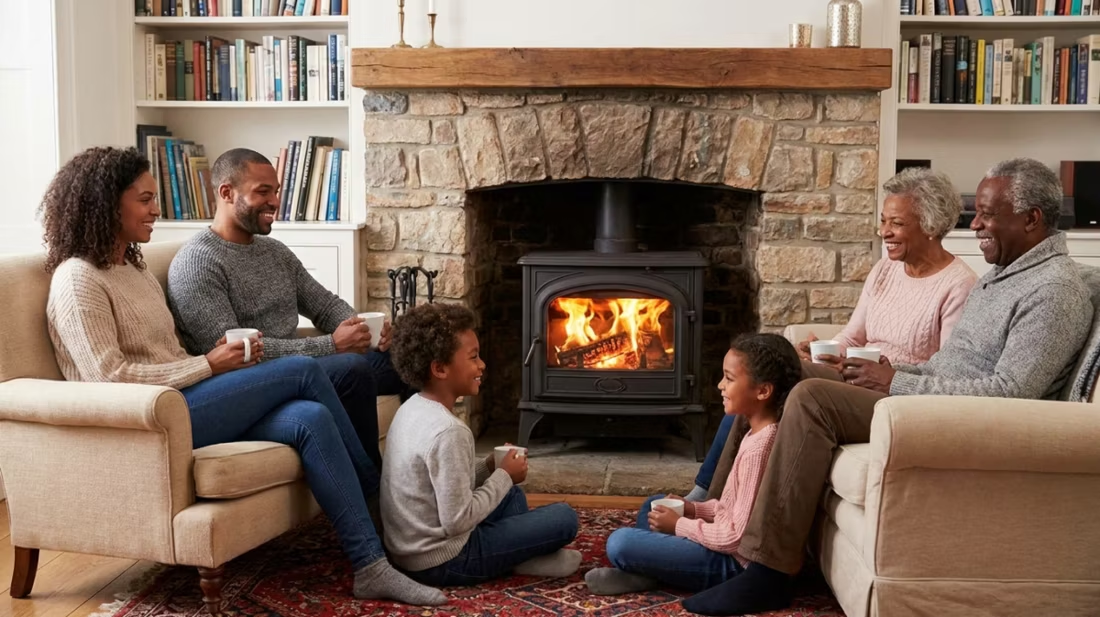
Wood heat is a way of life, not a backup plan.
Meagher County sits at elevation in central Montana, ringed by the Big Belt, Castle, and Little Belt Mountains, with White Sulphur Springs as the only real town. This is Zone 6B country—winters here run long and cold, closer in character to Bozeman or Helena than to anywhere lower and milder, and ranch homes and cabins scattered across the county have relied on wood heat for generations, not as a novelty but as genuinely dependable heat when a storm knocks out power on a county road miles from the nearest lineman.
The surrounding national forest land makes firewood access straightforward for most residents—lodgepole pine and Douglas fir are the workhorses locally, with ponderosa pine and aspen rounding out what's split and stacked behind most houses. A properly sized wood stove or insert throws serious radiant heat in a drafty older ranch house, keeps running when the grid doesn't, and for a county this rural and this sparsely populated, that reliability matters more than almost anything else you could ask of a heating appliance.
Three steps. No salesperson until you're ready.
Tell us about your project
Your zip code, your situation, and the fuel you're leaning toward—or let the answers point you to one.
See what's actually available
The brands dealers within 100 miles genuinely carry—real options, never a catalog mirage.
Get your dealer & Project Guide
A trusted local dealer, plus the free Project Guide & Parts List that names every component of the job.
Frequently Asked Questions
How much does a wood stove installation cost in Meagher County?
Installations across Meagher County typically run in the range you'd expect for rural Montana—a straightforward install into an existing hearth or chimney chase tends to sit at the lower end, while new Class A chimney runs through a roof, especially in older ranch homes without existing masonry, push costs higher. Because White Sulphur Springs is the only town of any size in the county, expect a modest travel charge built into quotes for homes out toward Checkerboard, Martinsdale, or deeper into the Smith River valley—installers are covering real distance to get to you.
What size wood stove do I need for my home?
Sizing in a Zone 6B county like Meagher should lean toward the generous side, especially for older, less-insulated ranch houses that leak heat through single-pane windows and uninsulated walls. A small stove might handle a tight cabin or single large room, but most full-time residences in the county do better with a medium-to-large stove capable of holding heat overnight when temperatures drop well below zero, which happens regularly here. A local dealer can walk your home and size it properly—oversizing leads to smoldering, creosote-heavy fires, while undersizing means you're feeding the stove around the clock and still cold by morning.
Where can I find a certified wood stove installer near White Sulphur Springs?
Given the county's population, dealers who serve Meagher County generally cover it from a base in a larger nearby market and travel in for installs. Look for NFI (National Fireplace Institute) or CSIA-certified installers rather than a general contractor—proper clearances and venting matter even more in a county where the nearest fire response may be a long drive away. Most reputable dealers will handle the drive to White Sulphur Springs or outlying ranches as part of doing business in this part of the state; ask about travel charges upfront when you get a quote.
What's the difference between a wood stove and a wood insert?
A wood stove is a freestanding unit on its own hearth pad, vented through a chimney, and it can go almost anywhere in a home with the right clearances—a common choice in the pole barns, shops, and newer construction found around Meagher County. A wood insert instead slides into an existing masonry fireplace, which is common in some of the county's older ranch homes, and converts that open, heat-losing hearth into a sealed, efficient heat source using the chimney that's already there. If you've got an existing fireplace that barely takes the chill off a room, an insert is usually the better upgrade; if you're heating a shop or a home without a chimney, a freestanding stove is the more practical route.
Do I need a permit to install a wood stove in Meagher County?
Yes—new wood stove installations require a building permit, and the unit itself needs to meet current EPA emissions standards. Most local installers handle the permitting paperwork as part of the installation, so this typically isn't something you have to chase down yourself. Burning itself doesn't require a permit, but Meagher County does see wildfire smoke impact air quality in late summer and early fall, which is worth keeping in mind when you're stocking wood and planning burn season around the shoulder months rather than during active smoke events.
What's the best wood stove for Meagher County's climate?
For a Zone 6B county with real overnight cold, a catalytic stove from a brand like Blaze King is worth a serious look—these units are built for long, slow burns that can hold overnight in single-digit or below-zero temperatures without a 2 a.m. reload. That matters in a county this rural, where you're not running to a gas station for a space heater if the fire goes out at 3 a.m. For smaller cabins or supplemental heat in a shop, a non-catalytic stove from Pacific Energy or Lopi burns hotter and faster and is a bit simpler to run. A local dealer can match the stove to your square footage, insulation, and whether it's a full-time residence or a seasonal place.
How often should my chimney be inspected and cleaned?
An annual inspection before burning season starts, typically in late summer, is the standard recommendation from the CSIA, and it holds just as true in Meagher County as anywhere else. Homes that rely on wood as primary heat and burn through several cords a winter may need a mid-season check for creosote buildup. Given how rural much of the county is, and how much longer an emergency response can take on county roads outside White Sulphur Springs, this is one maintenance item worth staying ahead of rather than pushing to spring.
Where can I get firewood in Meagher County?
Much of the county sits near national forest land, which means Forest Service cutting permits are a realistic option for residents willing to cut their own—lodgepole pine and Douglas fir are the most commonly harvested species locally, with ponderosa pine and aspen also available depending on where you're cutting. For those who'd rather buy split and delivered wood, local sellers around White Sulphur Springs typically sell by the cord, though given the county's small population, supply can be more limited and word-of-mouth than in a larger market—it's worth asking early in the season rather than waiting until the first cold snap.
Wood stove vs. pellet stove—which is right for me?
Wood stoves burn cordwood, work with zero electricity, and pair naturally with self-cut firewood from nearby national forest land—a real advantage in a county where power lines run long distances across open country and outages can last a while. Pellet stoves, using bagged pellets from brands like Bear Mountain or Lignetics, are easier to run day-to-day and burn cleaner, but they need electricity for the auger and blower, which means no heat at all during an outage unless you've got a generator or battery backup. For most full-time residences in Meagher County, especially anything out on a ranch or away from town, wood's independence from the grid tends to be the deciding factor.
Why is a fireplace insert so efficient?
An insert does two things: it seals the chimney completely, so you stop losing air you already paid to heat, and it radiates warmth into the room through the firebox and glass. Most add a heat-exchange fan that pulls cool room air underneath, wraps it around the hot firebox, and pushes it back out warm. Your home is more efficient before you've even lit the first fire.
What's the difference between an insert and a zero-clearance fireplace?
An insert is a fireplace that slides into a pre-existing wood-burning fireplace—if you don't have one, there's nothing to insert it into. A zero-clearance fireplace is built into a framed wall, which makes it the answer for remodels and new construction. Simple test: existing masonry fireplace means insert; blank or framed wall means zero-clearance.
What is an in-home preview and do I need one?
It's a visit where a hearth professional measures your space, confirms the model you picked actually works in your home, and walks the specs—framing, gas line, venting, finish work—before anything is ordered. Some details you just can't know until you see the house. Never make a down payment without one; it's the single most-skipped step that burns buyers.
Can I install a fireplace myself?
If you're putting a fire in your house on purpose, it's best to work with an expert. Unless you're genuinely experienced in framing, gas line, vent pipe, and the national code on clearances to combustibles, have a professional do it—and ideally the same company that sells you the fireplace, so warranty, service, and liability all live under one roof.
Find your wood fireplace in Meagher County.
Tell us about your home and we'll match you with the right wood stove or insert for Meagher County's winters, plus a free Project Guide & Parts List with the exact parts—including the vent kit—and a recommended local dealer.
Find Your Fireplace →