
Clean heat for Helena's inversion days and coldest nights.
Electric fireplaces won't replace a furnace in a valley with a long, cold winter heating season, but they add zero-smoke warmth to a room on the inversion days when wood smoke settles over Helena. Find the right unit and connect with a trusted local dealer.
Every Project Starts From One of These Five Situations
The valley traps smoke—electric heat doesn't add to it.
Lewis and Clark County sits in a mountain valley with a winter low average of 14°F and a long, cold heating season—a climate closer to Bismarck, North Dakota than to most of the Mountain West's milder foothill towns. That kind of cold means most Helena and East Helena homes lean on a furnace, wood stove, or gas insert for primary heat. Electric fireplaces play a different, narrower role here: they're a zero-combustion, zero-venting way to add warmth and ambiance to a bonus room, finished basement, condo, or rental where running a flue isn't practical.
That role matters more than it might elsewhere because Helena's valley traps air. Winter inversions hold wood smoke close to the ground, and wildfire smoke drifts in during late summer—both are recurring air quality concerns the county deals with. On the days local air quality advisories discourage wood burning, an electric unit still runs. Most of the county gets reliable grid power through NorthWestern Energy, and because electric units need no chimney, no gas line, and often no building permit at all for plug-in models, they're frequently the fastest and least invasive fireplace project a Lewis and Clark County homeowner can take on—even if they're never going to be the house's main heat source.
Three steps. No salesperson until you're ready.
Tell us about your project
Your zip code, your situation, and the fuel you're leaning toward—or let the answers point you to one.
See what's actually available
The brands dealers within 100 miles genuinely carry—real options, never a catalog mirage.
Get your dealer & Project Guide
A trusted local dealer, plus the free Project Guide & Parts List that names every component of the job.
Frequently Asked Questions
How much does an electric fireplace installation cost in Lewis and Clark County?
Plug-in electric inserts and freestanding units are the cheapest fireplace project available—often $150 to $600 installed, since there's no venting, no gas line, and usually no permit involved beyond plugging into an existing outlet. Hardwired built-in units or wall-mount fireplaces set into a framed niche run higher, typically $1,000 to $2,500, once you factor in a licensed electrician running a dedicated circuit and any carpentry to build out the surround. Full mantel packages with custom cabinetry can push past that. Local dealers in the Helena area will quote a firm number after seeing the room and the electrical panel.
Can an electric fireplace actually heat a room in a climate this cold?
It can take the edge off a single room, but it shouldn't be counted on as your main heat source in a county with a long, demanding winter heating season. Most electric fireplace inserts top out around 5,000 to 9,000 BTU—comparable to a good space heater—which is enough to make a home office or bedroom comfortable on its own, but won't keep pace with a Helena valley night at 14°F across an open floor plan. Homeowners here typically pair an electric unit with existing furnace or wood/gas heat and use the electric fireplace for supplemental warmth and atmosphere rather than as the sole heat source.
Do I need a certified installer for an electric fireplace?
Plug-in models don't require a licensed installer—anyone can set one in place and plug it into a standard outlet. Hardwired built-ins are a different story: they need a licensed electrician to run a dedicated circuit and tie into the panel safely, and many hearth dealers in the Helena area either employ one or work directly with local electricians on installs. If your project involves any wall framing or venting for a linear built-in, a hearth retailer who handles the whole job—unit, electrical, and carpentry—will save you from coordinating three separate contractors.
What's the difference between an electric insert, a wall-mount unit, and a mantel package?
An electric insert is built to slide into an existing masonry fireplace opening or a zero-clearance frame, replacing an old wood-burning firebox with electric heat and flame effects without touching your chimney. A wall-mount unit hangs flat against a wall like a large TV and needs a nearby outlet or a dedicated circuit if hardwired. A mantel package combines an electric insert or unit with a surrounding cabinet, shelf, and trim—essentially a self-contained fireplace that needs no masonry at all. For Lewis and Clark County homes with an old, drafty wood fireplace that's rarely used, an insert is often the simplest upgrade; for a bonus room or basement with no fireplace at all, a wall-mount or mantel package is the more common choice.
Do I need a permit to install an electric fireplace in Helena or Lewis and Clark County?
Plug-in electric fireplaces generally don't require a permit since no wiring, venting, or structural work is involved. Hardwired built-in units usually do need an electrical permit, since a licensed electrician is adding a new circuit—your local building department, whether that's the City of Helena or Lewis and Clark County depending on where the property sits, can confirm what's required for your specific project. Most dealers who handle hardwired installs will pull the electrical permit as part of the job.
What's a good electric fireplace for a Helena-area home?
Look at established electric fireplace brands like Dimplex, Napoleon, and Amantii, all of which make realistic flame technology in insert, wall-mount, and linear built-in formats. For a room you actually want to feel warmer—a home office, a finished basement—prioritize a model with a heater rated near the top of the typical 5,000-9,000 BTU range and a thermostat, rather than a flame-effect-only unit. If ambiance matters more than heat output, a linear model without a heavy-duty heater will run cooler on your electric bill and still deliver the look. A local dealer can walk you through which models fit the wattage your panel can support.
How much maintenance does an electric fireplace need?
Very little compared to wood or gas. There's no chimney to sweep, no gas line to inspect, and no combustion byproducts to worry about. Maintenance is mostly dusting the unit, occasionally vacuuming the intake vents, and replacing LED lighting components every several years as they age out—most manufacturers rate the LEDs for tens of thousands of hours. This low-maintenance profile is part of why electric units are popular in Helena-area rentals and secondary rooms where nobody wants to schedule annual service calls.
Will my electric fireplace still work if the power goes out?
No—and this is the one honest tradeoff worth flagging for Lewis and Clark County. Winter storms here can knock out power for hours, and an electric fireplace goes dark right along with everything else on the circuit. If backup heat during an outage matters to you, a wood stove or a battery-backed gas unit is the better choice for that specific role; an electric fireplace is best thought of as a comfort and ambiance upgrade for a room that already has reliable heat, not a storm-day safety net.
Electric vs. wood or gas—which fits my Lewis and Clark County home?
Given the county's long, cold winter heating season and 14°F average winter low, wood and gas remain the practical choices for real heat load—wood pairs naturally with cutting permits through the Helena-Lewis and Clark National Forest and local species like lodgepole pine and Douglas fir, while gas offers instant, thermostat-controlled warmth without smoke. Electric fits best as a third, supplemental option: no venting, minimal install cost, zero emissions on inversion or wildfire-smoke days, and easy installation in a room where running a flue just isn't realistic. Many Helena-area homes end up with a primary wood or gas source for the coldest months and an electric unit in a secondary room for everyday ambiance.
Can I put a TV above my fireplace?
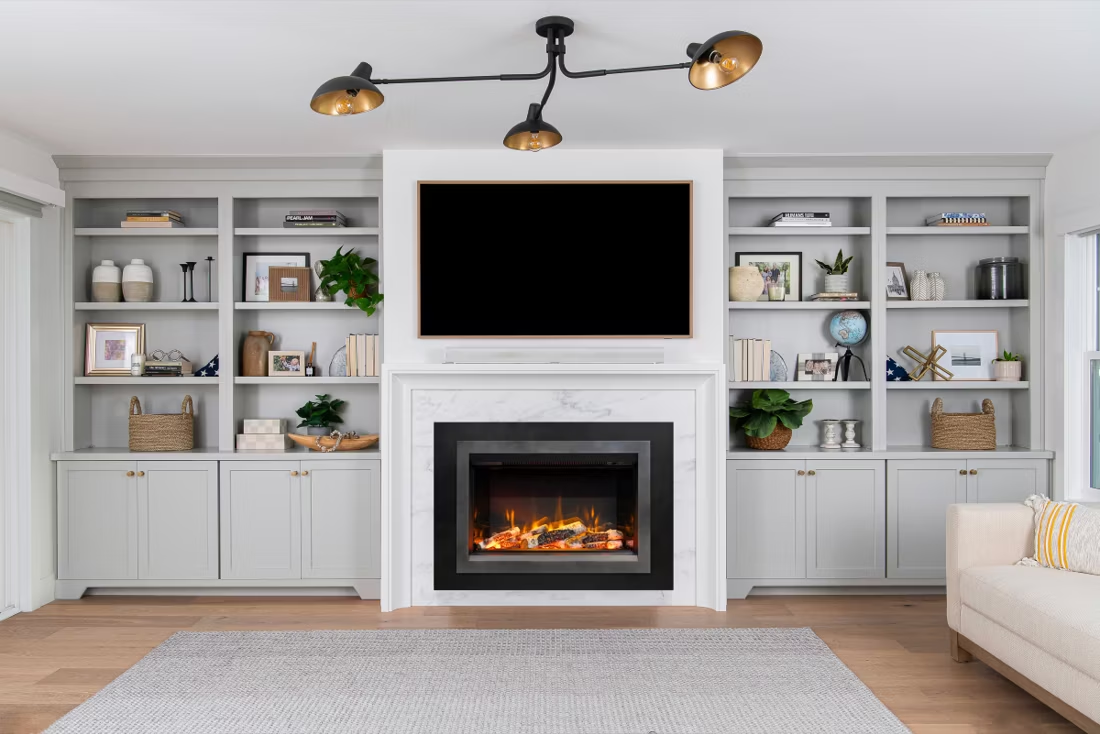
Yes—with an asterisk. Fireplaces are hot and TVs don't like heat. Either put a mantel between them to deflect rising warmth, or choose a fireplace with heat-management technology that creates a cool zone on the wall above—the wall stays around 125 degrees, barely warm, while the room still gets full heat. If you like clean lines and don't want a mantel, heat management is the answer.
Do electric fireplaces actually produce heat?
Yes—most put out around 4,800–5,000 BTUs from a standard outlet, which comfortably warms a bedroom, office, or den as a comfort-zone heater. What they won't do is carry a whole house the way wood, gas, or pellet can. Think of electric as ambiance-first with honest supplemental heat: flames on with no heat in July, flames plus warmth in January.
What is an in-home preview and do I need one?
It's a visit where a hearth professional measures your space, confirms the model you picked actually works in your home, and walks the specs—framing, gas line, venting, finish work—before anything is ordered. Some details you just can't know until you see the house. Never make a down payment without one; it's the single most-skipped step that burns buyers.
Can I install a fireplace myself?
If you're putting a fire in your house on purpose, it's best to work with an expert. Unless you're genuinely experienced in framing, gas line, vent pipe, and the national code on clearances to combustibles, have a professional do it—and ideally the same company that sells you the fireplace, so warranty, service, and liability all live under one roof.
Stove and Fireplace Dealers in Lewis and Clark County
Listings include WhyFire partner dealers, dealers we have verified as authorized for the brands we recommend, and established local businesses that carry hearth products. Every listing shows which one it is. The ones marked Preferred run on WhyFire's software, so they can show you real pricing and book your appointment right here. No manufacturer pays for placement. How we verify dealers →
The Stove Man
Find your electric fireplace in Lewis and Clark County.
Tell us a bit about your home and room, and we'll match you with a trusted local dealer and send over a free Project Guide & Parts List—the right unit, the wiring needs, and the exact parts for your Lewis and Clark County electric fireplace project.
Find Your Fireplace →