
Warm Up a Room Without Touching Your Chimney.
No vent, no gas line, no cutting permit—just plug in or wire up and add real zone heat to a Helena Valley home. Find the right unit and connect with a trusted local dealer.
Every Project Starts From One of These Five Situations
Zone heat that skips the vent pipe and the permit.
Helena Valley Northeast sits at roughly 3,650 feet in a climate zone 6B pocket with a long, cold heating season and winter lows that average 14°F—not far off from what a home in Bozoman experiences an hour south, or Helena proper just down the valley. Most homes here carry their primary heat load with propane furnaces, wood stoves, or electric baseboard, and increasingly homeowners add an electric fireplace to a living room, bonus room, or bedroom for supplemental warmth and ambiance without opening a new hole in the wall for venting.
Vigilante Electric Cooperative serves the area at a residential rate around $0.1423 per kWh, which makes running a 1,500-watt electric fireplace roughly 20 to 25 cents an hour—cheap for occasional zone heat, though not meant to replace a furnace across a full Helena Valley winter. The other advantage worth noting: this valley sees winter temperature inversions that can trap wood smoke and wildfire smoke close to the ground. An electric unit produces zero combustion byproducts, so it keeps running (and keeps you warm) on the days when burning wood outdoors—or even in a stove—isn't the best idea.
Three steps. No salesperson until you're ready.
Tell us about your project
Your zip code, your situation, and the fuel you're leaning toward—or let the answers point you to one.
See what's actually available
The brands dealers within 100 miles genuinely carry—real options, never a catalog mirage.
Get your dealer & Project Guide
A trusted local dealer, plus the free Project Guide & Parts List that names every component of the job.
Frequently Asked Questions
How much does an electric fireplace installation cost in Helena Valley Northeast?
Plug-in electric inserts and freestanding units run $300 to $1,200 installed, since they just need a standard 120V outlet and no venting, gas line, or chimney work. Built-in wall units or larger electric fireplaces that need a dedicated 20-amp circuit and some framing or finish carpentry typically run $1,500 to $4,000. Compare that to the $4,000-plus you'd spend venting a gas or wood unit through a Lewis and Clark County home, and electric is usually the fastest, least invasive option on the table.
Do I need a permit to install an electric fireplace here?
In most cases, no—a plug-in electric fireplace that runs off an existing outlet doesn't trigger a building permit. If you're having an electrician run a new dedicated circuit or hardwiring a built-in unit into a wall, that electrical work typically does require a permit through Lewis and Clark County. Either way, it's a much shorter process than the building and gas-line permits required for a wood or gas installation in the same county.
What does it actually cost to run an electric fireplace in Helena Valley Northeast?
At Vigilante Electric Cooperative's residential rate of about $0.1423 per kWh, a typical 1,500-watt electric fireplace costs roughly 21 cents an hour to run on the heater setting, or well under a nickel an hour on ambiance-only (flame, no heat) mode. Run it 4 hours a night through a cold Helena Valley winter and you're looking at around $25 to $30 a month—reasonable for supplemental heat in one room, but not a substitute for whole-home heating given this area's long, cold winter season.
Can an electric fireplace heat my whole house in this climate?
Realistically, no—not at Helena Valley Northeast's elevation and cold, with winter lows averaging 14°F and a heating season that runs long and deep. Electric resistance heat is expensive to run at that volume, and most electric fireplaces are built and rated as zone heaters for a single room, not a whole-home furnace replacement. The right approach for most homes here is an electric fireplace for the room you spend the most time in, paired with a propane furnace, wood stove, or heat pump system carrying the rest of the house.
What's the difference between an electric fireplace, insert, and stove?
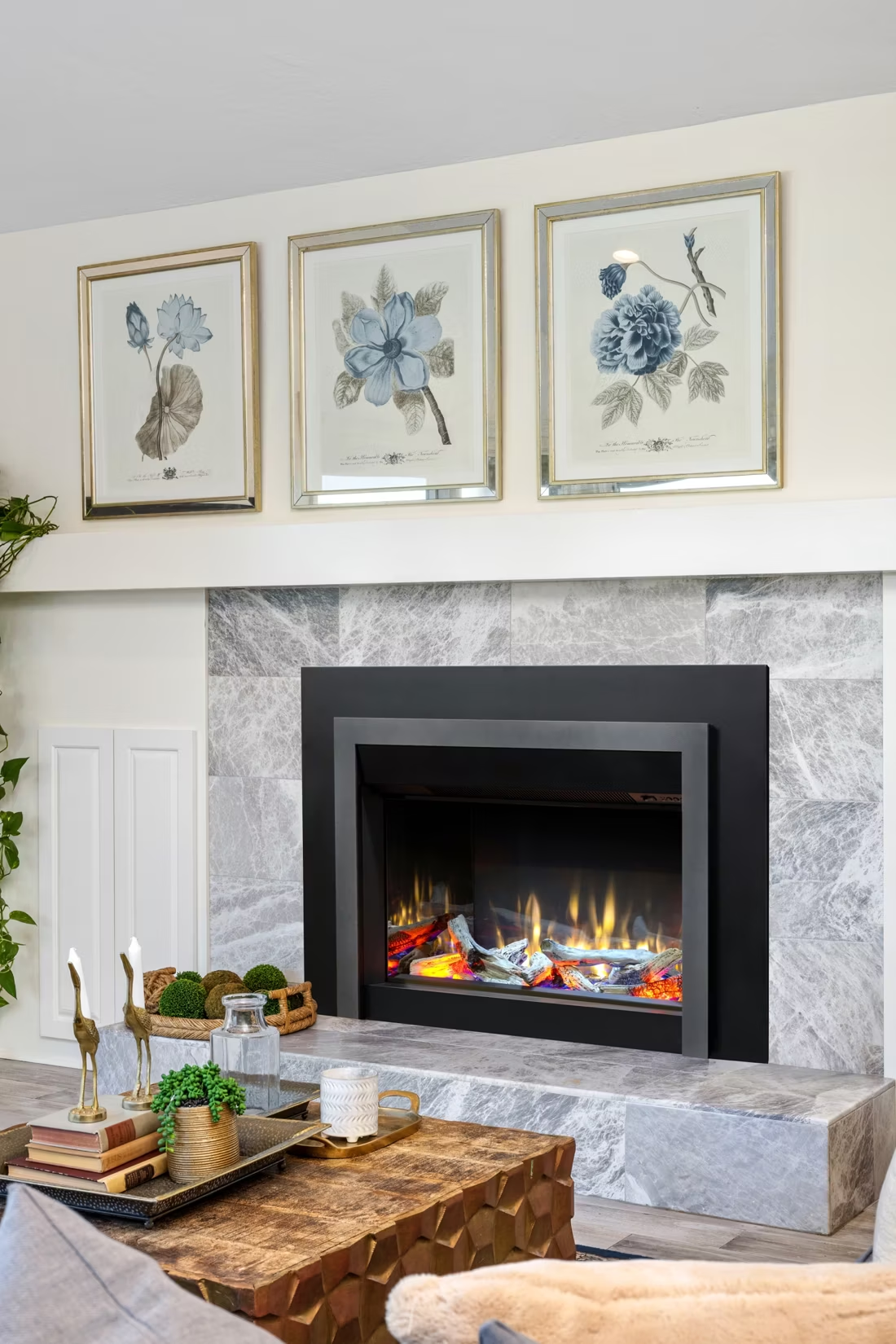
An electric fireplace is typically a built-in or wall-mounted unit designed to look like a traditional fireplace, often installed in new framing or a mantel surround. An electric insert is sized to slide into an existing masonry or wood-burning fireplace opening, giving an old hearth a heat source without touching the chimney. An electric stove is a freestanding cabinet-style unit that mimics a wood stove's look and can go almost anywhere there's an outlet. For Helena Valley homes with an existing but unused wood fireplace, an insert is often the simplest upgrade; for new construction or a room without a hearth, a built-in fireplace or stove works better.
Electric vs. wood—which makes more sense for my home here?
Wood remains the backbone of heating for a lot of Helena Valley homes, and it makes sense given the surrounding timber—lodgepole pine, ponderosa pine, Douglas fir, and aspen are all common locally, and Forest Service cutting permits through the Helena-Lewis and Clark National Forest run just $5 to $20 per cord during the May-to-October season. Wood also keeps working during a power outage, which electric can't do. But wood requires chimney maintenance, cutting or buying firewood, and it can run into trouble during winter inversion days when smoke gets trapped in the valley. Electric skips all of that: no smoke, no permit, no chimney sweep, just less heat output per dollar and no function if the power's out. Many homes here run both—wood or propane for primary heat, electric for a supplemental room.
Electric vs. pellet stove—what's the real tradeoff?
Both electric fireplaces and pellet stoves depend on electricity to operate, so neither one is a reliable backup during a power outage—pellet stoves need power to run the auger and blower, and electric units obviously need power to run at all. Where pellet pulls ahead is heat output: a pellet stove burning Bear Mountain or Lignetics pellets (both sold regionally) can carry real heat load through a cold Helena Valley night, something an electric unit isn't built to do. Where electric pulls ahead is simplicity and cost: no hopper to load, no venting to install, and a much lower upfront price. If you want ambiance and light supplemental heat with minimal installation, go electric. If you want a real secondary heat source for the house, pellet is the stronger option.
Where does an electric fireplace make the most sense in a home like mine?
Electric fireplaces do well in rooms without existing gas lines or chimneys—bonus rooms, finished basements, primary bedrooms, or additions where running new venting would be expensive. They're also a good fit for rental properties in the Helena Valley area, since there's no combustion appliance to inspect or maintain. And on days when a winter inversion settles into the valley and wood smoke advisories are in effect, an electric unit is the one heat source in the house that won't add to the problem.
How do I find the right electric fireplace and get it installed properly?
I'm not a manufacturer or a retailer—Find My Fireplace matches you with a trusted local dealer who knows what's actually available and installable for a home in Helena Valley Northeast, whether that's a simple plug-in insert or a built-in unit that needs a new circuit run. Tell us about your space and we'll hand you a free Project Guide & Parts List with the right unit specs and your recommended local dealer, so you're not guessing at a big-box store.
Can I put a TV above my fireplace?
Yes—with an asterisk. Fireplaces are hot and TVs don't like heat. Either put a mantel between them to deflect rising warmth, or choose a fireplace with heat-management technology that creates a cool zone on the wall above—the wall stays around 125 degrees, barely warm, while the room still gets full heat. If you like clean lines and don't want a mantel, heat management is the answer.
Do electric fireplaces actually produce heat?
Yes—most put out around 4,800–5,000 BTUs from a standard outlet, which comfortably warms a bedroom, office, or den as a comfort-zone heater. What they won't do is carry a whole house the way wood, gas, or pellet can. Think of electric as ambiance-first with honest supplemental heat: flames on with no heat in July, flames plus warmth in January.
How much should I budget for a fireplace?
For an average home—covering the fireplace, the vent pipe, and basic installation—a budget between $3,900 and $5,500 gives you a lot of options across wood, gas, and pellet. By the time you add finish work, gas line, and electrical, the average complete installation lands between $5,000 and $12,000 all-in. In a remodel or new build, a good rule is to put about 2.5% of the total project cost toward the fireplace.
What is an in-home preview and do I need one?
It's a visit where a hearth professional measures your space, confirms the model you picked actually works in your home, and walks the specs—framing, gas line, venting, finish work—before anything is ordered. Some details you just can't know until you see the house. Never make a down payment without one; it's the single most-skipped step that burns buyers.
Nearby Dealers
Hearth shops serving Helena Valley Northeast and the surrounding area. Every listing shows whether it is a WhyFire partner, a dealer we have verified as authorized for the brands we recommend, or a local business carrying hearth products. No manufacturer pays for placement. How we verify dealers →
The Stove Man
Electric Service in Helena Valley Northeast
An electric fireplace's heater draws about 1,500 watts—pennies per hour at local rates.
Vigilante Electric Coop, Inc
Find your electric fireplace in Helena Valley Northeast.
Tell us about your home and we'll match you with the right electric fireplace, insert, or stove, plus a free Project Guide & Parts List and a trusted local dealer to install it.
Find Your Fireplace →