
Keep Your Family Warm and Safe—No Matter What
At nearly 4,000 feet in the Helena Valley, where winter lows average 14°F and the heating season runs long, wood heat isn't a novelty—it's the backbone of how a lot of homes here stay warm. Find the right stove or insert and connect with a trusted local dealer.
Every Project Starts From One of These Five Situations
Wood heat matches this valley's winters.
Helena Valley Northwest sits at just under 4,000 feet on the north edge of the Helena Valley, an unincorporated community of ranch properties and larger acreages tucked between the Big Belt and Elkhorn Mountains. With a winter heating load roughly on par with Bozeman just up the interstate—colder on paper than you'd guess—and winter lows that average 14°F but regularly dip well below zero during cold snaps, this is a place where a heating system has to actually perform, not just look good on a showroom floor.
The community backs up against the Helena-Lewis and Clark National Forest, which means cheap cutting permits (typically $5 to $20 per cord, May through October) and easy access to lodgepole pine, ponderosa pine, Douglas fir, and aspen—the species that fill most woodsheds in this part of Lewis and Clark County. Because Helena Valley Northwest is unincorporated, many homes are also on rural electric co-op service through Vigilante Electric Cooperative, where storm-related outages in an exposed valley can stretch longer than they would in town. A properly sized, EPA-certified wood stove or insert delivers real backup heat during those outages, cuts propane or electric heating costs through the coldest months, and holds up to the winter inversions that occasionally settle wood smoke into the valley.
Firewood Cutting Permits Near Helena Valley Northwest
Three steps. No salesperson until you're ready.
Tell us about your project
Your zip code, your situation, and the fuel you're leaning toward—or let the answers point you to one.
See what's actually available
The brands dealers within 100 miles genuinely carry—real options, never a catalog mirage.
Get your dealer & Project Guide
A trusted local dealer, plus the free Project Guide & Parts List that names every component of the job.
Frequently Asked Questions
How much does a wood stove installation cost in Helena Valley Northwest?
Most wood stove installations in and around Helena Valley Northwest run $4,500 to $10,000, with the spread driven by the stove itself, whether new Class A chimney pipe needs to be run through a roof, and how much clearance or hearth pad work the install requires. Because the community is unincorporated, permitting for new installations goes through Lewis and Clark County rather than a city building department, and most local installers who serve the valley fold that permitting into the job. Homes without an existing chimney—common on newer ranch-style builds out here—tend to land on the higher end once full venting is factored in.
What size wood stove do I need for a home in this climate?
With a heavy winter heating load and overnight lows that can drop well below zero, sizing matters more here than it does in milder climates. A small stove (up to roughly 1,000 sq ft) suits a shop, cabin, or single large room; a medium stove (1,000–2,000 sq ft) covers most main living areas in valley homes; and a large stove (2,000+ sq ft) can carry a well-insulated whole house through a cold snap. Undersized stoves get run wide open all winter and burn out prematurely—oversized stoves smolder and load up creosote. A local dealer will size your specific home and elevation during an in-home visit rather than guessing off square footage alone.
Where can I find a certified wood stove installer near Helena Valley Northwest?
Look for NFI (National Fireplace Institute) or CSIA (Chimney Safety Institute of America) certification—both indicate real training in wood-burning appliance venting and clearances, not just general construction experience. Because Helena Valley Northwest is a small unincorporated community, most certified installers are based in nearby Helena and serve the valley as part of their regular route. That's a good thing: it means you're getting a crew that installs dozens of stoves a year in this exact climate and elevation, rather than a one-off job from a general contractor unfamiliar with cold-climate venting requirements.
Wood stove or wood insert—which fits my home?
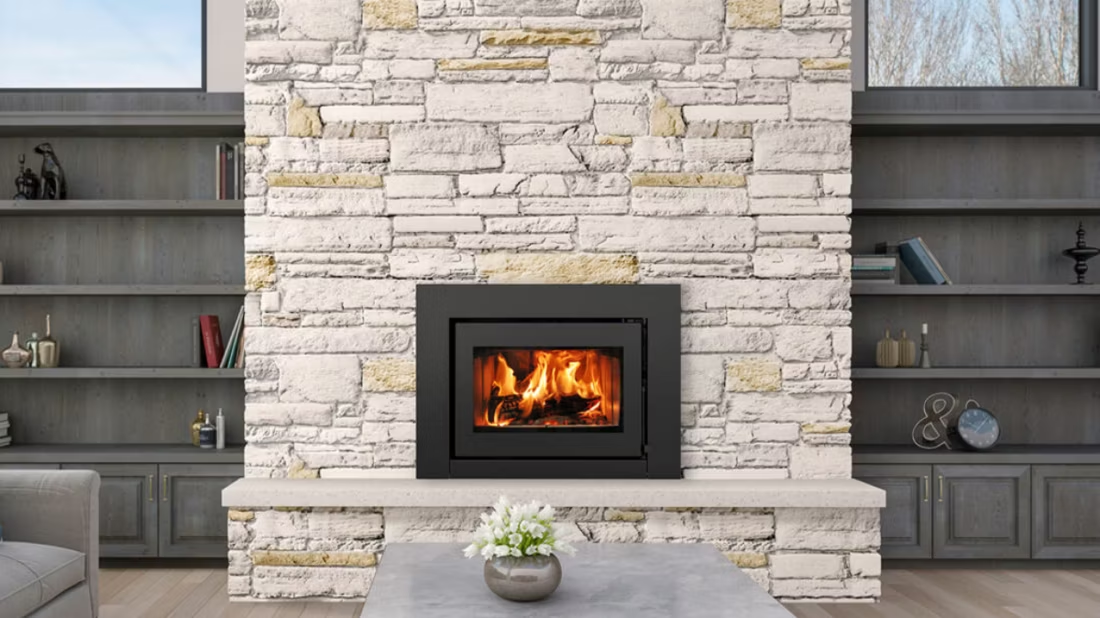
A freestanding wood stove sits on a hearth pad and can go almost anywhere with proper clearances—the common choice for newer construction or homes without a masonry fireplace, which describes a lot of the ranch-style building in Helena Valley Northwest. A wood insert slides into an existing masonry fireplace and turns it into a sealed, high-efficiency heater using the chimney you already have. If your home was built with an open fireplace, an insert is almost always the better upgrade; if you're starting from scratch or heating a shop or outbuilding, a freestanding stove gives you more flexibility on placement.
Do I need a permit to install a wood stove here?
Yes. Because Helena Valley Northwest is unincorporated, new wood stove installations are permitted through the Lewis and Clark County Planning & Community Development Department rather than a city office, and the stove itself needs to meet current EPA emissions standards. Most local installers handle that paperwork as part of the job. Worth knowing separately: the Helena valley is prone to winter temperature inversions that can trap wood smoke close to the ground, and Lewis and Clark County occasionally issues air quality advisories during those events—check local advisories before burning on the stillest, coldest days.
What's the best wood stove for this elevation and climate?
For homes relying on wood as a primary or serious backup heat source through a long, demanding winter heating season, catalytic stoves from brands like Blaze King are worth a close look—they're built to hold a fire 20+ hours on a load, which matters when temperatures drop well below zero overnight and you don't want to be up at 3 a.m. reloading. Douglas fir and lodgepole pine, both common locally, burn hot and fast, so a catalytic design that can throttle down and extend the burn gets more mileage out of a cord than a basic non-catalytic unit. For supplemental heat in a smaller space, non-catalytic stoves from Pacific Energy or Lopi are solid, simpler options—a local dealer can match the model to your square footage and how hard you plan to run it.
How often should my chimney be swept in a climate like this?
An annual inspection is the CSIA-recommended minimum, and it holds true in Helena Valley Northwest—plan on a sweep and inspection each late summer or early fall, before the cold sets in. Homes that lean on wood as a primary heat source through the long winter here, burning through several cords of lodgepole pine, ponderosa pine, or Douglas fir, often need a second mid-season check, since resinous softwoods can build creosote faster than hardwood. Skipping inspections is the single biggest preventable cause of chimney fires, and it's not worth the risk on a system you're depending on through a Montana winter.
Where can I get firewood or a cutting permit near Helena Valley Northwest?
The Helena-Lewis and Clark National Forest issues personal-use cutting permits from May through October, typically running $5 to $20 per cord—one of the more affordable permit programs in the region. Lodgepole pine, ponderosa pine, Douglas fir, and aspen are all common and permitted species. For homeowners who'd rather buy than cut, several sellers in and around Helena deliver split, seasoned cordwood to the valley, usually priced by species and dryness. If you're heating primarily with wood through a winter this long, plan to have next season's wood cut, split, and stacked by late spring so it has a full summer to season.
Wood stove vs. pellet stove—which makes more sense out here?
Wood stoves run on cordwood you can cut yourself through the Helena-Lewis and Clark National Forest permit program, work with zero electricity, and give you real backup heat when Vigilante Electric Cooperative lines go down in a storm—a genuine consideration on exposed rural service in this valley. Pellet stoves, using regional brands like Bear Mountain, Lignetics, or Forest Energy, are more convenient to load and run cleaner, but they need electricity for the auger and blower, so they're not a fallback during an outage unless paired with a battery backup. For a valley property where winter storms can knock out power and firewood is genuinely cheap to come by, wood tends to be the more resilient choice; pellet is a reasonable fit for a second home or a household that prioritizes convenience over off-grid backup.
Why is a fireplace insert so efficient?
An insert does two things: it seals the chimney completely, so you stop losing air you already paid to heat, and it radiates warmth into the room through the firebox and glass. Most add a heat-exchange fan that pulls cool room air underneath, wraps it around the hot firebox, and pushes it back out warm. Your home is more efficient before you've even lit the first fire.
What's the difference between an insert and a zero-clearance fireplace?
An insert is a fireplace that slides into a pre-existing wood-burning fireplace—if you don't have one, there's nothing to insert it into. A zero-clearance fireplace is built into a framed wall, which makes it the answer for remodels and new construction. Simple test: existing masonry fireplace means insert; blank or framed wall means zero-clearance.
Can I install a fireplace myself?
If you're putting a fire in your house on purpose, it's best to work with an expert. Unless you're genuinely experienced in framing, gas line, vent pipe, and the national code on clearances to combustibles, have a professional do it—and ideally the same company that sells you the fireplace, so warranty, service, and liability all live under one roof.
What is an in-home preview and do I need one?
It's a visit where a hearth professional measures your space, confirms the model you picked actually works in your home, and walks the specs—framing, gas line, venting, finish work—before anything is ordered. Some details you just can't know until you see the house. Never make a down payment without one; it's the single most-skipped step that burns buyers.
Nearby Dealers
Hearth shops serving Helena Valley Northwest and the surrounding area. Every listing shows whether it is a WhyFire partner, a dealer we have verified as authorized for the brands we recommend, or a local business carrying hearth products. No manufacturer pays for placement. How we verify dealers →
The Stove Man
Find your wood stove in Helena Valley Northwest, MT.
Tell us about your home and we'll match you with a trusted local dealer and put together a free Project Guide & Parts List—the exact stove or insert, venting, and parts your Helena Valley Northwest project needs.
Find Your Fireplace →