
Reliable gas heat for Dawson County's long, cold winters.
With 7,417 heating degree days and winter lows that average near 9°F, Dawson County homes need heat that doesn't quit—from Glendive to the ranches scattered across the badlands. Find the right gas fireplace or insert and connect with a trusted local dealer.
Every Project Starts From One of These Five Situations
Steady heat for a county shaped by wind and cold.
Dawson County sits in the high plains of eastern Montana, along the Yellowstone River and the badlands terrain of Makoshika State Park just outside Glendive. The population is small—around 7,000 countywide—but the climate is not forgiving: Zone 6B winters bring an average low near 9°F and rack up 7,417 heating degree days a year, a cumulative cold load in the range of Bismarck, North Dakota, just a few hours east. Summer brings its own concern in the form of wildfire smoke drifting in from regional fires, but the real story for most of the year is holding heat against open-plains wind exposure in older farmhouses and ranch construction.
Unlike counties with a strong wood-cutting culture, wood and pellet heat aren't the standard fit here—Dawson County's terrain is more prairie and badlands than timbered forest, and most local households lean on gas or electric appliances for both primary and supplemental heat. In and around Glendive, natural gas service is available through Montana-Dakota Utilities (MDU); outside city limits, propane delivery is the norm for ranches and rural properties. Either way, a gas fireplace or insert gives Dawson County homeowners the kind of instant, consistent heat that doesn't depend on a woodpile or a hopper full of pellets—a real advantage when the wind picks up and the thermometer drops.
Three steps. No salesperson until you're ready.
Tell us about your project
Your zip code, your situation, and the fuel you're leaning toward—or let the answers point you to one.
See what's actually available
The brands dealers within 100 miles genuinely carry—real options, never a catalog mirage.
Get your dealer & Project Guide
A trusted local dealer, plus the free Project Guide & Parts List that names every component of the job.
Frequently Asked Questions
How much does a gas fireplace installation cost in Dawson County?
Most gas fireplace installations in and around Glendive and Dawson County run somewhere between $4,000 and $10,000, depending on the unit, the venting path, and whether new gas or propane line work is required. A direct-vent insert going into an existing masonry opening with gas already run to that wall tends to land on the lower end. A new built-in fireplace in a remodel—with framing, venting through an exterior wall, and a fresh gas or propane line—sits higher. Rural properties that need a new propane tank installed, or a longer line run from tank to appliance, should expect the estimate to reflect that extra work. A local dealer will give you a firm number after seeing your home.
Can I convert an existing wood fireplace to gas in Dawson County?
It's possible, though fewer Dawson County homes have existing wood-burning masonry fireplaces compared to more forested parts of Montana—wood heat has never been the dominant local fuel here the way it is in the mountain counties to the west. If your home does have an older masonry fireplace, typically in one of Glendive's early-20th-century houses, a gas insert can usually be installed using the existing chimney as a vent path with a stainless liner. Expect a similar cost range to a standard insert install, with the final number depending on whether you're on natural gas through MDU or need to work with a propane supplier.
Should I use natural gas or propane for my fireplace?
It depends on where in the county you live. Natural gas service through Montana-Dakota Utilities covers Glendive and the immediate surrounding area—if your home already has natural gas appliances, adding a fireplace on that same line is usually the simpler and cheaper route. Outside the MDU service area, which includes most of rural Dawson County, propane is standard. Nearly all gas fireplace models can be configured to run on either fuel; your installer sets the correct orifice and regulator for whichever you have. If you're on propane and don't already have a tank, that's an added cost your local dealer will factor into the estimate.
Will my gas fireplace still work if the power goes out?
Most modern gas fireplaces with intermittent pilot ignition (IPI) include a battery backup that keeps the unit operating normally when the power drops—you just need to keep fresh batteries in the unit. That matters in Dawson County, where winter storms and high-wind events can knock out power in rural areas for longer stretches than in town. Valor fireplaces take a different approach: their pilot assembly generates its own electricity through the thermocouple, so there's no battery to remember at all. Ask your local dealer about the ignition system on any model you're considering, especially if you're outside Glendive where outages tend to last longer.
What's the difference between a gas fireplace, gas insert, and gas stove?
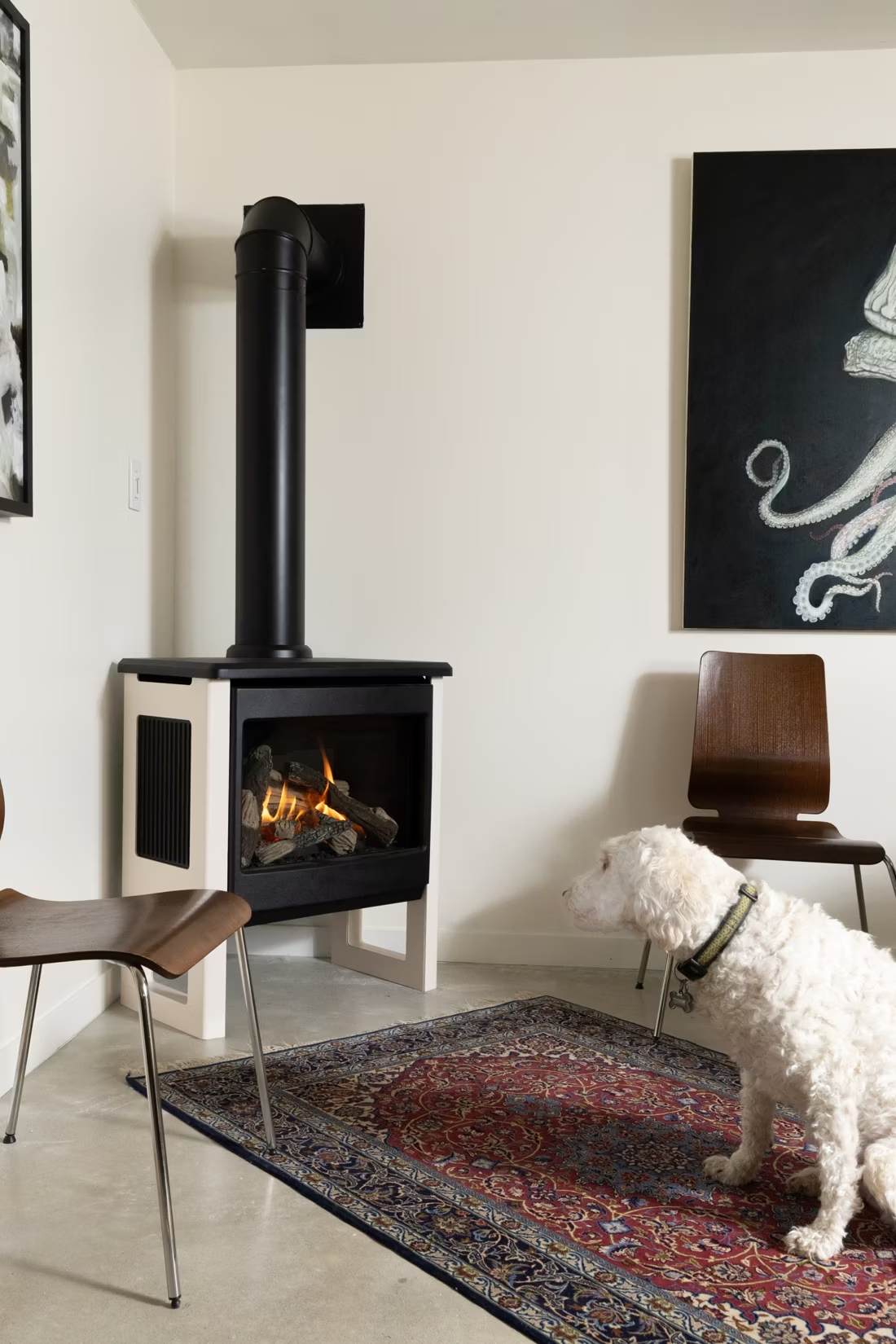
A gas fireplace is a fully built-in unit framed into a wall—the right choice for new construction or a major remodel. A gas insert is built to slide into an existing masonry fireplace opening, turning an old, drafty hearth into a sealed, efficient heat source using the existing chimney as the vent. A gas stove is a freestanding cabinet-style unit that sits on the floor, similar in footprint to a wood stove but running on gas or propane. For most Dawson County homes with an existing fireplace opening, an insert is the straightforward upgrade; for new rooms or additions, a built-in unit or freestanding stove usually makes more sense.
Do I need a permit to install a gas fireplace in Dawson County?
Yes—new gas fireplace and insert installations require a building permit through Dawson County's building department, and any new gas or propane line work needs to be done by a licensed gas-fitter. Most established local dealers handle the permitting and coordinate the gas-line and venting work as part of the install, so you're not left managing separate trades yourself. This coordination matters more in a rural county like Dawson, where finding and scheduling multiple contractors independently can add weeks to a project.
Vented vs. vent-free gas fireplaces—what should I know?
Vented (direct-vent) gas fireplaces draw combustion air from outside and exhaust exhaust gases back outside through sealed venting—they're the cleanest and most universally code-approved option. Vent-free units burn gas directly into the room without external venting; they're legal in Montana but come with strict room-sizing requirements and the tradeoff of releasing some combustion byproducts indoors. Given how tightly older Dawson County farmhouses and newer energy-efficient builds alike tend to be sealed against the plains wind, direct-vent units are the more common and generally recommended choice locally—they deliver real heat without any indoor air quality compromise.
How often does a gas fireplace need servicing?
An annual inspection is recommended for any gas-burning appliance. A technician checks the burner, pilot assembly, venting, and gas connections, and cleans the glass and interior—a quick job compared to wood chimney sweeping, but important for safety and efficiency. Local hearth dealers and gas service technicians serving Glendive and the surrounding county typically charge in the $150–$250 range for this annual visit, and scheduling it before the heating season ramps up in the fall is the easiest way to stay ahead of it.
Gas vs. electric fireplace—which is right for my Dawson County home?
Gas fireplaces produce real, radiant heat capable of warming a room even during a hard winter stretch, and with battery backup or a thermocouple-powered pilot, many models keep working through a power outage—a real consideration given how exposed rural Dawson County can be to wind and winter storms. Electric fireplaces are simpler to install, cost less up front, and work anywhere there's an outlet, but they rely entirely on grid power and produce less usable heat in a true Zone 6B cold snap. Wood heat, by contrast, isn't the standard fit here the way it is in more forested parts of Montana. For most Dawson County homeowners, gas is the practical choice for a primary or zone-heat fireplace, with electric units reserved for supplemental ambiance in rooms where running a gas or propane line isn't practical.
Why is a fireplace insert so efficient?
An insert does two things: it seals the chimney completely, so you stop losing air you already paid to heat, and it radiates warmth into the room through the firebox and glass. Most add a heat-exchange fan that pulls cool room air underneath, wraps it around the hot firebox, and pushes it back out warm. Your home is more efficient before you've even lit the first fire.
Is my gas fireplace wasting gas?
If it was installed more than 15 years ago, probably. Older gas fireplaces keep a standing pilot light burning all the time, and that little flame can cost a couple hundred dollars a year. Newer models use pilot-on-demand ignition—the pilot lights only when you use the fireplace and goes out when you turn it off.
How much should I budget for a fireplace?
For an average home—covering the fireplace, the vent pipe, and basic installation—a budget between $3,900 and $5,500 gives you a lot of options across wood, gas, and pellet. By the time you add finish work, gas line, and electrical, the average complete installation lands between $5,000 and $12,000 all-in. In a remodel or new build, a good rule is to put about 2.5% of the total project cost toward the fireplace.
Can a fireplace actually lower my heating bill?
Yes—by creating a comfort zone. A furnace heats every square foot of the house just to warm the one room you're in; a gas fireplace on low burns roughly a sixth of the gas a typical furnace does. Set the furnace around 55–60 degrees as a baseline, then heat the rooms your family actually uses. Families who heat this way commonly save $20–$60 a month.
Find your gas fireplace in Dawson County.
Tell us a bit about your home and we'll match you with a trusted local dealer and a free Project Guide & Parts List—the exact parts, including the vent kit, for your gas fireplace project in Dawson County.
Find Your Fireplace →