
Reliable heat for Dawson County's long, cold winters.
Fireplace resources for Glendive and every rural community along the Yellowstone River in Dawson County. Connect with a local hearth retailer who knows what actually works out here.
Every Project Starts From One of These Five Situations
Prairie heating in Montana's Yellowstone River valley.
Dawson County sits in the badlands and river-bottom prairie of eastern Montana, where the Yellowstone River cuts through open range rather than timbered mountains. With winters averaging lows near 9°F and a heating season that rivals Bismarck, North Dakota for length and severity, homes here need serious cold-weather performance. But unlike forested western Montana counties, standing timber is scarce in Dawson County itself—most of what grows locally is river-bottom cottonwood, not the lodgepole pine or Douglas fir that fuel wood stoves elsewhere in the state. That geography shapes how homes here actually heat: natural gas from Montana-Dakota Utilities serves Glendive and much of the county, and electric heat through Lower Yellowstone Rural Electric Cooperative fills in where gas lines don't reach.
What you'll find on this hub: hearth retailers, service technicians, and fuel suppliers serving Glendive, Richey, and the unincorporated communities scattered across the county's badlands and farmland. Because wood and pellet stoves see very little demand here—despite the cold—this hub focuses on gas and electric fireplace options, where the local dealer network and utility infrastructure actually support them. Pick your fuel below for dealer listings, installation costs, and unit recommendations specific to Dawson County.
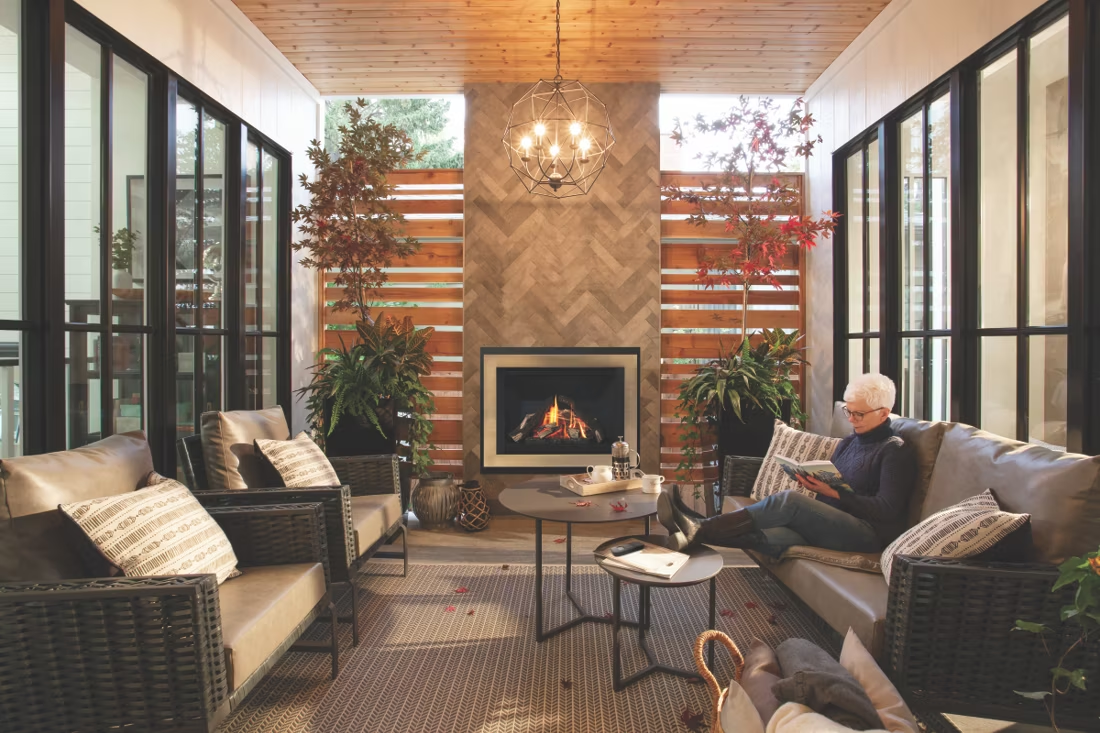
Four fuels. One honest answer for Dawson County.
Three steps. No salesperson until you're ready.
Tell us about your project
Your zip code, your situation, and the fuel you're leaning toward—or let the answers point you to one.
See what's actually available
The brands dealers within 100 miles genuinely carry—real options, never a catalog mirage.
Get your dealer & Project Guide
A trusted local dealer, plus the free Project Guide & Parts List that names every component of the job.
Frequently Asked Questions
Which fuel works best in Dawson County?
Gas is the default choice for most Dawson County homes. Montana-Dakota Utilities runs natural gas lines through Glendive and several surrounding areas, and propane fills in where gas mains don't reach—either way, gas fireplaces and inserts deliver steady, low-maintenance heat through a heating season that runs nearly as long as Bismarck's. Electric fireplaces are common as supplemental heat in bedrooms, additions, and homes served by Lower Yellowstone Rural Electric Cooperative where zone heating makes sense. Wood and pellet stoves, despite the cold winters, see very little local demand—the county's badlands and river-bottom terrain don't produce the standing timber that supports a wood-heat culture the way it does in western Montana, and there's no meaningful local dealer network for either fuel. Most Dawson County homeowners land on gas as primary heat, with electric in secondary rooms.
Do I need a permit to install a fireplace in Dawson County?
Yes, in most cases. Gas fireplace, insert, and stove installations require a building permit through the Dawson County building department (or the City of Glendive for in-city addresses), plus a separate gas line permit pulled by a licensed gas fitter for any new or modified gas connection. Electric fireplace installs typically don't require a permit unless the project involves a new dedicated circuit or hardwired built-in unit, in which case an electrical permit applies. Most local retailers and gas contractors handle the permitting as part of the installation quote, so this usually isn't something you manage yourself.
Is wood burning viable in Dawson County given how cold the winters get?
Wood stoves are uncommon in Dawson County despite average winter lows near 9°F and a long, harsh heating season—the issue isn't the cold, it's the terrain. Dawson County's badlands and river-bottom prairie don't support the dense stands of lodgepole pine, ponderosa pine, or Douglas fir found in western Montana; most cordwood here has to be trucked in from timbered areas hours away, which drives up cost and limits local dealer interest. A handful of rural homeowners keep a wood stove as an outage backup using purchased or hauled-in wood, but it's not the primary heating strategy you'd find in a mountain county. If reliable off-grid backup heat is the goal, most Dawson County homeowners we hear from lean toward a propane or gas unit rated for use without electricity instead.
What about pellet stoves—are they an option here?
Pellet stoves are also rare in Dawson County, even though brands like Bear Mountain, Lignetics, and Forest Energy move through the region on rail lines heading to other Montana and Dakota markets. The supply chain exists nearby, but local demand hasn't built up a dealer base that stocks or services pellet appliances the way you'd see in a forested Montana county. Sourcing bagged pellets locally can mean a drive to a farm supply store rather than a dedicated hearth retailer, and warranty service usually means calling a technician based out of Billings or Miles City. For most Dawson County homes, gas or electric remains the more practical route.
Can one local dealer handle both gas and electric fireplace needs?
Yes—the hearth retailers serving Dawson County typically carry both gas and electric lines, since those are the two fuels with real local demand. A single dealer visit can usually cover a gas insert for the living room and an electric unit for a bedroom or basement addition, with one contractor coordinating both the gas line permit and any electrical work needed. If a retailer also lists wood or pellet inventory, it's worth confirming they actually stock and service those units locally rather than special-ordering from out of state.
What's the typical cost range for gas and electric fireplace installation in Dawson County?
Gas fireplace, insert, or stove installation typically runs $4,000–$9,500 in Dawson County, with cost driven mainly by how far the gas line has to run and whether existing venting can be reused—conversions of an existing gas appliance land on the lower end. Electric fireplace installation ranges from $200–$2,800 for the unit itself, plus $300–$1,000 in labor for anything beyond a plug-and-play install, such as a built-in unit requiring a new circuit. Rural properties outside Glendive may see a modest travel charge added to installation quotes. See the county + fuel pages above for retailer-specific pricing.
Wood, gas, pellet, or electric—how do I choose?
Match the fuel to your life, not the other way around. Wood: lowest fuel cost and total power-outage independence, but you're hauling and stacking. Gas: press a button, set a thermostat, no maintenance to speak of. Pellet: wood economics with automatic feeding, in exchange for weekly cleaning and a need for electricity. Electric: plugs in anywhere with honest supplemental heat. Nobody regrets the fuel that fits how they actually live.
What is an in-home preview and do I need one?
It's a visit where a hearth professional measures your space, confirms the model you picked actually works in your home, and walks the specs—framing, gas line, venting, finish work—before anything is ordered. Some details you just can't know until you see the house. Never make a down payment without one; it's the single most-skipped step that burns buyers.
Does a fireplace add value to my home?
On average, a fireplace adds back to the home about the same amount you spent installing it. Add the monthly savings from heating the rooms you actually use instead of the whole house—often hundreds of dollars a year—and the value case is strong before you even count what a fire does for how your family uses the room.
Can a fireplace actually lower my heating bill?
Yes—by creating a comfort zone. A furnace heats every square foot of the house just to warm the one room you're in; a gas fireplace on low burns roughly a sixth of the gas a typical furnace does. Set the furnace around 55–60 degrees as a baseline, then heat the rooms your family actually uses. Families who heat this way commonly save $20–$60 a month.
Stove and Fireplace Dealers in Dawson County
Listings include WhyFire partner dealers, dealers we have verified as authorized for the brands we recommend, and established local businesses that carry hearth products. Every listing shows which one it is. The ones marked Preferred run on WhyFire's software, so they can show you real pricing and book your appointment right here. No manufacturer pays for placement. How we verify dealers →
Get matched with a fireplace specialist in Dawson County.
Tell us about your project and we'll match you with a trusted local dealer and send you a free Project Guide & Parts List—the exact parts, venting, and recommended installer for your Dawson County home.'}
Find Your Fireplace →