
Add real ambiance to Scobey-area homes—no chimney required.
Clean, no-venting heat and glow for Daniels County's farmhouses and ranch homes, where wood and propane carry the coldest nights and electric fills in the rest. Find the right unit and connect with a trusted local dealer.
Every Project Starts From One of These Five Situations
Simple heat and ambiance for the high plains.
Daniels County sits in the far northeastern corner of Montana against the Saskatchewan border, a stretch of wheat fields and cattle range with a total county population under 900. Scobey is the only real town of any size, and the housing stock here runs to older farmhouses, ranch homes, and mobile homes built well before energy codes tightened up. Climate zone 6B means winters that rival Fargo, ND for sustained cold—weeks of subzero highs and wind chill that makes an uninsulated room unlivable without help. For generations, wood cut from the lodgepole pine, ponderosa pine, Douglas fir, and aspen stands along the creek bottoms has done the heavy lifting, with propane filling in for whole-house heat in town and on the ranch.
Electric fireplaces don't try to replace that primary heat source—and honestly shouldn't in a county this cold. What they do well is add supplemental warmth and real ambiance to a specific room: a plug-in insert in a den, a wall-mount unit in a remodeled kitchen, a built-in in a new addition, all without cutting a chimney or running gas line. There's no venting to size, no combustion byproducts to worry about, and installation is often a matter of a dedicated circuit and a few hours of an electrician's time—a real advantage in a county where every skilled trade has to travel. Sheridan Electric Cooperative, which covers much of this stretch of the Hi-Line, handles the load without issue; the practical question is just where you want the heat and glow, not whether the grid can support it.
Three steps. No salesperson until you're ready.
Tell us about your project
Your zip code, your situation, and the fuel you're leaning toward—or let the answers point you to one.
See what's actually available
The brands dealers within 100 miles genuinely carry—real options, never a catalog mirage.
Get your dealer & Project Guide
A trusted local dealer, plus the free Project Guide & Parts List that names every component of the job.
Frequently Asked Questions
How much does an electric fireplace installation cost in Daniels County?
A plug-in electric insert or freestanding unit that uses an existing outlet runs on the low end, often $400 to $900 installed, since there's no venting or gas line to run. A built-in wall unit or a linear electric fireplace that requires a dedicated 120V or 240V circuit run by an electrician typically lands between $900 and $1,800, depending on wall framing and how far the circuit has to travel from the panel—a bigger factor in older Scobey-area farmhouses with older electrical service. There's no masonry work, no Class A chimney pipe, and no gas permit involved, which is a big part of why electric tends to be the least expensive fireplace project in the county.
Can an electric fireplace actually heat my home through a Daniels County winter?
Not on its own, and any honest installer will tell you the same. Zone 6B winters here bring stretches of sustained subzero cold that a 5,000-BTU electric unit simply isn't built to overcome for a whole house. Electric fireplaces are best understood as supplemental heat for a single room—they'll comfortably carry a den, bedroom, or addition on a cold day, and they look and feel like a real fire doing it—but the furnace, wood stove, or propane heater still needs to be your primary defense against a January cold snap. Most Daniels County homeowners we hear from want electric specifically because they already have wood or propane covering the brutal nights and want something clean and instant for everyday ambiance in one room.
What's the best electric fireplace style for an older farmhouse or mobile home?
For older farmhouses with plaster walls and limited outlets, a freestanding electric stove or console unit is usually the easiest retrofit—it plugs into a standard outlet and can be moved if you change room layouts later. For mobile and manufactured homes common throughout the county, wall-mount or recessed linear units work well in a remodel, but wall cavity depth and electrical panel capacity need a quick check first—a local installer can confirm that in a short site visit. Built-in mantel packages tend to fit best in newer construction or additions where the wall framing is designed around the unit from the start.
Do I need a permit to install an electric fireplace in Daniels County?
A plug-in unit using an existing outlet generally doesn't require a permit. If the installation involves a new dedicated circuit, a licensed electrician will typically pull an electrical permit through Daniels County's building department in Scobey, and the work needs to meet current electrical code regardless of how remote the property is. Because there's no combustion, no gas line, and no venting involved, electric fireplace permitting in the county is far simpler than a wood or gas project—most installers handle the paperwork as part of the job.
Electric vs. wood—which makes more sense for my Daniels County home?
Wood remains the practical backbone of heat for a lot of homes here, especially given the lodgepole pine, ponderosa pine, Douglas fir, and aspen available regionally and the reality that it keeps working when the power doesn't. Electric can't run without grid power, so during an outage—which happens with prairie ice storms and high wind events—an electric fireplace goes dark right when you might need heat most. Where electric wins is convenience and cleanliness: no ash, no creosote, no wood to split and stack, and no concern during the wildfire smoke events that periodically roll through this part of Montana and make some homeowners want to skip combustion appliances in the house altogether. Many Daniels County households end up with both—wood or propane for real heat and outage backup, electric for the room where they just want easy, on-demand ambiance.
Will my electric fireplace work if the power goes out?
No—electric fireplaces require grid power to run the heater and flame effect, so they shut off completely during an outage. In a county this rural, served by Sheridan Electric Cooperative across long stretches of line, outages tend to run longer than in town, particularly after ice storms or heavy prairie wind events. If you're relying on any heat source through the coldest months, plan on a wood stove, propane heater, or generator as backup—the electric fireplace should be understood as a comfort and ambiance feature, not your emergency heat plan.
Electric insert, wall-mount, or freestanding stove—what's the difference?
An electric insert is built to slide into an existing fireplace opening, which works well if you have an old masonry fireplace you want to seal up and modernize without wood or gas. A wall-mount or linear unit recesses into or hangs on a wall and suits a remodel or new addition where you're designing the room from scratch. A freestanding electric stove sits on the floor like a traditional wood stove, plugs into a standard outlet, and can be relocated later—a practical choice for renters or homeowners who aren't ready to commit to a permanent installation. Most Daniels County projects we hear about are inserts into old fireplaces or freestanding units in a den or bonus room.
How much does it cost to run an electric fireplace in Daniels County?
Most electric fireplaces draw around 1,500 watts on the heat setting, which works out to roughly 15 to 20 cents per hour at typical rural Montana cooperative electric rates. Running one for a few hours an evening in a single room adds a modest amount to a monthly bill—nothing like the cost of heating an entire farmhouse electrically through a zone 6B winter, which is exactly why these units are used as supplemental, single-room heat rather than a whole-house solution out here.
Where can I actually buy and get an electric fireplace installed in a county this small?
Daniels County's population is small enough that there isn't a dedicated hearth showroom in Scobey itself, so most installations are handled by dealers and electricians serving the wider Hi-Line region, including Glasgow and Havre. That's exactly the gap Find My Fireplace closes—rather than guessing which of those companies actually services Daniels County or stocks a unit that fits your wall and circuit, we match you with a trusted local dealer who covers your address and knows the realities of installing in this part of Montana.
Can I put a TV above my fireplace?
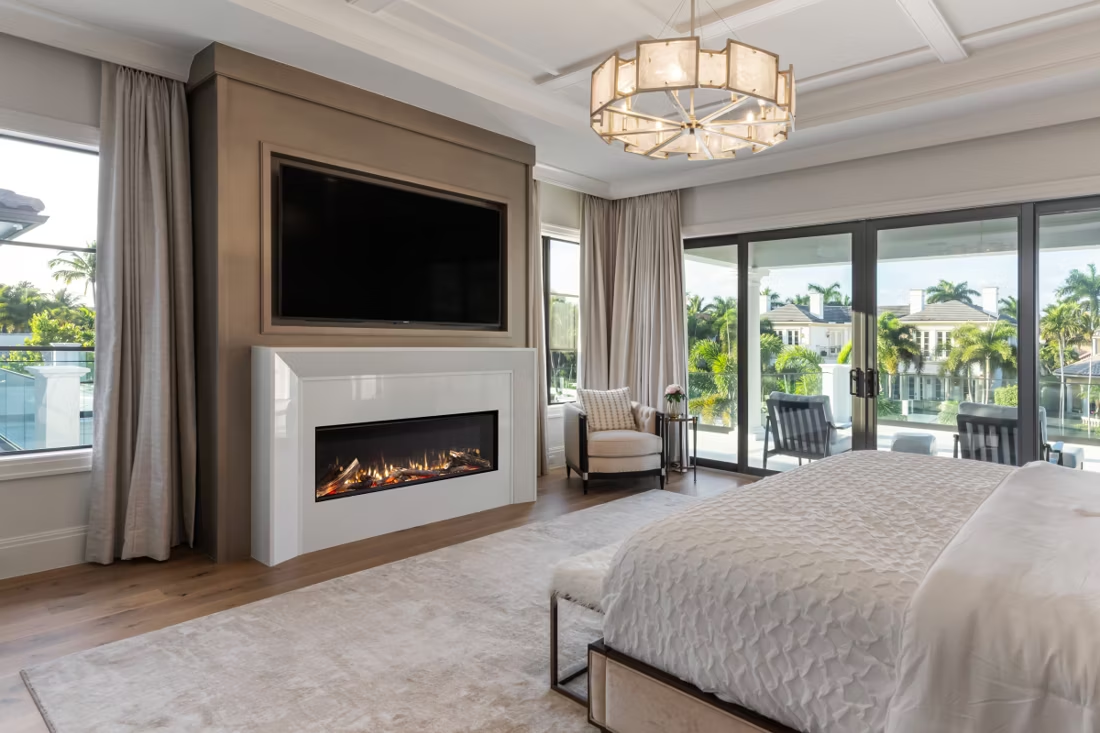
Yes—with an asterisk. Fireplaces are hot and TVs don't like heat. Either put a mantel between them to deflect rising warmth, or choose a fireplace with heat-management technology that creates a cool zone on the wall above—the wall stays around 125 degrees, barely warm, while the room still gets full heat. If you like clean lines and don't want a mantel, heat management is the answer.
Do electric fireplaces actually produce heat?
Yes—most put out around 4,800–5,000 BTUs from a standard outlet, which comfortably warms a bedroom, office, or den as a comfort-zone heater. What they won't do is carry a whole house the way wood, gas, or pellet can. Think of electric as ambiance-first with honest supplemental heat: flames on with no heat in July, flames plus warmth in January.
Does a fireplace add value to my home?
On average, a fireplace adds back to the home about the same amount you spent installing it. Add the monthly savings from heating the rooms you actually use instead of the whole house—often hundreds of dollars a year—and the value case is strong before you even count what a fire does for how your family uses the room.
Can a fireplace actually lower my heating bill?
Yes—by creating a comfort zone. A furnace heats every square foot of the house just to warm the one room you're in; a gas fireplace on low burns roughly a sixth of the gas a typical furnace does. Set the furnace around 55–60 degrees as a baseline, then heat the rooms your family actually uses. Families who heat this way commonly save $20–$60 a month.
Find your electric fireplace in Daniels County.
Tell us a bit about your home and we'll put together a free Project Guide & Parts List—the right electric fireplace or insert for your space, the exact parts needed, and a trusted local dealer who can install it.
Find Your Fireplace →