
Find your fireplace across Daniels County's Hi-Line winters.
Wood, gas, pellet, and electric fireplace resources for Scobey, Peerless, Flaxville, Coalridge, Whitetail, and the farms and ranches between them. Find the right unit and connect with a trusted local hearth dealer, even in a county this small.
Every Project Starts From One of These Five Situations
Wide-open winters where Montana meets Saskatchewan.
Daniels County sits on Montana's Hi-Line, a few miles south of the Saskatchewan border, in a climate zone (6B) that puts it in the same league as International Falls, Minnesota, for sustained deep-winter cold. With no mountains or timber to break the wind, prairie gusts push wind chill well below the air temperature for days at a time, and the heating season here often runs from October into April. With roughly 867 residents spread across mostly agricultural land, this is one of the least densely populated counties in the state—most homes are farmhouses, ranch houses, or small-town properties in places like Scobey, Peerless, and Flaxville, and many were built or added onto with wood heat as a practical backup for the ice storms that periodically knock out the rural electric grid.
Because the county is so sparsely populated, you won't find a hearth retailer on every corner—most dealers who service Daniels County are based in Glasgow, Plentywood, or occasionally Havre, and they cover the whole county, including the unincorporated communities of Coalridge and Whitetail. Pick your fuel below to see local dealers, typical installation costs, and the units that hold up to Hi-Line winters. Whether you're heating a Scobey farmhouse or a grain operation outside Flaxville, this hub is the starting point.
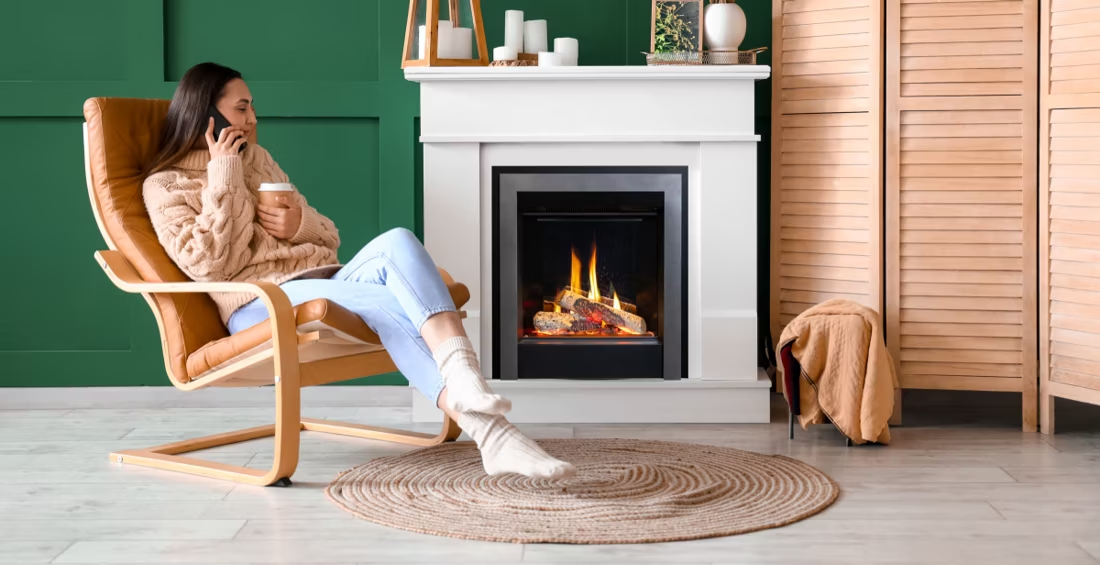
Four fuels. One honest answer for Daniels County.
Three steps. No salesperson until you're ready.
Tell us about your project
Your zip code, your situation, and the fuel you're leaning toward—or let the answers point you to one.
See what's actually available
The brands dealers within 100 miles genuinely carry—real options, never a catalog mirage.
Get your dealer & Project Guide
A trusted local dealer, plus the free Project Guide & Parts List that names every component of the job.
Frequently Asked Questions
Which fuel works best in a place as cold as Daniels County?
Most homes here end up running two fuels rather than one. Wood remains the backbone for a lot of Daniels County farmhouses—lodgepole pine, ponderosa pine, Douglas fir, and aspen are the common species, usually hauled in rather than cut on-site since the county itself is mostly open prairie, not timberland. A catalytic wood stove will hold overnight heat through the kind of sustained sub-zero stretches this area sees most winters, and it keeps working when a January ice storm takes down the Sheridan Electric Cooperative lines. Propane is the practical choice for whole-house convenience since there's no piped natural gas out here—most rural accounts run on a farm co-op delivery contract. Pellet stoves are a solid middle ground if you don't want to split and stack wood, as long as you're comfortable keeping a pellet supply on hand between deliveries. Electric fireplaces work fine for supplemental heat in a bedroom or den, but on a county grid this exposed to weather, I wouldn't plan on electric as your only heat source through a Hi-Line winter.
Do I need a permit to install a wood stove or gas insert in Daniels County?
It depends on where the property sits and what you're installing. For anything inside Scobey's city limits, check with the town before you start—most municipalities in Montana require a permit for solid-fuel appliances and any new gas line work. Out in unincorporated Daniels County, enforcement is lighter than you'd find in a larger county, but gas line installations should still go through a licensed propane technician, and I'd still recommend calling the Daniels County Courthouse in Scobey to confirm current requirements before work starts—rules do get updated, and it's a quick call that can save you a headache at resale. Most hearth retailers who install in this area are used to handling the paperwork themselves as part of the job.
Does wildfire smoke affect wood burning in Daniels County?
Not in the way it does in western Montana or the inversion-prone valleys further west. Daniels County doesn't have local non-attainment issues or the kind of trapped-air inversions you see in mountain basins—the main concern here is smoke that drifts in from wildfires burning in western Montana, Canada, or the broader Northern Rockies during summer and early fall. That can bring air quality advisories for a few days at a time, but it's a seasonal, drift-related issue rather than a wintertime wood-burning restriction, and it doesn't change what you can install or run in your own stove.
Is there a dealer nearby who can handle wood, gas, pellet, and electric?
Given the population, don't expect a big multi-fuel showroom inside Daniels County itself—the dealers who cover this area are based in Glasgow (about an hour south) or Plentywood (roughly 30 miles east), and several of them do carry all four fuel types, which is worth knowing if you want to compare options in one visit rather than driving to multiple towns. If you're set on a specific brand of catalytic wood stove or a particular pellet stove line, it's worth calling ahead to confirm what's on the showroom floor before you make the drive—rural dealers often keep a smaller working inventory than you'd find in a bigger market.
How does annual service work when the nearest technician is an hour away?
Plan ahead. Technicians servicing Daniels County are traveling from Glasgow, Plentywood, or occasionally Havre, so a same-week appointment in the middle of a January cold snap is unlikely—a chimney sweep or gas inspection booked in August or September is far easier to schedule than an emergency call once the snow's flying. Expect a travel fee for the trip out to Scobey, Peerless, or Flaxville, typically added on top of the standard service charge. If you're running a pellet stove, keep a spare igniter and extra pellets on hand between deliveries, and if wood is your backup heat, get the chimney swept before the season starts rather than waiting for a problem to show up at 20 below.
What does installation typically cost across fuel types out here?
Rural travel and freight add a bit to typical Montana pricing. Wood stove or insert installation runs roughly $4,500–$9,500, more if a masonry chimney needs rebuilding for a rural property. Propane fireplace, insert, or stove installation typically falls between $4,500–$10,000, driven mostly by the length of gas line run and whether a new propane tank setup is needed. Pellet stove or insert installs generally run $4,500–$7,500. Electric fireplaces are the cheapest entry point—$200–$3,000 for the unit itself, plus $400–$1,200 in labor for anything beyond a simple plug-and-play wall unit. Ask your dealer to itemize travel charges separately, since that's often the line item that varies most for a county this remote.
Does a fireplace add value to my home?
On average, a fireplace adds back to the home about the same amount you spent installing it. Add the monthly savings from heating the rooms you actually use instead of the whole house—often hundreds of dollars a year—and the value case is strong before you even count what a fire does for how your family uses the room.
Can a fireplace actually lower my heating bill?
Yes—by creating a comfort zone. A furnace heats every square foot of the house just to warm the one room you're in; a gas fireplace on low burns roughly a sixth of the gas a typical furnace does. Set the furnace around 55–60 degrees as a baseline, then heat the rooms your family actually uses. Families who heat this way commonly save $20–$60 a month.
What is an in-home preview and do I need one?
It's a visit where a hearth professional measures your space, confirms the model you picked actually works in your home, and walks the specs—framing, gas line, venting, finish work—before anything is ordered. Some details you just can't know until you see the house. Never make a down payment without one; it's the single most-skipped step that burns buyers.
Wood, gas, pellet, or electric—how do I choose?
Match the fuel to your life, not the other way around. Wood: lowest fuel cost and total power-outage independence, but you're hauling and stacking. Gas: press a button, set a thermostat, no maintenance to speak of. Pellet: wood economics with automatic feeding, in exchange for weekly cleaning and a need for electricity. Electric: plugs in anywhere with honest supplemental heat. Nobody regrets the fuel that fits how they actually live.
Stove and Fireplace Dealers in Daniels County
Listings include WhyFire partner dealers, dealers we have verified as authorized for the brands we recommend, and established local businesses that carry hearth products. Every listing shows which one it is. The ones marked Preferred run on WhyFire's software, so they can show you real pricing and book your appointment right here. No manufacturer pays for placement. How we verify dealers →
Valley Builders Supply
Find your fireplace in Daniels County.
Answer a few questions about your home and we'll match you with a trusted local dealer serving Daniels County, plus a free Project Guide & Parts List—the exact parts, vent kit included, for your fireplace project here on the Hi-Line.
Find Your Fireplace →