
Reliable Heat for Butte's Long, Cold Winters.
At 5,821 feet with a long, demanding winter heating season, Butte homes need heat that keeps up. Find the right pellet stove or insert, and connect with a trusted local dealer.
Every Project Starts From One of These Five Situations
Consistent warmth without the wood pile.
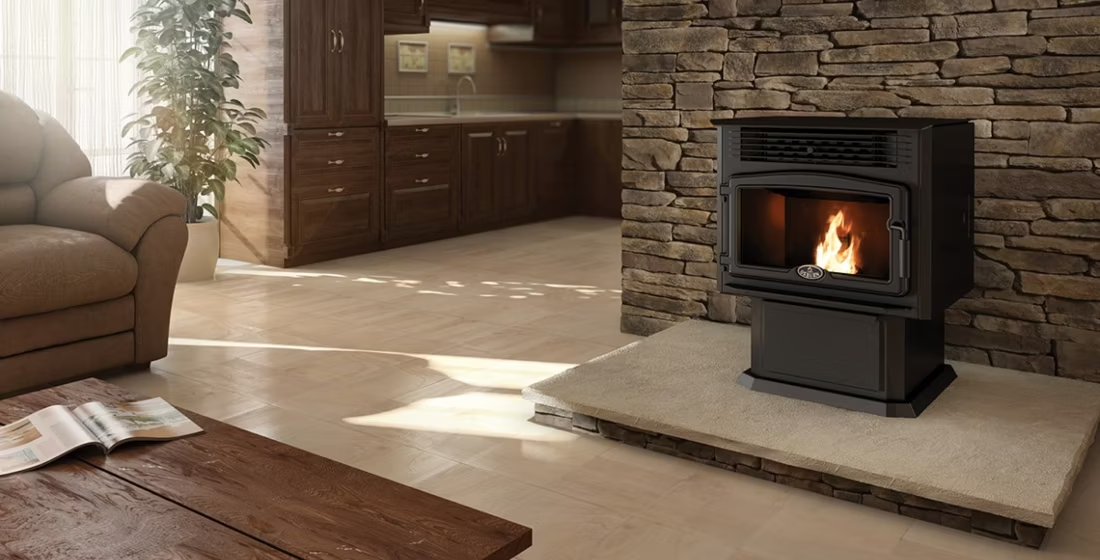
Butte sits at 5,821 feet in the Rocky Mountains, in a valley that traps cold air and, during winter inversions, wildfire smoke and wood smoke alike. With a heating season about as long and cold as International Falls, Minnesota—and winter lows averaging 8°F, this is a place where heating equipment gets used hard, for months at a time, in an older housing stock built during Butte's mining-camp boom. Pellet stoves have become a popular fit here because they deliver steady, thermostatically controlled heat without the daily splitting and stacking that wood demands.
Pellet stoves also burn cleaner than cordwood, which matters directly in Butte-Silver Bow: during winter inversion events when the Health Department issues air quality advisories, EPA-certified pellet appliances are typically exempt from burn restrictions that apply to open wood-burning. Regional pellet brands like Bear Mountain, Lignetics, and Forest Energy are milled from the same lodgepole pine and Douglas fir that fill the surrounding national forests, so fuel is regionally sourced and generally available through the winter. One thing to plan for at this elevation: many pellet stove models need a high-altitude combustion air kit above roughly 4,500 feet, and Vigilante Electric Cooperative service—like any grid power—can go down in a bad mountain storm, which matters for an appliance that runs on an electric auger and blower.
Three steps. No salesperson until you're ready.
Tell us about your project
Your zip code, your situation, and the fuel you're leaning toward—or let the answers point you to one.
See what's actually available
The brands dealers within 100 miles genuinely carry—real options, never a catalog mirage.
Get your dealer & Project Guide
A trusted local dealer, plus the free Project Guide & Parts List that names every component of the job.
Frequently Asked Questions
How much does a pellet stove installation cost in Butte?
A typical pellet stove or insert installation in Butte runs roughly $3,500 to $7,000, depending on the unit, whether it's a freestanding stove or an insert going into an existing masonry fireplace, and whether new wall venting needs to be cut. Because pellet stoves vent through a smaller PL-rated pipe rather than a full masonry chimney, installs are often on the lower end of hearth-appliance costs. Butte-Silver Bow's Building Division requires a permit for the installation, and most local dealers handle that paperwork as part of the job.
Are pellet stoves exempt from Butte's winter air quality restrictions?
Generally, yes. Butte sits in a valley that's prone to winter temperature inversions, and wildfire smoke can add to the problem in late summer and fall. When Butte-Silver Bow issues air quality advisories, restrictions typically target uncertified, open wood-burning appliances. EPA-certified pellet stoves burn hot and clean enough that they're usually allowed to keep operating during those advisory periods—worth confirming with your dealer for the specific advisory language, but it's one of the practical reasons pellet has caught on here.
What size pellet stove do I need for a Butte home?
With a long, cold heating season and lows regularly in single digits, undersizing is the more common mistake here. A lot of Butte's housing stock dates to the early 1900s mining era, with balloon-frame construction and inconsistent insulation, so a stove rated for a given square footage on paper may need to run harder than the same stove would in a newer, tighter home. As a starting point, stoves in the 40,000–50,000 BTU range handle 1,500–2,200 square feet of older Butte housing; smaller units suit a single zone or supplemental heat. A local dealer will size against your actual floor plan and insulation, not just square footage.
What happens to my pellet stove during a power outage?
Pellet stoves rely on an electric auger to feed fuel and a blower to distribute heat, so a standard unit stops running when the power does—a real consideration during a Vigilante Electric Cooperative outage in a mountain snowstorm. Some pellet stove models offer a battery backup option that keeps the auger and igniter running for a period on DC power, and a small inverter generator can also keep a pellet stove going through a multi-day outage. If backup heat during outages is a priority, ask your dealer about battery-backup-compatible models or pair the stove with a wood-burning unit for true off-grid resilience.
Where do I buy pellets in Butte, and what do they cost?
Regional brands like Bear Mountain, Lignetics, and Forest Energy are widely stocked at hardware and ranch supply stores throughout southwest Montana, and typically run $250 to $300 per ton depending on the brand and time of year—buying a full winter's supply (usually 2 to 3 tons for a moderately sized Butte home) before the fall rush tends to get the better price. Because these pellets are milled from regional lodgepole pine and Douglas fir sawmill residue, supply has stayed fairly stable even in tight winters.
Does Butte's elevation affect how a pellet stove performs?
It can. At 5,821 feet, thinner air changes the combustion air-to-fuel ratio, and many manufacturers specify a high-altitude conversion kit for installations above roughly 4,500 feet—this typically adjusts the combustion blower speed or intake orifice. Skipping this step at Butte's elevation can lead to incomplete combustion, more ash, and reduced heat output. Any local dealer installing pellet stoves in Butte should already know which models need the kit and include it in the quote.
Do I need a permit to install a pellet stove in Butte?
Yes—new pellet stove or insert installations require a building permit through the Butte-Silver Bow Building Division, since the appliance affects both structural clearances and exterior venting. Most local dealers include permit filing and the required inspection as part of the installation. Because pellet stoves vent horizontally through an exterior wall rather than requiring a full chimney, the permit and inspection process is usually more straightforward than for a wood-burning masonry installation.
How much maintenance does a pellet stove need?
Pellet stoves need the burn pot and ash pan cleaned regularly—weekly during heavy winter use is typical in a Butte home running the stove daily through a long heating season—plus an annual professional service to inspect and clean the exhaust venting, hopper, auger, and blower motor. They don't produce creosote the way wood stoves do, so there's no chimney sweep required, but neglecting the auger and vent cleaning is the most common cause of service calls. Most dealers who sell pellet stoves in Butte also offer an annual service plan.
Pellet stove vs. wood stove—which makes more sense in Butte?
Wood is the more self-sufficient option here: Silver Bow County sits within reach of both the Beaverhead-Deerlodge and Helena-Lewis and Clark National Forests, where personal-use cutting permits run just $5 to $20 per cord during the May-to-October season, and wood stoves keep working through a power outage. Pellet stoves trade that self-sufficiency for convenience—thermostatic control, easier loading, cleaner burns that stay compliant during winter inversion advisories, and no splitting or stacking. For a primary residence with reliable grid power, pellet is often the lower-hassle choice; for a cabin or a household that wants true off-grid backup heat, wood remains the more resilient option. Some Butte households run both.
What's the difference between an insert and a zero-clearance fireplace?
An insert is a fireplace that slides into a pre-existing wood-burning fireplace—if you don't have one, there's nothing to insert it into. A zero-clearance fireplace is built into a framed wall, which makes it the answer for remodels and new construction. Simple test: existing masonry fireplace means insert; blank or framed wall means zero-clearance.
Why is my open fireplace making my house colder?
Open fireplaces suck—literally. As the fire burns, it consumes air your furnace already paid to heat and pulls it out through the chimney, so the house is actually colder after the fire goes out than before you lit it. An insert fixes this: it seals the chimney, puts fixed glass across the front, and turns that hole in your house into a real heat source.
What is an in-home preview and do I need one?
It's a visit where a hearth professional measures your space, confirms the model you picked actually works in your home, and walks the specs—framing, gas line, venting, finish work—before anything is ordered. Some details you just can't know until you see the house. Never make a down payment without one; it's the single most-skipped step that burns buyers.
Can a fireplace actually lower my heating bill?
Yes—by creating a comfort zone. A furnace heats every square foot of the house just to warm the one room you're in; a gas fireplace on low burns roughly a sixth of the gas a typical furnace does. Set the furnace around 55–60 degrees as a baseline, then heat the rooms your family actually uses. Families who heat this way commonly save $20–$60 a month.
Nearby Dealers
Hearth shops serving Butte and the surrounding area. Every listing shows whether it is a WhyFire partner, a dealer we have verified as authorized for the brands we recommend, or a local business carrying hearth products. No manufacturer pays for placement. How we verify dealers →
Ridgeline Heating
S.j. Perry Co
The Stove Man
Pellet Brands Stocked Around Butte
Manufacturers will point you to the nearest stocking dealer.
Find your pellet stove in Butte.
Tell us a bit about your home and we'll put together a free Project Guide & Parts List for your pellet project in Butte—the right unit, the vent kit sized for your install, and a trusted local dealer to put it in.
Find Your Fireplace →