
Steady heat for Wayne County's Ozark winters, without tending a woodpile.
From Greenville to Piedmont to the Black River valley, pellet stoves give Wayne County households a low-maintenance alternative to cordwood. Find the right unit and get matched with a trusted local dealer.
Every Project Starts From One of These Five Situations
Reliable heat, minus the splitting and stacking.
Wayne County sits in the Ozark foothills of southeast Missouri, a rural stretch of about 3,575 residents spread across Greenville, Piedmont, Williamsville, Mill Spring, and the countryside along the Black River, much of it bordering the Mark Twain National Forest. Winters here are real but moderate by national standards—climate zone 4A, roughly 4,452 heating degree days, and average winter lows around 23°F, colder than the Missouri Bootheel but nowhere near what a place like Minneapolis or Burlington, VT sees each January. That's the kind of cold where a stove needs to run consistently for a few months, not stand up to sustained sub-zero nights.
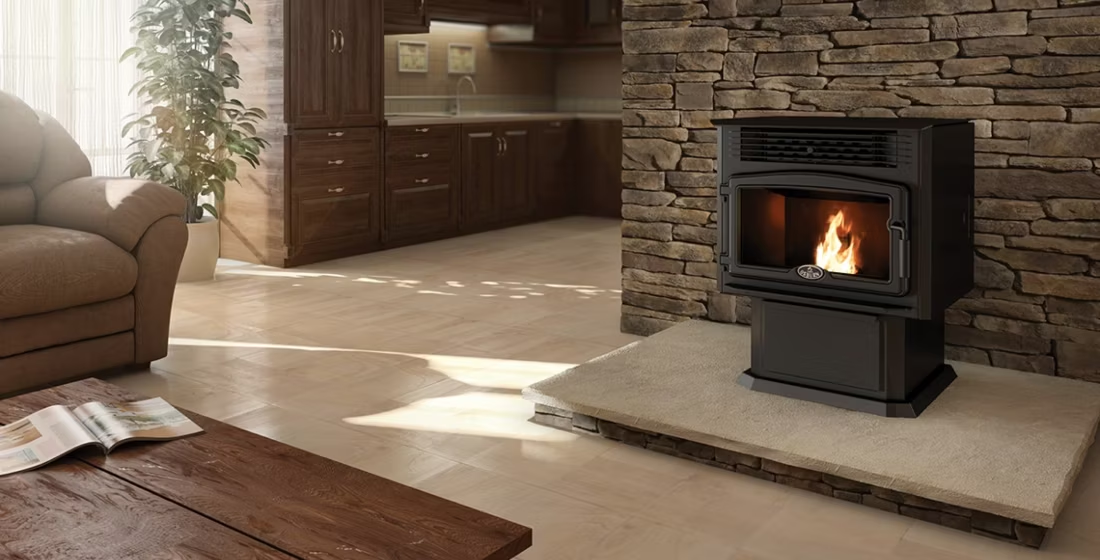
Wayne County has always been firewood country—oak, hickory, walnut, and maple are all locally abundant, and plenty of households still burn cordwood the traditional way. Pellet stoves have found a real niche here for a different reason: convenience. There's no air quality non-attainment issue driving the choice like you'd see in parts of the West—it's simply that a hopper-fed pellet stove burns cleaner, needs less daily tending, and produces far less ash than a wood-burning setup, which matters for smaller households and anyone who doesn't want to be splitting and stacking wood every fall. Bagged pellets from suppliers like Lignetics and Indeck Energy Services are sold through regional farm and hardware suppliers, making fuel sourcing straightforward even in a county this rural.
Three steps. No salesperson until you're ready.
Tell us about your project
Your zip code, your situation, and the fuel you're leaning toward—or let the answers point you to one.
See what's actually available
The brands dealers within 100 miles genuinely carry—real options, never a catalog mirage.
Get your dealer & Project Guide
A trusted local dealer, plus the free Project Guide & Parts List that names every component of the job.
Frequently Asked Questions
How much does a pellet stove installation cost in Wayne County?
Pricing depends heavily on the unit and whether you're installing a freestanding stove or converting an existing masonry fireplace with a pellet insert. Across rural Missouri, most pellet installations land in the low-to-mid thousands once venting, an electrical outlet for the hopper motor, and any hearth pad work are factored in—a local dealer will give you a firm number after seeing your home. Because Wayne County is sparsely populated, expect installers based in Poplar Bluff or nearby towns to factor a modest travel charge into quotes for homes farther out toward Williamsville or Mill Spring.
What size pellet stove do I need for my home?
Sizing comes down to square footage, ceiling height, and how open your floor plan is. Given Wayne County's moderate 4A climate and average winter lows in the low 20s, most homes don't need the largest units on the market—a mid-sized pellet stove is usually enough to heat a main living area, with a larger unit reserved for whole-home heating in older, less-insulated farmhouses common throughout the county. A local dealer will walk your home and size it properly rather than guessing off square footage alone.
Pellet stove or wood stove—which makes more sense in Wayne County?
Wood is deeply rooted here—oak, hickory, walnut, and maple are all common locally, and self-cut or purchased cordwood is cheap and plentiful. A wood stove also keeps running with zero electricity, which matters during ice storms when rural power lines go down. A pellet stove trades that off for convenience: load the hopper, set the thermostat, and skip the splitting, stacking, and daily ash cleanup. Because pellet stoves rely on an electric auger and blower, they're not a backup heat source during an outage unless paired with a battery backup or generator—worth considering given how rural parts of the county can see longer restoration times after storms.
Where can I find a certified pellet stove installer near me?
Look for a dealer with hands-on pellet appliance experience, not just a general contractor who occasionally installs stoves. Proper venting, electrical setup for the hopper motor, and hearth clearance all matter for safety and warranty coverage. Given Wayne County's small population, most homeowners end up working with a dealer based in a nearby larger town who services the county as part of their regular route—we match you with one who actually knows the area rather than a random search result.
Do I need a permit to install a pellet stove in Wayne County?
Most jurisdictions require a building permit for a new pellet stove installation, particularly if it involves new venting through a wall or roof. Requirements can vary between incorporated towns like Piedmont or Greenville and the unincorporated parts of the county, so check with your local building department before work begins. Most established dealers handle the permitting conversation as part of the installation, which is one advantage of working with an established local pro rather than a big-box purchase and DIY install.
What's the best pellet stove for Wayne County's climate?
Because Wayne County's winters are moderate rather than extreme—average lows in the low 20s rather than sustained sub-zero stretches—most homes do well with a mid-efficiency pellet stove sized to the main living space rather than an oversized whole-home unit. Fuel availability matters too: with Lignetics and Indeck Energy Services both distributing pellets regionally, it's worth confirming with your dealer which brand of pellet your chosen stove burns best, since some units are calibrated for a specific pellet density or ash content.
How often does a pellet stove need to be cleaned and serviced?
Pellet stoves need more frequent attention than people expect, just less messy attention than a wood stove. Plan on emptying the ash pan every few days during regular use, cleaning the burn pot weekly, and having the exhaust venting and auger system professionally serviced at least once a year—typically before the fall heating season starts. Neglecting the burn pot is the most common cause of poor ignition and smoky starts, so staying on top of the weekly cleaning matters more than people assume when they first switch over from a wood stove.
Where do Wayne County residents buy pellet fuel?
Bagged pellets are typically available through regional farm and hardware suppliers, with Lignetics and Indeck Energy Services both distributing into the southeast Missouri market. Pricing runs in the low-to-mid $200s to around $300 per ton depending on the supplier, the season, and whether you're buying a single bag or a bulk pallet order—buying by the ton ahead of the season is usually the better deal for anyone using pellet heat as more than a backup. Your local dealer can usually point you toward the nearest reliable supply source.
Pellet stove vs. gas fireplace—which is right for my home?
A pellet stove gives you real, radiant heat and a visible flame, and it works well as a primary or supplemental heat source without needing a gas line or propane tank—a real consideration in parts of Wayne County where natural gas service isn't readily available. A gas fireplace offers instant on-off convenience and no fuel storage at all, but requires either a natural gas hookup or propane tank and delivery. For homes already set up for propane, gas is often simpler; for homes without it, a pellet stove sidesteps that infrastructure question entirely while still delivering consistent, low-maintenance heat.
What does it take to replace an existing fireplace?
Fireplaces are like icebergs—bigger behind the wall than in front of it. Replacement means removing the surrounding tile or stone (the finish material laps onto the fireplace face), pulling the old unit, setting the new one in the same enclosure, and re-finishing the wall. A hearth professional can determine what's behind your wall without demolition during an in-home preview.
Can a pellet stove heat a whole house?
It genuinely can. I burned a pellet stove as my only heat source for years after a furnace died, and it kept the entire house warm. Pellets feed automatically from a hopper, so you get wood-heat economics with thermostat-style control. Two honest caveats: it needs weekly cleaning during the season, and most models need electricity to run—ask about battery backup if outages are a concern.
Can a fireplace actually lower my heating bill?
Yes—by creating a comfort zone. A furnace heats every square foot of the house just to warm the one room you're in; a gas fireplace on low burns roughly a sixth of the gas a typical furnace does. Set the furnace around 55–60 degrees as a baseline, then heat the rooms your family actually uses. Families who heat this way commonly save $20–$60 a month.
Does a fireplace add value to my home?
On average, a fireplace adds back to the home about the same amount you spent installing it. Add the monthly savings from heating the rooms you actually use instead of the whole house—often hundreds of dollars a year—and the value case is strong before you even count what a fire does for how your family uses the room.
Pellet Brands Stocked Around Wayne County
Manufacturers will point you to the nearest stocking dealer.
Find your pellet stove in Wayne County.
Tell us about your home and heating goals, and we'll match you with a trusted local dealer and a free Project Guide & Parts List—the exact stove, vent kit, and install plan for your Wayne County home.
Find Your Fireplace →