
Zone heat and ambiance for University City's historic homes.
With a moderate winter heating season and winter lows averaging 25°F, University City doesn't need a wood-burning setup to stay comfortable—just a well-placed electric unit and the right circuit. I'll match you with a trusted local dealer who knows the Loop's older housing stock and can get it installed right.
Every Project Starts From One of These Five Situations
Heat without a chimney or a permit.
University City's housing stock runs heavy on early-20th-century brick bungalows, Tudor Revivals, and courtyard apartments around the Loop, Parkview Gardens, and Ames Place—plenty of them without a working masonry chimney, and a lot of them rented rather than owner-occupied near Washington University. At 524 feet elevation with a moderate 4A climate (a moderate heating season with winter lows averaging 25°F—noticeably milder than a true northern winter in Fargo or Duluth), electric heat doesn't need to carry the whole heating load. It just needs to warm a den, a converted sunroom, or a bedroom without cutting into old plaster walls or adding a flue where one never existed.
Union Electric Co. (Ameren Missouri) serves the city at a residential rate of about $0.1256 per kWh, which keeps a typical 1,500-watt unit running for well under $1 a day of steady use—cheap zone heat for a guest room or finished basement that the central furnace doesn't quite reach. Most plug-in inserts and mantel packages need no permit at all since they run off a standard outlet; a built-in wall unit wired to a dedicated circuit is the one case where an electrical permit through University City's Building Division typically applies, and a local dealer will handle that as part of the install.
Three steps. No salesperson until you're ready.
Tell us about your project
Your zip code, your situation, and the fuel you're leaning toward—or let the answers point you to one.
See what's actually available
The brands dealers within 100 miles genuinely carry—real options, never a catalog mirage.
Get your dealer & Project Guide
A trusted local dealer, plus the free Project Guide & Parts List that names every component of the job.
Frequently Asked Questions
How much does it cost to install an electric fireplace in University City?
Plug-in units—freestanding stoves, mantel packages, or log inserts that slide into an existing masonry firebox—typically run $300 to $1,200 installed, since there's no venting or gas line involved. A built-in wall unit recessed into drywall, common in newer condo renovations near the Loop, runs higher, often $1,500 to $2,500, mostly for the electrical work and any framing to fit an older brick two-flat's uneven wall cavities. Compare that to a wood or gas install elsewhere in the region, which routinely runs $4,000 or more once venting is involved, and it's clear why electric is the low-cost, low-disruption option for a supplemental heat source here.
Is an electric fireplace enough heat for a University City winter?
As a primary heat source, no—with winter lows averaging 25°F and a real six-month heating season, University City needs a functioning furnace behind whatever electric unit you install. But as supplemental or zone heat, it works well: a 1,500-watt unit can comfortably take the edge off a drafty sunroom addition or a converted attic bedroom in one of the area's older bungalows, letting you turn down the thermostat elsewhere in the house on milder days without freezing out that one room.
Are electric fireplaces a good option for renters near the Loop and Wash U?
Yes, and it's one of the more common reasons we see interest in University City specifically—the area has a lot of rental units and short-term leases tied to Washington University, and a landlord isn't going to approve cutting a new flue into a rented apartment. A plug-in electric insert or freestanding stove needs nothing more than an outlet, so it moves with you when the lease ends, and it doesn't require any landlord sign-off the way a gas or wood install typically would.
Can I put an electric insert into my home's existing wood-burning fireplace?
In most cases, yes. Plenty of University City's older brick foursquares and Tudor Revivals near Parkview Gardens and the West End still have their original masonry fireboxes, even if the flue hasn't been swept or used in years. An electric log insert or fireplace insert typically drops straight into that opening on a standard outlet or nearby circuit—no liner, no chimney inspection, no cutting into brick required. It's usually the fastest and least invasive upgrade for a house with a fireplace that's more decorative than functional at this point.
What does it actually cost to run an electric fireplace day to day?
At Union Electric Co.'s (Ameren Missouri) residential rate of roughly $0.1256 per kWh, a typical 1,500-watt electric fireplace costs about $0.19 an hour to run on high heat. Run it six hours an evening through a cold stretch and you're looking at a little over a dollar a day—inexpensive compared to running central heat harder to cover the same room, which is part of why electric units get used as targeted zone heat rather than a whole-house solution here.
Do I need a permit for a built-in electric fireplace in University City?
A simple plug-in unit generally doesn't need one. A built-in wall unit that requires a dedicated 20-amp circuit—the more common choice for a clean, flush installation in a renovated living room—usually does need an electrical permit through University City's Building Division. Most local electricians and hearth dealers who work in the area are used to pulling that permit as a routine part of the job, so it shouldn't add much time to your project.
What type of electric fireplace works best in University City's older homes?
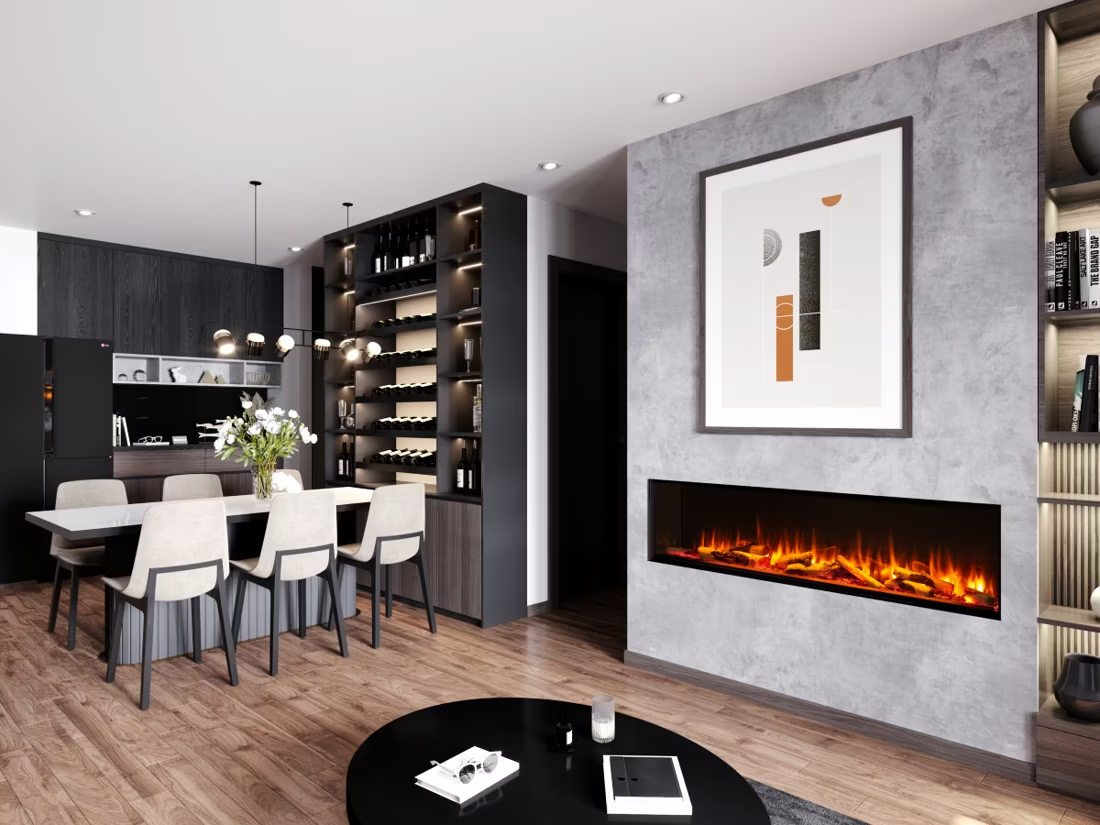
For the area's brick bungalows and two-flats with an existing but unused masonry firebox, an electric log insert is the simplest fit—it uses the opening you already have. For newer condo renovations or additions without any existing fireplace, a wall-mounted linear unit is popular for its low profile against a flat wall. Freestanding stove-style units are a middle option that suits a corner of a den or finished basement without any construction at all. A local dealer can walk your specific room and tell you which style actually fits the wall and outlet situation you've got.
Will my electric fireplace work during a power outage?
No—unlike a wood stove, an electric fireplace is entirely dependent on power, so during an ice storm outage from Ameren Missouri, which does happen periodically in the St. Louis area during winter weather, it won't run. If backup heat during an extended outage is a real concern for your household, that's worth factoring in before you choose electric as your only supplemental source; some homeowners here pair an electric unit for everyday convenience with a battery-backed furnace or a generator plan for outage scenarios.
Electric vs. gas—which makes more sense for a University City home?
It depends mostly on what's already in the wall. Many University City homes near the Loop are already on natural gas for their furnace and water heater, which makes a gas fireplace or insert a reasonable option if you want stronger heat output and the ambiance of a real flame. But if you don't want to run a new gas line, deal with venting, or pull a mechanical permit, electric wins on simplicity—plug it in, mount it, or drop it into an existing firebox, and you're done. For purely supplemental, low-hassle heat in a rental or a room addition, electric is usually the more practical call here.
Can I put a TV above my fireplace?
Yes—with an asterisk. Fireplaces are hot and TVs don't like heat. Either put a mantel between them to deflect rising warmth, or choose a fireplace with heat-management technology that creates a cool zone on the wall above—the wall stays around 125 degrees, barely warm, while the room still gets full heat. If you like clean lines and don't want a mantel, heat management is the answer.
What fireplace styles should I know before shopping?
Four cover most of the market: screen-front traditional (mesh front, open feel, fits craftsman homes), traditional door set (the classic look you grew up with), modern linear (wide, low, the statement piece for entertaining), and clean face contemporary (no trim—your tile or stone runs right to the fire's edge). Walk in knowing those four terms and you're ahead of most buyers.
How much should I budget for a fireplace?
For an average home—covering the fireplace, the vent pipe, and basic installation—a budget between $3,900 and $5,500 gives you a lot of options across wood, gas, and pellet. By the time you add finish work, gas line, and electrical, the average complete installation lands between $5,000 and $12,000 all-in. In a remodel or new build, a good rule is to put about 2.5% of the total project cost toward the fireplace.
Can a fireplace actually lower my heating bill?
Yes—by creating a comfort zone. A furnace heats every square foot of the house just to warm the one room you're in; a gas fireplace on low burns roughly a sixth of the gas a typical furnace does. Set the furnace around 55–60 degrees as a baseline, then heat the rooms your family actually uses. Families who heat this way commonly save $20–$60 a month.
Nearby Dealers
Hearth shops serving University City and the surrounding area. Every listing shows whether it is a WhyFire partner, a dealer we have verified as authorized for the brands we recommend, or a local business carrying hearth products. No manufacturer pays for placement. How we verify dealers →
Savvy Surroundings
Forshaws
Gas Appliance Service LLC
Villa Lighting Supply
Fireplace And Grill Center
Fireside Hearth & Grill Center
English Sweep
Summer Classics By Forshaw
Arnold Stove & Fireplace Center
Brighthouse Living
Hearthside Grill & Fireplace
Bel-O Fireplaces & More
C Bennett Building Supply
Electric Service in University City
An electric fireplace's heater draws about 1,500 watts—pennies per hour at local rates.
Union Electric Co - (Mo)
Get your free Project Guide & Parts List for an electric fireplace in University City.
Tell me about your room and your home's wiring, and I'll match you with a trusted local dealer and send a free Project Guide & Parts List—sized for the space, with the right circuit and mounting hardware specified.
Find Your Fireplace →