
Steady pellet heat for Texas County's Ozark hardwood country.
No splitting, no stacking, no chimney sweep required—just a hopper of pellets and a thermostat. Find the right unit for your home and connect with a trusted local dealer serving Houston, Cabool, and the rest of Texas County.
Every Project Starts From One of These Five Situations
Convenience meets the Ozarks' wood heritage.
Texas County sits in the south-central Missouri Ozarks, a mostly rural stretch of about 8,700 people spread across farms, timberland, and small towns like Houston, Cabool, Licking, and Summersville. The oak, hickory, walnut, and maple forests here have supplied firewood for generations, and plenty of households still burn cordwood. But Climate Zone 4A means real winter heating demand without the brutal extremes of places like Duluth, MN—average lows run around 21°F and the county logs roughly 4,773 heating degree days a year, enough cold to matter, not enough to require an all-day fire tending operation.
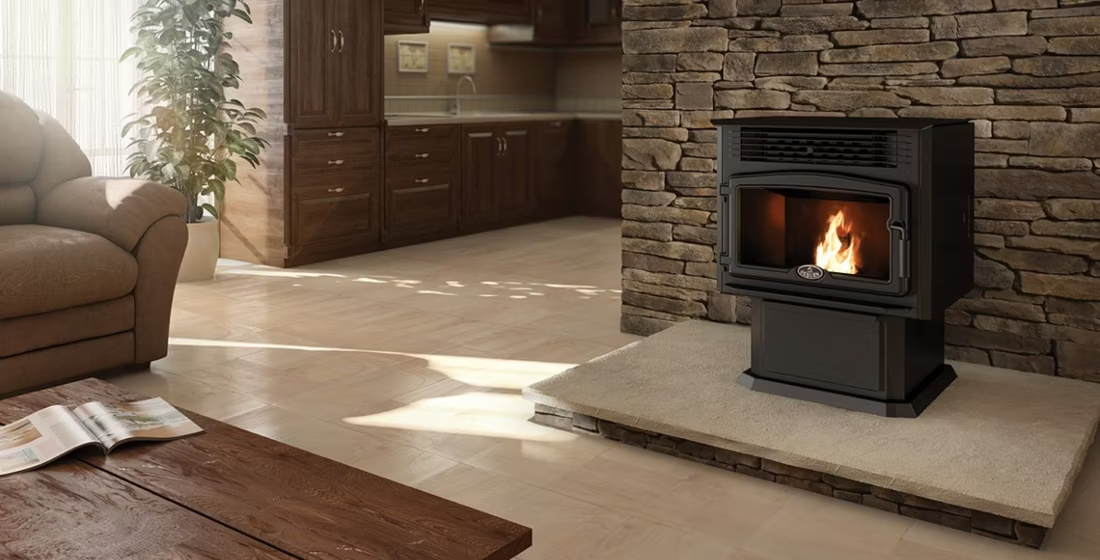
That's where pellet stoves earn their place. For homeowners who want the radiant warmth of a real fire without cutting, splitting, and hauling wood, a pellet stove or insert delivers consistent output with a hopper you fill every day or two. Regional pellet supply is solid here—Lignetics and Indeck Energy Services both produce bags widely stocked at farm and hardware stores across the Ozarks, so fuel isn't hard to come by even in a county this rural. Texas County also has no air-quality non-attainment designation, which means no winter burn curtailment periods to plan around—your pellet stove runs on your schedule, not the weather bureau's.
Three steps. No salesperson until you're ready.
Tell us about your project
Your zip code, your situation, and the fuel you're leaning toward—or let the answers point you to one.
See what's actually available
The brands dealers within 100 miles genuinely carry—real options, never a catalog mirage.
Get your dealer & Project Guide
A trusted local dealer, plus the free Project Guide & Parts List that names every component of the job.
Frequently Asked Questions
How much does a pellet stove installation cost in Texas County?
A typical pellet stove installation in Texas County runs roughly $3,000 to $6,000, depending on the unit's heat output, whether you need a new hearth pad, and how far the vent run has to travel through an exterior wall. Because pellet stoves vent with small-diameter PL pipe rather than a full masonry chimney, installs in older Ozark farmhouses without existing chimneys are often simpler and cheaper than a comparable wood stove project. Homes inside city limits—Houston, Cabool, Licking—may need a permit through the local building department; unincorporated parts of the county typically don't.
What size pellet stove do I need for my home?
Sizing depends on square footage, ceiling height, and insulation. Many homes in Texas County are older farmhouses with higher ceilings and less insulation than newer construction, which pushes sizing up a notch compared to a tightly built modern home of the same square footage. As a rough guide: small units (up to 1,000 sq ft) suit a single living area, mid-size units (1,000-1,800 sq ft) cover most main floors, and larger units (1,800+ sq ft) can handle a whole-home heating role if the layout is open. A local dealer will size your specific home rather than guess from square footage alone.
Where can I buy pellet fuel near me in Texas County?
Wood pellets are widely available through farm and hardware stores across the Ozarks, including regional brands like Lignetics and Indeck Energy Services, both of which supply the Midwest in volume. Bags typically run $5-$6 for a 40-pound bag, or roughly $220-$280 per ton if you buy by the pallet—buying a full season's supply early in fall, before demand picks up, is the usual local strategy. Stocking up before the first cold snap matters more in a county this rural, where the nearest supplier may be a 20-30 minute drive.
Do I need a permit to install a pellet stove in Texas County?
It depends on where you live. Homes within Houston, Cabool, or Licking city limits typically need a building permit through the local city office before installing a new pellet stove. In unincorporated Texas County, there's no countywide mechanical permit requirement for most pellet installs, though the stove still needs to meet manufacturer clearance and venting specs. Since the county has no air-quality non-attainment designation, there are also no seasonal burn curtailment periods to work around—a real advantage over pellet installs in counties dealing with winter inversion issues.
What's the best pellet stove for Texas County's climate?
With average winter lows around 21°F and roughly 4,773 heating degree days a year, Texas County doesn't need the extreme-cold, 24-hour-burn capacity that far-northern climates demand. A mid-output unit in the 40,000-50,000 BTU range from a brand like Harman, Englander, or Napoleon covers most Ozark homes comfortably as primary or supplemental heat. For larger farmhouses or homes with vaulted ceilings, sizing up is worth discussing with a local dealer—the difference between running a stove flat-out all winter and having margin on the coldest nights matters.
Pellet stove vs. wood stove—which is right for my home?
Texas County's oak, hickory, walnut, and maple forests have supported wood-burning for generations, and plenty of households still cut and split their own firewood. A wood stove works without electricity, which matters during ice storms when rural power can be out for days. A pellet stove trades that off for convenience—no splitting, no stacking, more consistent heat output, and less ash—but the auger and blower need electricity to run, so a battery backup or generator matters if outages are a concern on your property. Many Texas County households end up with one of each: pellet for daily convenience, wood as the fallback.
How is a pellet stove vented, and does it need a chimney?
No masonry chimney is required. Pellet stoves vent through small-diameter PL (pellet vent) pipe, typically 3 or 4 inches, run through an exterior wall to a termination cap. That makes them a practical option for older Texas County farmhouses that never had a fireplace or chimney to begin with, and it usually keeps installation costs down compared to a wood stove that needs full Class A chimney pipe. A local installer will confirm clearance and termination location requirements for your specific wall and roofline.
How often does a pellet stove need cleaning and maintenance?
Plan on emptying the ash pan every few days during regular use and a deeper cleaning of the burn pot and glass weekly. Most manufacturers recommend a full professional inspection and cleaning once a year, ideally before the season starts in early fall. Rural Texas County homeowners running a pellet stove as primary heat through a full winter should expect to go through this cleaning cycle more often than someone using it just for supplemental warmth in the evenings.
Pellet stove vs. propane heat—which makes more sense for my home?
Many homes in Texas County rely on propane for primary heat, since natural gas service is limited outside town centers. A pellet stove doesn't replace a propane furnace outright, but it can meaningfully cut propane usage by handling the bulk of heating load in the main living space, with the furnace as backup for the rest of the house. Pellets are also generally cheaper per BTU than propane in most winters, and the upfront cost of a stove is often recovered within a few seasons of reduced propane deliveries. A local dealer can walk through the numbers for your specific home and current propane usage.
What's the difference between an insert and a zero-clearance fireplace?
An insert is a fireplace that slides into a pre-existing wood-burning fireplace—if you don't have one, there's nothing to insert it into. A zero-clearance fireplace is built into a framed wall, which makes it the answer for remodels and new construction. Simple test: existing masonry fireplace means insert; blank or framed wall means zero-clearance.
Why is a fireplace insert so efficient?
An insert does two things: it seals the chimney completely, so you stop losing air you already paid to heat, and it radiates warmth into the room through the firebox and glass. Most add a heat-exchange fan that pulls cool room air underneath, wraps it around the hot firebox, and pushes it back out warm. Your home is more efficient before you've even lit the first fire.
Can I install a fireplace myself?
If you're putting a fire in your house on purpose, it's best to work with an expert. Unless you're genuinely experienced in framing, gas line, vent pipe, and the national code on clearances to combustibles, have a professional do it—and ideally the same company that sells you the fireplace, so warranty, service, and liability all live under one roof.
Can a fireplace actually lower my heating bill?
Yes—by creating a comfort zone. A furnace heats every square foot of the house just to warm the one room you're in; a gas fireplace on low burns roughly a sixth of the gas a typical furnace does. Set the furnace around 55–60 degrees as a baseline, then heat the rooms your family actually uses. Families who heat this way commonly save $20–$60 a month.
Pellet Brands Stocked Around Texas County
Manufacturers will point you to the nearest stocking dealer.
Find your pellet stove in Texas County.
Tell us a bit about your home and we'll match you with the right pellet stove or insert, plus a free Project Guide & Parts List—the exact parts, including the vent kit, and our recommended local dealer for your Texas County installation.
Find Your Fireplace →