
Efficient pellet heat for Taney County's Ozark winters.
From the lake homes around Table Rock and Taneycomo to the year-round neighborhoods of Branson, Hollister, and Forsyth, pellet stoves deliver steady, thermostat-controlled heat without a woodpile to manage. I'll match you with a trusted local dealer who can size the right unit for your home.
Every Project Starts From One of These Five Situations
Consistent heat with less hassle than cordwood.
Taney County sits in the Missouri Ozarks, climate zone 4A, with roughly 3,997 heating degree days a year and winter lows averaging 24°F—cold enough to need a real heat source several months a year, but nowhere near the extremes of a Duluth or Fargo winter. The county's roughly 24,764 year-round residents are joined by a much larger seasonal population drawn to the Branson entertainment corridor, Table Rock Lake, and Lake Taneycomo, which means a lot of local housing stock is a mix of full-time homes in Forsyth, Rockaway Beach, and Hollister and part-time cabins and lake houses that sit empty for stretches at a time.
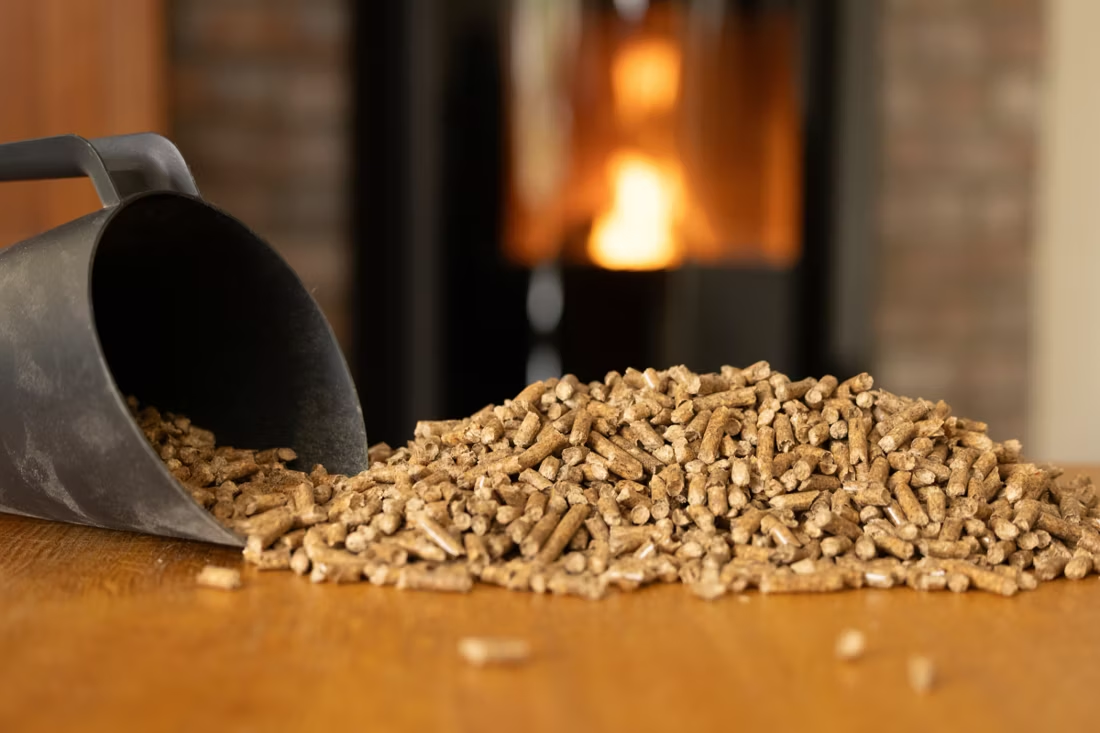
That mix is part of why pellet stoves fit so well here. The Ozark hills grow plenty of oak, hickory, walnut, and maple, and cordwood heat has a long tradition locally, but splitting, stacking, and tending a wood stove isn't practical for a lake house that's only occupied on weekends, or for a homeowner who wants heat without the chimney maintenance. A pellet stove loads from a hopper, runs on a thermostat, and burns bagged fuel sourced from regional producers like Lignetics and Indeck Energy Services—available through local hearth dealers and hardware stores throughout the county. Taney County has no air quality non-attainment designation and no winter burn curtailment periods, so there's no regulatory hurdle standing between you and daily use.
Three steps. No salesperson until you're ready.
Tell us about your project
Your zip code, your situation, and the fuel you're leaning toward—or let the answers point you to one.
See what's actually available
The brands dealers within 100 miles genuinely carry—real options, never a catalog mirage.
Get your dealer & Project Guide
A trusted local dealer, plus the free Project Guide & Parts List that names every component of the job.
Frequently Asked Questions
How much does a pellet stove installation cost in Taney County?
Most pellet stove installations run in the range of $3,000 to $6,000 in Taney County, with the total depending on whether the unit is a freestanding stove or an insert going into an existing fireplace, how much vent pipe run is needed to reach an exterior wall, and whether a hearth pad has to be added for code clearance. Installing into an existing masonry fireplace using it as a chase for the vent kit is usually on the lower end; a new freestanding stove in a room without an existing chimney, requiring fresh wall penetration and vent kit installation, tends to land higher. A local dealer will confirm the number after an in-home look at your space.
What size pellet stove do I need for my home?
Sizing depends on square footage, ceiling height, and how well insulated the home is—and in Taney County that varies a lot between a tightly built year-round home in Hollister or Forsyth and an older lake cabin near Table Rock that was built for three-season use. As a rough guide, smaller units (under 1,000 sq ft) suit a single large room or cabin, and medium-to-large units (1,500-2,500+ sq ft) can carry a whole main living area given the county's moderate 3,997 heating degree days. Vacation and weekend-use homes often do better with a stove sized for quick recovery heat rather than one built for 24/7 primary heating. A local dealer will size the unit based on an actual walkthrough rather than square footage alone.
Where can I find certified pellet stove installers near me?
Look for installers with NFI (National Fireplace Institute) pellet-specialist certification—it signals training specific to pellet appliances, which have different venting and electrical requirements than wood stoves. Dealers serving Branson, Hollister, Forsyth, and Rockaway Beach typically handle installation as part of the sale, which keeps warranty coverage and code compliance under one roof. For lake properties farther from the main Highway 76 corridor, ask about travel charges up front, since some installers add a small fee for the drive.
What's the difference between a pellet stove and a pellet insert?
A pellet stove is a freestanding appliance that sits on a hearth pad and vents through a wall or existing chimney chase—it can go almost anywhere with the right clearances. A pellet insert is built to slide into an existing masonry fireplace opening, which makes it a natural fit for the many older homes and lake cabins around Taney County that already have a wood-burning fireplace but rarely use it. If you already have a fireplace opening, an insert usually installs faster and cleaner than adding a freestanding stove elsewhere in the room.
Do I need a permit to install a pellet stove in Taney County?
Most pellet stove installations require a building permit, whether that's through Taney County's building department for unincorporated areas or through the local city office in Branson, Hollister, Forsyth, or Rockaway Beach. The permit process typically checks clearances, venting termination, and electrical hookup for the stove's hopper motor and igniter. Most hearth dealers pull the permit as part of the installation, so it's worth confirming that's included in your quote before work starts.
What's the best pellet stove for Taney County's climate?
With winter lows averaging around 24°F and a moderate 3,997 heating degree days, Taney County doesn't demand the extreme-cold performance you'd need in the northern Plains—most mid-range pellet stoves from established manufacturers handle the season comfortably. What matters more locally is hopper capacity and run time, especially for weekend lake homes around Table Rock Lake and Taneycomo where nobody's around to refill the hopper daily. A larger hopper that can run 24-40+ hours between fills is worth prioritizing for part-time properties; full-time homes in town have more flexibility since someone's typically there to reload.
How much maintenance does a pellet stove need?
Pellet stoves need less upkeep than a wood-burning chimney system, but they're not maintenance-free. Plan on emptying the ash pan every few days during regular use, cleaning the burn pot and glass weekly, and vacuuming the exhaust venting and hopper area a few times per season. An annual professional service—checking the auger motor, igniter, and venting—is recommended, similar to servicing a furnace. For a lake home that sits empty between visits, a start-of-season service before the first cold snap is a good habit.
Where can I buy pellet fuel in Taney County?
Wood pellets from regional producers like Lignetics and Indeck Energy Services are sold through local hearth dealers and hardware stores throughout the county, generally running somewhere in the $200 to $300 per ton range depending on the season and how far ahead you buy. Buying a season's supply—typically 1 to 3 tons for a supplemental stove, more for a primary heat source—before cold weather hits is common practice, since local supply can tighten during hard winter stretches.
Pellet stove vs. wood stove—which is right for my home?
Wood stoves burn cordwood cut from the oak, hickory, walnut, and maple common to the Ozark hills, work without electricity, and are the better choice for backup heat during an outage. Pellet stoves are more automated—load the hopper, set the thermostat, and they self-feed and self-ignite—but they need electricity to run the auger, igniter, and blower, so they go dark in a power outage unless paired with a battery backup. For full-time Taney County homes where daily convenience matters, or for lake houses and cabins where an owner isn't around to split and stack wood, pellet usually wins. For someone who wants a heat source that works no matter what the power grid is doing, wood is the more reliable backup.
What's the difference between an insert and a zero-clearance fireplace?
An insert is a fireplace that slides into a pre-existing wood-burning fireplace—if you don't have one, there's nothing to insert it into. A zero-clearance fireplace is built into a framed wall, which makes it the answer for remodels and new construction. Simple test: existing masonry fireplace means insert; blank or framed wall means zero-clearance.
Why is my open fireplace making my house colder?
Open fireplaces suck—literally. As the fire burns, it consumes air your furnace already paid to heat and pulls it out through the chimney, so the house is actually colder after the fire goes out than before you lit it. An insert fixes this: it seals the chimney, puts fixed glass across the front, and turns that hole in your house into a real heat source.
Does a fireplace add value to my home?
On average, a fireplace adds back to the home about the same amount you spent installing it. Add the monthly savings from heating the rooms you actually use instead of the whole house—often hundreds of dollars a year—and the value case is strong before you even count what a fire does for how your family uses the room.
How much should I budget for a fireplace?
For an average home—covering the fireplace, the vent pipe, and basic installation—a budget between $3,900 and $5,500 gives you a lot of options across wood, gas, and pellet. By the time you add finish work, gas line, and electrical, the average complete installation lands between $5,000 and $12,000 all-in. In a remodel or new build, a good rule is to put about 2.5% of the total project cost toward the fireplace.
Pellet Brands Stocked Around Taney County
Manufacturers will point you to the nearest stocking dealer.
Find your pellet stove in Taney County.
Tell me a bit about your home—full-time residence or lake property—and I'll match you with a trusted local dealer and send over a free Project Guide & Parts List: the exact parts, including the vent kit, and the dealer built to install it right.
Find Your Fireplace →