
Reliable Gas Heat for Shannon County's Ozark Hollows.
From Eminence to Winona, and every hollow along the Current and Jacks Fork Rivers—clean, instant propane heat for one of Missouri's most sparsely populated counties. Find the right unit and get matched with a trusted local dealer.
Every Project Starts From One of These Five Situations
Propane fills the gap where the gas main never arrived.
Shannon County is Ozark country in the truest sense—nearly 1,000 square miles of forested hills drained by the Current and Jacks Fork Rivers, most of it inside or bordering the Ozark National Scenic Riverways and Mark Twain National Forest. With a population of just 1,753, it's one of the least densely populated counties in Missouri, and the housing stock reflects it: older farmhouses, hunting cabins, and river-adjacent weekend properties scattered across Eminence, Winona, and the unincorporated hollows between them. Climate zone 4A means real winter cold and the occasional ice storm, but nothing like the deep-freeze extremes of the northern Plains—homeowners here want dependable heat, not a science project.
No part of Shannon County is served by a natural gas utility—the population simply doesn't support running mains this far into the Ozarks. That makes propane the fuel path for essentially every gas fireplace, insert, or stove installed here, delivered and tanked by regional suppliers rather than piped from a city main. The upside is real: a propane-fed direct-vent fireplace gives you push-button heat in a farmhouse living room, backup warmth during the ice-storm outages that periodically knock out power along the county's rural lines, and a zone-heating option that pairs naturally with the wood stoves already common in older Shannon County homes.
Three steps. No salesperson until you're ready.
Tell us about your project
Your zip code, your situation, and the fuel you're leaning toward—or let the answers point you to one.
See what's actually available
The brands dealers within 100 miles genuinely carry—real options, never a catalog mirage.
Get your dealer & Project Guide
A trusted local dealer, plus the free Project Guide & Parts List that names every component of the job.
Frequently Asked Questions
How much does a gas fireplace installation cost in Shannon County?
A propane fireplace or insert installation in Shannon County typically runs $3,500 to $9,000, with the spread coming down to three things: whether you're converting an existing masonry fireplace or building new, how far the propane line has to run across your property, and whether you already have a tank or need one set. Homes tucked back in the hollows off Highway 106 or Highway 19 sometimes add a modest travel charge, since most certified installers are based out of larger towns like West Plains or Salem and cover Shannon County as part of a wider rural service area. A local dealer will give you a firm number after seeing the site.
Can I convert my existing wood fireplace to gas?
Yes, and it's a common project in Shannon County's older farmhouses. A propane insert drops into your existing masonry fireplace opening, with a stainless liner run up your current chimney to vent safely, and a propane line brought in from an outdoor tank. Conversions here typically land between $4,000 and $8,500 depending on the insert model and how much new line has to be trenched to reach the tank location. The chimney you already have does the venting work—you're not building anything from scratch.
Do I need natural gas, or does everyone here use propane?
Propane is essentially the only option—no natural gas utility reaches Shannon County, whether you're in Eminence, Winona, or out along the Current River. If you already heat with propane for a water heater or range, adding a fireplace usually just means running a new line off your existing tank. If you don't have a tank yet, a regional propane supplier will set one, either buried or above-ground, sized to handle the fireplace along with any other propane appliances in the house.
Will my gas fireplace work during a power outage?
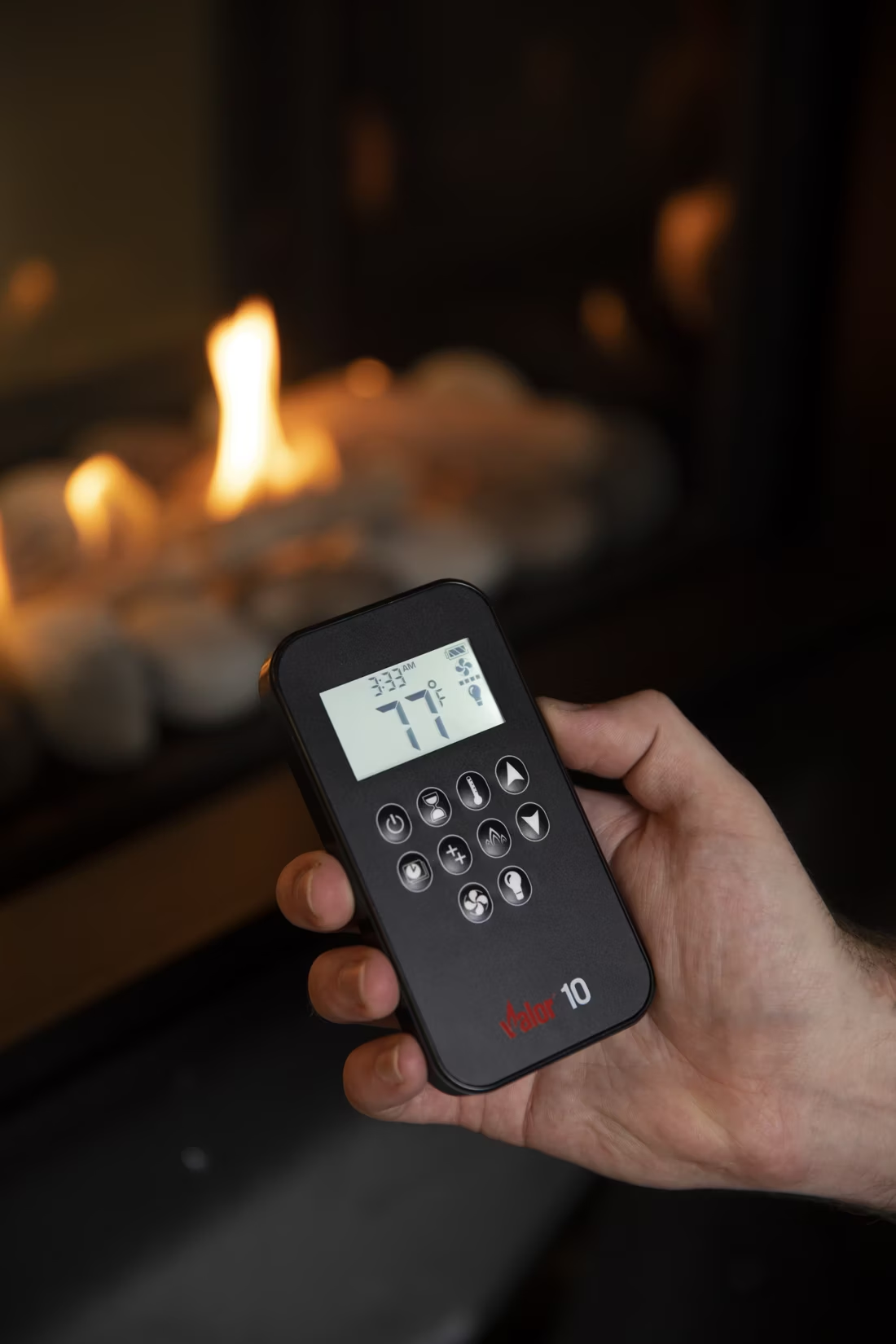
Most modern propane fireplaces are built for exactly this. Units with intermittent pilot ignition (IPI) run on AA batteries that kick in automatically when the power drops, so the fireplace lights on demand just like normal. That matters in Shannon County, where ice storms and downed lines along rural feeders can knock out power for days at a time. Valor fireplaces take a different approach—the pilot's thermocouple generates its own electricity, so there are no batteries to remember at all. Worth asking your local dealer about when you're comparing units for a hollow or riverside property where a lineman's response time can run long.
What's the difference between a gas fireplace, gas insert, and gas stove?
A gas fireplace is a fully built-in unit framed into a wall—the right call for new cabins or additions along the Current and Jacks Fork Rivers. A gas insert fits inside an existing masonry fireplace opening, which describes a lot of the older farmhouses scattered through Shannon County. A gas stove is a freestanding cabinet unit that sits out in the room on its own hearth pad, a good fit for a smaller cabin or a room with no existing fireplace. Most Shannon County homeowners with an old masonry hearth end up choosing an insert; new builds usually go with a built-in fireplace or freestanding stove.
Do I need a permit to install a gas fireplace in Shannon County?
Outside the incorporated towns of Eminence and Winona, Shannon County—like many rural Ozark counties—doesn't enforce a countywide building code, so a formal building permit often isn't required for a fireplace install on unincorporated rural property. That doesn't mean anything goes: propane tank setting, line sizing, and appliance venting still fall under state LP-gas regulations and national fuel gas code (NFPA 54/58), and a licensed propane installer will handle that work correctly regardless of whether a permit office is involved. If your property sits within Eminence or Winona city limits, check with the town before starting work.
What's the difference between vented and vent-free gas fireplaces?
Vented (direct-vent) fireplaces draw combustion air from outside and exhaust exhaust gases back outside through sealed venting—clean, safe, and code-compliant everywhere. Vent-free units burn propane directly into the room with no external venting, which is legal in Missouri but requires strict room-sizing and oxygen-depletion sensors. For the older, sometimes leaky farmhouses common in Shannon County, direct-vent units are the more reliable choice—they don't depend on your home's air-sealing to manage combustion byproducts, and they still throw real heat. Ask your local dealer to walk through both options for your specific room.
How often should my propane fireplace be serviced?
Plan on an annual inspection, ideally before the first cold snap each fall. A technician checks the burner, pilot assembly, gas connections, and venting, and cleans the glass and firebox interior. Because Shannon County itself is small—1,753 people spread across a lot of forest—most service techs cover the county from a base in a nearby larger town like West Plains or Salem, so it's worth scheduling ahead rather than waiting for a breakdown in January.
Gas vs. wood—which makes more sense for a Shannon County home?
Wood is deeply practical here: oak, hickory, walnut, and maple are all common in the surrounding hardwood forest, self-cut firewood costs next to nothing if you have access to land, and a wood stove keeps burning with zero electricity—a real advantage during the ice-storm outages that hit rural power lines along the Current River corridor. Propane offers instant, no-hassle heat and works well as the primary source in a main living room, especially for weekend river properties where nobody wants to tend a fire on a Friday-night arrival. Plenty of Shannon County homes run both: propane for daily convenience, wood as the backup that never depends on the grid.
Can I put a TV above my fireplace?
Yes—with an asterisk. Fireplaces are hot and TVs don't like heat. Either put a mantel between them to deflect rising warmth, or choose a fireplace with heat-management technology that creates a cool zone on the wall above—the wall stays around 125 degrees, barely warm, while the room still gets full heat. If you like clean lines and don't want a mantel, heat management is the answer.
Why is my open fireplace making my house colder?
Open fireplaces suck—literally. As the fire burns, it consumes air your furnace already paid to heat and pulls it out through the chimney, so the house is actually colder after the fire goes out than before you lit it. An insert fixes this: it seals the chimney, puts fixed glass across the front, and turns that hole in your house into a real heat source.
How much should I budget for a fireplace?
For an average home—covering the fireplace, the vent pipe, and basic installation—a budget between $3,900 and $5,500 gives you a lot of options across wood, gas, and pellet. By the time you add finish work, gas line, and electrical, the average complete installation lands between $5,000 and $12,000 all-in. In a remodel or new build, a good rule is to put about 2.5% of the total project cost toward the fireplace.
Can I install a fireplace myself?
If you're putting a fire in your house on purpose, it's best to work with an expert. Unless you're genuinely experienced in framing, gas line, vent pipe, and the national code on clearances to combustibles, have a professional do it—and ideally the same company that sells you the fireplace, so warranty, service, and liability all live under one roof.
Find your gas fireplace in Shannon County.
Tell us about your home and your propane setup, and we'll match you with a trusted local dealer and send over a free Project Guide & Parts List—the exact fireplace, insert, or stove your project needs, including the vent kit.
Find Your Fireplace →