
Find the Right Fireplace for Your Corner of the Ozarks.
Wood, gas, pellet, and electric fireplace resources for Eminence, Winona, and the unincorporated communities scattered along the Current and Jacks Fork Rivers. Find the right unit and connect with a trusted local hearth retailer.
Every Project Starts From One of These Five Situations
Heating an Ozark county built on hardwood and hollows.
Shannon County sits deep in the Ozark Highlands, most of it wrapped in the Ozark National Scenic Riverways and Mark Twain National Forest along the Current and Jacks Fork Rivers. The terrain is steep and forested, the population is small and spread thin, and the two incorporated towns—Eminence, the county seat, and Winona—anchor a landscape of hollows, spring branches, and private timberland. Climate Zone 4A here means a real but moderate heating season: nowhere near the deep-freeze winters of a place like Duluth, Minnesota, but cold enough that most homes run a primary heat source from November through March. Oak, hickory, walnut, and maple grow thick across the county, and self-cut firewood off private land or Forest Service permits remains a normal part of how people heat their homes.
What you'll find on this hub: hearth retailers, service technicians, and fuel suppliers serving every community in the county—from Eminence and Winona out to Round Spring, Birch Tree, Montier, and the smaller river hamlets in between. Because Shannon County has no natural gas utility infrastructure, propane fills the role gas plays in more urbanized counties. Pick your fuel below to see local dealers, typical installation costs, and the resources that match your project—whether you're heating a farmhouse outside Eminence or a cabin near Alley Spring.
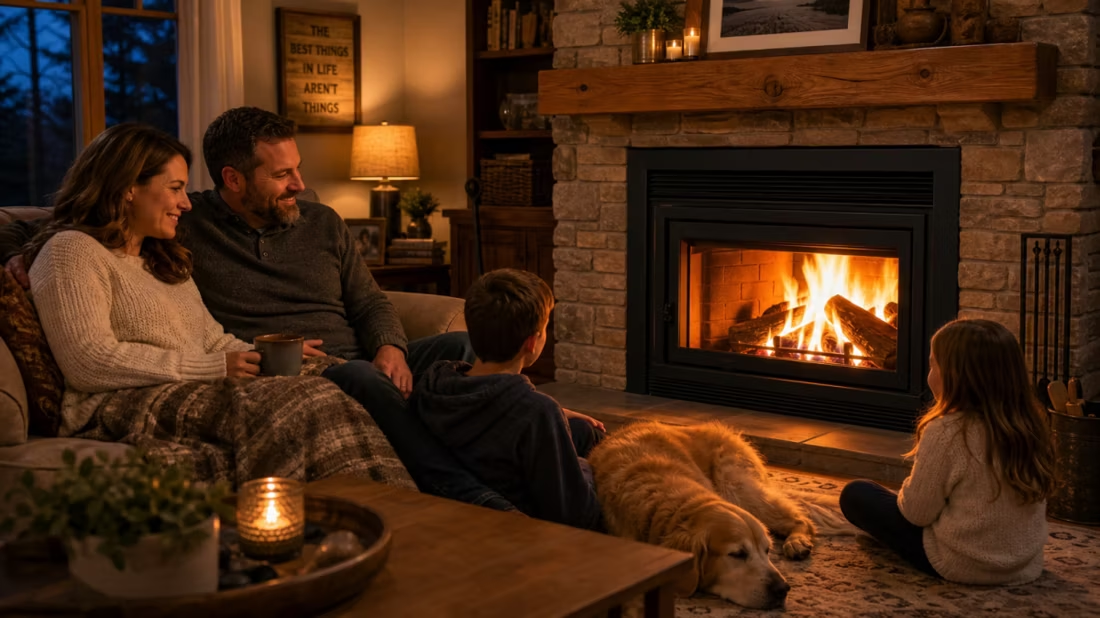
Four fuels. One honest answer for Shannon County.
Three steps. No salesperson until you're ready.
Tell us about your project
Your zip code, your situation, and the fuel you're leaning toward—or let the answers point you to one.
See what's actually available
The brands dealers within 100 miles genuinely carry—real options, never a catalog mirage.
Get your dealer & Project Guide
A trusted local dealer, plus the free Project Guide & Parts List that names every component of the job.
Frequently Asked Questions
Which fuel works best in Shannon County?
Wood is the deep-rooted choice here—oak, hickory, walnut, and maple are all abundant on private timberland and within Mark Twain National Forest, and a lot of Shannon County households have burned self-cut firewood for generations. Because the county has no natural gas utility, homes wanting gas heat typically run on propane rather than piped natural gas—propane fireplaces and inserts give instant heat with none of the wood-splitting labor. Pellet stoves are a solid middle ground, especially for households that want wood-style ambiance without stacking cordwood; regional supply comes through brands like Lignetics and Indeck Energy Services. Electric units work well as supplemental heat in a bedroom or sunroom but aren't relied on as a primary heat source through a full Ozark winter. Many homes here end up running two fuels—wood or propane as the workhorse, electric or pellet in a secondary space.
Do I need a permit to install a fireplace in Shannon County?
It depends on where you are. Shannon County, like many rural Ozark counties, does not enforce a unified countywide building code the way a suburban jurisdiction would—a lot of rural installs happen without a county-issued building permit. That said, within Eminence or Winona city limits, municipal rules may apply, and any gas line work for a propane fireplace or insert should still go through a licensed propane or gas-fitting contractor regardless of whether a permit is pulled. New wood stoves sold and installed anywhere still have to meet EPA New Source Performance Standards for emissions—that's federal, not local. The most reliable path is asking your installer directly; local hearth retailers who work this county regularly know exactly what each jurisdiction requires.
Are there air quality restrictions on wood burning in Shannon County?
No. Shannon County has no air quality non-attainment designation and no winter burn advisories—the population is small enough and spread out enough that wood smoke buildup simply isn't the issue it can be in a mountain basin or urban valley. That doesn't mean burning practices don't matter: well-seasoned oak or hickory (six months to a year of dry storage) burns cleaner and hotter than green wood, and an EPA-certified stove will get more heat out of the same cord while producing far less smoke than an older uncertified unit. There's no regulatory pressure pushing you toward a cleaner-burning stove here—it's purely a matter of efficiency and chimney safety.
Can one local hearth retailer handle all four fuel types?
In a county this size, most of the hearth retailers who actually service Shannon County are based outside it—in West Plains, Salem, or Rolla—and travel in for installs and consultations. Multi-fuel retailers that stock wood, propane, pellet, and electric units are worth seeking out if you're still deciding between fuels, since they can show you working displays and talk through what fits your home and your wood supply. Smaller, more specialized dealers may focus mainly on wood and propane, which covers the two dominant fuels in this part of the Ozarks. Fuel suppliers dealing strictly in firewood, propane delivery, or bagged pellets are a separate category from hearth retailers who sell and install the appliances themselves.
Where does firewood come from in Shannon County, and how should I store it?
A large share of Shannon County firewood is self-cut from private timberland or gathered under Forest Service permits within Mark Twain National Forest, where oak and hickory are especially common alongside walnut and maple. Oak in particular needs a long seasoning window—plan on nine months to a year of covered, off-ground storage before it burns efficiently—while hickory and maple season somewhat faster. If you're not cutting your own, a handful of local firewood suppliers sell seasoned cords by the truckload, and it's worth asking how long the wood has been split and stacked before you buy, since unseasoned wood is the single biggest cause of poor stove performance and creosote buildup in chimneys here.
What's the typical cost range for fireplace installation across all fuel types in Shannon County?
Wood stove or insert installation: roughly $4,000–$8,500 for a typical install, more if new chimney or hearth-pad work is needed. Propane fireplace, insert, or stove: roughly $4,000–$9,500, with cost driven mainly by tank setup and line run if propane service isn't already in place at the home. Pellet stove or insert: roughly $4,000–$7,000 for a typical install. Electric fireplace: $200–$3,000 for the unit itself, plus $300–$1,000 in labor for anything beyond a simple plug-in placement. Rural travel distance for the installer can add a modest trip charge on top of these ranges—worth asking about up front when you get a quote.
Can I install a fireplace myself?
If you're putting a fire in your house on purpose, it's best to work with an expert. Unless you're genuinely experienced in framing, gas line, vent pipe, and the national code on clearances to combustibles, have a professional do it—and ideally the same company that sells you the fireplace, so warranty, service, and liability all live under one roof.
Can a fireplace actually lower my heating bill?
Yes—by creating a comfort zone. A furnace heats every square foot of the house just to warm the one room you're in; a gas fireplace on low burns roughly a sixth of the gas a typical furnace does. Set the furnace around 55–60 degrees as a baseline, then heat the rooms your family actually uses. Families who heat this way commonly save $20–$60 a month.
Does a fireplace add value to my home?
On average, a fireplace adds back to the home about the same amount you spent installing it. Add the monthly savings from heating the rooms you actually use instead of the whole house—often hundreds of dollars a year—and the value case is strong before you even count what a fire does for how your family uses the room.
Wood, gas, pellet, or electric—how do I choose?
Match the fuel to your life, not the other way around. Wood: lowest fuel cost and total power-outage independence, but you're hauling and stacking. Gas: press a button, set a thermostat, no maintenance to speak of. Pellet: wood economics with automatic feeding, in exchange for weekly cleaning and a need for electricity. Electric: plugs in anywhere with honest supplemental heat. Nobody regrets the fuel that fits how they actually live.
Stove and Fireplace Dealers in Shannon County
Listings include WhyFire partner dealers, dealers we have verified as authorized for the brands we recommend, and established local businesses that carry hearth products. Every listing shows which one it is. The ones marked Preferred run on WhyFire's software, so they can show you real pricing and book your appointment right here. No manufacturer pays for placement. How we verify dealers →
West Plains Door & Building Supply
Heritage Stoves And Grills
Richards Heating And Cooling
Find your fireplace in Shannon County.
Pick your fuel below and we'll match you with a trusted local dealer and a free Project Guide & Parts List—the exact parts, vent kit included, and the installer best suited to your part of the county.
Find Your Fireplace →