
Find your electric fireplace in Scotland County.
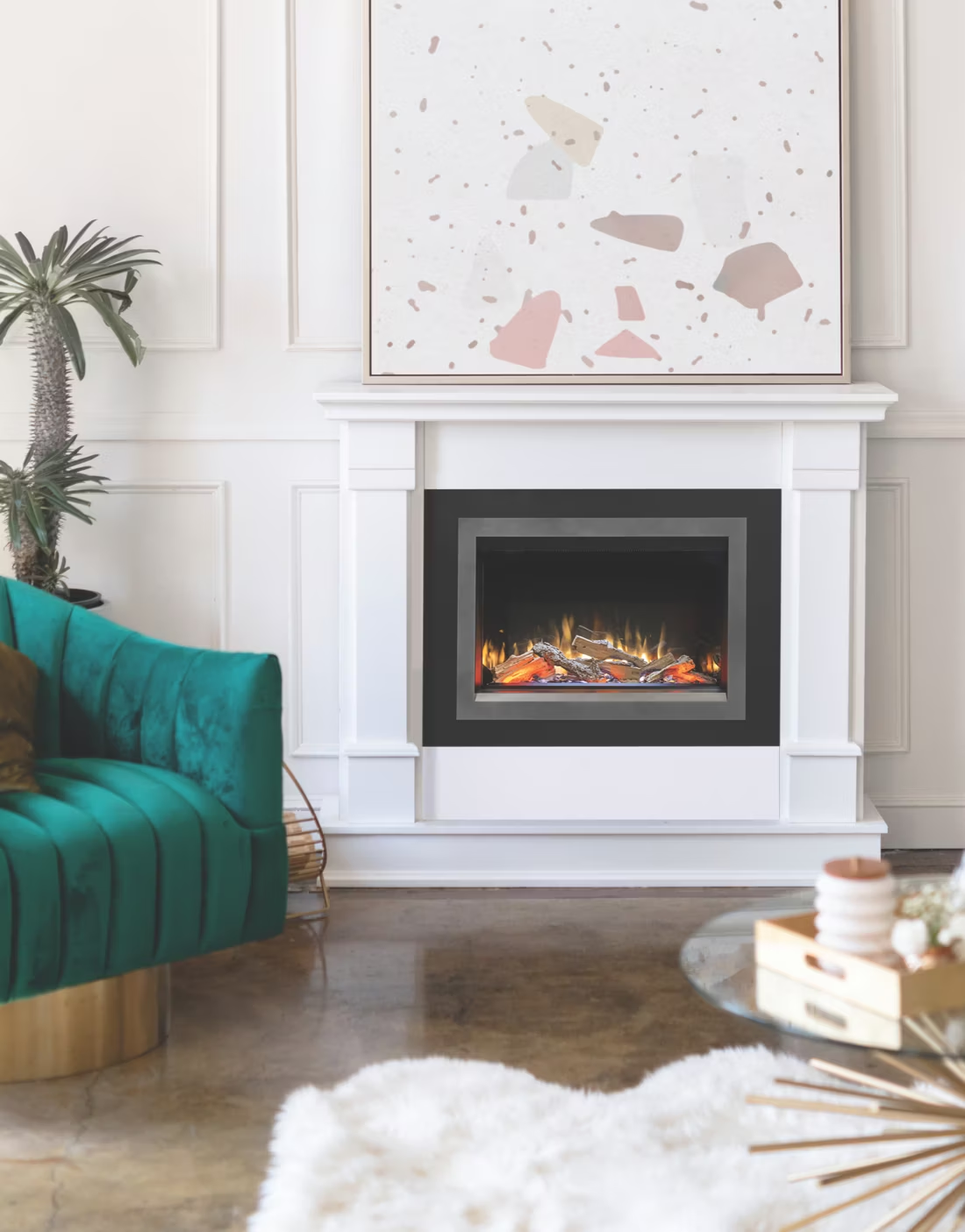
Zone heat that plugs in and goes to work the same day—no chimney, no gas line, no permit hassle for most units. Find the right electric fireplace or insert for your Scotland County home and connect with a trusted local dealer.
Every Project Starts From One of These Five Situations
Zone heat that plugs in and works instantly.
Scotland County sits in the far northeast corner of Missouri, farm country around Memphis with a population just over 2,000 spread across rolling ground and river bottoms. Winters here are genuinely cold—climate zone 5A, a long, demanding heating season each year, and average winter lows around 14°F. Wood heat runs deep in this county, with oak, hickory, walnut, and maple cut off local timber ground and burned in stoves and fireplaces across the countryside every winter. Electric fireplaces don't replace that tradition—they fill a different role: quick supplemental heat in a bonus room, a finished basement, a rental property, or an addition where running a flue or a gas line isn't practical.
Most homes in Scotland County get their power from Tri-County Electric Cooperative, and that rural co-op relationship matters for anyone weighing an electric fireplace: running costs are tied to your co-op rate, not a flat regional utility price, so a local dealer can walk you through what a given unit will actually add to your bill. Because most electric fireplaces and inserts are plug-in units, installation is usually simple—set the unit, plug it in, done. Built-in models that need a dedicated 20-amp circuit require a licensed electrician, but even that is a fraction of the work a vented wood or gas project demands. For a county this size, with a limited number of installers covering a lot of rural ground, that simplicity is a real advantage.
Three steps. No salesperson until you're ready.
Tell us about your project
Your zip code, your situation, and the fuel you're leaning toward—or let the answers point you to one.
See what's actually available
The brands dealers within 100 miles genuinely carry—real options, never a catalog mirage.
Get your dealer & Project Guide
A trusted local dealer, plus the free Project Guide & Parts List that names every component of the job.
Frequently Asked Questions
How much does an electric fireplace installation cost in Scotland County?
A basic plug-in electric insert or freestanding electric stove runs $300 to $1,200 for the unit itself, with little to no installation cost since it plugs into a standard outlet. Built-in wall-mounted units or linear electric fireplaces that need a dedicated circuit typically run $1,200 to $2,500 installed once electrician labor is factored in. That's meaningfully less than a vented wood or gas project in Scotland County, mainly because there's no chimney, no venting, and usually no building permit involved. Costs can run a bit higher for homes on the edges of the county simply due to travel time for the installer or electrician.
Do I need a permit to install an electric fireplace in Scotland County?
For most plug-in electric fireplaces and inserts, no permit is required—they're treated like any other appliance you plug into an outlet. If you're installing a built-in unit that requires a new dedicated circuit, an electrical permit is typically needed through the Scotland County Courthouse in Memphis, and the work should be done by a licensed electrician. Most local dealers can tell you upfront whether the unit you're considering needs that extra step, which is worth confirming before you buy.
Will an electric fireplace heat my whole house?
No—and this is the most important thing to understand before buying one for a Scotland County home. With average winter lows around 14°F and a long, demanding heating season each year, an electric fireplace is built for zone heating a single room, not carrying a whole farmhouse through a Northeast Missouri winter. Most units are rated to comfortably heat 400 to 1,000 square feet depending on model and insulation. Think of it as a way to warm up a den, a bedroom, or a finished basement without running your furnace harder—not a replacement for your primary heat source.
What's the best electric fireplace option for an older farmhouse?
Many Scotland County farmhouses have an old masonry fireplace that's no longer used or was capped off years ago—an electric insert is a straightforward way to bring that space back into use without touching the chimney or running new gas line. For rooms without an existing fireplace, a freestanding electric stove-style unit or a wall-mounted linear model both work well, and either can be moved or swapped out later without any structural changes to the house. A local dealer can look at your specific fireplace opening or wall space and tell you which style fits.
How much does it cost to run an electric fireplace in Scotland County?
Running cost depends on your Tri-County Electric Cooperative rate and the wattage of the unit, but most electric fireplaces draw around 1,500 watts on the heat setting—roughly comparable to running a space heater. Used for a few hours an evening in a single room, that typically adds a modest amount to a monthly bill rather than a dramatic one. Ask your dealer about units with adjustable heat settings or eco-modes, which let you run the flame effect without the heater engaged, useful on milder days in early fall or spring.
Will my electric fireplace work during a power outage?
No—this is worth being direct about. Electric fireplaces need power to run, full stop, so they won't help during an ice storm outage, which is a real consideration in a rural county like Scotland where downed lines can mean multi-day outages in a hard winter. If backup heat during outages matters to your household, a wood stove burning local oak or hickory, or a propane unit with battery-backed ignition, is the better call for that specific need. Many Scotland County homes end up with both: electric for easy everyday zone heat, wood or propane for the nights the power actually goes out.
Electric vs. wood—which makes more sense for my home?
Wood has deep roots in Scotland County, with oak, hickory, walnut, and maple cut locally and burned as primary or backup heat in plenty of farmhouses. Wood keeps working when the power doesn't, throws real radiant heat, and can genuinely offset a winter's propane or electric bill if you're cutting your own. Electric wins on convenience—no wood to split and stack, no ash to haul, no chimney to maintain, and it's the practical choice for a room where running a flue just isn't feasible, like a finished basement or an addition. Most households here don't pick one over the other so much as decide which room gets which.
Electric vs. propane—which is more common in Scotland County?
Propane is the standard whole-house fuel for a lot of rural Scotland County homes given the lack of natural gas infrastructure across most of the county, and propane fireplaces and inserts remain a strong option for primary supplemental heat that also works during a power outage with the right ignition system. Electric fireplaces don't compete with propane on backup reliability, but they're simpler and cheaper to install when you just need to take the edge off a single room and don't want to deal with a tank, gas line, or venting. The two fuels tend to serve different rooms in the same house rather than replacing each other outright.
Where can I find a dealer for electric fireplaces near me in Scotland County?
Given Scotland County's population of just over 2,000, dealer options close to home are limited, and most residents end up working with a hearth retailer based in a larger nearby Northeast Missouri town who can deliver and install within the county. A local dealer will look at your room, your existing fireplace opening if you have one, and your electrical setup, and recommend a unit that's actually sized right rather than whatever's sitting on a big-box shelf. That's the gap Find My Fireplace is built to close—we match you with a trusted dealer who knows what's realistic to install in a Scotland County home.
Can I put a TV above my fireplace?
Yes—with an asterisk. Fireplaces are hot and TVs don't like heat. Either put a mantel between them to deflect rising warmth, or choose a fireplace with heat-management technology that creates a cool zone on the wall above—the wall stays around 125 degrees, barely warm, while the room still gets full heat. If you like clean lines and don't want a mantel, heat management is the answer.
Does an electric fireplace need a vent or chimney?
No—that's its superpower. An electric fireplace needs a wall and an outlet, period. No vent pipe, no gas line, no clearances to design around, which is why it works in bedrooms, offices, apartments, and walls where venting a gas or wood unit would be impractical or impossible. Installation is typically the simplest and least expensive of any fireplace type.
Can a fireplace actually lower my heating bill?
Yes—by creating a comfort zone. A furnace heats every square foot of the house just to warm the one room you're in; a gas fireplace on low burns roughly a sixth of the gas a typical furnace does. Set the furnace around 55–60 degrees as a baseline, then heat the rooms your family actually uses. Families who heat this way commonly save $20–$60 a month.
How much should I budget for a fireplace?
For an average home—covering the fireplace, the vent pipe, and basic installation—a budget between $3,900 and $5,500 gives you a lot of options across wood, gas, and pellet. By the time you add finish work, gas line, and electrical, the average complete installation lands between $5,000 and $12,000 all-in. In a remodel or new build, a good rule is to put about 2.5% of the total project cost toward the fireplace.
Find your electric fireplace in Scotland County.
Tell us a bit about your home and we'll match you with the right electric fireplace or insert, plus a free Project Guide & Parts List—the exact parts and your recommended local Scotland County dealer, in one packet.
Find Your Fireplace →