
Heat that holds through a northeast Missouri winter.
Wood, gas, pellet, and electric fireplace resources for Memphis, Rutledge, Arbela, Gorin, and the farms and timber ground between them. Find the right unit and connect with a trusted local hearth retailer.
Every Project Starts From One of These Five Situations
Rolling farmland, hardwood timber, and a long, cold winter heating season.
Scotland County sits in the northeast corner of Missouri, tucked against the Iowa line, with about 2,000 residents spread across mostly rural, agricultural land. Climate zone 5A means real winters—average lows near 14°F, a heating season that stretches from October into April, and winters comparable to Madison, Wisconsin. There's no major air quality restriction here—no non-attainment designation, no burn bans to track—which is unusual and makes wood heat a straightforward choice for a lot of households.
The county's hardwood timber—oak, hickory, walnut, maple—has supported wood heat here for generations, and a lot of farms still cut and split their own firewood. What you'll find on this hub: hearth retailers, service technicians, and fuel suppliers covering the whole county, from Memphis down through Rutledge, Arbela, and Gorin. Pick your fuel below for local dealers, installed cost ranges, and unit recommendations specific to a Scotland County home.
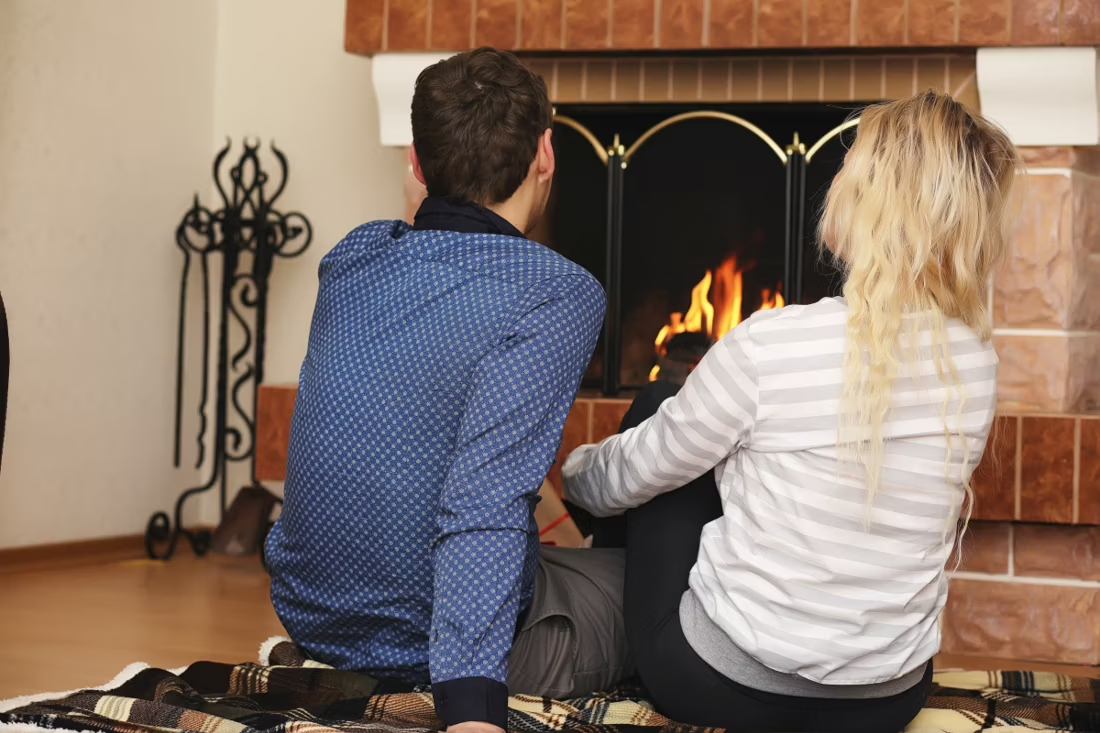
Four fuels. One honest answer for Scotland County.
Three steps. No salesperson until you're ready.
Tell us about your project
Your zip code, your situation, and the fuel you're leaning toward—or let the answers point you to one.
See what's actually available
The brands dealers within 100 miles genuinely carry—real options, never a catalog mirage.
Get your dealer & Project Guide
A trusted local dealer, plus the free Project Guide & Parts List that names every component of the job.
Frequently Asked Questions
Which fuel makes sense for a Scotland County home?
It depends on the house and how you use it. Wood is the traditional backbone here—oak and hickory split from local timber burn hot and long, and with no air quality restrictions in the county, there's nothing stopping a wood stove or insert from being a primary heat source. Gas (mostly propane in this rural county, since natural gas mains are limited) is the convenience option—no wood to split or stack, heat at the flip of a switch, and reliable during the coldest stretches. Pellet stoves split the difference—Lignetics and Indeck Energy Services both distribute in this part of Missouri, so supply isn't an issue, and you get wood-like heat without the felling and splitting. Electric fireplaces work well as supplemental heat in a bedroom or living room addition, but with winters as cold and long as Scotland County's, electric alone won't carry a Scotland County winter as a primary source. Most homes here run wood or pellet as primary heat with gas or electric backup for outages or shoulder-season mornings.
Do I need a permit to install a wood stove or fireplace in Scotland County?
Most incorporated areas—Memphis in particular—require a building permit for new wood stoves, inserts, gas appliances, and pellet stoves, and gas work needs a licensed installer for the line connection. Out in unincorporated Scotland County, permitting requirements are often lighter or handled informally through the county, so it's worth a call before you buy. New wood-burning appliances should meet current EPA emissions standards regardless of where you sit in the county. Most local hearth retailers who install regularly in this area already know which office to call and typically pull the permit as part of the job.
Are there wood-burning restrictions in Scotland County?
No—Scotland County has no listed air quality concerns, no non-attainment designation, and no burn curtailment program. That puts it in a different category from places like the Klamath Basin or parts of the Mountain West, where winter inversions trigger voluntary or mandatory burn advisories. Practically, that means a wood stove or insert can run as your primary heat source through the whole season without worrying about advisory days. The one caveat: new installations should still meet current EPA 2020 NSPS standards, and a properly sized, well-seasoned load of oak or hickory will burn cleaner and more efficiently than green or unseasoned wood regardless of local rules.
Can I find one dealer who carries all four fuel types near Scotland County?
In a county this size, don't expect a big-box showroom with every fuel on display—most dealers serving Scotland County are smaller operations based in Memphis or driving in from a neighboring Missouri or Iowa county, and they tend to specialize in two or three fuel types rather than stocking all four. Wood and pellet are usually paired together since installation logistics overlap; gas dealers often handle propane appliances as a separate line. Electric fireplace installs are frequently handled by a local electrician or general contractor rather than a dedicated hearth retailer. If you want to compare fuels side by side, it's worth checking dealers a bit further out in Kirksville or across the Iowa line—the county + fuel pages list who covers what.
How does fireplace service work in a rural county like Scotland?
Technicians covering Scotland County are mostly based out of Memphis or driving in from Kirksville or nearby Iowa towns, so expect a modest trip charge for service calls out to Rutledge, Arbela, Gorin, or the farm roads in between—often $40–$80 depending on distance. Scheduling early matters more here than in a bigger market: with fewer techs covering more square miles, September and October slots for annual chimney sweeps or gas inspections fill up before the first cold snap. If you're heating primarily with wood, keep a backup plan—a small electric heater or a second wood stack—in case a January ice storm delays a service call.
What does fireplace installation typically cost across fuel types in Scotland County?
Costs run a bit below national averages given the rural market, but still vary by fuel. Wood stove or insert: roughly $3,800–$8,000 installed, more if new chimney work is required. Gas fireplace, insert, or stove (propane, in most of this county): $4,000–$9,500 depending on tank setup and venting. Pellet stove or insert: $4,000–$6,500 for a typical install. Electric fireplace: $200–$2,500 for the unit itself, plus $300–$1,000 in labor unless it's a simple plug-and-play unit. Exact numbers depend on your specific home and which dealer you use—the county + fuel pages break down retailer-specific pricing.
Does a fireplace add value to my home?
On average, a fireplace adds back to the home about the same amount you spent installing it. Add the monthly savings from heating the rooms you actually use instead of the whole house—often hundreds of dollars a year—and the value case is strong before you even count what a fire does for how your family uses the room.
How much should I budget for a fireplace?
For an average home—covering the fireplace, the vent pipe, and basic installation—a budget between $3,900 and $5,500 gives you a lot of options across wood, gas, and pellet. By the time you add finish work, gas line, and electrical, the average complete installation lands between $5,000 and $12,000 all-in. In a remodel or new build, a good rule is to put about 2.5% of the total project cost toward the fireplace.
What is an in-home preview and do I need one?
It's a visit where a hearth professional measures your space, confirms the model you picked actually works in your home, and walks the specs—framing, gas line, venting, finish work—before anything is ordered. Some details you just can't know until you see the house. Never make a down payment without one; it's the single most-skipped step that burns buyers.
Can I install a fireplace myself?
If you're putting a fire in your house on purpose, it's best to work with an expert. Unless you're genuinely experienced in framing, gas line, vent pipe, and the national code on clearances to combustibles, have a professional do it—and ideally the same company that sells you the fireplace, so warranty, service, and liability all live under one roof.
Stove and Fireplace Dealers in Scotland County
Listings include WhyFire partner dealers, dealers we have verified as authorized for the brands we recommend, and established local businesses that carry hearth products. Every listing shows which one it is. The ones marked Preferred run on WhyFire's software, so they can show you real pricing and book your appointment right here. No manufacturer pays for placement. How we verify dealers →
Gingerich Stoves And Plumbing
Peters Heating & Ac
Blazing Burners L.L.C.
Jc Huffman Cabinetry
Stoves & Chimneys Of Iowa, Inc.
Find your fireplace in Scotland County.
Pick your fuel below and we'll match you with a trusted local dealer, plus a free Project Guide & Parts List—the exact parts, vent kit included, and the dealer we recommend for your home.
Find Your Fireplace →