
Find the right pellet stove for your Randolph County home.
Steady, thermostat-controlled heat for the cold nights around Moberly, Huntsville, and Cairo. We match you with a trusted local dealer who knows what installs and vents correctly in this county.
Every Project Starts From One of These Five Situations
A clean-burning option for a solid mid-Missouri winter.
Randolph County sits in USDA climate zone 4A with a winter heating season comparable in length and severity to a typical Midwest winter, and average winter lows around 19°F—a real but manageable winter, nothing close to Duluth or Fargo, but cold enough that a supplemental heat source pays for itself most seasons. Homes here run from older farmhouses outside Huntsville and Cairo to newer construction near Moberly, and a lot of them already have oak, hickory, walnut, or maple on the property from woodlot management—which is exactly the kind of household where a pellet stove earns its keep as a lower-maintenance alternative to cutting and stacking cordwood.
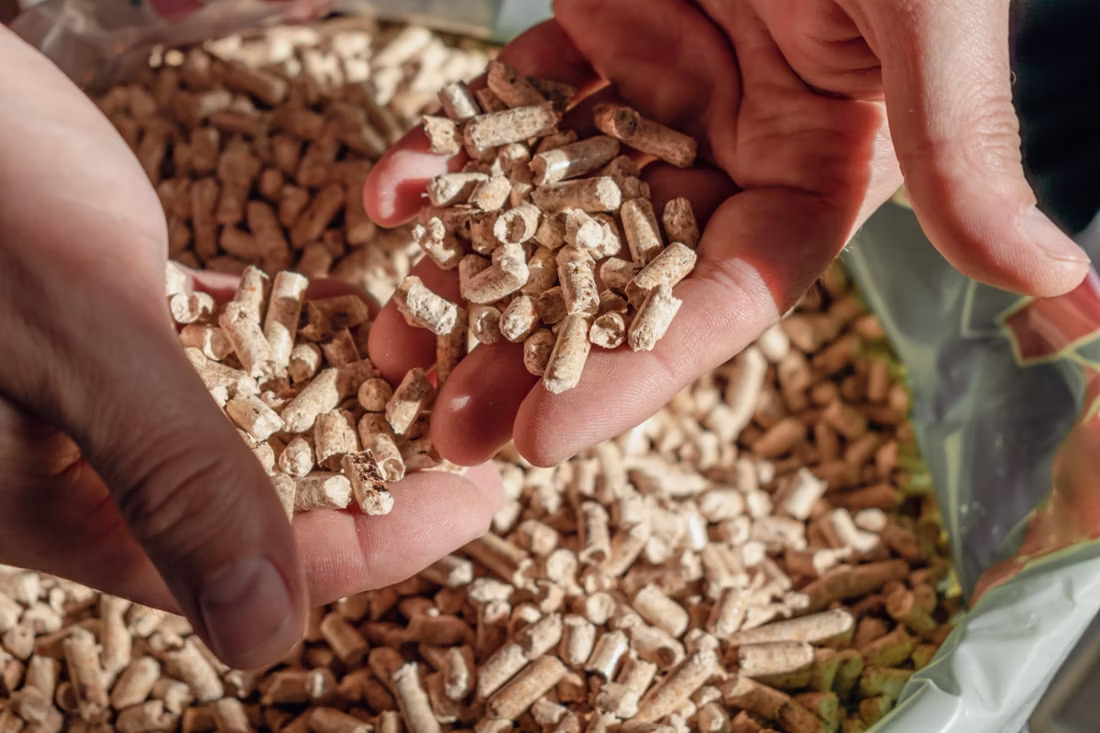
With no air quality non-attainment concerns or burn-ban history in this part of Missouri, pellet stoves here are chosen mostly for convenience rather than regulatory necessity: load the hopper, set the thermostat, and get consistent heat without tending a fire or hauling ash multiple times a day. Regional pellet supply runs through Lignetics and Indeck Energy Services, both of which distribute into mid-Missouri, so sourcing fuel isn't a seasonal scramble the way it can be in more remote parts of the country. A trusted local dealer will size the unit to your square footage and make sure the vent kit and hearth pad meet code—not just sell you a box off a shelf.
Three steps. No salesperson until you're ready.
Tell us about your project
Your zip code, your situation, and the fuel you're leaning toward—or let the answers point you to one.
See what's actually available
The brands dealers within 100 miles genuinely carry—real options, never a catalog mirage.
Get your dealer & Project Guide
A trusted local dealer, plus the free Project Guide & Parts List that names every component of the job.
Frequently Asked Questions
How much does a pellet stove installation cost in Randolph County?
Pellet stove installations typically run in the range most Missouri hearth dealers quote for a similar climate and home size—generally covering the stove itself, the vent kit (usually a simple through-wall vent rather than a full masonry chimney), and any hearth pad work needed for clearance compliance. Homes without an existing hearth pad or exterior wall access for venting will land toward the higher end. Because pellet stoves don't require a full Class A chimney system the way wood stoves do, installs are often faster and less invasive than a wood stove project in an older Huntsville or Cairo farmhouse. Your matched local dealer will give you a firm number after seeing your space.
What size pellet stove do I need for my home?
With Randolph County's solid, Midwest-style winter heating season and winter lows around 19°F, most single-family homes in the 1,200 to 2,200 square foot range do well with a mid-sized pellet stove producing somewhere in the neighborhood of 40,000 to 60,000 BTUs, assuming reasonable insulation. Larger farmhouses outside Moberly or Huntsville with less insulation, higher ceilings, or open floor plans often need to size up or plan for the stove as zone heat for the main living area rather than whole-home heat. A local dealer will walk your home and factor in ceiling height, window count, and layout before recommending a specific model—sizing by square footage alone misses too much.
Where can I get wood pellets in Randolph County?
Regional supply runs through brands like Lignetics and Indeck Energy Services, both of which distribute into mid-Missouri and are commonly stocked by farm supply stores, hardware stores, and hearth dealers serving the Moberly and Huntsville area. Premium hardwood pellets burn cleaner and leave less ash than softwood or bargain blends, which matters if you're running the stove daily through a full Randolph County winter. Buying a season's supply early—before the first cold snap—is worth doing since demand (and sometimes price) ticks up once temperatures drop.
Does a pellet stove need electricity to run?
Yes—this is the biggest practical difference from a wood stove. A pellet stove relies on an electric auger to feed fuel and a blower to distribute heat and exhaust combustion gases, so it will not operate during a power outage unless you have a battery backup or generator. For Randolph County homeowners who experience occasional winter storm outages, that's worth weighing: a pellet stove is excellent for everyday convenience and consistent heat, but if backup heat during an ice storm is your priority, a wood stove or a pellet stove paired with a small backup power source is the more resilient setup. Ask your local dealer about battery backup options if this matters to you.
What's the difference between a pellet stove and a pellet insert?
A pellet stove is a freestanding unit that sits on a hearth pad and vents through an exterior wall or existing chimney—it can go in almost any room with reasonable clearance and a nearby exterior wall. A pellet insert is built to slide into an existing masonry fireplace opening, converting an old open hearth into a much more efficient, thermostat-controlled heat source using the existing chimney for venting. For Randolph County homes with an older fireplace already in place—common in older Moberly neighborhoods—an insert is often the simpler retrofit. Homes without an existing fireplace usually go with a freestanding stove instead.
Do I need a permit to install a pellet stove in Randolph County?
Most jurisdictions in Randolph County require a building permit for a new pellet stove installation, particularly when it involves new venting through an exterior wall or modifications to an existing chimney. Requirements can vary between incorporated Moberly and unincorporated parts of the county, so it's worth confirming with your local building office before work starts. In practice, most established hearth dealers handle the permitting as part of the installation, which is one of the advantages of working with a trusted local pro rather than doing a DIY box-store install.
How often does a pellet stove need to be cleaned or serviced?
Pellet stoves need more frequent light maintenance than wood stoves, but less heavy-duty chimney work. Plan on emptying the ash pan every few days during regular use, cleaning the burn pot weekly to keep clinkers from building up, and scheduling a full professional cleaning and inspection annually—ideally before the start of the Randolph County heating season each fall. Neglecting the burn pot and venting system is the most common cause of poor combustion and error codes, so staying on top of routine cleaning keeps the stove running efficiently through a full winter of daily use.
What's the best pellet stove for Randolph County's climate?
For a 4A climate with moderate but real winter cold, a mid-sized pellet stove with a reliable auger feed system and a decent hopper capacity (40+ pounds) is usually the sweet spot—large enough to run overnight without refilling, but not oversized for a typical Moberly or Huntsville home. Look for models with a good reputation for consistent feed rates and easy-to-clean burn pots, since day-to-day usability matters more with pellet stoves than with wood stoves. A local dealer familiar with mid-Missouri homes can point you toward models that have held up well in similar-sized houses in the area.
Pellet stove vs. wood stove—which is right for me?
Wood stoves burn free or low-cost fuel if you have access to oak, hickory, walnut, or maple from your own property, work without electricity (a real advantage during a Randolph County ice storm), and offer the traditional fire experience many people want. Pellet stoves trade some of that for convenience—load a bag, set a thermostat, and get consistent heat with far less daily labor and much less ash and creosote to manage. For Randolph County homeowners without easy access to firewood, or who simply want lower-maintenance heat, pellet often wins. For those with woodlot access who want backup heat that doesn't depend on the grid, wood remains the more resilient choice. Your matched local dealer can walk through both options for your specific home.
How often does a pellet stove need cleaning?
A clean pellet stove is a happy pellet stove. Plan on cleaning the burn pot about once a week when you're burning regularly—ash and clinkers gum up the air holes just like a pellet barbecue. Most pellet stove problems trace back to skipped cleaning that nobody explained up front. Some designs make it easy with a trapdoor burn pot: pull a lever and the gunk drops into the ash pan.
Why is my open fireplace making my house colder?
Open fireplaces suck—literally. As the fire burns, it consumes air your furnace already paid to heat and pulls it out through the chimney, so the house is actually colder after the fire goes out than before you lit it. An insert fixes this: it seals the chimney, puts fixed glass across the front, and turns that hole in your house into a real heat source.
Can I install a fireplace myself?
If you're putting a fire in your house on purpose, it's best to work with an expert. Unless you're genuinely experienced in framing, gas line, vent pipe, and the national code on clearances to combustibles, have a professional do it—and ideally the same company that sells you the fireplace, so warranty, service, and liability all live under one roof.
Can a fireplace actually lower my heating bill?
Yes—by creating a comfort zone. A furnace heats every square foot of the house just to warm the one room you're in; a gas fireplace on low burns roughly a sixth of the gas a typical furnace does. Set the furnace around 55–60 degrees as a baseline, then heat the rooms your family actually uses. Families who heat this way commonly save $20–$60 a month.
Stove and Fireplace Dealers in Randolph County
Pellet Brands Stocked Around Randolph County
Manufacturers will point you to the nearest stocking dealer.
Get your free Project Guide & Parts List for a pellet stove in Randolph County.
Tell us about your home and we'll match you with a trusted local dealer and put together a free Project Guide & Parts List—the exact parts, including the vent kit, and a recommended installer near you.
Find Your Fireplace →