
Zone heat and real ambiance for Polk County homes—no chimney, no gas line.
From Bolivar to the farm roads around Humansville and Half Way, electric fireplaces give Polk County homeowners a plug-in heat source for additions, bonus rooms, and manufactured homes where running a flue or gas line isn't practical. Find the right unit and connect with a trusted local dealer.
Every Project Starts From One of These Five Situations
Simple heat where gas lines don't reach.
Polk County is Ozark foothill country—rolling farmland and timber around Bolivar, Humansville, Morrisville, and Fair Play, with roughly 14,000 residents spread across a mostly rural county. Winters here average lows around 22°F with a real but moderate heating season, noticeably milder than a place like Madison, WI, but still cold enough that most homes run a furnace or wood stove from October through April. Oak, hickory, walnut, and maple are the dominant hardwoods in the county's timber, and plenty of longtime residents still heat primarily with wood cut from their own ground. Electric fireplaces fill a different niche: they're the practical answer for the sunroom, the finished basement, the garage conversion, or the manufactured home where a masonry chimney or gas line was never in the plans.
Much of Polk County outside Bolivar city limits has no natural gas infrastructure at all—Southwest Electric Cooperative, headquartered right in Bolivar, is the primary electricity provider for a large share of rural members, with propane filling in as the common alternative fuel for whole-home heat. An electric fireplace sidesteps both issues: no gas line to run, no venting to engineer, just a 120V or 240V circuit and a wall. That makes it a common secondary heat source in Polk County homes that already burn wood or propane for primary heat, and a fast, code-simple option for additions and remodels where cutting a chimney chase isn't worth the cost or the mess.
Three steps. No salesperson until you're ready.
Tell us about your project
Your zip code, your situation, and the fuel you're leaning toward—or let the answers point you to one.
See what's actually available
The brands dealers within 100 miles genuinely carry—real options, never a catalog mirage.
Get your dealer & Project Guide
A trusted local dealer, plus the free Project Guide & Parts List that names every component of the job.
Frequently Asked Questions
How much does an electric fireplace installation cost in Polk County?
Plug-in wall-mount and freestanding electric fireplaces run on the low end—often $500 to $1,500 installed, since most just need a nearby outlet and a mounting bracket. Built-in electric inserts or linear units set into a wall or existing mantel surround typically run $1,500 to $3,500, depending on whether an electrician needs to run a dedicated 240V circuit and whether custom framing or a mantel surround is part of the job. Homes in and around Bolivar have easier access to installers than the more rural corners of the county near Fair Play or Morrisville, where a small travel charge is common.
Does an electric fireplace need a chimney or vent?
No—electric fireplaces produce no combustion byproducts, so there's no flue, no chimney, and no outside venting required. That's the main reason they show up so often in Polk County additions, sunrooms, and older farmhouses where a proper masonry chimney was never built. The unit only needs a standard or dedicated electrical circuit, which makes it one of the simpler retrofit heating projects a local electrician or hearth dealer can complete in a day.
Can I install an electric fireplace in a manufactured or mobile home?
Yes, and it's one of the more common installs in rural Polk County, where manufactured and modular homes make up a meaningful share of the housing stock. Because there's no combustion and no venting, electric units avoid the clearance and structural questions that come with wood or gas installs in a manufactured home. The main thing to check is the home's electrical panel capacity—larger built-in inserts that draw on a 240V circuit may require a licensed electrician to confirm the panel can handle the added load before installation.
Will my electric fireplace work if the power goes out?
No—unlike a wood stove, an electric fireplace is entirely dependent on grid power, so it won't run during an outage. Southwest Electric Cooperative, which serves much of rural Polk County, generally maintains solid reliability, but winter ice storms can still knock out lines for hours or longer in the more rural stretches of the county. For that reason, many Polk County homeowners pair an electric fireplace for everyday convenience and ambiance with a wood stove or propane heater as backup heat for the rare extended outage.
Electric vs. wood—which makes more sense for my Polk County home?
Wood remains a strong choice here given how much oak and hickory grows locally and how many Polk County homeowners already cut their own firewood—it also keeps working when the power's out. Electric wins on convenience: no ash, no wood handling, instant on-off operation, and installation that doesn't touch your roofline or require a masonry chimney. For a primary heat source in an older farmhouse, wood often stays in the mix. For a bonus room, a bedroom, or a finished basement where you want heat and glow without the upkeep, electric is usually the simpler answer—and plenty of homes in the county run both.
Do I need a permit to install an electric fireplace in Polk County?
A simple plug-in unit generally doesn't require a permit. A built-in insert that requires new electrical wiring or a dedicated circuit typically does need an electrical permit, handled through the Polk County Commission's building office for unincorporated areas, or through the City of Bolivar if the home is inside city limits. Most hearth dealers or electricians who install built-in units will pull the permit as part of the job, so it's worth confirming that's included in your quote.
What size electric fireplace do I need for my space?
Most electric fireplace heaters are rated for spaces up to about 400 to 1,000 square feet, which covers a single room or open living area comfortably. For a Polk County sunroom addition or a garage conversion without much existing insulation, size up slightly or plan on the fireplace as supplemental zone heat rather than the room's sole heat source—especially once outdoor temperatures drop into the teens and single digits, which happens most winters. Larger linear built-ins with higher wattage heaters can cover bigger open-concept living rooms, but a local dealer can size the unit correctly based on your room's insulation and ceiling height.
What does it cost to run an electric fireplace day to day?
Most electric fireplace heaters draw around 1,500 watts on the heat setting, which works out to roughly 8 to 15 cents an hour depending on your electric cooperative's rate structure—a modest add to a Southwest Electric Cooperative bill for occasional evening use. Running the flame effect alone, without the heater engaged, uses only a few watts, so many homeowners leave the visual on for ambiance without meaningfully affecting their bill. It's a far cheaper daily cost than running central heat to warm a single room.
What features matter most for an electric fireplace in a Polk County home?
Look for a unit with a dedicated 240V heater option if you want real supplemental warmth rather than just visual flame—plug-in 120V units are limited to about 1,500 watts regardless of brand. Brands like Dimplex and Napoleon offer both wall-mount and built-in linear models with realistic flame technology that holds up well over years of daily use. For humid basement installs, common in Ozark-region homes with limestone foundations, ask your dealer about moisture-resistant electronics. A local retailer familiar with Polk County's housing stock—older farmhouses, newer builds around Bolivar, and manufactured homes throughout the county—can steer you toward the right fit for your specific space.
Can I put a TV above my fireplace?
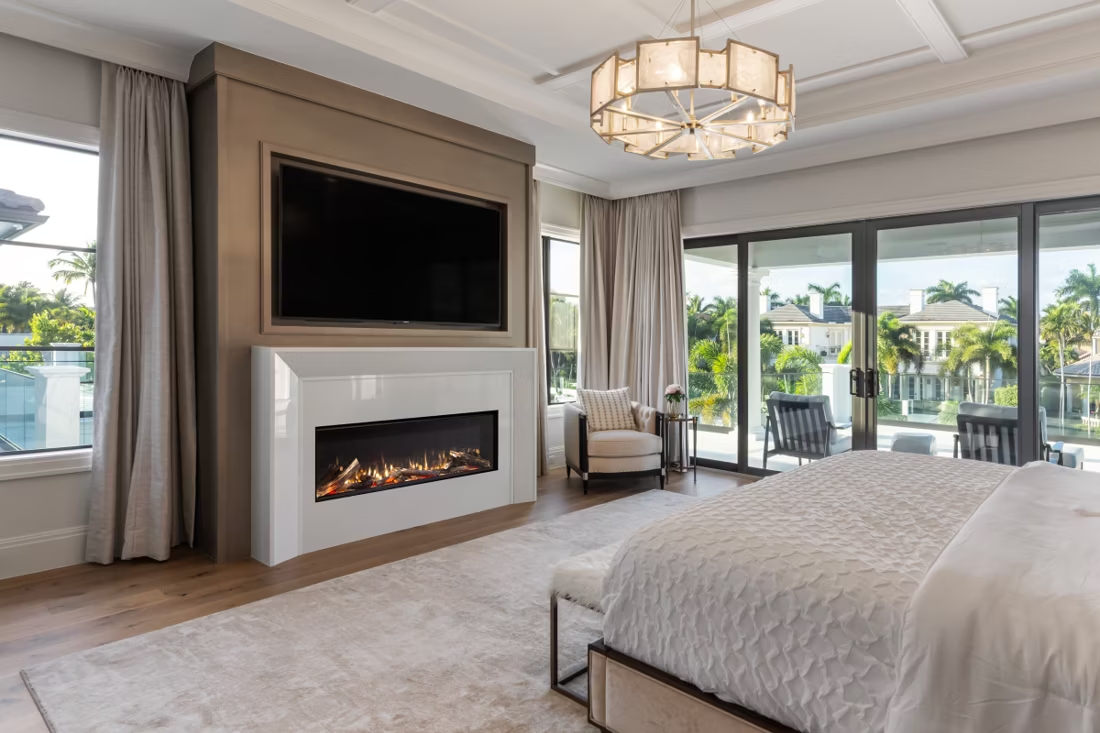
Yes—with an asterisk. Fireplaces are hot and TVs don't like heat. Either put a mantel between them to deflect rising warmth, or choose a fireplace with heat-management technology that creates a cool zone on the wall above—the wall stays around 125 degrees, barely warm, while the room still gets full heat. If you like clean lines and don't want a mantel, heat management is the answer.
Does an electric fireplace need a vent or chimney?
No—that's its superpower. An electric fireplace needs a wall and an outlet, period. No vent pipe, no gas line, no clearances to design around, which is why it works in bedrooms, offices, apartments, and walls where venting a gas or wood unit would be impractical or impossible. Installation is typically the simplest and least expensive of any fireplace type.
Can a fireplace actually lower my heating bill?
Yes—by creating a comfort zone. A furnace heats every square foot of the house just to warm the one room you're in; a gas fireplace on low burns roughly a sixth of the gas a typical furnace does. Set the furnace around 55–60 degrees as a baseline, then heat the rooms your family actually uses. Families who heat this way commonly save $20–$60 a month.
What is an in-home preview and do I need one?
It's a visit where a hearth professional measures your space, confirms the model you picked actually works in your home, and walks the specs—framing, gas line, venting, finish work—before anything is ordered. Some details you just can't know until you see the house. Never make a down payment without one; it's the single most-skipped step that burns buyers.
Find your electric fireplace in Polk County.
Tell us a bit about your home and we'll match you with a trusted local dealer and send over a free Project Guide & Parts List—the exact unit, mounting or venting parts, and a clear installation plan for your Polk County home.
Find Your Fireplace →