
Find the right wood, gas, pellet, or electric fireplace for your Polk County, Missouri home.
From Bolivar to the smaller crossroads towns around it, Polk County sees average winter lows near 22°F and a winter heating load comparable to a long, cold Midwest season. Whatever fuel fits your house, we'll connect you with a trusted local dealer who can size and install it correctly.
Every Project Starts From One of These Five Situations
Ozark hardwood country in southwest Missouri.
Polk County sits in the rolling hills of the Missouri Ozarks, in climate zone 4A—a moderate but genuinely cold heating season, not the brutal single-digit stretches you'd find in Fargo or Duluth, but cold enough that most homes here run a heating appliance from October well into April. Oak, hickory, walnut, and maple are the dominant hardwoods across the county's woodlots and river bottoms, and they're exactly the dense, long-burning species that make wood heat practical here—a well-seasoned load of oak or hickory in an EPA-certified stove will carry a home through a long Ozark night. There's no air quality non-attainment designation in Polk County and no seasonal burn curtailment to plan around, which is a real difference from stricter basin or valley counties elsewhere in the country.
This hub pulls together the county's whole hearth ecosystem: retailers, chimney sweeps and gas techs, and fuel suppliers serving Bolivar and the smaller towns around it—Humansville, Fair Play, Half Way, and the rural routes between them. Pick a fuel below to get into specifics—recommended units, installation costs, and a dealer near you. Whether you're heating a farmhouse on acreage or a home a few blocks from the Polk County Courthouse in Bolivar, this is the place to start.
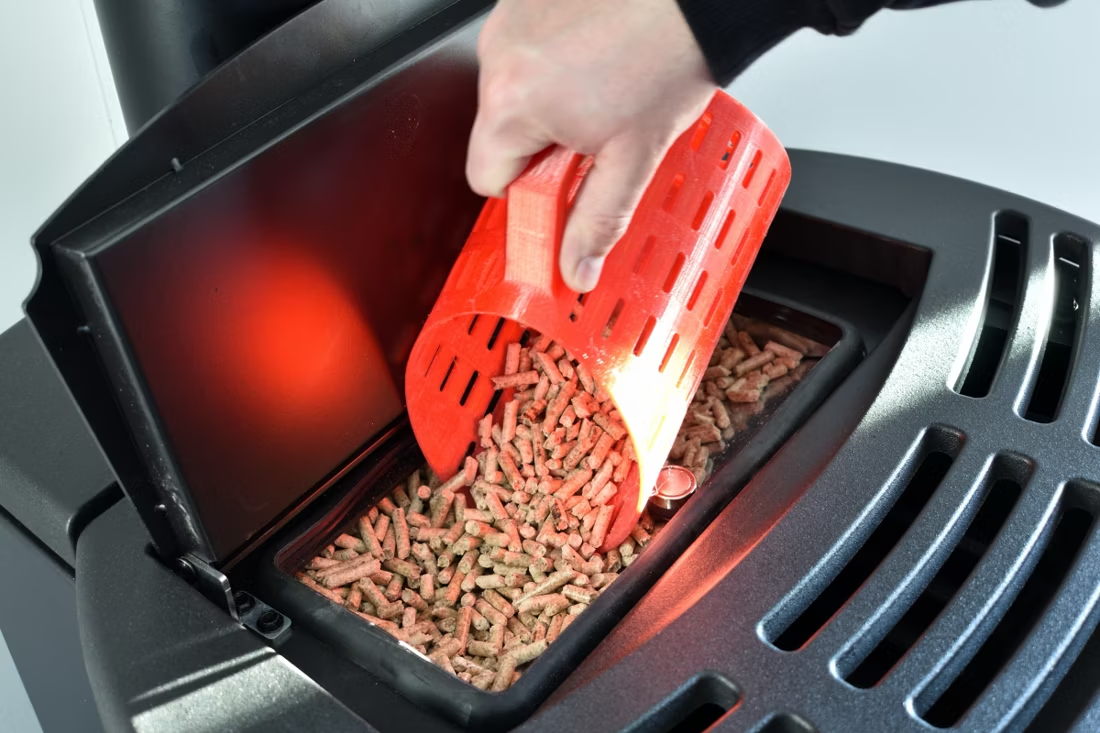
Four fuels. One honest answer for Polk County.
Three steps. No salesperson until you're ready.
Tell us about your project
Your zip code, your situation, and the fuel you're leaning toward—or let the answers point you to one.
See what's actually available
The brands dealers within 100 miles genuinely carry—real options, never a catalog mirage.
Get your dealer & Project Guide
A trusted local dealer, plus the free Project Guide & Parts List that names every component of the job.
Frequently Asked Questions
Which fuel works best in Polk County?
It depends on your home and situation. Wood is a strong fit given the local hardwoods—oak, hickory, walnut, and maple are dense, long-burning species that many Polk County households already have access to on their own land or through local suppliers, and an EPA-certified stove or insert loaded with seasoned hickory will hold heat through a cold Ozark night. Gas is the convenience choice; since piped natural gas isn't universal out here, most gas installs run on propane, which still gives you instant heat with no wood to split or stack. Pellet is a middle path—Lignetics and Indeck Energy Services bags are both available regionally, giving you wood-style ambiance without the woodpile labor, though you do need reliable electricity to run the auger and blower. Electric is best treated as supplemental heat for a bedroom, sunroom, or finished basement rather than a primary source through a Polk County winter. Many homes here end up pairing wood or pellet as the main heater with gas or electric in a secondary room.
Do I need a permit to install a fireplace in Polk County?
In most cases, yes. New wood stoves and inserts need to meet current EPA 2020 NSPS emissions standards, and gas fireplace or insert installations require a licensed gas-fitter for the propane or gas-line connection, separate from any building permit for the unit itself. Permitting for Polk County homes runs through the county building department out of Bolivar; requirements can vary slightly if your property is inside city limits versus unincorporated county land, so it's worth checking before work starts. Electric fireplaces usually skip the permit process unless you're doing a built-in installation with new wiring or a dedicated circuit. Most local hearth retailers handle the permit paperwork as part of installation, so you typically aren't the one filing it.
Are there wood-burning restrictions in Polk County?
No—Polk County doesn't carry an air quality non-attainment designation, and there's no seasonal burn curtailment program like you'd find in a basin community dealing with winter inversions. That said, it's still worth installing an EPA-certified stove or insert: modern catalytic and non-catalytic designs burn Ozark hardwoods like oak and hickory more completely, which means less creosote buildup in the flue, less visible smoke, and meaningfully better fuel efficiency per cord. If you're clearing land or burning brush separately from your stove, that typically falls under a different set of local open-burning rules than the hearth appliance itself.
Can one local dealer handle all four fuel types?
Many hearth retailers serving Polk County carry at least two or three fuel types—commonly wood and gas, with pellet often available as well. Fewer stock electric fireplaces as a core line, since electric units are more often sold through big-box or online channels and simply need an installer for anything beyond plug-and-play. If you're still deciding between wood, gas, and pellet, a multi-fuel dealer near Bolivar can walk you through working displays of each and talk through what actually fits your house, your wood access, and your budget—rather than you guessing from a catalog.
How does service work in the rural parts of Polk County?
Most service technicians covering Polk County are based in or near Bolivar and drive out to the surrounding towns and rural routes—Humansville, Fair Play, Half Way, and the gravel-road properties in between. Expect a modest travel fee for calls further out from town, and know that pre-season appointments in September and October are far easier to book than an emergency call in the middle of a January cold spell. If your property is on a longer gravel drive or set well back from a paved road, mentioning that when you schedule helps the tech plan the visit and arrive with the right gear.
What's the typical cost range for fireplace installation across fuel types in Polk County?
Ranges vary by fuel and by how much existing infrastructure your home has. Wood stove or insert installation: roughly $3,800–$8,500 for a typical install, more if a full masonry chimney or new venting is needed. Gas fireplace, insert, or stove: roughly $4,000–$10,000, with the low end applying to homes that already have gas or propane service run to the room. Pellet stove or insert: roughly $4,000–$7,000 installed. Electric fireplace: the unit itself often runs $200–$3,000, with $300–$1,000 in labor for anything beyond a simple plug-and-play placement. For numbers tied to actual local pricing, see the county + fuel pages above.
How much should I budget for a fireplace?
For an average home—covering the fireplace, the vent pipe, and basic installation—a budget between $3,900 and $5,500 gives you a lot of options across wood, gas, and pellet. By the time you add finish work, gas line, and electrical, the average complete installation lands between $5,000 and $12,000 all-in. In a remodel or new build, a good rule is to put about 2.5% of the total project cost toward the fireplace.
Can I install a fireplace myself?
If you're putting a fire in your house on purpose, it's best to work with an expert. Unless you're genuinely experienced in framing, gas line, vent pipe, and the national code on clearances to combustibles, have a professional do it—and ideally the same company that sells you the fireplace, so warranty, service, and liability all live under one roof.
Should the dealer who sells my fireplace also install it?
Ideally, yes. A fireplace project involves vent pipe, gas line, electrical, and often tile or stone. Hire three or four separate trades and you own the liability and the game of telephone between them. One company selling and installing means one accountable party, start to finish—ask about factory training, on-time completion records, and what happens if an inspection fails.
I know I want a fireplace—where do I actually start?
Do two things today: snap a photo of the wall or fireplace you want to transform, and take a tape measure to the space—width, height, depth. Those two artifacts answer most of a hearth professional's first questions. Then settle fuel (wood, gas, pellet, or electric) and set a realistic budget: $3,900–$5,500 covers fireplace, vent, and basic install for most homes.
Stove and Fireplace Dealers in Polk County
Listings include WhyFire partner dealers, dealers we have verified as authorized for the brands we recommend, and established local businesses that carry hearth products. Every listing shows which one it is. The ones marked Preferred run on WhyFire's software, so they can show you real pricing and book your appointment right here. No manufacturer pays for placement. How we verify dealers →
Abc Block And Brick
Smitty's Chimney Service
Meek's The Builder's Choice
Country Side Cottage
Aaron's Fireplace Co.
Hmi Fireplace Shop
Nixa Hardware
Get matched with a trusted Polk County hearth dealer.
Tell us about your home and fuel preference and we'll match you with a local dealer near Bolivar—plus a free Project Guide & Parts List covering the exact vent kit and components your project needs.
Find Your Fireplace →