
Warmth Without the Wait, Anywhere in Pemiscot County.
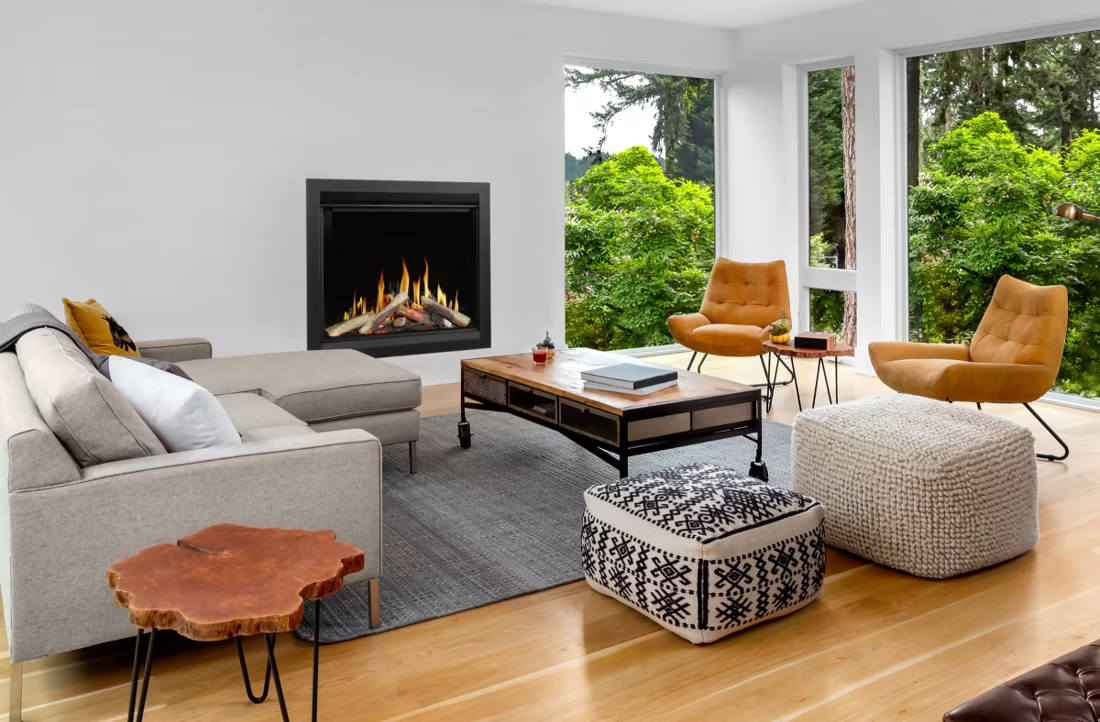
No chimney, no gas line, no venting required—just plug in and heat the room, from Caruthersville and Hayti to Steele and the smaller Bootheel farm towns. Find the right unit and connect with a trusted local dealer.
Every Project Starts From One of These Five Situations
Mild winters, modest heating bills, maximum flexibility.
Pemiscot County sits at the southern tip of Missouri's Bootheel, flat Mississippi River delta country built on cotton, soybeans, and rice. Winters here are short and comparatively gentle—average lows hover around 30 degrees and the county's winter heating load runs less than half of what a place like Duluth, Minnesota sees over the same stretch. That short heating season is exactly why electric fireplaces make sense for a lot of homeowners in Caruthersville, Hayti, Steele, and the smaller communities scattered across the county: you don't need a full standalone heating system, you need warmth and ambiance for the handful of genuinely cold weeks each winter.
With no regional air quality concerns to work around and reliable service from the local electric cooperative, an electric fireplace installs cleanly with zero venting, zero clearance headaches, and none of the chimney or gas-line coordination that other fuels require. That matters in a county with a lot of manufactured and mobile homes, older farmhouses without existing masonry chimneys, and rental units in Caruthersville and Hayti where landlords want a low-risk upgrade. A plug-in unit runs off a standard outlet; a built-in model needs a dedicated circuit, which a licensed electrician handles as part of the install.
Three steps. No salesperson until you're ready.
Tell us about your project
Your zip code, your situation, and the fuel you're leaning toward—or let the answers point you to one.
See what's actually available
The brands dealers within 100 miles genuinely carry—real options, never a catalog mirage.
Get your dealer & Project Guide
A trusted local dealer, plus the free Project Guide & Parts List that names every component of the job.
Frequently Asked Questions
How much does an electric fireplace installation cost in Pemiscot County?
A plug-in electric fireplace or insert—the kind that slides into an existing opening or sits against a wall—typically runs $300 to $900 for the unit itself, with little to no installation labor since it just needs a standard outlet. A built-in electric fireplace or wall-mounted unit that requires a dedicated 20-amp circuit, in-wall wiring, or a custom surround runs higher, often $1,000 to $2,500 once an electrician is involved. Because Pemiscot County's winters are short, a lot of homeowners here go with the lower-cost plug-in route for supplemental heat in a living room or bedroom rather than a full built-in project.
Will an electric fireplace actually heat a room in Pemiscot County, or is it just for looks?
It will genuinely heat a room—most models produce around 4,600 to 5,000 BTUs, enough to warm a 300 to 400 square foot space, which covers most bedrooms and living rooms in local homes. Given that Pemiscot County's average winter low sits around 30 degrees and cold spells are usually short-lived rather than weeks-long deep freezes, an electric unit is often plenty to take the chill off a room without running the furnace harder. It's not designed to heat an entire farmhouse on its own, but as zone heat for the room you're actually sitting in, it does real work here—not just ambiance.
Do I need a permit to install an electric fireplace in Pemiscot County?
In most cases, no. A plug-in electric fireplace or insert that runs off an existing outlet doesn't require a permit anywhere in the county. A built-in unit that needs a new dedicated circuit or in-wall wiring typically does require an electrical permit, since it involves altering the home's wiring. Local electricians and hearth dealers who handle built-in installs are used to pulling that permit as part of the job, so you usually don't have to coordinate it yourself.
What types of electric fireplaces are available for Pemiscot County homes?
There are four main formats: inserts that slide into an existing fireplace opening (a popular retrofit for older farmhouses with a masonry hearth that's no longer used for wood), built-in or wall-mounted units set into new framing, freestanding mantel packages that need no construction at all, and simple plug-in stoves. For manufactured and mobile homes, which are common throughout the county, a freestanding or wall-mounted unit is usually the easiest path since it avoids any structural modification. For older homes in Caruthersville or Hayti with an existing but unused chimney, an insert lets you keep the look of the fireplace while removing the ash, smoke, and upkeep of wood.
Is electric a good fit for manufactured and mobile homes in the Bootheel?
Yes—it's one of the best fits available. Manufactured homes make up a real share of housing stock in Pemiscot County's smaller communities, and most manufacturer warranties and local codes are cautious about wood or gas units that require venting through a manufactured home's roof or wall assembly. Electric fireplaces sidestep that entirely: no venting, no combustion, no chimney penetration. A freestanding or wall-mounted electric unit can go in with minimal modification, which is why it's often the first recommendation local dealers make for mobile and manufactured homes.
How much does it cost to run an electric fireplace in Pemiscot County?
Most electric fireplaces draw around 1,500 watts on the heat setting, which works out to roughly 15 cents an hour at typical local electric cooperative rates—call it $1 to $2 for an evening of use. Since Pemiscot County's heating season is relatively short, running an electric unit for supplemental warmth on cold nights costs far less over a winter than heating an entire home with electric resistance heat. Most homeowners run the flame effect without heat for ambiance the rest of the year at essentially no cost, since the light-only mode draws very little power.
Electric vs. wood—which makes more sense for my Pemiscot County home?
Wood makes sense if you want real heat output, have access to local oak, hickory, walnut, or maple, and don't mind the upkeep of stacking, feeding, and cleaning a firebox—plus it works during a power outage, which electric can't. Electric makes sense if you want instant on-off convenience, zero mess, no chimney or clearance requirements, and heat that's proportional to the county's genuinely mild, short winters. For a lot of Pemiscot County homeowners—especially in town in Caruthersville or Hayti, or in manufactured housing—electric wins simply because it installs faster, costs less upfront, and matches a heating season that's more about taking the edge off than surviving a hard freeze.
Can I put an electric fireplace in a rental property or apartment in Caruthersville?
Yes, and it's one of the more common uses for electric units in the county. Because a plug-in electric fireplace needs nothing more than a standard outlet, it's landlord-friendly—no chimney liability, no gas line, no permanent structural change, and it can move with a tenant if needed. Local dealers see this a lot with rental units and apartments in Caruthersville and Hayti where a wood or gas installation isn't practical or allowed by the property owner.
What's the difference between an electric fireplace insert and a space heater?
An electric fireplace insert is built to look and feel like a real fireplace—a glowing log or crystal display, a mantel or surround, and heat output similar to a small space heater—while a standard space heater is just a utility box with no visual appeal. Both use similar wattage and produce comparable warmth for a single room, but the insert is designed to become a permanent, attractive feature of the room rather than something you tuck away in a closet each spring. For homeowners in Pemiscot County looking to upgrade an old, unused fireplace opening, an insert accomplishes both goals at once: real supplemental heat and a finished look.
Can I put a TV above my fireplace?
Yes—with an asterisk. Fireplaces are hot and TVs don't like heat. Either put a mantel between them to deflect rising warmth, or choose a fireplace with heat-management technology that creates a cool zone on the wall above—the wall stays around 125 degrees, barely warm, while the room still gets full heat. If you like clean lines and don't want a mantel, heat management is the answer.
Does an electric fireplace need a vent or chimney?
No—that's its superpower. An electric fireplace needs a wall and an outlet, period. No vent pipe, no gas line, no clearances to design around, which is why it works in bedrooms, offices, apartments, and walls where venting a gas or wood unit would be impractical or impossible. Installation is typically the simplest and least expensive of any fireplace type.
Can a fireplace actually lower my heating bill?
Yes—by creating a comfort zone. A furnace heats every square foot of the house just to warm the one room you're in; a gas fireplace on low burns roughly a sixth of the gas a typical furnace does. Set the furnace around 55–60 degrees as a baseline, then heat the rooms your family actually uses. Families who heat this way commonly save $20–$60 a month.
What is an in-home preview and do I need one?
It's a visit where a hearth professional measures your space, confirms the model you picked actually works in your home, and walks the specs—framing, gas line, venting, finish work—before anything is ordered. Some details you just can't know until you see the house. Never make a down payment without one; it's the single most-skipped step that burns buyers.
Find your electric fireplace in Pemiscot County.
Tell us a bit about your home and we'll put together a free Project Guide & Parts List—the exact parts for your electric fireplace project in Pemiscot County, plus a match with a trusted local dealer who can install it right.
Find Your Fireplace →