
Find the right pellet stove for your Osage County home.
Steady, low-maintenance heat for the river hills and farmland of Osage County—from Linn to Chamois to Freeburg. We match you with a local dealer who can size, permit, and install it right.
Every Project Starts From One of These Five Situations
Consistent heat, without the wood-splitting.
Osage County sits in the rolling Ozark border hills of central Missouri, where winter lows average in the low 20s and the county gets a moderate winter heating season—noticeably milder than a place like Bozeman or Madison, but still cold enough that supplemental heat matters for months at a time. With no air quality restrictions in the county, homeowners here have real flexibility in choosing between wood, gas, pellet, and electric—and pellet stoves have found a solid niche among people who want the radiant heat of a stove without the daily hauling and splitting that comes with the region's abundant oak, hickory, walnut, and maple.
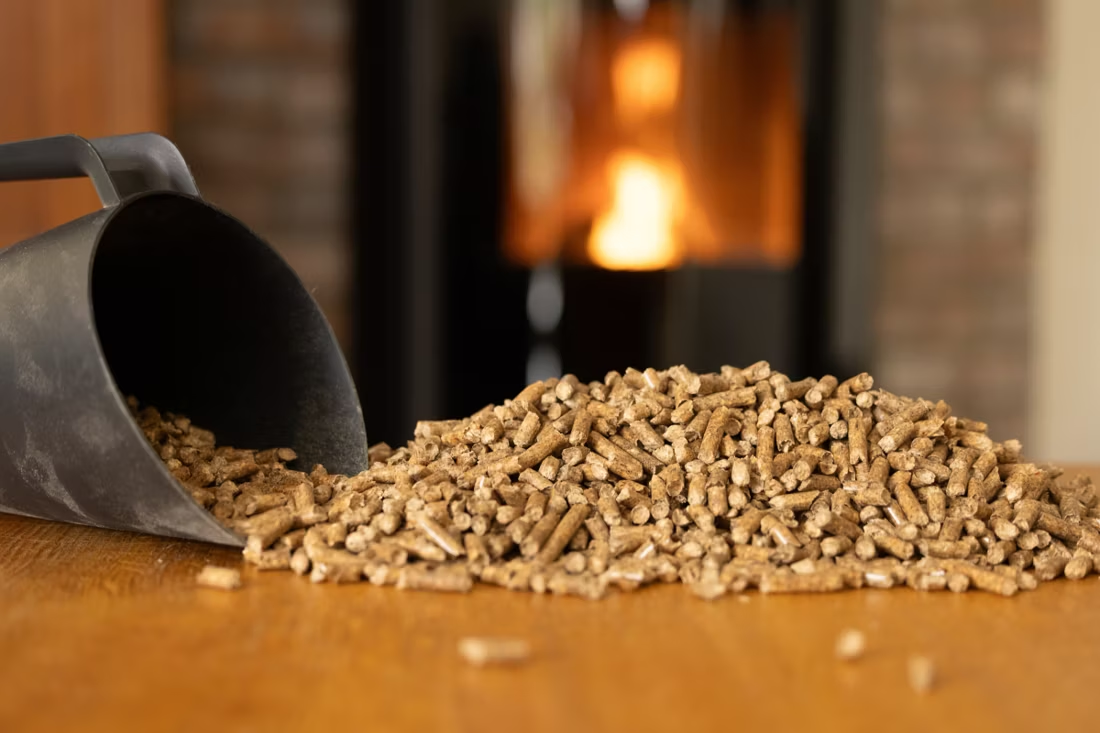
For small acreages and rural properties scattered around Linn, Chamois, and Freeburg, a pellet stove offers a middle path: automated feed from a hopper, longer burn times between reloads than a wood stove, and cleaner glass with less creosote buildup. Regional bagged fuel from brands like Lignetics and Indeck Energy Services is generally available through farm supply and hardware retailers in this part of Missouri, which keeps fuel logistics simpler than sourcing and seasoning cordwood every year. A local dealer can walk you through sizing the unit to your square footage and confirming venting fits your home's construction.
Three steps. No salesperson until you're ready.
Tell us about your project
Your zip code, your situation, and the fuel you're leaning toward—or let the answers point you to one.
See what's actually available
The brands dealers within 100 miles genuinely carry—real options, never a catalog mirage.
Get your dealer & Project Guide
A trusted local dealer, plus the free Project Guide & Parts List that names every component of the job.
Frequently Asked Questions
How much does a pellet stove installation cost in Osage County?
Pellet stove and insert installations in this part of Missouri typically run in the $4,500 to $7,500 range, depending on the unit, whether it's a freestanding stove or an insert into an existing fireplace, and how far the vent run has to travel through an exterior wall. Rural properties around Chamois or Freeburg with longer driveways or older farmhouse construction sometimes see a modest travel or retrofit charge from the installer. A local dealer will give you a firm number after seeing your home in person.
What size pellet stove do I need for my Osage County home?
With winter lows averaging around 22°F and a moderate winter heating season, most Osage County homes fall into the mid-range for pellet stove sizing—not the extreme cold-climate territory of somewhere like Duluth, but cold enough that a stove sized purely for looks will leave you cold in January. A small unit works fine for a single room or a supplemental setup in an already-heated farmhouse; a mid-size unit (rated for roughly 1,000 to 2,000 square feet) covers most primary living areas in this county. Older, less-insulated rural homes should size up slightly. A local dealer can size the unit to your actual square footage and insulation during an in-home visit.
Where can I buy pellet fuel near me in Osage County?
Bagged wood pellets from regional producers like Lignetics and Indeck Energy Services are typically stocked at farm supply stores and hardware retailers serving the Linn, Chamois, and Freeburg area, especially as the season ramps up in fall. Buying by the ton (usually 50 forty-pound bags) ahead of the coldest months is the most cost-effective approach and avoids the scramble that happens when cold snaps hit and shelves thin out. Your local dealer can point you toward which suppliers in the county keep pellets in stock through the winter.
Do I need a permit to install a pellet stove in Osage County?
Most jurisdictions require a building permit for a new solid-fuel appliance installation, including pellet stoves, and Osage County is no exception for anything beyond a simple swap of an existing unit. The permitting process is straightforward, and most installers handle the paperwork as part of the job so you're not chasing down forms yourself. Because pellet stoves vent horizontally through a wall rather than needing a full masonry chimney, the permit and inspection process is generally simpler and faster than a wood stove installation.
What's the difference between a pellet stove and a pellet insert?
A pellet stove is a freestanding unit that sits on its own hearth pad and vents through a wall—it can go almost anywhere in a room with the right clearances. A pellet insert is built to slide into an existing masonry fireplace opening, converting an old wood-burning fireplace into an automated, hopper-fed heat source while using the existing firebox opening. For Osage County homes with an older fireplace already in place—common in the county's farmhouses—an insert is often the more practical retrofit. Homes without an existing fireplace usually go with a freestanding stove instead.
How much maintenance does a pellet stove need compared to a wood stove?
Pellet stoves need less physical labor than wood—no splitting, stacking, or seasoning oak and hickory rounds—but they do need regular attention to the burn pot, ash pan, and glass, typically a quick cleaning every few days of use and a deeper cleaning monthly during heavy-use months. They also require electricity to run the auger, igniter, and combustion blower, which is the main tradeoff versus a wood stove: during a power outage, a pellet stove without a battery backup won't run. For Osage County homeowners who value convenience over the ritual of tending a wood fire, that tradeoff is usually worth it, but it's worth discussing backup power options with your local dealer if outages are a concern on your property.
How often should my pellet stove be serviced?
An annual professional inspection and cleaning is recommended for any pellet stove, ideally scheduled in late summer before the first cold nights hit central Missouri. A technician will check the auger motor, combustion blower, igniter, and venting, and do a deeper clean of the burn pot and exhaust passages than typical homeowner upkeep covers. Regular users burning through a full heating season should also expect to vacuum the ash pan and clean the glass every few days on their own. Local dealers who sell and install these units typically offer service plans or annual maintenance visits.
Will a pellet stove work if the power goes out?
Not without a backup power source. Pellet stoves rely on electricity to run the hopper auger, igniter, and combustion blower, so a standard unit shuts down the moment the power drops—unlike a wood stove, which keeps burning regardless. For Osage County's rural properties, where outages during ice storms or summer thunderstorms aren't unusual, some homeowners pair a pellet stove with a small battery backup or generator specifically to keep it running. If uninterrupted heat during outages is a priority for your household, it's worth discussing that tradeoff with a local dealer before deciding between pellet and wood.
Pellet stove vs. wood stove—which is right for my Osage County home?
Wood stoves work without electricity, burn fuel you can cut yourself from the oak, hickory, walnut, and maple that's abundant across the county, and generally cost less to operate if you're sourcing your own cordwood. Pellet stoves trade that self-sufficiency for convenience—automated feed, longer burn times between reloads, less ash and creosote, and a more consistent heat output—but they need electricity and a steady supply of bagged fuel from local retailers. For Osage County homeowners without easy access to seasoned firewood, or who simply want less physical work heating their home, pellet is often the better fit. For those with land, a woodlot, and no concerns about splitting wood, a wood stove remains the more traditional and self-reliant choice. A local dealer can walk through both options based on your property and lifestyle.
Are pellet stoves loud?
They make some noise—there are two fans running plus an auger motor that turns as it feeds pellets. But there's a real range: premium models are engineered quiet, and the best offer a whisper-quiet mode you can comfortably watch TV next to. If noise matters in your room, ask to hear a stove running before you buy—it's a five-minute test that saves years of annoyance.
What's the difference between an insert and a zero-clearance fireplace?
An insert is a fireplace that slides into a pre-existing wood-burning fireplace—if you don't have one, there's nothing to insert it into. A zero-clearance fireplace is built into a framed wall, which makes it the answer for remodels and new construction. Simple test: existing masonry fireplace means insert; blank or framed wall means zero-clearance.
Does a fireplace add value to my home?
On average, a fireplace adds back to the home about the same amount you spent installing it. Add the monthly savings from heating the rooms you actually use instead of the whole house—often hundreds of dollars a year—and the value case is strong before you even count what a fire does for how your family uses the room.
Can I install a fireplace myself?
If you're putting a fire in your house on purpose, it's best to work with an expert. Unless you're genuinely experienced in framing, gas line, vent pipe, and the national code on clearances to combustibles, have a professional do it—and ideally the same company that sells you the fireplace, so warranty, service, and liability all live under one roof.
Stove and Fireplace Dealers in Osage County
Brandt Heating, Air Conditioning & Fireplaces
Pellet Brands Stocked Around Osage County
Manufacturers will point you to the nearest stocking dealer.
Get your free Osage County pellet stove Project Guide & Parts List.
Tell us about your home and we'll match you with a trusted local dealer and send a free Project Guide & Parts List—the right pellet stove or insert, the vent kit, and a plan built for your Osage County property.
Find Your Fireplace →