
Pellet Heat Is a Specialty Choice in O'Fallon.
Most O'Fallon homes run on natural gas and electric heat, so pellet stoves stay a niche pick—but for backup heat or ambiance, the right unit and the right local dealer still matter.
Every Project Starts From One of These Five Situations
Natural gas runs this town—pellet is the exception.
O'Fallon is one of the fastest-growing suburbs in the St. Louis metro, and most of its housing stock was built in the last 30 years around central gas furnaces and electric heat pumps rather than solid-fuel appliances. At 611 feet elevation with an average winter low of 21°F and 4,866 heating degree days, the climate here is moderate by national standards—closer to a Nashville or Kansas City winter than the deep cold of a Duluth or Fargo. That means homeowners rarely need a pellet stove as a primary heat source, and the newer subdivisions that make up much of St. Charles County were never built with the wall penetrations or hearth pads that solid-fuel stoves need.
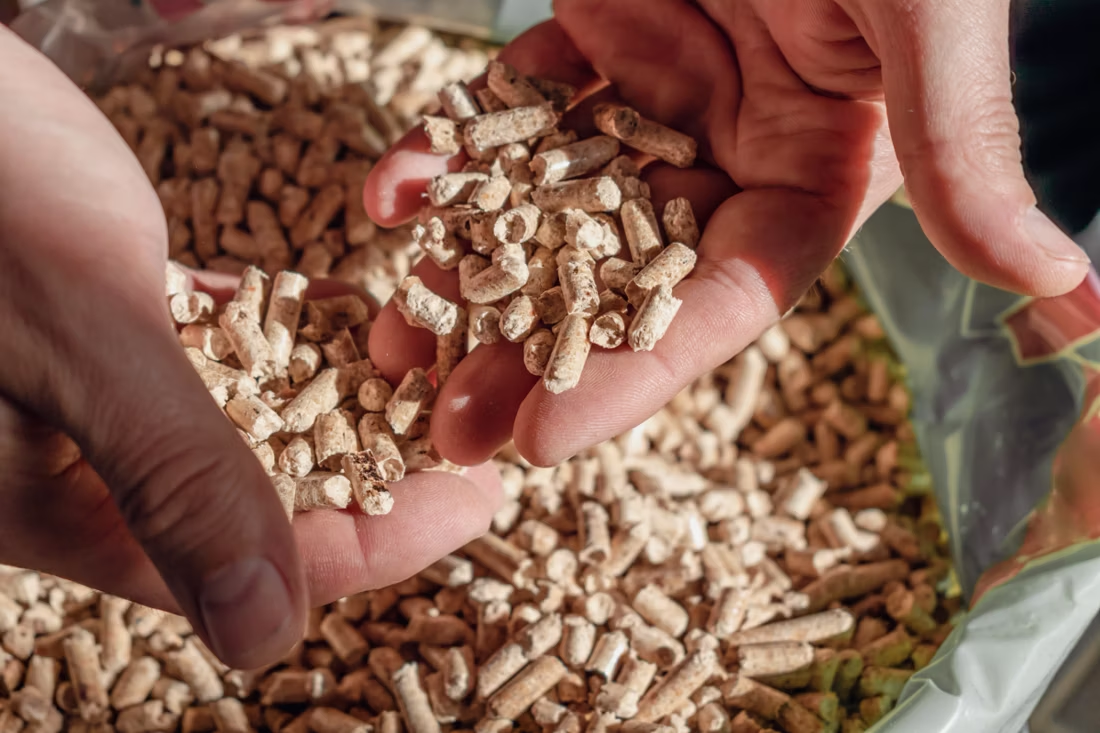
That said, pellet stoves haven't disappeared from O'Fallon entirely. A handful of homeowners install one in a basement, sunroom, or den for supplemental heat, backup warmth during the ice storms that occasionally knock out power across St. Charles County, or simply for the look and feel of a real flame without the bark, splitting, and stacking that come with a wood stove burning local oak or hickory. Regional brands like Lignetics and Indeck Energy Services supply pellets to a modest but real customer base in the area—it's just a smaller, more deliberate purchase than it would be in a colder or more rural part of the country.
Three steps. No salesperson until you're ready.
Tell us about your project
Your zip code, your situation, and the fuel you're leaning toward—or let the answers point you to one.
See what's actually available
The brands dealers within 100 miles genuinely carry—real options, never a catalog mirage.
Get your dealer & Project Guide
A trusted local dealer, plus the free Project Guide & Parts List that names every component of the job.
Frequently Asked Questions
Are pellet stoves actually common in O'Fallon?
Not especially—and it's worth saying plainly. O'Fallon's housing stock leans heavily on natural gas furnaces and electric heat pumps, and the moderate winters here (an average low around 21°F, 4,866 heating degree days) mean most households don't need a dedicated wood-pellet heat source. The homeowners who do install a pellet stove in O'Fallon are usually adding supplemental heat to a basement or bonus room, want a backup heat option for ice-storm power outages, or simply prefer the look of a pellet fire over a gas log set. If that's your situation, a local dealer can tell you honestly whether it's the right fit for your specific space.
What does a pellet stove installation cost in O'Fallon?
Nationally, a pellet stove installation typically runs $3,000 to $6,000 installed, and O'Fallon generally falls in that range since most jobs are straightforward wall-vent installs rather than complex masonry chimney retrofits. The bigger cost driver locally is usually electrical—pellet stoves need a dedicated 120V outlet to run the auger, igniter, and blower, and if your basement or den doesn't already have one nearby, adding it is often the largest line item after the unit itself. A local dealer can walk your specific space and give you a firm number.
Do I need a permit to install a pellet stove in O'Fallon?
Yes. Solid-fuel and pellet-burning appliances typically require a building permit through the City of O'Fallon Building Division, or the St. Charles County Building Department if your property falls outside city limits. Because pellet stoves also need a dedicated electrical circuit, an electrical permit and inspection is often bundled in as well. Most established hearth dealers in the St. Louis metro handle this paperwork as part of the installation, which is one good reason to avoid a big-box or DIY install for this particular appliance.
How does venting work for a pellet stove compared to a wood stove?
Pellet stoves vent through a small-diameter PL (pellet-listed) pipe—usually 3 or 4 inches—that can run horizontally through an exterior wall rather than requiring a full vertical masonry chimney. That's a real advantage in O'Fallon's newer subdivisions, where most homes were built without a wood-burning chimney at all. It also tends to keep installation costs down and gives installers more flexibility on where the stove can go, since you're not limited to a room with existing masonry.
Where do I buy pellets, and how should I store them in O'Fallon?
Regional pellet suppliers like Lignetics and Indeck Energy Services distribute bagged pellets through hardware stores and hearth dealers across the greater St. Louis area, and most homeowners buy by the ton (about 50 forty-pound bags) ahead of the winter heating season. Because O'Fallon's humidity climbs in summer, pellets need to stay in a dry, covered space—a garage shelf or basement storage rack works fine, but pellets stored in a damp crawlspace will swell and jam the stove's auger. Buying early in fall, before demand picks up during the first cold snap, also tends to get you better selection.
How much maintenance does a pellet stove need?
Less than a wood stove, but it's not zero. Plan on emptying the ash pan every few days during regular use, cleaning the burn pot weekly to keep the flame burning efficiently, and scheduling a professional cleaning of the exhaust venting and hopper once a year—typically in late summer before the first cold nights. Pellet stoves also have a few moving mechanical parts (the auger motor and combustion blower) that a wood stove doesn't, so an annual service visit from a qualified technician is worth the cost to catch wear before it becomes a mid-winter breakdown.
Will my pellet stove work if the power goes out?
Not on its own. Pellet stoves rely on an electric auger to feed fuel and a blower to distribute heat, so a power outage shuts the stove down completely—which matters in St. Charles County, where winter ice storms occasionally knock out power for a day or more. Some homeowners pair a pellet stove with a battery backup unit or small generator sized to run the auger and blower during an outage. If uninterrupted backup heat during power loss is your main goal, a wood-burning option or a gas fireplace with a battery-ignition system is generally a more reliable fit than pellet.
What size pellet stove do I need for my O'Fallon home?
Because O'Fallon's winters are moderate—4,866 heating degree days and an average low of 21°F—most local installations are sized for supplemental heat in a single room or open basement area rather than whole-home heating. A small unit (under 1,500 sq ft rating) is typically plenty for a den, bonus room, or finished basement. Whole-home sizing is rarely necessary here the way it would be in a colder climate, but a local dealer can confirm based on your home's layout, insulation, and how much of the heating load you actually want the stove to carry.
Pellet stove vs. gas fireplace—which makes more sense in O'Fallon?
For most O'Fallon homeowners, gas wins on convenience: natural gas service is widely available across the metro, a gas fireplace or insert lights instantly with no fuel storage or ash cleanup, and it fits the newer construction common here. A pellet stove makes more sense if you specifically want the ambiance of a real flame, don't have gas service to the room you're heating, or want a supplemental heat source that doesn't depend on your central HVAC system. Given how dominant gas is in this market, most local dealers will ask a few questions about your goals before recommending pellet over gas—it's worth having that conversation before you commit to either.
What's the difference between an insert and a zero-clearance fireplace?
An insert is a fireplace that slides into a pre-existing wood-burning fireplace—if you don't have one, there's nothing to insert it into. A zero-clearance fireplace is built into a framed wall, which makes it the answer for remodels and new construction. Simple test: existing masonry fireplace means insert; blank or framed wall means zero-clearance.
Why is a fireplace insert so efficient?
An insert does two things: it seals the chimney completely, so you stop losing air you already paid to heat, and it radiates warmth into the room through the firebox and glass. Most add a heat-exchange fan that pulls cool room air underneath, wraps it around the hot firebox, and pushes it back out warm. Your home is more efficient before you've even lit the first fire.
Does a fireplace add value to my home?
On average, a fireplace adds back to the home about the same amount you spent installing it. Add the monthly savings from heating the rooms you actually use instead of the whole house—often hundreds of dollars a year—and the value case is strong before you even count what a fire does for how your family uses the room.
What is an in-home preview and do I need one?
It's a visit where a hearth professional measures your space, confirms the model you picked actually works in your home, and walks the specs—framing, gas line, venting, finish work—before anything is ordered. Some details you just can't know until you see the house. Never make a down payment without one; it's the single most-skipped step that burns buyers.
Nearby Dealers
Hearth shops serving O'Fallon and the surrounding area.
Pellet Brands Stocked Around O'Fallon
Manufacturers will point you to the nearest stocking dealer.
Find your pellet stove in O'Fallon.
Tell us about your space and heating goals and we'll put together a free Project Guide & Parts List—the right pellet stove, the vent kit it needs, and a trusted local O'Fallon-area dealer to install it.
Find Your Fireplace →