
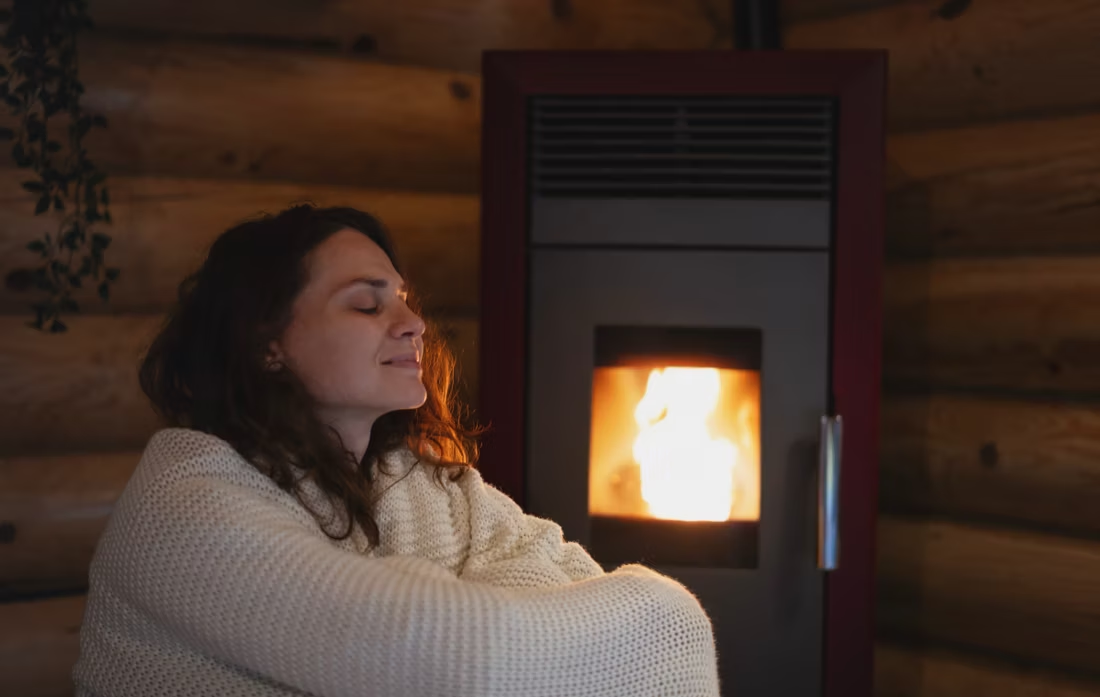
A pellet stove in Nixa: uncommon, but not out of the question.
Pellet appliances are a niche pick in the Ozarks, where natural gas and hardwood-fed wood stoves dominate. For the right home, a pellet stove still makes sense—we'll help you figure out if yours is one of them, and connect you with a local dealer who can install one correctly.
Every Project Starts From One of These Five Situations
Nixa's climate and fuel mix don't favor pellet stoves.
Nixa sits in climate zone 4A at about 1,289 feet in elevation, with a moderate winter heating season and winter lows that average around 21°F. That's a moderate heating season compared to the true cold-climate markets where pellet stoves see heavy adoption—nothing like the demand you'd see in a place like Duluth, MN or Fargo, ND. Add in the fact that natural gas service is well established across Christian County and that this part of the Ozarks sits on some of the best hardwood ground in the Midwest—oak, hickory, walnut, and maple are all cut locally—and you get a heating market that leans toward gas fireplaces for convenience and wood stoves or inserts for homeowners who want a real fire. Pellet appliances end up squeezed out on both sides.
That doesn't mean pellet stoves are off the table. Some Christian County homeowners choose one specifically because they don't want to split, stack, and haul wood despite living in oak-and-hickory country, or because they want a stove that holds a steady, hands-off burn overnight. The tradeoff is that a pellet stove's auger and blower run on electricity—through Ozark Electric Cooperative or the City of Nixa's municipal utility, at roughly $0.1407 per kWh—so during an Ozark ice storm outage, a pellet stove goes cold unless you've got it wired to a generator or battery backup. That's worth weighing against a wood stove that keeps burning no matter what the power grid is doing.
Three steps. No salesperson until you're ready.
Tell us about your project
Your zip code, your situation, and the fuel you're leaning toward—or let the answers point you to one.
See what's actually available
The brands dealers within 100 miles genuinely carry—real options, never a catalog mirage.
Get your dealer & Project Guide
A trusted local dealer, plus the free Project Guide & Parts List that names every component of the job.
Frequently Asked Questions
Are pellet stoves common in Nixa?
Not especially. Most Nixa homes that want a hearth appliance install either a gas fireplace or insert—natural gas is widely available and it's the low-maintenance choice—or a wood stove, given how much oak and hickory gets cut locally. Pellet stoves fill a smaller niche: homeowners who want the convenience of a thermostat-controlled, hands-off burn without running a gas line, or who want a cleaner-burning alternative to wood without giving up a real flame. It's a legitimate option, just not the default one here.
What does a pellet stove installation cost in Nixa?
Because pellet appliances are a lower-volume install in this market, pricing varies more than it would in a market with a dozen pellet dealers competing. As a general range, expect $3,000 to $6,000 for the stove, hearth pad, and vent kit installed—on the lower end if you're placing a freestanding unit with a short horizontal vent run through an exterior wall, higher if you're converting an existing masonry fireplace to a pellet insert with a full liner. A local dealer will need to see the room and chimney or wall configuration to give you a firm number.
Why would I choose a pellet stove over a wood stove when hardwood is so cheap here?
Fair question, and it's the core tradeoff in the Ozarks. Oak, hickory, walnut, and maple are all cut locally, so firewood is often free or cheap if you have land or know someone who does—that's a real cost advantage for wood. Pellet stoves win on convenience: no splitting, stacking, or seasoning wood, a hopper that feeds itself for 24-plus hours, and a cleaner burn with far less ash. If your winters mostly call for supplemental heat in one room and you'd rather load a hopper than tend a fire, pellet makes sense. If you already have a wood supply and don't mind the work, wood usually wins on cost here.
Will a pellet stove work if the power goes out?
No, not without a backup power source. Pellet stoves rely on an electric auger to feed fuel and a blower to distribute heat and exhaust—cut the power through Ozark Electric Cooperative or City of Nixa's grid during an ice storm, and the stove shuts down. Some homeowners pair a pellet stove with a small battery backup or a generator specifically for this reason, since ice storms are a real seasonal risk in this part of Missouri. If outage-proof heat is your top priority, a wood stove or a gas fireplace with battery-backed ignition is a more reliable choice.
Do I need a permit to install a pellet stove in Nixa?
Most likely, yes—new hearth appliance installations typically require a building permit through the City of Nixa or Christian County, depending on where the property sits, along with inspection of the venting and clearances. Pellet stove venting is generally simpler than a wood chimney (it's a small-diameter PL vent through a wall or roof rather than a full masonry flue), which usually makes the inspection more straightforward. Any dealer installing the unit should pull the permit and coordinate the inspection as part of the job.
Where do pellet stoves and pellets come from if they're not common locally?
Because pellet demand is lower in this market, the units and fuel both tend to come through regional suppliers rather than a dedicated local pellet shop. Lignetics and Indeck Energy Services both distribute hardwood pellets into the broader Ozarks region, and dealers who do carry pellet stoves typically special-order or stock a limited number of models rather than a full showroom line. It's worth asking a prospective dealer directly how they source both the appliance and an ongoing pellet supply before you commit.
How much do pellet stove fuel and bags cost near Nixa?
Pellet pricing in this region runs in the ballpark of $220 to $280 per ton, usually sold in 40-pound bags through farm supply stores, hardware stores, or the same dealer who sold you the stove. A typical home burning a pellet stove as supplemental heat through a Missouri winter might go through one to two tons; a home relying on it more heavily could use three or more. Because pellet demand is lower here than in colder climates, availability can tighten late in the season—buying your supply early in fall is the safer move.
What size pellet stove do I need for a Nixa home?
Given Nixa's moderate heating load—a moderate winter heating season and winter lows around 21°F—most homes don't need a large-capacity unit. A small to mid-size pellet stove (rated for 1,000 to 1,800 square feet) is enough to heat a main living area or serve as meaningful supplemental heat for a whole house with central HVAC as backup. Whole-home primary heat with pellet alone is less common here simply because gas and electric HVAC already cover that job efficiently. A dealer can size it based on your room dimensions and insulation.
Pellet stove vs. gas fireplace—which makes more sense in Nixa?
For most Nixa homes, gas wins on pure convenience: natural gas service is broadly available, a direct-vent gas fireplace turns on with a switch or remote, and there's no fuel to buy, store, or load. Pellet stoves offer something gas can't—a real, visible flame and the ambiance of an actual fire—while still being far less hands-on than wood. If you want genuine flame with hopper-fed convenience and don't mind buying pellets by the ton, pellet is the right niche pick. If you just want reliable, no-fuss heat and don't care about a live flame, gas is the more common—and more supported—choice locally.
Why is my open fireplace making my house colder?
Open fireplaces suck—literally. As the fire burns, it consumes air your furnace already paid to heat and pulls it out through the chimney, so the house is actually colder after the fire goes out than before you lit it. An insert fixes this: it seals the chimney, puts fixed glass across the front, and turns that hole in your house into a real heat source.
How often does a pellet stove need cleaning?
A clean pellet stove is a happy pellet stove. Plan on cleaning the burn pot about once a week when you're burning regularly—ash and clinkers gum up the air holes just like a pellet barbecue. Most pellet stove problems trace back to skipped cleaning that nobody explained up front. Some designs make it easy with a trapdoor burn pot: pull a lever and the gunk drops into the ash pan.
What is an in-home preview and do I need one?
It's a visit where a hearth professional measures your space, confirms the model you picked actually works in your home, and walks the specs—framing, gas line, venting, finish work—before anything is ordered. Some details you just can't know until you see the house. Never make a down payment without one; it's the single most-skipped step that burns buyers.
Can I install a fireplace myself?
If you're putting a fire in your house on purpose, it's best to work with an expert. Unless you're genuinely experienced in framing, gas line, vent pipe, and the national code on clearances to combustibles, have a professional do it—and ideally the same company that sells you the fireplace, so warranty, service, and liability all live under one roof.
Nearby Dealers
Hearth shops serving Nixa and the surrounding area.
Pellet Brands Stocked Around Nixa
Manufacturers will point you to the nearest stocking dealer.
Find your pellet stove fit in Nixa.
Tell us about your home and we'll help you figure out if a pellet stove is the right call given Nixa's climate and fuel options—then match you with a trusted local dealer and send over a free Project Guide & Parts List, including the vent kit, for your project.
Find Your Fireplace →